

Slowscreen SlowScreen
Toggle sidebar

Just launched: free lifetime premium for the first 1,000 members to activate their account.

Start free

64 Zoo Lane

Good

Recommended age Unlock

Co-watching from age 4

Balanced

Exact score locked

Watch on Prime Video
Availability in
Save
64 Zoo Lane

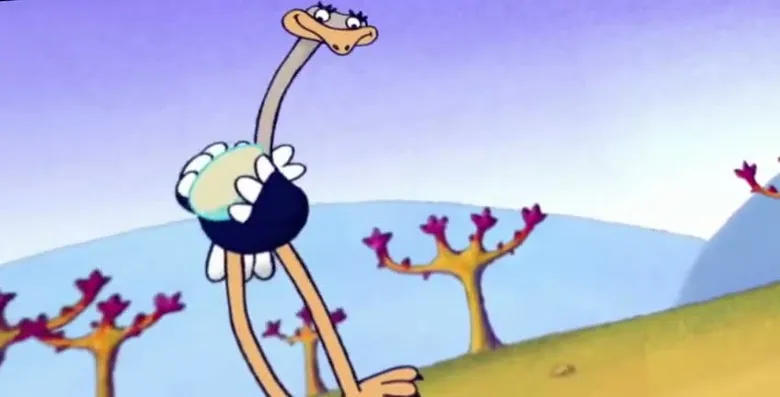
Lucy slips out each night to hear her animal neighbours at 64 Zoo Lane tell stories about animals around the world. The tone is gentle, aimed at preschoolers, with quiet lessons about friendship and consideration.

  • Calm pacing suited to winding down at bedtime.
  • Familiar nightly structure feels predictable and comforting.
  • Friends offer comfort when a child feels upset.
  • Characters keep trying when something feels difficult.
  • Some characters tease or mock others over differences.
  • A grown-up pressures a youngster to act mean.
  • A few mildly tense moments for the youngest viewers.

See the exact scores

The review is yours to read. Create a free account to reveal the exact SlowScreen score and every pillar score.

Create free account

Score Breakdown

The visuals stay calm and well-organised and the sound is soft and supportive throughout, so little jars or overwhelms. The main limitation is pace: images follow each other quickly, leaving a young child little time to pause and take in each moment. This pattern holds steady from one episode to the next, with no calmer or busier outliers. On the whole it remains easy for a preschooler to follow and process.
Every episode follows one clear storyline from beginning to middle to end, so a preschooler can track what happens and why. Events arrive one step at a time and each problem links logically to its consequence, like Joey borrowing jumping boots to practise and no longer needing them once he can jump. Transitions are signposted out loud ('Then came spring', 'this story happened a long time ago'), which keeps young viewers oriented. The one small demand is the story-within-a-story frame, where an animal tells Lucy the tale, asking a child to hold two layers at once.
The overall tone is warm: tense moments are answered by comfort and tend to resolve within the same scene, whether a parent steps in or friends talk things through. The recurring soft spot is teasing, with peers chanting things like 'Henrietta's hairy' or 'Joey can't jump!' before anyone corrects them, a sting a sensitive child may feel. One episode goes further: in Kevin the Crocodile, Victor is openly menacing, calling the others 'nitwits', and the unkindness runs for a sustained stretch before relief arrives, which may unsettle the youngest. Most episodes land on reassurance and warmth before the end.
Characters often drive their own stories, naming a problem, trying solutions and adjusting when something does not work, as when Henrietta tests three new homes before heading back, or the animals invent a compromise that works for everyone. How much the lead figures things out alone varies a good deal. Nelson and Henrietta work through clear, traceable steps, while elsewhere the turning point comes from outside: Joey's borrowed boots do the early work, Snowbert simply waits for the ice to thaw, and Kevin mostly copies Victor until the final choice. The thinking behind events is usually visible, even when the resolution leans on luck or confidence more than method.
Language is clear and well matched to a preschooler, carried by full sentences and a narrator who explains each step of the story. Trickier words come with built-in support, like 'compromise' ('a solution that's good for us and good for you too') or the invented 'fishitarian' ('it means I only eat fish'), and descriptive vocabulary such as 'dromedary' and 'wobbly boulders' stretches comprehension without losing the child. Dialogue serves the story rather than filling space. The small caveat is that some song lines are sung over each other and become harder to make out, and a few idiomatic exchanges ('oh yes you did, oh no you didn't') are expressive more than informative.
The social lessons are recognisable and usable: that your actions affect others, that practice pays off, that real friends matter more than someone pressuring you to be mean. These map closely onto a preschooler's daily world of milestones, peer pressure and making up after a fall-out. What holds this back is that almost everything on screen is fantasy, talking animals who travel continents and get hairdos from birds, so the activities themselves rarely transfer to real life. A couple of resolutions also rest on a thinner message, such as Henrietta needing a new hairdo to be accepted, which softens the self-worth lesson the story builds toward.

More information

This score shows how inclusively the series portrays diverse people, families and cultures. Scale: Limited → Varied → Rich → Inclusive.
The only recurring human is Lucy, a young blonde girl, with everyone else an animal neighbour, so there is little variation in ethnicity, age, family form or body type among people. Stories set in Africa or the Australian outback are populated by animals rather than any people from those places. The animal cast carries the variety instead, with mixed personalities, a single mother kangaroo raising triplets, and a stated message that difference is valuable ('not one is ordinary'). Some familiar role coding stays in place, though, with mothers tied to nests and babies and male characters cast as the cross authority figure or the proud champion.
This score shows whether the series stays close to everyday reality or leans into fantasy. Scale: Fantasy → Mixed reality → Realistic.
Every story sits firmly in fantasy: a girl named Lucy visits her talking zoo neighbours at night and they tell her a tale, often set somewhere like Africa or the Australian outback. The made-up rules stay consistent within each episode, which helps a preschooler follow along, and almost nothing resembles a child's real daily life. Most episodes have no villain at all, with conflict coming from feeling different, being lonely, or learning a skill. The exception is Kevin the Crocodile, where Victor is a clear, flat villain who pressures Kevin to be 'mean and nasty' and threatens his friends, sitting at the upper edge of what suits the youngest viewers.
This score shows how enjoyable the series is for parents watching along. Scale: Tedious → Tolerable → Pleasant → Enjoyable.
You will be comfortable on the couch for this one. Each story has a real arc to follow, the British voice cast is warm rather than shrill, and the hand-drawn animation has a distinctive look that does not grate. There are small treats for the grown-up in the room, a bit of pantomime back-and-forth, a wry storyteller sign-off, even a cheeky 'Good night, sweet prince'. Most of the jokes still aim squarely at your child, and the catchy theme refrain will lodge in your head, but you will be enjoying the craft more than enduring it.

Season 1

5 episodes

64 Zoo Lane
S01 E01

64 Zoo Lane

The Story of Nelson the Elephant

Balanced
recommended age Unlock co-watching from 4
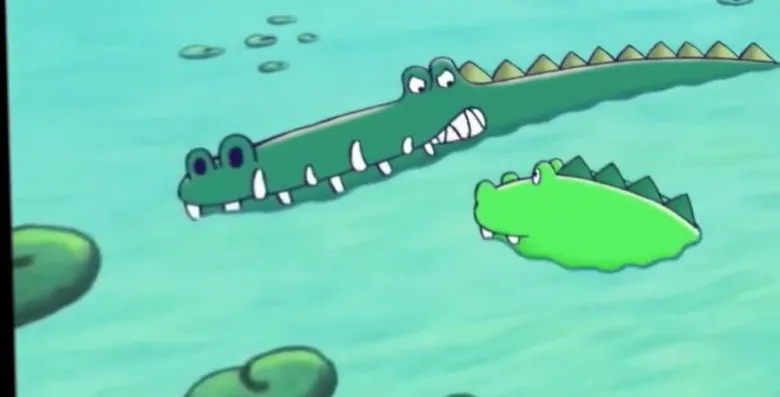
Lucy sneaks out at night to listen to her animal neighbours at 64 Zoo Lane. Georgina the giraffe tells the story of young Nelson the elephant, who is so bored in Africa that he invents a jumping game which disturbs the other animals. After Reginald, Audrey and Natalie build a trampoline to teach him a lesson, they negotiate a compromise: Nelson stops jumping and they all play snakes and ladders together. Lucy then heads back to bed with everyone saying goodnight.

64 Zoo Lane
S01 E02

64 Zoo Lane

The Story of Kevin the Crocodile

Balanced
recommended age Unlock co-watching from 4
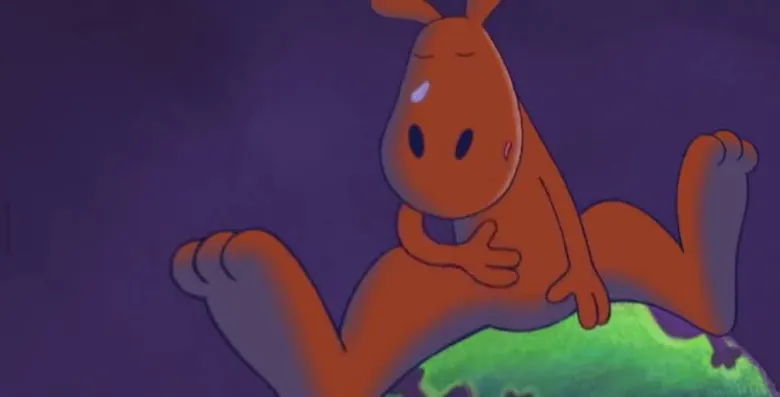
Lucy lives at 64 Zoo Lane and visits her animal neighbours at bedtime, where she meets Victor, a self-described mean crocodile, who must tell a story to join the party. Victor recounts how he tried to teach young Kevin to be a 'real' mean crocodile through lessons in scary eyes, scary grins and tail splashing. Kevin tries to scare his friends Doris the duck and Toby the tortoise, accidentally hurts Doris and rescues Toby from Victor. Kevin decides to stay his friendly self and the three friends end the day playing hide-and-seek before Lucy says goodnight.

64 Zoo Lane
S01 E03

64 Zoo Lane

The Story of Joey the Kangaroo

Balanced
recommended age Unlock co-watching from 4

Lucy is sent to bed but slips out to visit her animal neighbours, where Ribbit the Frog notices she is upset about being the worst at skipping in her class. To cheer her up, Ribbit tells the story of Joey, a young kangaroo in Australia who cannot jump and is teased by the other joeys. Ribbit lends Joey a pair of jumping boots so he can practise, and after training all night Joey enters the Junior Jump contest. When the boots are banned he finds he can jump without them, wins the contest, and the story sends Lucy happily off to bed.

64 Zoo Lane
S01 E04

64 Zoo Lane

The Story of Snowbert the Polar Bear

Balanced
recommended age Unlock co-watching from 4
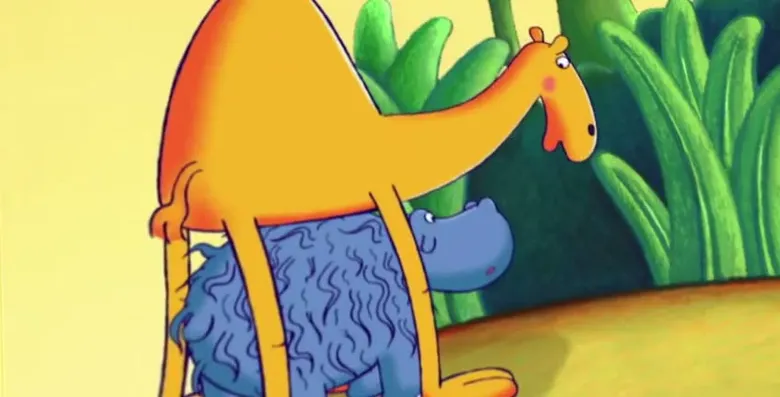
Lucy of 64 Zoo Lane is sent to bed, but climbs out to hear a bedtime story from her animal neighbours. The shy bear Boris tells the tale of Snowbert, a lonely polar bear who lives near the North Pole and one day befriends Sidney the seal through a hole in the ice. After a long, frozen midwinter separation, Sidney keeps his promise and returns in spring with friends to play. Lucy thanks Boris and heads back to her warm bed as the closing song plays.

64 Zoo Lane
S01 E05

64 Zoo Lane

The Story of Henrietta the Hairy Hippo

Balanced
recommended age Unlock co-watching from 4
Lucy comes home from school upset that classmates teased her hair, and her animal friends gather to comfort her at bedtime. Molly the meerkat tells her the story of Henrietta, a hairy hippo mocked by her river family who sets off to find a new home. Henrietta travels through the desert with Dennis the Dromedary, escapes a giant spider in the jungle with help from monkeys, and climbs the Blue Mountain where the snip-snip bird gives her a princess hairdo. She returns to the Zambam River, shares her adventures, and the other hippos welcome her back with a big splash.

Explore more

By age 4 years
By platform Prime Video

Share

Pass this find on to another parent

Link preview

64 Zoo Lane | Good, co-watching from age 4

64 Zoo Lane | Good, co-watching from age 4 - Slowscreen

Good · Co-watching from age 4. Lucy slips out each night to hear her animal neighbours at 64 Zoo Lane tell stories about animals around the world. The tone is g...

slowscreen.com

https://slowscreen.com/en/series/64-zoo-lane

https://slowscreen.com/en/series/64-zoo-lane

Slowscreen

64 Zoo Lane | Good, co-watching from age 4 - Slowscreen

Good · Co-watching from age 4. Lucy slips out each night to hear her animal neighbours at 64 Zoo Lane tell stories about animals around the world. The tone is g...

64 Zoo Lane | Good, co-watching from age 4

slowscreen.com

64 Zoo Lane | Good, co-watching from age 4 - Slowscreen

Good · Co-watching from age 4. Lucy slips out each night to hear her animal neighbours at 64 Zoo Lane tell stories about animals around the world. The tone is g...

64 Zoo Lane | Good, co-watching from age 4
slowscreen.com

64 Zoo Lane | Good, co-watching from age 4 - Slowscreen

slowscreen.com · Posted by you

64 Zoo Lane | Good, co-watching from age 4 - Slowscreen

0 Share
64 Zoo Lane | Good, co-watching from age 4
To
Subject 64 Zoo Lane | Good, co-watching from age 4

Good · Co-watching from age 4. Lucy slips out each night to hear her animal neighbours at 64 Zoo Lane tell stories about animals around the world. The tone is g...

https://slowscreen.com/en/series/64-zoo-lane

Share on WhatsApp Share on X Share on Facebook Share on Telegram Share on Reddit Share on Email

Just launched: free lifetime premium for the first 1,000 members to activate their account.

Create your account

Search by title, show, tag, or topic

We use functional cookies and Google Analytics to improve our site. Learn more