

Slowscreen SlowScreen
Toggle sidebar

Just launched: free lifetime premium for the first 1,000 members to activate their account.

Start free

Ask the StoryBots

Mediocre

Recommended age Unlock

Co-watching from age 4

Stimulating

Exact score locked

Watch on Netflix
Availability in
Save
Ask the StoryBots

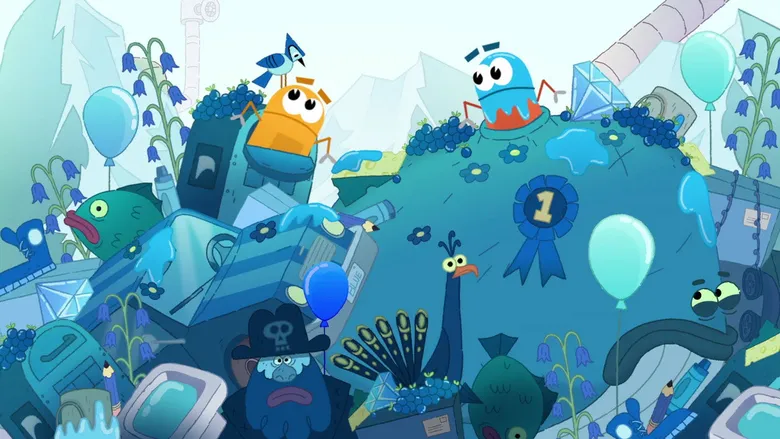
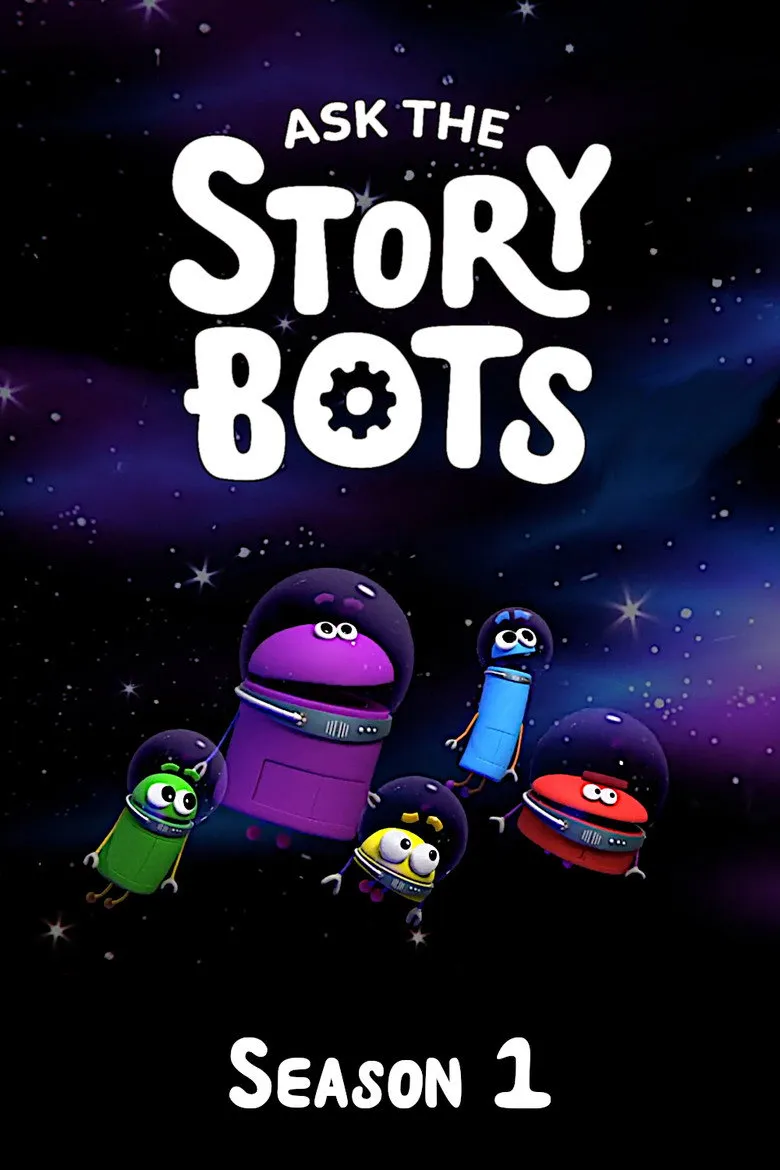
The StoryBots are small colourful robots who answer real children's questions by exploring the human body, weather and food. The tone is upbeat and playful, made for preschoolers, with science and curiosity at its heart.

  • Answers real questions children often ask.
  • Explains how things work in simple steps.
  • Real children appear and take part.
  • Catchy songs make ideas stick.
  • Busy, fast-paced segments throughout.
  • Some moments feel briefly tense for the youngest.
  • Bright flashes and loud sounds in places.

See the exact scores

The review is yours to read. Create a free account to reveal the exact SlowScreen score and every pillar score.

Create free account

Score Breakdown

Every episode moves at a fast clip, with images that follow each other quickly and leave little room to pause and take in what just happened. The sound is usually clear and regularly pulls attention, while the visuals themselves stay reasonably organized and easy to read overall. The combined effect is energetic and actively demands attention, which can feel intense for the youngest children. This high-stimulation pace is consistent across the series.
Each episode is built around a single guiding question, such as how you catch a cold or how tornadoes form, which gives it a clear spine. That through-line is constantly interrupted by songs, comedy sketches, child interviews and other detours, so the main thread can be hard to follow at this age. New facts and characters arrive in dense bursts, faster than a three-year-old can comfortably absorb in one viewing. The cause-and-effect explanations themselves are laid out clearly, which is the strongest part of the storytelling.
Warmth runs through the series: the StoryBots speak kindly to each other and to the children who ask the questions, and most upsets are answered with reassurance. Against that, episodes regularly swing into tense or dramatic moments, like a threatening Virus King, a storm chase with frightened clouds, or a character in tears, and these shifts can feel abrupt for a three-year-old. Recovery does follow, though sometimes a full scene later rather than right away. Calmer episodes such as 'Internet' keep the bumps small, while 'How Do People Catch a Cold?' leans harder into fear and shouting.
The StoryBots model a clear way of figuring things out: they hear a question, head into the world to investigate, gather information step by step, and bring back a concrete answer or tip such as washing your hands. The reasoning chain stays visible, with each part of the explanation building on the last, so children see curiosity rewarded rather than helplessness. One mild caveat is that the question is often handed to a character by a boss or an upset adult rather than springing from their own wondering, and the steps can get buried in comedy. Even so, the ask, investigate and conclude structure comes through consistently.
Speech leads clearly and the sentences are complete, grammatical and purposeful rather than empty filler. The vocabulary, however, is pitched at older children: words like 'lymph', 'macrophage', 'updraft', 'supercell', 'taste buds', 'umami' and 'IP address' arrive quickly and with little of the slow, concrete grounding a three-year-old needs. Repetition and songs do anchor a few key ideas, like 'wash your hands', which helps, but much of the language will wash past the youngest viewers. The gap between the words used and what this age can map to meaning is the main limitation.
Each episode carries a real, useful core, from washing your hands to trying new flavors, and weaves in recognizable social moments like teamwork and asking for help. Most of the runtime, though, sits in an invented world of talking robots, personified germs, singing rocks and animated journeys inside the body. For a three-year-old, who learns most from content they can copy in daily life, there is little here to carry directly into offline play. The factual lessons land, but the realistic anchor points stay thin next to the elaborate imaginary world.

More information

This score shows how inclusively the series portrays diverse people, families and cultures. Scale: Limited → Varied → Rich → Inclusive.
Diversity comes through mainly in the live-action inserts, where children of varied ethnicities and skin tones ask the questions and adult guests appear, including a Black boy at the center of one episode and a Black woman shown as a medical expert. The StoryBots themselves are colour-coded, gender-neutral characters, and knowledge and initiative are shared evenly across the team rather than resting on one figure. This picture stays stable throughout, though human identities are shown only in short glimpses and a few authority roles, like the librarian, still lean male-coded. Within its abstract cast the series offers a varied, broadly inclusive set of faces and voices.
This score shows whether the series stays close to everyday reality or leans into fantasy. Scale: Fantasy → Mixed reality → Realistic.
Real children appear in live-action clips to ask the questions and the science is grounded in fact, but the storytelling lives mostly in an imagined world of colorful robots, talking germs, tornadoes with faces and singing rocks. There is no recurring villain; the tension comes from the question itself or from the weather rather than a malicious character, which keeps the emotional world calm. The internal rules of each invented world stay consistent. For a three-year-old, who is best served by mostly realistic content with only light imagination, the fantasy load and the occasional darker image, such as a brief noir figure, sit higher than the age usually calls for.
This score shows how enjoyable the series is for parents watching along. Scale: Tedious → Tolerable → Pleasant → Enjoyable.
There is genuinely something here for you on the couch. The series layers parody bits, a Bob Ross style painter, a film-noir detective, a mock news anchor, clever songs and a real exploration arc on top of the kids' questions, and the craft across animation styles, voice work and music is consistently strong. The catch is the volume: the high-energy bot voices, catchy refrains and frequent yelling can wear on your ears over a full sitting. For parent-friendly children's viewing, though, this sits comfortably above average.
Ask the StoryBots
S01 E04

Ask the StoryBots

Where Does Sand Come From?

Stimulating
recommended age Unlock co-watching from 4
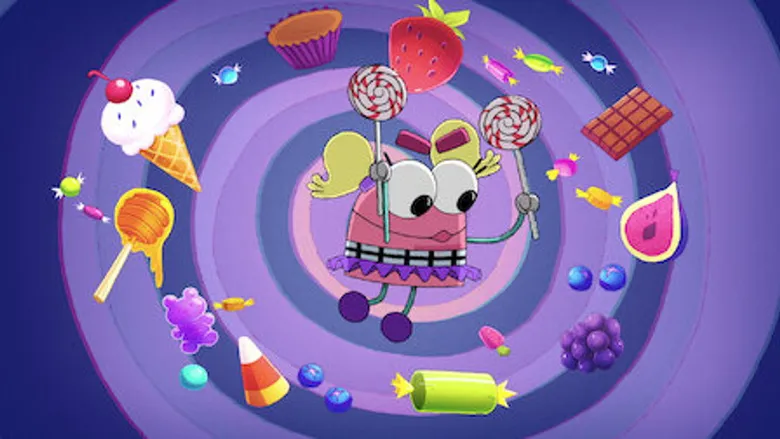
A child sends in the question 'where does sand come from?' and the StoryBots set out to answer it. The episode mixes a main adventure following animated rock characters across mountains, rivers and oceans with short sketches, a painting bit and a rainbow song. Along the way the StoryBots show how rocks crack, tumble and grind down into tiny grains. At the end they bring the answer back, framing sand as the result of nature wearing rocks down over a very long time.

Ask the StoryBots
S01 E07

Ask the StoryBots

How Does Taste Work?

Overstimulating
recommended age Unlock co-watching from 4
In this StoryBots: Answer Time episode, Miss Mushroom, played in live action by Chrissy Teigen in a giant mushroom costume, is upset because children dislike vegetables and fungi. The StoryBot Bo sets off on a journey through animated kitchens, a jungle, and a concert arena to answer the question of how taste works. Along the way, real children on screen sample foods and describe sweet, sour, salty, bitter, and umami, while StoryBot explainers show how taste buds send signals to the brain. The episode ends with a celebratory musical number that ties the science back to enjoying a wider range of foods.

Ask the StoryBots
S02 E06

Ask the StoryBots

How Do Tornadoes Form?

Stimulating
recommended age Unlock co-watching from 4
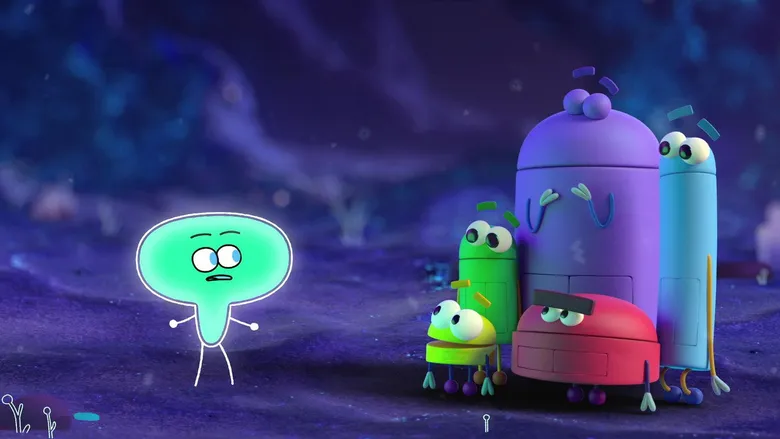
Mr. Cow asks the StoryBots how tornadoes form, and Beep heads out with documentarian Chase Weathers to investigate. Along the way, real children answer the same question on video screens, and animated weather characters act out how warm and cold air meet to create a tornado. A musical segment and a short forest bear bit interrupt the main thread before the team returns home. Beep delivers the answer to Mr. Cow at the end.

Ask the StoryBots
S02 E08

Ask the StoryBots

How Do People Catch a Cold?

Overstimulating
recommended age Unlock co-watching from 4

A young boy named Malachi asks the StoryBots how people catch a cold, and team 341B is dispatched to find the answer. The bots board a tiny vessel and travel into the body to tour the immune system, meeting helper T-cells, B-cells and a macrophage while a Virus King tries to take over. Through songs, gags and a 'Fun Fact Machine', the team explains how viruses spread and how the body fights back. The episode closes with the takeaway that washing your hands helps you stay healthier.

Ask the StoryBots
S02 E11

Ask the StoryBots

Internet

Stimulating
recommended age Unlock co-watching from 4
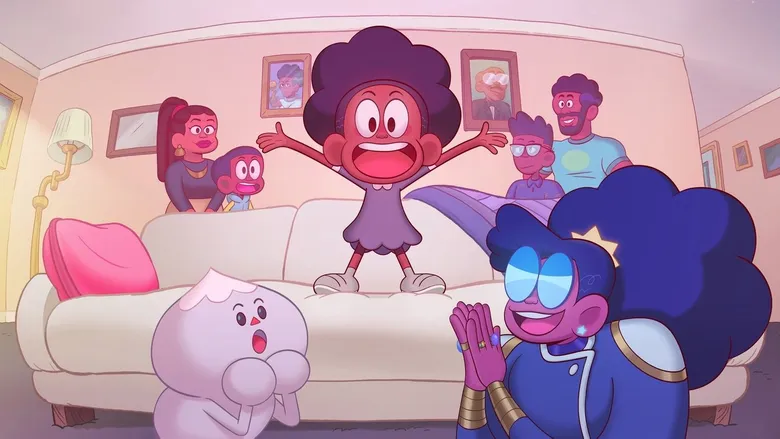
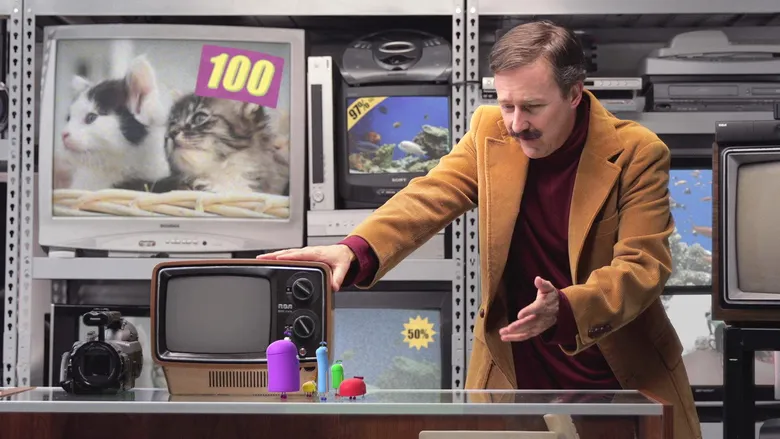
In this StoryBots: Answer Time episode, Bo investigates how the internet works after office worker Stacy accidentally sends a silly video to her boss. The answer is built up through library research, a journey through a stylised network, a film-noir parody about a 'sneeze case', and several music numbers. Live-action children pose the original question and Trevor Noah appears in office scenes as part of the framing story. By the end, Bo has traced the path from one computer through routers and servers back to Stacy's situation.

Explore more

By age 3 years
By platform Netflix

Share

Pass this find on to another parent

Link preview

Ask the StoryBots | Mediocre, co-watching from age 4

Ask the StoryBots | Mediocre, co-watching from age 4 - Slowscreen

Mediocre · Co-watching from age 4. The StoryBots are small colourful robots who answer real children's questions by exploring the human body, weather and food....

slowscreen.com

https://slowscreen.com/en/series/ask-the-storybots

https://slowscreen.com/en/series/ask-the-storybots

Slowscreen

Ask the StoryBots | Mediocre, co-watching from age 4 - Slowscreen

Mediocre · Co-watching from age 4. The StoryBots are small colourful robots who answer real children's questions by exploring the human body, weather and food....

Ask the StoryBots | Mediocre, co-watching from age 4

slowscreen.com

Ask the StoryBots | Mediocre, co-watching from age 4 - Slowscreen

Mediocre · Co-watching from age 4. The StoryBots are small colourful robots who answer real children's questions by exploring the human body, weather and food....

Ask the StoryBots | Mediocre, co-watching from age 4
slowscreen.com

Ask the StoryBots | Mediocre, co-watching from age 4 - Slowscreen

slowscreen.com · Posted by you

Ask the StoryBots | Mediocre, co-watching from age 4 - Slowscreen

0 Share
Ask the StoryBots | Mediocre, co-watching from age 4
To
Subject Ask the StoryBots | Mediocre, co-watching from age 4

Mediocre · Co-watching from age 4. The StoryBots are small colourful robots who answer real children's questions by exploring the human body, weather and food....

https://slowscreen.com/en/series/ask-the-storybots

Share on WhatsApp Share on X Share on Facebook Share on Telegram Share on Reddit Share on Email

Just launched: free lifetime premium for the first 1,000 members to activate their account.

Create your account

Search by title, show, tag, or topic

We use functional cookies and Google Analytics to improve our site. Learn more