

Slowscreen SlowScreen
Toggle sidebar

Just launched: free lifetime premium for the first 1,000 members to activate their account.

Start free

Bebefinn

Mediocre

Recommended age Unlock

Co-watching from age 5

Overstimulating

Exact score locked

Watch on Netflix
Availability in
Save
Bebefinn

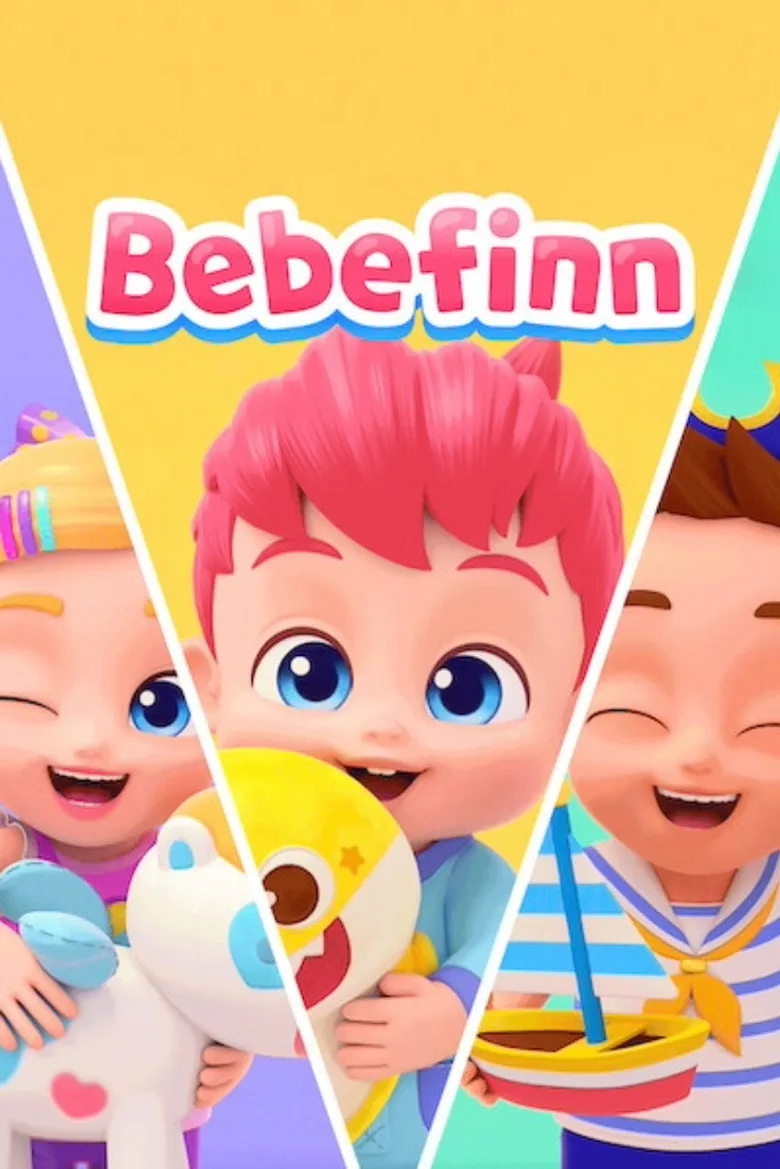
Bebefinn follows a toddler, his older siblings and parents through musical nursery rhymes in a colourful family home. The tone is upbeat and cheerful, aimed at preschoolers, encouraging them to copy along and sing.

  • Familiar routines like potty training and hand-washing.
  • Feelings are named and shown in simple ways.
  • Short, predictable episodes are easy to follow.
  • Frequent prompts to subscribe and search the channel.
  • Bright colours and lively pace can overstimulate.
  • Sneaking sweets and fibbing appear before being corrected.

See the exact scores

The review is yours to read. Create a free account to reveal the exact SlowScreen score and every pillar score.

Create free account

Score Breakdown

Bebefinn moves at a fast pace, with images that follow each other quickly and leave little time to pause and take in what is happening. The sound is intense and almost continuously present, which makes the overall experience highly stimulating for a young child. The visuals themselves stay clean and well organised, so the busyness comes from the speed and the wall of sound rather than cluttered pictures. For the youngest viewers, processing everything calmly can be a real challenge.
Every episode follows one clear, easy thread, whether it is a family playing hide and seek, a potty routine, or learning feeling words, so a young child can always track who is on screen and what is happening. The information load per scene stays low because each song repeats the same name-and-refrain pattern, which suits a preschooler. The trade-off is that little actually develops: verses often restart the same template with a new action, and the cause-and-effect logic stays thin. The 'Potty Party' episode is the strongest here, moving step by step from feeling the urge to washing hands, while 'Baby Shark' jumps from the playroom to an underwater world with no explanation.
The tone stays warm and friendly throughout, with smiling family scenes, hugs, and reassurance whenever a name is called, and no mocking or shaming between characters. What holds this back is a constant high-excitement register: wide-eyed gasps, exaggerated reactions, and never-ending upbeat energy that give a child little quiet contrast or room to settle. Because almost no real tension is introduced, there are also few genuine moments of recovery or calm reassurance. Two episodes add small wrinkles: 'Baby Shark' shifts abruptly from carefree singing into a chase, and the cookie song leans on a 'gotcha' dynamic where parents catch their child in a lie and then do the same themselves.
The children on screen are mostly carried along by the music rather than thinking or solving anything for themselves. When a small problem does appear, it is resolved in a single beat: a character calls out and is instantly answered, or runs until the next verse declares them 'safe at last', with no plan, no failed attempt, and no adjustment to watch. A child therefore sees very little modelled about persistence or working a challenge through. The 'Potty Party' episode offers the one small exception, when big sister Bora reminds Bebefinn that a step is still left, adding a hint of follow-through.
At the word level the language fits a young preschooler well, with concrete, recognisable vocabulary like 'sit down', 'wash your hands', and 'happy', plus counting from one to five that a child can carry into their own play. What pulls this down is how much of each song is rhythmic filler rather than meaning: refrains such as 'doo doo doo' or 'hide and hide and seek' fill large stretches, and most lines are short fragments and exclamations rather than full sentences. The feelings song and the hide-and-seek song offer the richest language, pairing each word clearly with a visible action, while 'Baby Shark' carries the least actual language input.
How much a child can carry offline depends heavily on the topic. The 'Potty Party' and hide-and-seek episodes are genuinely useful, showing a complete real-world routine or a familiar game with everyday objects that a three-year-old can copy at home. Other episodes offer much less: 'Baby Shark' is pure underwater fantasy with no daily-life equivalent, and the cookie song mostly models hiding sweets and lying, with the catchy refrain as the main takeaway. The recurring family setting and turn-taking give a steady thread of recognisable social context that runs through the series.

More information

This score shows how inclusively the series portrays diverse people, families and cultures. Scale: Limited → Varied → Rich → Inclusive.
The series centres on a single nuclear family, a mother, a father, and three children, with cameo characters added in some episodes. All the people share a similar light skin tone and conventional design, and no other family forms, cultural backgrounds, ages, or body types appear, so the overall picture stays narrow. Gender coding follows familiar conventions, with the daughter in pink and bows and the sons in pirate or sailor outfits. The picture is fairly stable from one episode to the next, though the father's hands-on part in the potty-training episode and the parents sharing the questioning role in the cookie song add some warmth to how the adults are shown.
This score shows whether the series stays close to everyday reality or leans into fantasy. Scale: Fantasy → Mixed reality → Realistic.
Most of Bebefinn stays close to everyday life, set in a recognisable family home with ordinary furniture and familiar routines like potty training, hide and seek, and learning feeling words that a young child can recognise and imitate. There are no villains and no hero-versus-villain framing anywhere, and conflict stays light and is quickly resolved. Gentle touches of imagination appear, such as a smiling poo that waves goodbye or a small lion and bunny joining the family, and they fit the playful tone without confusing the realistic message. 'Baby Shark' is the outlier, leaning on heavier fantasy with babies breathing underwater and dancing sharks.
This score shows how enjoyable the series is for parents watching along. Scale: Tedious → Tolerable → Pleasant → Enjoyable.
Settle in honestly, because there is not much here for you. Most episodes loop a single refrain ('doo doo doo', 'yes yes yes', 'where are you, here I am') over high-pitched toddler vocals, the kind of catchy that lodges in your head and wears thin fast. The 3D animation is tidy and the character models are clean, so it is easy on the eyes even when it is hard on the ears. Your one small reward is the cookie song, where the parents get caught sneaking soda at the end, a brief wink for the grown-up on the couch.

Season 1

5 episodes

Bebefinn
S01 E01

Bebefinn

Baby Shark and Bebefinn Doo Doo Doo

Overstimulating
recommended age Unlock co-watching from 5

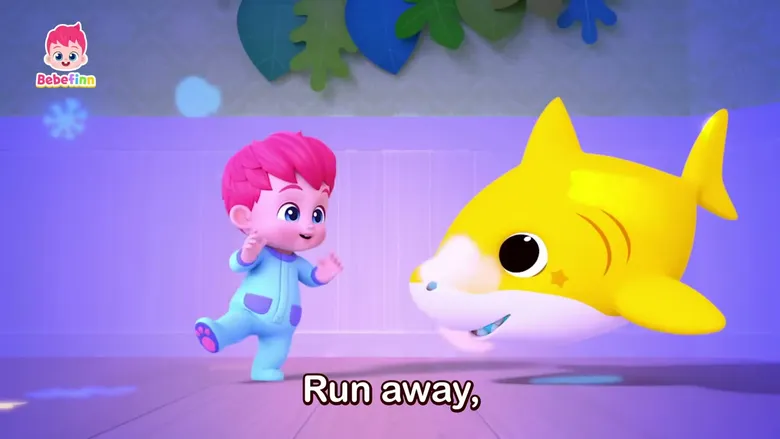
Three child characters from the Bebefinn family play in a sunny room when a shark family appears and the song Baby Shark begins. Each family member is introduced verse by verse while the children dance along, then they magically end up in an underwater world riding the sharks. A 'let's go hunt' verse turns into a chase where the kids run from a hunting shark before reaching 'safe at last'. The episode closes with the human family and the shark family posed together and an on-screen prompt to search the channel name.

Bebefinn
S01 E02

Bebefinn

No Bebefinn's Not Eating Cookies!

Overstimulating
recommended age Unlock co-watching from 5
In this Bebefinn nursery rhyme, a pink-haired toddler hides around the house while secretly eating candies, cookies, ice cream, and chocolate. Across four verses, Mama or Papa calls 'Where are you?' and the baby denies eating, only to be exposed when asked to 'Open your mouth'. In a closing twist the toddler catches the parents drinking soda and lying in the same way, and the song ends with the line 'Don't tell lies!' followed by a subscribe screen.

Bebefinn
S01 E03

Bebefinn

If You're Happy Clap Your Hands!

Overstimulating
recommended age Unlock co-watching from 5
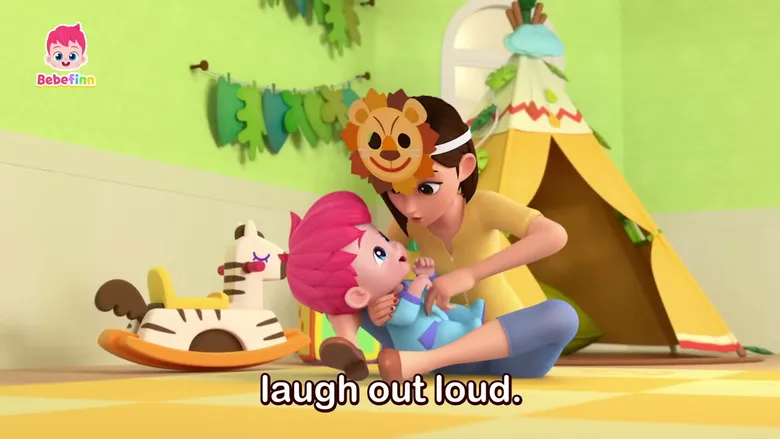
A short Bebefinn nursery-rhyme music video built on the 'If You're Happy' template. A pink-haired toddler character, other young child characters, and an adult woman move through a brightly coloured home, singing through two verses about feeling 'happy' and then feeling 'surprised'. Each feeling is paired with a matching action such as smiling, laughing, clapping, gasping, or raising hands, with the toddler facing the camera and inviting the viewer to 'copy me'. The video closes on an end card prompting viewers to search for Bebefinn online.

Bebefinn
S01 E04

Bebefinn

Yes, Yes, Potty Party!

Overstimulating
recommended age Unlock co-watching from 5
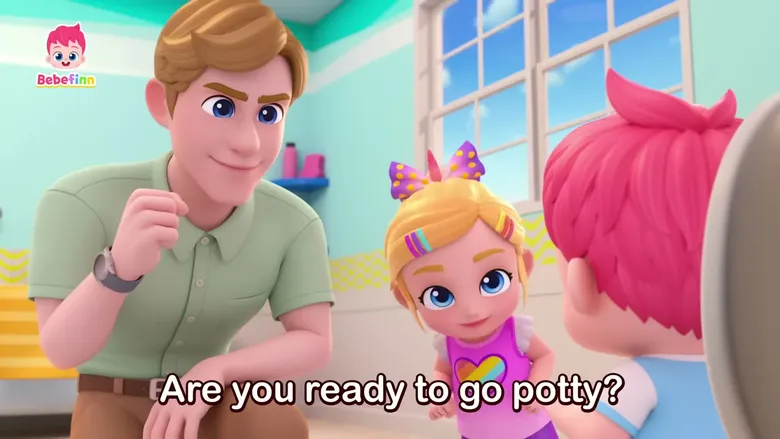
Bebefinn, his older sister Bora and their father go through a complete potty routine together. The father asks 'Are you ready?' before each step and Bebefinn responds with an enthusiastic 'Yes, yes!' as he sits on the potty, pushes, wipes and says goodbye to the poo. Bora then reminds Bebefinn that one step is still missing, and the family finishes with a hand-washing scene. The episode closes with an onscreen prompt to search for Bebefinn online.

Bebefinn
S01 E05

Bebefinn

Hide and Seek

Overstimulating
recommended age Unlock co-watching from 5
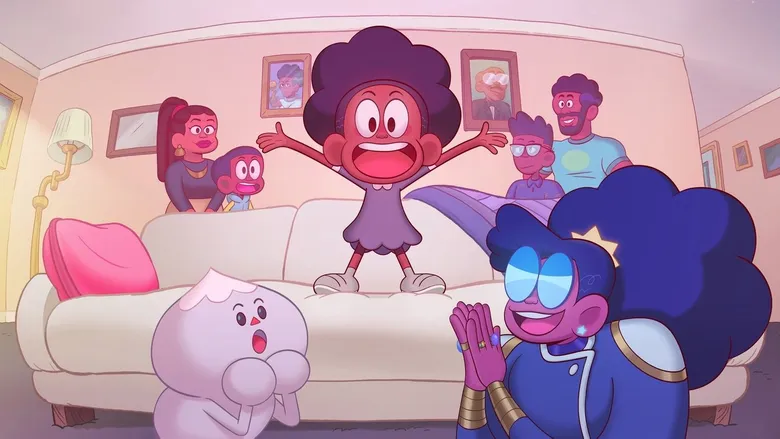
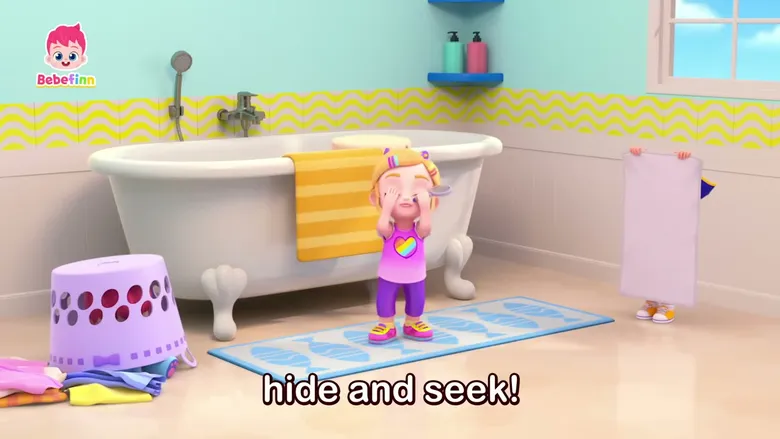
In this Bebefinn nursery-rhyme episode, a cartoon family with three children plays hide and seek inside their home. The children take turns counting to five while parents and siblings hide behind sofas, blankets, curtains and a play tent, then the seeker calls each family member by name and is answered with 'Here I am'. The same musical pattern repeats across several rounds, with a 'one more time' verse near the end. The video closes with a Bebefinn end card showing a play button and a prompt to search for more videos.

Explore more

By age 3 years
By platform Netflix

Share

Pass this find on to another parent

Link preview

Bebefinn | Mediocre, co-watching from age 5

Bebefinn | Mediocre, co-watching from age 5 - Slowscreen

Mediocre · Co-watching from age 5. Bebefinn follows a toddler, his older siblings and parents through musical nursery rhymes in a colourful family home. The ton...

slowscreen.com

https://slowscreen.com/en/series/bebefinn

https://slowscreen.com/en/series/bebefinn

Slowscreen

Bebefinn | Mediocre, co-watching from age 5 - Slowscreen

Mediocre · Co-watching from age 5. Bebefinn follows a toddler, his older siblings and parents through musical nursery rhymes in a colourful family home. The ton...

Bebefinn | Mediocre, co-watching from age 5

slowscreen.com

Bebefinn | Mediocre, co-watching from age 5 - Slowscreen

Mediocre · Co-watching from age 5. Bebefinn follows a toddler, his older siblings and parents through musical nursery rhymes in a colourful family home. The ton...

Bebefinn | Mediocre, co-watching from age 5
slowscreen.com

Bebefinn | Mediocre, co-watching from age 5 - Slowscreen

slowscreen.com · Posted by you

Bebefinn | Mediocre, co-watching from age 5 - Slowscreen

0 Share
Bebefinn | Mediocre, co-watching from age 5
To
Subject Bebefinn | Mediocre, co-watching from age 5

Mediocre · Co-watching from age 5. Bebefinn follows a toddler, his older siblings and parents through musical nursery rhymes in a colourful family home. The ton...

https://slowscreen.com/en/series/bebefinn

Share on WhatsApp Share on X Share on Facebook Share on Telegram Share on Reddit Share on Email

Just launched: free lifetime premium for the first 1,000 members to activate their account.

Create your account

Search by title, show, tag, or topic

We use functional cookies and Google Analytics to improve our site. Learn more