


Slowscreen SlowScreen
Toggle sidebar

Just launched: free lifetime premium for the first 1,000 members to activate their account.

Start free

Caillou

Good

Recommended age Unlock

Co-watching from age 2

Balanced

Exact score locked

Watch on PBS Kids Tubi TV
Availability in
Save
Caillou

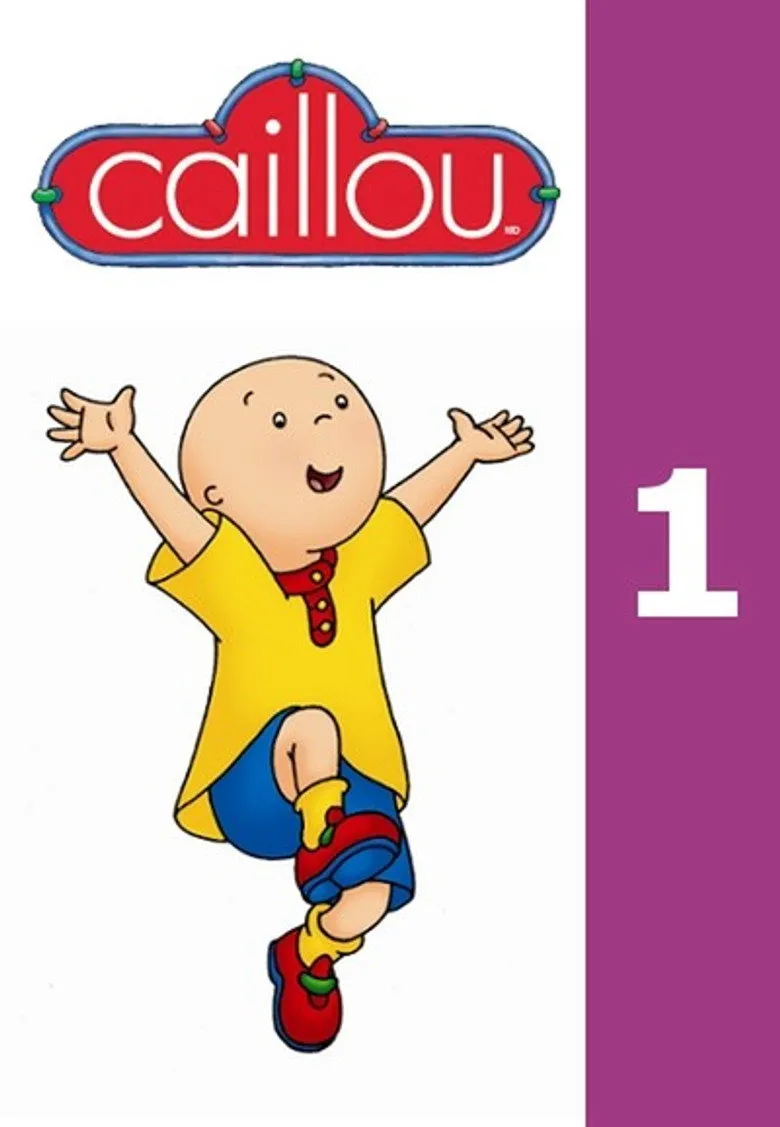
Caillou follows a young boy and his family through everyday moments at home and around the neighbourhood. The tone is calm and gentle, aimed at young preschoolers, building social and emotional skills.

  • Parents respond to messes calmly, inviting help not scolding.
  • Short episodes suited to young attention spans.
  • Relatable situations like baking, tidying and trying vegetables.
  • Imaginative play turns problems into games.
  • Caillou sometimes whines or nags to get his way.
  • Sweets often appear as a treat or reward.
  • Mildly tense moments for the youngest viewers.

See the exact scores

The review is yours to read. Create a free account to reveal the exact SlowScreen score and every pillar score.

Create free account

Score Breakdown

Each episode stays easy to follow and process, with soft, supportive sound and visuals that are calm and well-organized. The one consistent limitation is the pacing: images follow each other quickly, leaving a young child little time to pause and take in what is happening. In some episodes the sound sits gently in the background, while in others it is more present and regularly draws attention. The sensory load stays manageable for a preschooler, though the brisk tempo is the main thing to keep in mind.
Every episode follows one simple storyline from start to finish, with clear cause and effect and one new idea introduced per scene. A storyteller, usually Grandma or an older Caillou, narrates and bridges the transitions, so a young child can keep track of what is happening and why. The arcs are everyday and concrete: baking cookies and cleaning up, learning a neighbour is kind, finishing vegetables, finding something to do alone, and tidying toys. The only small caveat is the older-Caillou frame story in one episode, which adds a layer of narration the youngest viewers may not fully follow.
The parents and grandparents stay warm and patient, never shouting, and emotional transitions are gradual with reassurance arriving soon after any small upset. What holds this back is a recurring pattern: Caillou often whines and stalls ('cookies I want cookies I'm hungry', 'I hate vegetables'), and the adults tend to redirect or work around the complaint rather than naming a clear limit, so nagging is partly modelled as a way to get what he wants. One episode has a brief scare when Caillou's imagination turns his neighbour into a spooky, lunging figure, which may feel intense for the youngest. In another, the adults repeatedly tell him they are too busy to play before warmth returns at the end.
In most episodes the adults drive the solutions while Caillou mainly reacts, imitates, or asks again for a treat, so there is little visible try, evaluate and adjust on his own. Grandma invents the bear game, the parents come up with the toy box, and the baking happens largely inside a wordless montage, leaving the thinking process off screen. The clear exception is the episode where Caillou wants a playmate: he tries each family member in turn, then the cat, and finally settles happily into playing alone, which is genuine child-led problem-solving for this age. Outcomes show recognizable cause and effect, but the reasoning behind decisions usually belongs to the grown-ups rather than the child.
Language is well matched to a preschooler throughout, with short, concrete sentences about cookies, vegetables, snowmen and tidying that are tied directly to what is on screen. The narrator speaks in calm, full sentences that often put a feeling into words, giving a young listener something to hold onto, and dialogue mostly informs or describes rather than just exclaiming. The small caveat is that some of Caillou's own lines are mumbled, slurred or sing-songy in delivery (he says his own name as 'caou'), which slightly muddies clarity without derailing comprehension.
The everyday family life on screen maps directly onto a preschooler's own world: getting bored, helping in the kitchen, meeting a neighbour, finishing a meal, finding something to do alone, and putting toys away. There is no fantasy layer to translate, so the situations and objects, a mixing bowl, a dustpan, a teddy bear, a toy box, are easy to recognize and copy offline. Some episodes go a little further, such as Grandpa's simple lesson about what animals eat, while one summarizes its baking in a musical montage so the practical steps stay more suggestive than instructive. The recognizable social dynamics, a stubborn child with patient adults, are exactly what a young child meets at home.

More information

This score shows how inclusively the series portrays diverse people, families and cultures. Scale: Limited → Varied → Rich → Inclusive.
The picture stays narrow and consistent: a single white nuclear family at home with Mommy, Daddy, baby Rosie and grandparents, and almost no friends, neighbours or characters from other backgrounds or family forms. Roles tend to split along familiar lines, with the mother shown mostly in the kitchen handling food while the father takes the lead on instructions, repairs and clean-up. Where the series adds real value is age: young children, parents, grandparents and an elderly neighbour all get meaningful presence, and one episode gently dismantles the idea that the unusual-looking old man next door is someone to fear.
This score shows whether the series stays close to everyday reality or leans into fantasy. Scale: Fantasy → Mixed reality → Realistic.
The series sits firmly in the everyday world of a young family: home, kitchen, garden, the park, and ordinary moments like baking, finishing vegetables or tidying up. There is no villain and no magic, so tension comes only from small, recognizable frustrations. The one imaginative touch, Grandpa and Caillou pretending to be bears eating berries, is clearly framed as make-believe and stays internally consistent. For a two- or three-year-old this is a close, comfortable match, since children will recognize nearly every situation from their own home.
This score shows how enjoyable the series is for parents watching along. Scale: Tedious → Tolerable → Pleasant → Enjoyable.
Settle in honestly: there is not much here for the grown-up on the couch. The stories are thin domestic vignettes, the famously repetitive theme song loops around the character's name, and Caillou's high, whiny delivery can wear on adult ears within minutes. The animation is competent, with soft watercolour backgrounds and a gentle sound mix, and each episode does follow a clear little lesson you can lean on. Your reward for watching along is mostly the chance to talk it over with your child afterwards, not the episode itself.

Season 1

5 episodes

Caillou
S01 E01

Caillou

Caillou Makes Cookies

Balanced
recommended age Unlock co-watching from 2
An older Caillou narrates a memory of when he was three years old and his sister Rosie was put down for a nap. Bored and hungry, Caillou wanders into the kitchen and bakes a batch of honey cookies on his own, leaving flour and ingredients everywhere. Mom discovers the mess, invites him to help clean up rather than scolding, and they sweep the kitchen together before dad tastes a cookie at the table. The episode closes with dad himself making another big mess in the kitchen, a small visual punchline.

Caillou
S01 E02

Caillou

Caillou's Not Afraid Anymore

Balanced
recommended age Unlock co-watching from 2
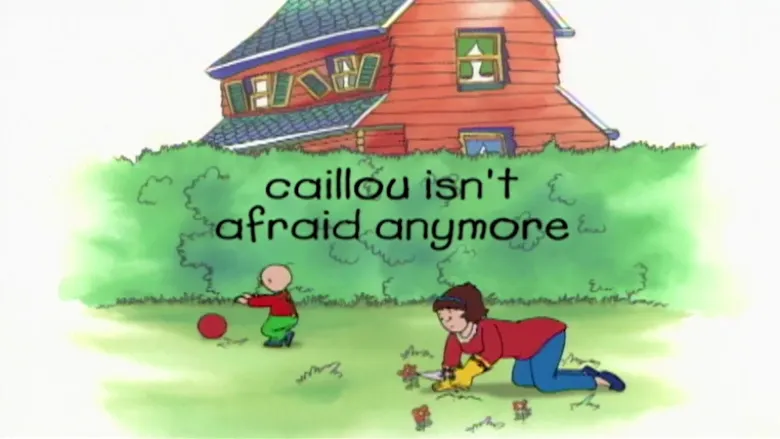
Grandma reads the children a story about a time when 3-year-old Caillou was afraid of his neighbor Mr. Hinkle, who looked spooky from a distance. After running away from him outside, Caillou hides at home when Mr. Hinkle comes over to apologise. Mr. Hinkle turns the moment into a game of hide and seek, and by the time he finds Caillou, the two are laughing together and become friends.

Caillou
S01 E03

Caillou

Caillou Hates Vegetables

Balanced
recommended age Unlock co-watching from 2
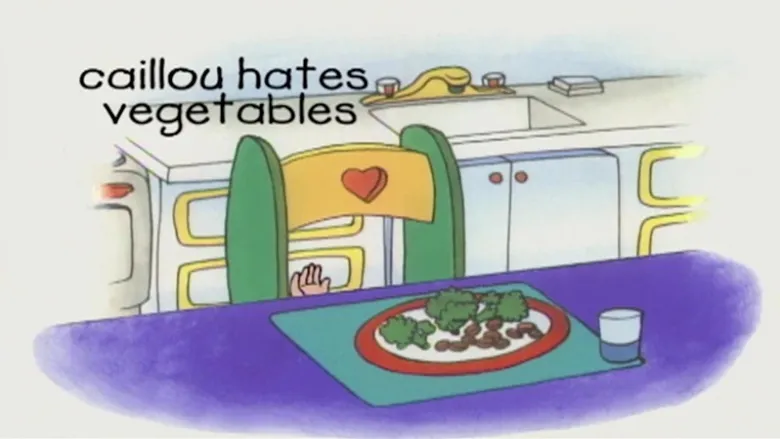
Grandma tells Caillou a story about when he was three and refused to eat his peas and carrots. While he is at her house, grandpa takes him to the park and shows him how caterpillars, birds and squirrels each eat to get energy. Back home, Caillou and grandma pretend to be bears so the peas and carrots become 'berries', and he finishes his plate. Mom and dad arrive to pick him up, and the episode ends with cookies for dessert.

Caillou
S01 E04

Caillou

Caillou's All Alone

Balanced
recommended age Unlock co-watching from 2
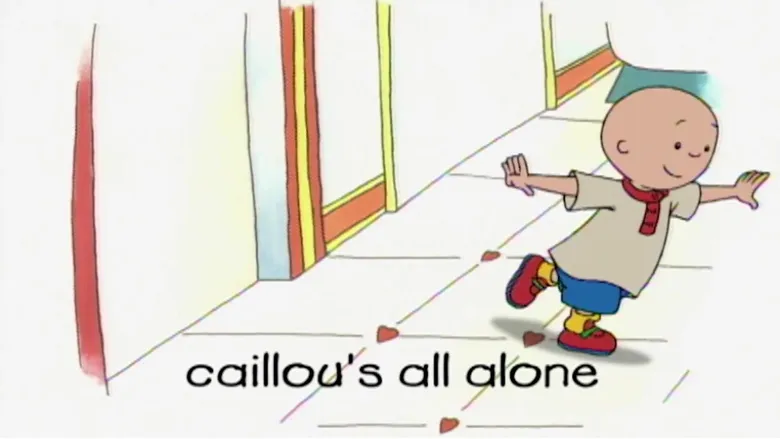
After the opening song and a storyteller introduction, Caillou tries to find someone to play with. Mommy is counting and asks him to leave her alone after he accidentally spills her papers, daddy is fixing the washing machine when it erupts in bubbles, and grandma is putting baby Rosie down for a nap. Caillou tries to engage his cat Gilbert in the garden, checks back on mommy, and finally ends up playing happily on his own with a teddy bear. Mommy finds him there and is reassured that he is fine.

Caillou
S01 E05

Caillou

Caillou Tidies His Toys

Balanced
recommended age Unlock co-watching from 2
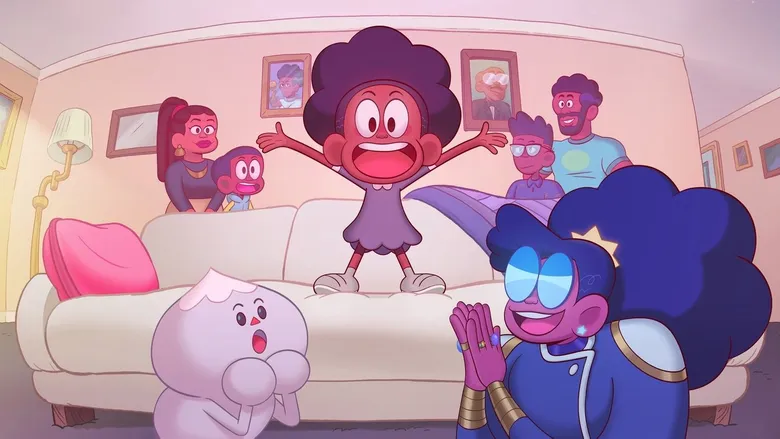
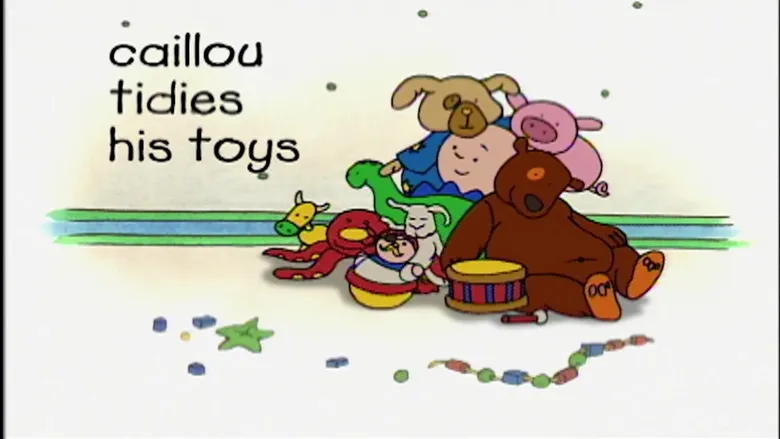
Caillou is called downstairs for chocolate pudding, but his mother and then his father notice that he has left his toys all over the stairs and the driveway. Each parent reminds him that he is not supposed to leave his toys there, and Caillou keeps asking about his pudding before reluctantly starting to tidy. After dad helps him pick everything up and they finally enjoy their pudding, the two of them build a big toy box together and Caillou agrees to pass some of his old toys on to his little sister Rosie.

Explore more

By age 3 years
By platform PBS Kids Tubi TV

Share

Pass this find on to another parent

Link preview

Caillou | Good, co-watching from age 2

Caillou | Good, co-watching from age 2 - Slowscreen

Good · Co-watching from age 2. Caillou follows a young boy and his family through everyday moments at home and around the neighbourhood. The tone is calm and ge...

slowscreen.com

https://slowscreen.com/en/series/caillou

https://slowscreen.com/en/series/caillou

Slowscreen

Caillou | Good, co-watching from age 2 - Slowscreen

Good · Co-watching from age 2. Caillou follows a young boy and his family through everyday moments at home and around the neighbourhood. The tone is calm and ge...

Caillou | Good, co-watching from age 2

slowscreen.com

Caillou | Good, co-watching from age 2 - Slowscreen

Good · Co-watching from age 2. Caillou follows a young boy and his family through everyday moments at home and around the neighbourhood. The tone is calm and ge...

Caillou | Good, co-watching from age 2
slowscreen.com

Caillou | Good, co-watching from age 2 - Slowscreen

slowscreen.com · Posted by you

Caillou | Good, co-watching from age 2 - Slowscreen

0 Share
Caillou | Good, co-watching from age 2
To
Subject Caillou | Good, co-watching from age 2

Good · Co-watching from age 2. Caillou follows a young boy and his family through everyday moments at home and around the neighbourhood. The tone is calm and ge...

https://slowscreen.com/en/series/caillou

Share on WhatsApp Share on X Share on Facebook Share on Telegram Share on Reddit Share on Email

Just launched: free lifetime premium for the first 1,000 members to activate their account.

Create your account

Search by title, show, tag, or topic

We use functional cookies and Google Analytics to improve our site. Learn more