












This program is stimulating. It actively demands attention and can feel intense. For the recommended age, this may be on the more intense side.
The pacing is fast. Images follow each other quickly, leaving little time to pause and take in what is happening.
The sound is soft and supportive.
The visuals are busy, with a lot of movement and frequent changes.
One clear question drives the whole episode: where is the great stink coming from? Events follow each other in order, with a recognisable beginning, middle and end as the friends gather clues and reach an answer, and each action leads to a sensible result so the mystery stays followable. The main caveat is that the science ideas, such as why warmth carries a smell, stack up densely, which is a lot to hold onto for a child at the younger end.
The emotional register stays light and safe throughout. Reactions to the bad smell are played for gentle comedy rather than fear, and the friends treat each other with patience and support as they work the problem together. When something throws them, it is resolved soon after, so tension never lingers. A few bursts of excitement and disgust arrive a little abruptly, but nothing here unsettles a young child.
This episode stands out for showing children how to think a problem through. Ada and her friends notice the smell, ask questions, form ideas about its cause and test them one by one until they find the source. The investigation is their own idea, driven by curiosity rather than handed to them by an adult. Each guess leads to a next action, so the cause-and-effect of their reasoning is easy to follow and genuinely models how to figure something out.
Language is clear, purposeful and full of real meaning, with the friends explaining their thinking in complete sentences. Science words like 'evidence' and 'experiment' are used correctly and in context, and most talk informs or describes rather than just filling space. The one caveat for a three-year-old is that some of this vocabulary sits above their level, even though the conversation around it stays concrete and explanatory.
The episode connects directly to the real world. The children practise observing, questioning and testing, habits a child can carry into everyday life, and the closing live-action segment shows a real scientist examining cheese in a laboratory, tying the smell theme to something tangible. The settings are an ordinary home and play space with a pet cat, and the friendships and teamwork mirror familiar situations. Light imagined visualisations of science ideas stay grounded enough to keep the learning usable away from the screen.
More information
This score shows how inclusively the series portrays diverse people, families and cultures. Scale: Limited → Varied → Rich → Inclusive.
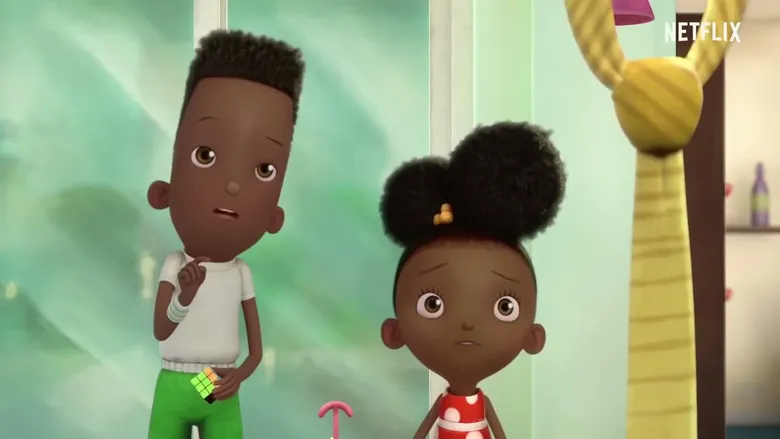
Ada Twist centers a Black girl and her family, joined by friends of different backgrounds and a real woman scientist who all share the screen as a matter of course. Within the group, the children take turns leading, questioning and building, and feelings like curiosity, frustration and excitement appear across boys and girls without being pinned to one type. The clearest limits are a fairly narrow mix of Black and fair-skinned characters and a conventional two-parent household, with adults kept to supportive parts. Overall it gives children a varied, balanced cast where difference is treated as ordinary.
This score shows whether the series stays close to everyday reality or leans into fantasy. Scale: Fantasy → Mixed reality → Realistic.
Ada Twist and her friends investigate a mysterious bad smell using real curiosity and simple experiments, all set in recognisable homes and a science corner. There is no villain anywhere; the only tension is the puzzle itself, worked out through questions and teamwork. Brief imagined sequences picture science ideas like how a smell travels, and they stay consistent and clearly tied to the real world, ending with a real scientist in a live-action segment. For this age the mostly realistic world with light, grounded imagination is a comfortable fit.
This score shows how enjoyable the series is for parents watching along. Scale: Tedious → Tolerable → Pleasant → Enjoyable.
This is a polished, well-made series that holds up as company in the room for a parent. The investigation format gives the story a real shape, the production craft is clean, and the colors and voices stay easy on adult ears. The main caveat is that the jokes and dialogue rarely reach beyond the youngest children, and the song refrains can wear thin on repeat. Overall it sits comfortably as pleasant viewing for a co-watching adult.
Themes
Science
Central
The friends investigate why something smells, with a whiteboard linking steam, heat and smell.
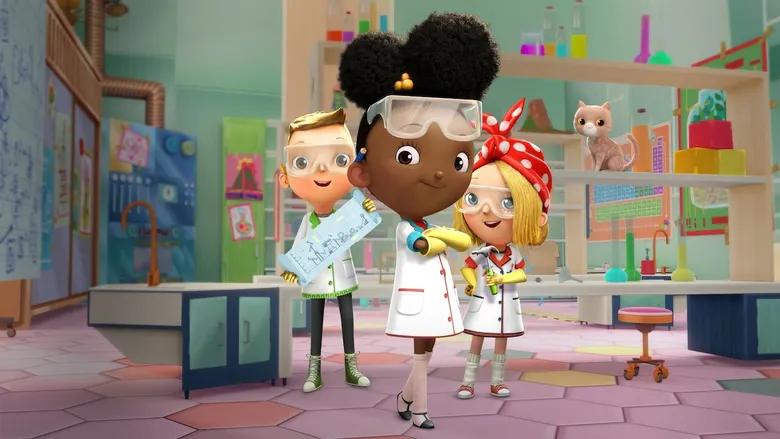
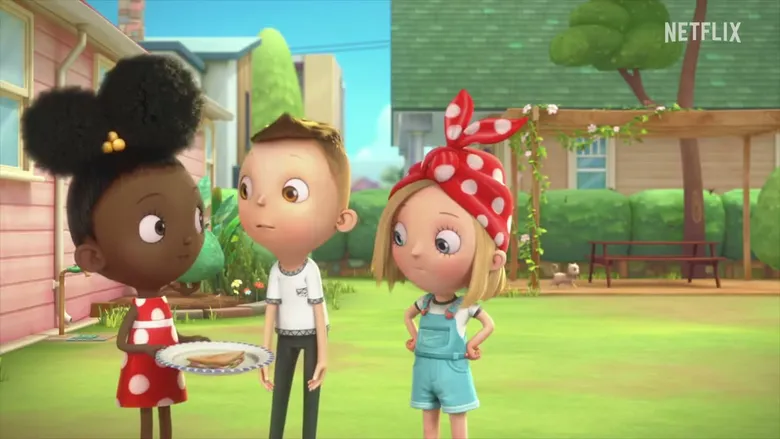
Ada Twist and her friends Rosie and Iggy track down the source of a powerful smell drifting through the house, which they call the great stink. They observe clues, suggest where it might come from and test their ideas until they find the culprit. The final minutes leave the animation behind for a real scientist who studies cheese in a laboratory, linking the story to how smells work in real life. The mystery is solved through teamwork and careful thinking.