







This program is well-balanced. It remains mostly easy to follow and process. It is a good fit for the recommended age.
The pacing is calm. A child has time to watch and understand what is happening.
The sound is clearly present and regularly draws attention.
The visuals are calm and well-organized.
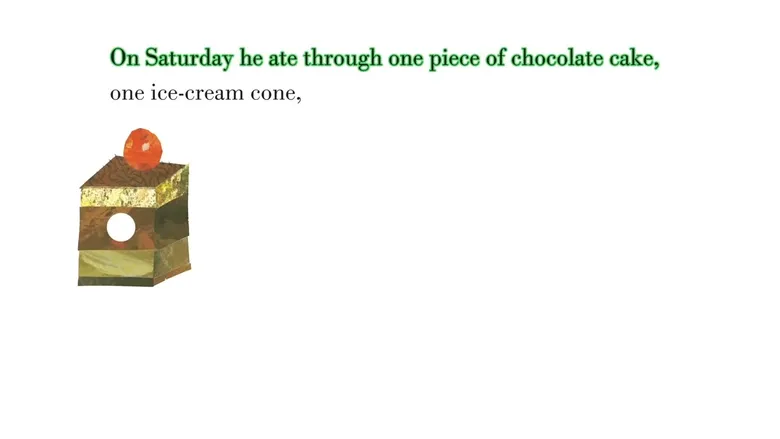
The story follows a single thread the whole way through: one caterpillar, one journey from egg to butterfly, with no side plots to track. Events arrive in a clear order, with the days of the week giving the structure a predictable backbone, and each step leads logically to the next. Actions have consequences a child can follow, such as overeating leading to a tummy ache and then a green leaf bringing relief. The Saturday feast packs many foods into one page and is the busiest moment, but every other beat stays simple and easy to follow.
The emotional feel stays gentle from beginning to end. The narrator's voice is even and reassuring, and the only mild low point, the caterpillar's stomach ache, is settled right away when he eats a green leaf and feels much better. Shifts between feelings are soft rather than sudden, so there are no jolts for a young child. The closing words are encouraging and kind, rounding off the story on a steady, safe note.
The caterpillar acts on his own hunger and sets off to find food himself, which gives the story a thread of self-driven action. But there is little visible thinking or problem-solving: he simply eats, and the resolution arrives through natural consequence rather than any plan he works out. The cause-and-effect lesson is spelled out at the end, that the right foods help him grow while too much of the wrong food causes a stomach ache, yet a child sees the outcome more than any reasoning behind it. There is not much here that models trying, failing, and adjusting.
The language is a strong match for young listeners: short, clear, complete sentences built from concrete words like apple, pear, leaf and cocoon. The repeated line, 'but he was still hungry,' reinforces meaning and helps a child anticipate what comes next. The narration is spoken clearly and the words are used consistently and correctly throughout. Counting from one to five and naming the days of the week add useful, purposeful vocabulary.
The story carries learning a child can connect to daily life: counting, the days of the week, a simple healthy-eating message, and the real stages of a butterfly's life from egg to cocoon to winged insect. The caterpillar eating its way through chocolate cake, salami and lollipops is imaginative rather than something a child would copy, so the on-screen actions themselves are not very transferable. There is also almost no social interaction, since the caterpillar is alone for the whole story, so recognizable family or friendship situations are absent. The clearest takeaways are the counting and the nature concepts rather than everyday social moments.
More information
This score shows how inclusively the series portrays diverse people, families and cultures. Scale: Limited → Varied → Rich → Inclusive.
This is a read-aloud of a classic picture book, hosted by a single adult woman who introduces and closes the reading while the story follows a caterpillar eating its way through fruit and snacks before turning into a butterfly. Almost no human variety appears on screen: there are no children, no families and no range of ages, backgrounds or ways of living, just one narrator and an animal protagonist. Because the cast is so small, there is no real spread of roles to weigh, and nothing tips into stereotype. The format simply offers very little breadth of representation.
This score shows whether the series stays close to everyday reality or leans into fantasy. Scale: Fantasy → Mixed reality → Realistic.
A friendly host reads the story of a small caterpillar that eats its way through fruit and treats and then turns into a butterfly. Almost everything on screen is recognizable from a child's world: real foods, the days of the week, and the real change from caterpillar to butterfly, with only a light touch of make-believe in a creature munching cake and salami. There is no villain anywhere, and the only trouble comes from eating too much, which is quickly settled. This gentle blend of real life and a small dose of imagination sits comfortably with a three-year-old.
This score shows how enjoyable the series is for parents watching along. Scale: Tedious → Tolerable → Pleasant → Enjoyable.
A host reads Eric Carle's classic aloud while the book's illustrations fill the screen. It is easy company for an adult in the room, with a warm, even narrator voice and soft background music. The story carries a real arc from egg to butterfly, though the middle leans on counting fruit and a repeated refrain. Little is pitched at a parent's own sense of humor, but nothing here grates.
Themes
Healthy eating
Central
The closing line teaches that 'eating the right things helped him grow' while the wrong things 'gave him a stomachache'.
Life cycle
Central
The story traces a caterpillar from an egg on a leaf to a cocoon and finally a butterfly.
Food
Central
Each page names foods the caterpillar eats, from apples and pears to cake and watermelon.
Ms. Linda introduces and reads aloud the picture book 'The Very Hungry Caterpillar' by Eric Carle. A tiny caterpillar hatches from an egg and eats through more food each day of the week, then overeats a feast of rich treats on Saturday and gets a stomachache. After eating a green leaf he feels better, grows large, forms a cocoon, and comes out as a butterfly. The host closes with a short note about eating well and an invitation to read more stories.