







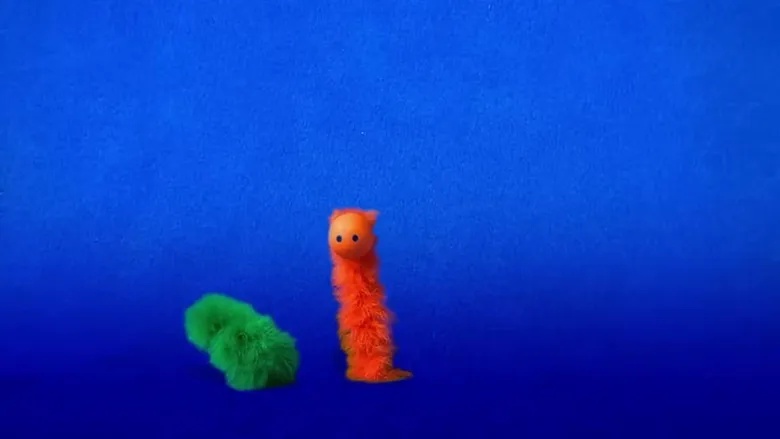
This program is stimulating. It actively demands attention and can feel intense. For the recommended age, this may be on the more intense side.
The pacing is moderate. The story remains easy for a child to follow.
The sound is intense and continuously present.
The visuals are well-balanced, with a clear overall view.
The emotional register stays warm and playful from beginning to end, with friendly costumed characters smiling, clapping and cooperating on each act. There are no raised voices, no fearful expressions, no mocking, and the few small surprises ('boom', 'wow') resolve immediately into laughter or applause. A small caveat is that the abrupt switch from one act to a completely different costumed world can feel like an emotional reset rather than a transition, but the tone across all acts stays in the same gentle positive range.
More information
This score shows how inclusively the series portrays diverse people, families and cultures. Scale: Limited → Varied → Rich → Inclusive.
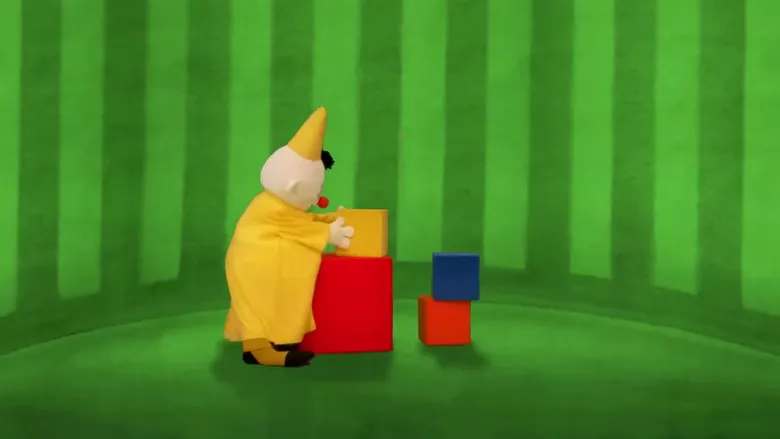
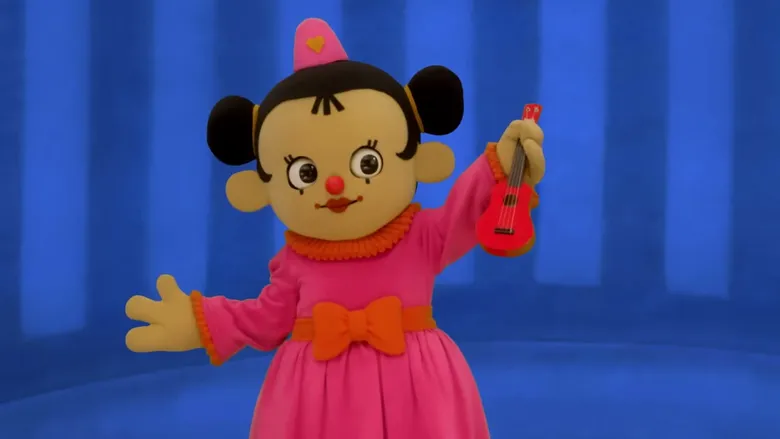
This Bumba episode is a music and movement piece with almost no spoken dialogue. The cast consists of costumed clown characters (Bumba, Bumbina, Arro), a mouse-like figure in a pink tutu (Nanadu), and groups of small puppet figures in matching yellow and red outfits. Because the world is built from fantasy puppets rather than humans, there is little room for visible diversity in ethnicity, family forms, bodies or age, and the roles stay largely interchangeable as the figures dance and drum together.
This score shows whether the series stays close to everyday reality or leans into fantasy. Scale: Fantasy → Mixed reality → Realistic.
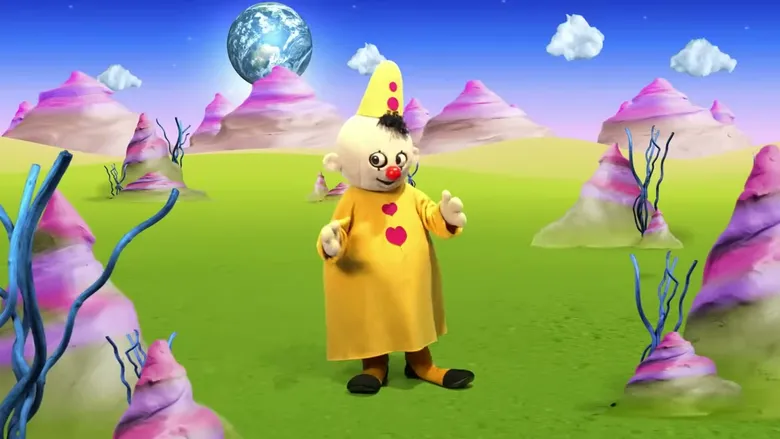
This Bumba episode plays out in a fully theatrical circus and fantasy world with costumed clown characters, dancing mice in tutus, and space sequences where purple shapes float past the moon. For a recommended age of 1 year, where almost everything should still be recognizable from daily life, the realism gap is large. There is no villain figure and no good-versus-evil framing, and the imagined world stays internally consistent throughout. The main concern at this age is the heavily costumed, dreamlike presentation rather than any conflict on screen.
This score shows how enjoyable the series is for parents watching along. Scale: Tedious → Tolerable → Pleasant → Enjoyable.
This Bumba episode is a wordless music and dance spectacle with costumed performers in bright circus-style settings. There is essentially nothing for an adult co-viewer to latch onto: no plot, no dialogue, no humor layers, just a parade of drumming, dancing, and applause set against saturated red, yellow, and blue backdrops. The production has a distinctive visual identity but the relentless music and high color saturation make extended adult co-viewing fatiguing.
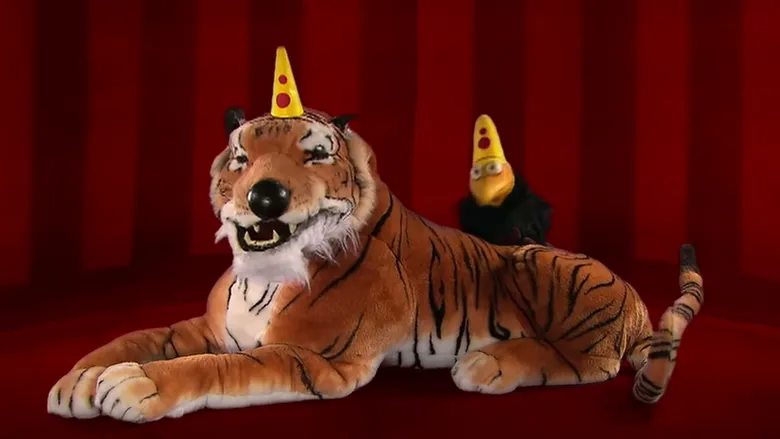
This Bumba episode is a five-minute string of music and movement acts performed by people in colourful clown and animal costumes. Bumbina spins a yoyo, a row of ducks dances on a ring, puppet figures sing, Bumba and Arro drum together in a starry space backdrop, and Nanadu finishes with a tap-dance solo in front of red curtains. The Bumba logo spins between each segment to mark the transition. The episode ends with a group dance and closing credits.