























This program is well-balanced. It remains mostly easy to follow and process. It is a good fit for the recommended age.
The pacing is fast. Images follow each other quickly, leaving little time to pause and take in what is happening.
The sound is soft and supportive.
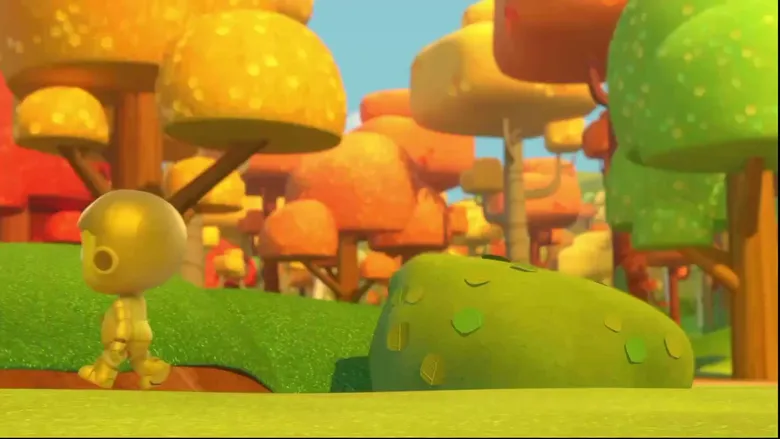
The visuals are calm and well-organized.
One clear question drives the whole episode: what do you actually do at a restaurant. Events follow in an order a preschooler can track, from the dinner invitation to arriving, learning the steps, and the closing realization. New ideas like napkins, silverware, menus, and ordering arrive one at a time, and each character action leads to a sensible next event, such as grabbing food off a plate leading to Emma explaining the right way. The load of new information is on the fuller side for this age but stays organized around the single thread.
The tone stays warm and supportive throughout, with Emma patiently guiding her robot friends and both families being kind as the bots fumble. The few dips, like Doug looking sad when the silverware drops, are quickly answered with reassurance and a solution, so tension never lingers. Characters behave consistently and treat each other with respect, and small mistakes are met with help rather than mockery. Emotional shifts are gentle and gradual, keeping the whole episode comfortable to sit through.
The bots take initiative in their own way, deciding to visit the restaurant, spreading out to investigate, and Doug plugging in to research what a restaurant is. Much of the learning happens by watching Emma demonstrate rather than through independent trial and error, which softens how visible the thinking process is. Still, there are real problem moments, such as figuring out what to do after the silverware falls, that the characters reason through by asking for help. Doug even carries the idea home, setting up a chat spot in the recharge room, which shows the lesson being applied.
Language is clear and purposeful, with characters naming and explaining real things like silverware, napkins, and menus in full, understandable sentences. The robot family adds words like 'reboot', 'sensors', and 'optimal', which stretch vocabulary in a way a four-year-old can follow from context. Most dialogue informs or describes rather than just exclaiming, and the speech is clean and easy to make out. A few playful 'ooh' and 'wow' moments sit alongside the meaningful talk without crowding it out.
The episode centers on a genuinely useful real-world experience: how a restaurant works, from reading a menu to placing a napkin, ordering, waiting, and talking with the people you are with. These actions are easy to carry into a child's own life, and the closing point that eating out is about spending time together is a recognizable social lesson. The setting mixes a realistic restaurant and human family with a robot world of recharge pods and plugging in, so it is not fully grounded in reality. For this age the imaginative frame stays coherent and the practical takeaways remain clear.
More information
This score shows how inclusively the series portrays diverse people, families and cultures. Scale: Limited → Varied → Rich → Inclusive.
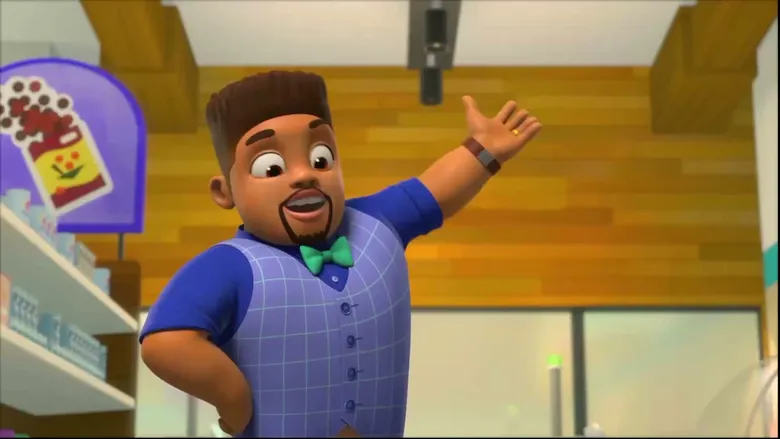
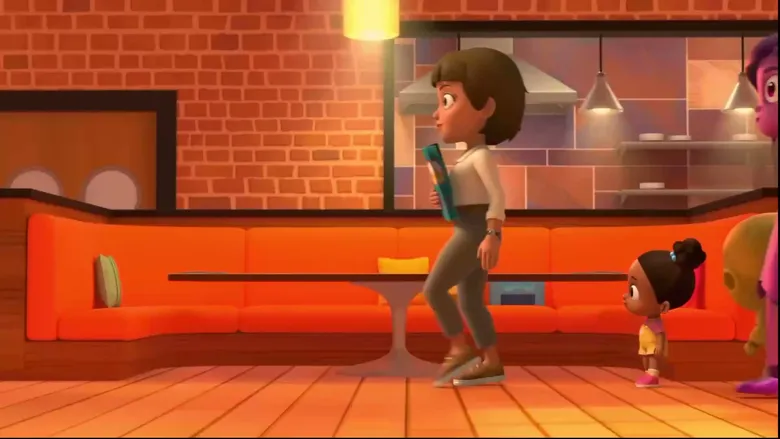
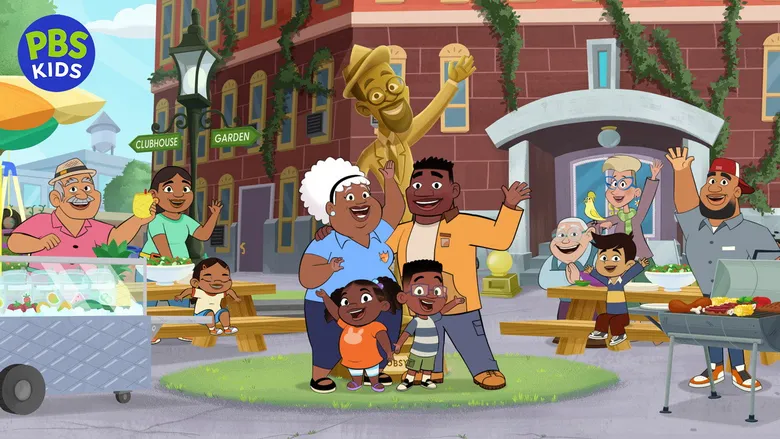
The episode brings together a robot family and a human family for dinner, and the cast is visibly varied. The Pine family, who are Black, appear throughout with two parents and young twin sisters, while the restaurant fills with patrons and staff of different skin tones and ages. Tasks and initiative are spread across the group rather than tied to one type of character: mothers and fathers both take part, and the children lead as much of the action as the adults. The result is a broad, natural picture of people sharing a meal together.
This score shows whether the series stays close to everyday reality or leans into fantasy. Scale: Fantasy → Mixed reality → Realistic.
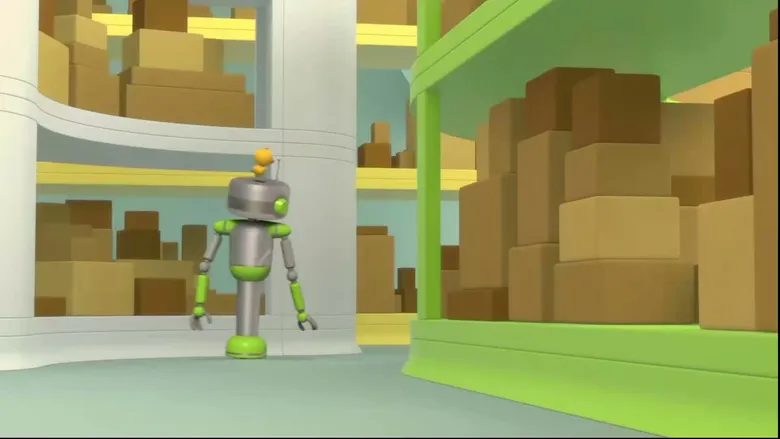
This episode blends a light fantasy premise with a very recognizable everyday setting. Doug and his robot family recharge on pods and work as robots, but the whole story takes place in an ordinary restaurant where they learn about menus, silverware, napkins, waiting, and making conversation. There is no villain and no hero-versus-enemy framing; every bump comes from the robots simply not knowing how a restaurant works. The imaginative and real-life parts fit together clearly, which suits a child of this age well.
This score shows how enjoyable the series is for parents watching along. Scale: Tedious → Tolerable → Pleasant → Enjoyable.
This episode holds up reasonably well for the adult in the room. The story has a clear arc, a robot family learning that a restaurant is really about talking and connecting, not just food, which gives a watching parent something to follow. The polished animation and warm restaurant setting are easy on the eyes, and the one repeated song is the only real irritant. There is little humor aimed squarely at grown-ups, so most of the appeal stays child-pitched.
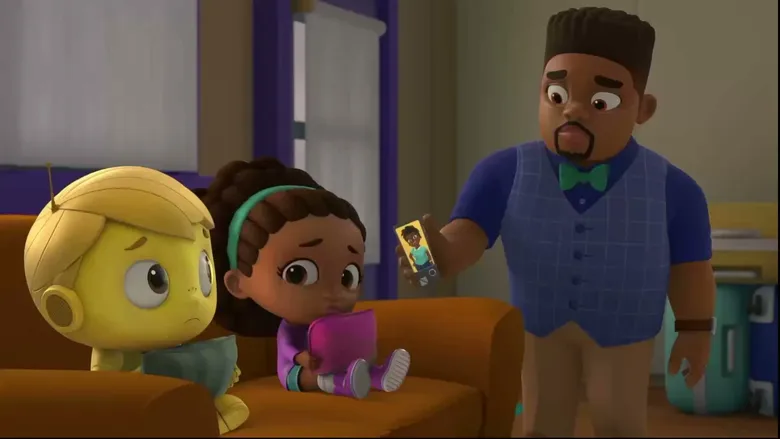
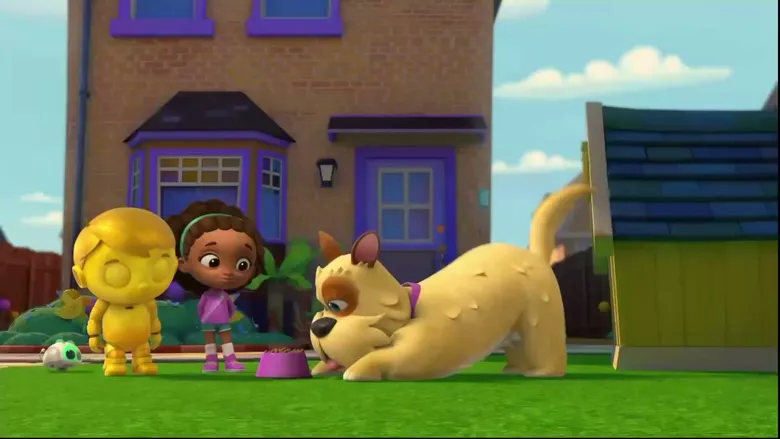
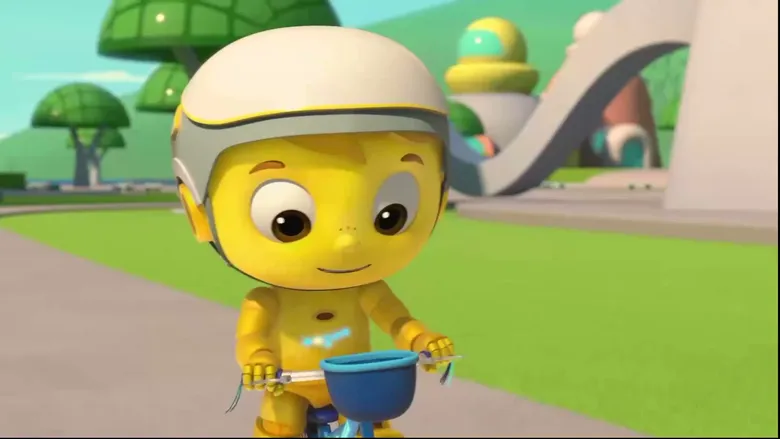
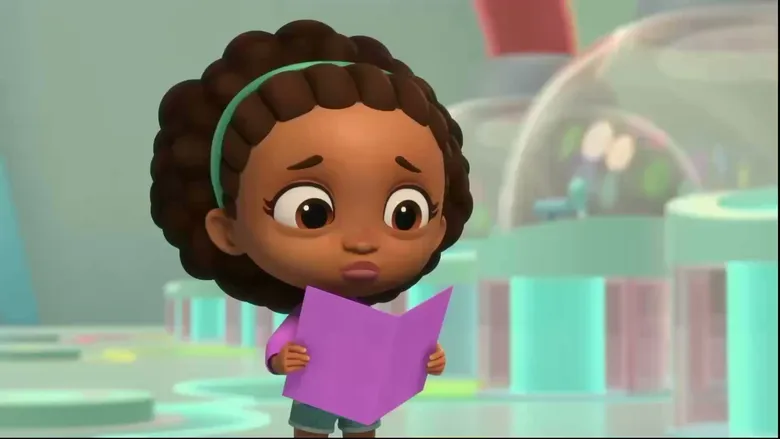
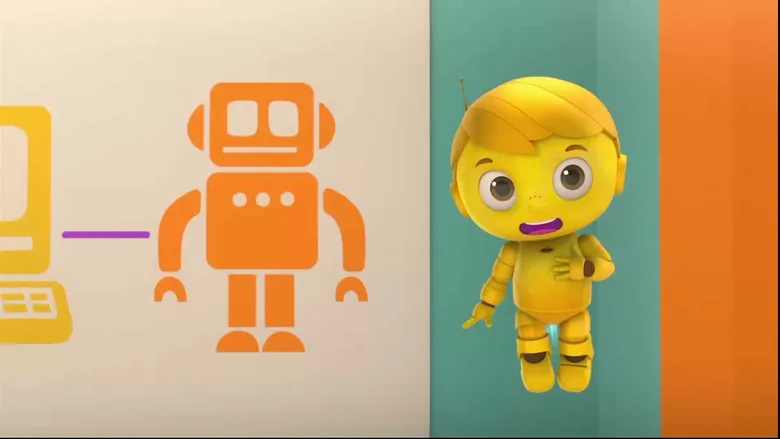
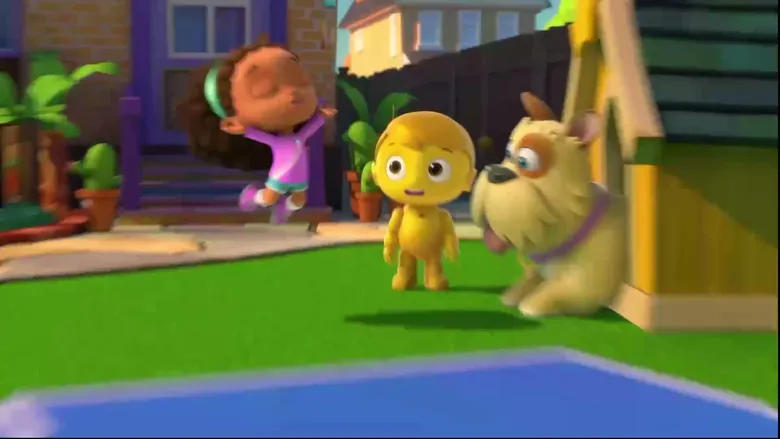
A golden robot child named Doug and his parents, Bob-Bot and Becky-Bot, are invited to dinner by their human friend Emma and her family. The bots have never been to a restaurant, so Emma shows them how menus, napkins, silverware, ordering, and waiting all work. Along the way the bots make small mistakes, like grabbing food from a stranger's plate, and learn the right way to do things. By the end Doug realizes that eating out is really about spending time and talking with people you care about, and he sets up a chat spot back in the recharge room.