

Slowscreen SlowScreen
Toggle sidebar

Just launched: free lifetime premium for the first 1,000 members to activate their account.

Start free

Kiri & Lou

Good

Recommended age Unlock

Co-watching from age 2

Balanced

Exact score locked

Watch on Apple TV+
Availability in
Save
Kiri & Lou

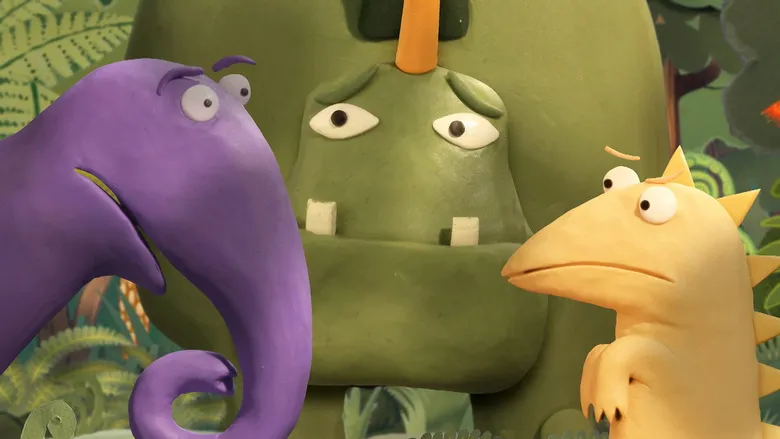
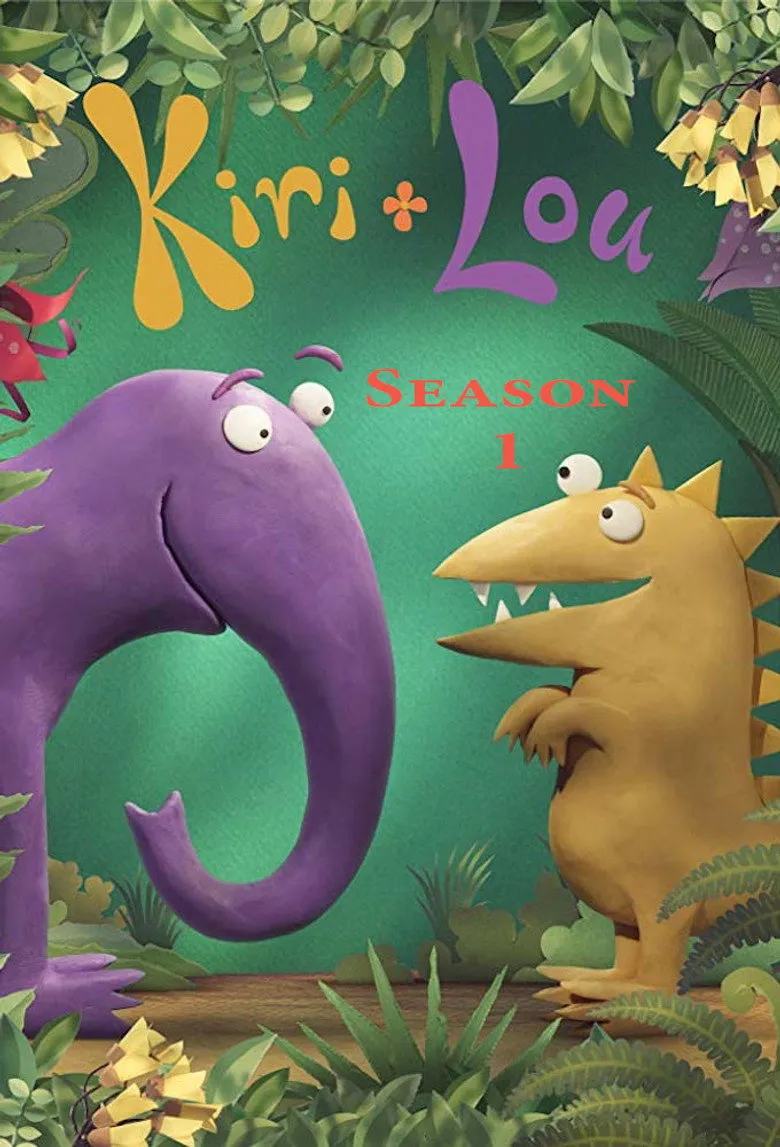
Kiri & Lou follows two clay creature friends through small upsets in their prehistoric forest home. The tone is calm and soothing, aimed at young preschoolers, with emotional learning woven through.

  • Models apologising and making amends after small conflicts.
  • Calm pacing suits short attention spans.
  • Names and validates feelings like hurt and loneliness.
  • Gentle message that being different is okay.
  • Mild sadness and hurt feelings appear at times.
  • Brief teasing and exclusion before friends make up.
  • Mildly tense for the youngest viewers.

See the exact scores

The review is yours to read. Create a free account to reveal the exact SlowScreen score and every pillar score.

Create free account

Score Breakdown

The visuals stay calm and well organised, with soft earthy colours and uncluttered forest scenes that are easy to take in. The pacing tends to run on the quick side, with images following each other fast enough that there is little time to pause on what just happened, and the sound is consistently present and regularly draws attention. 'Imaginary Friend' settles into a more moderate tempo that is gentler to follow. Across the series it stays easy enough to process and remains a comfortable match for the recommended age, though the brisk pace and ever present sound are worth noting for the youngest watchers.
Every episode tells one clear story with a recognisable beginning, middle and end, so a young child can keep track of what is happening. Cause and effect are explicit, for example Lou eating all the shared fruit leaves none for Kiri, which is exactly what upsets her, and new information arrives one idea at a time without crowding the viewer. The single thread carries each episode, whether it is finding a hidden friend or reaching a stranded Lou across the lake. Occasionally a small step is skipped over, such as how Lou drifts to the middle of the lake in 'Super Sticky Situation', but the overall arc always stays coherent.
Real feelings sit at the centre of the series, and they are handled with warmth and care. Characters name their emotions honestly and model repair, such as Lou's sincere 'I'm sorry, I wasn't thinking' or friends reassuring a lonely Kiri with 'We're here.' Distress never escalates into anything frightening, and tense moments are settled within the episode through apology and comfort. The gentleness wavers a little at times, sadness can sit unresolved for a stretch before help arrives, and the shift from a happy song to Dalvanius being hurt in 'Amazing Ears' is sudden, leaving the upset only partly soothed before the close.
The characters drive their own situations, and conflicts grow from their choices rather than from outside events. Kiri often shows clear initiative, working out on her own that she has hurt a friend and choosing to make it right, with her thinking made visible through song. What holds this back is that the problems are usually emotional rather than hands-on puzzles, so there is little step-by-step working out to follow, and resolutions lean on apology or on a friend arriving to help. In 'Super Sticky Situation' Lou is encouraged to rely on himself, but the situation is ultimately solved when Kiri finds him rather than through his own plan.
The language fits a young preschooler well, built from short clear sentences and concrete words like 'ripe,' 'feast' and 'sorry,' delivered by expressive, easy to understand voices. Most speech carries real meaning, and repeated words tied to each story, 'sorry,' 'camouflage,' 'calm inner voice,' reinforce the theme rather than filling space. A few words reach a little higher, such as 'apologise,' 'temperature' or 'species,' but they sit in situations that make them clear, and friendly te reo Maori words like 'Ka-pai' add interest. The dialogue does lean on cheerful exclamations like 'Oh, wow!' and 'Whoa,' which bring energy more than information.
The social and emotional heart of the series is genuinely recognisable: keeping a promise, owning a mistake, saying a real sorry, feeling left out and being comforted are all things a young child meets in daily life. These lessons transfer well, mirroring real playground dynamics closely. What limits the everyday usefulness is that the surface world is fully imagined, with talking prehistoric creatures, invisible friends and moments of floating, so little of what is shown maps onto real objects or activities a child could copy at home. The lasting takeaways are emotional rather than practical, and there are few concrete, hands-on steps to carry off the screen.

More information

This score shows how inclusively the series portrays diverse people, families and cultures. Scale: Limited → Varied → Rich → Inclusive.
The series tells its stories through an all-creature cast in a single forest world, so the visible human markers of diversity, such as different ethnicities, family types, ages and body types, are not part of the picture. What stands out instead is the cultural grounding in New Zealand English and te reo Maori, with natural greetings like 'Kia ora' and 'Ka-pai' that rarely feature in children's media. The series is strongest in how its characters behave: the bold, take-charge lead is voiced as a girl, Kiri, while the gentle, openly emotional friend is voiced as a boy, Lou, quietly turning the usual gender pattern around. Both move freely through a full range of feelings and treat each other as equals, sharing blame and standing up for friends.
This score shows whether the series stays close to everyday reality or leans into fantasy. Scale: Fantasy → Mixed reality → Realistic.
The series is built around everyday emotional situations a young child recognises at once, a friend eating all the shared treats, teasing that hurts, the wish to be included, and it grounds every episode in those true to life feelings. The cast is made of imagined forest creatures, with light fantasy touches like an invisible friend or a brief moment of floating, and these stay internally consistent without overwhelming the emotional core. There is no villain at any point; tension comes only from a relatable mistake or from being lost, and it resolves through kindness and apology. 'Amazing Ears' leans a little more heavily on imagination, but the calm pace and relatable emotions keep it well within reach for this age.
This score shows how enjoyable the series is for parents watching along. Scale: Tedious → Tolerable → Pleasant → Enjoyable.
If you are sharing the couch, this is easy and often rewarding company. The handmade clay look, painted forest backdrops and crafted, sculpted characters give it a real visual signature, while gentle voices, muted earthy colours and original acoustic songs keep it pleasant rather than grating. The writing has quiet wit that rewards an adult listening along, like a creature actually named 'Sorry' turning up because she thought she was being called, or Lou meeting his own 'calm inner voice.' The jokes stay mostly child pitched, so your reward comes more from the craft and warmth than from gags aimed over the kids' heads, but there is enough here to hold your attention.

Season 1

5 episodes

Kiri & Lou
S01 E01

Kiri & Lou

Yum Yum Baronies

Balanced
recommended age Unlock co-watching from 2
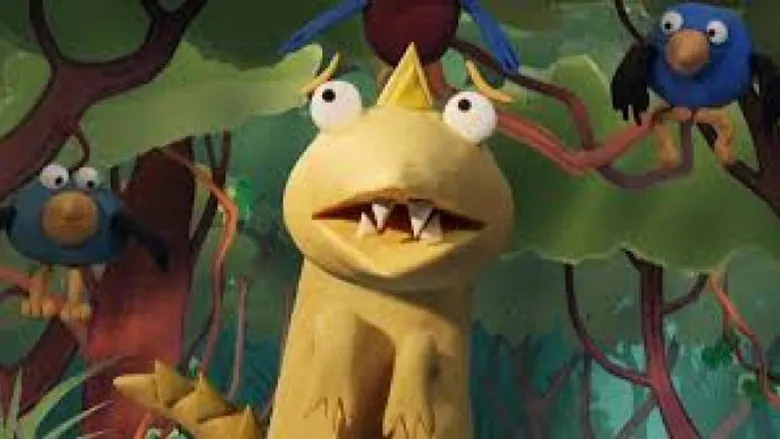
Kiri, a small creature with a red crest, and her purple friend Lou plan to share a feast of their favorite fruit, the yum yum baronies, in their forest home. While Kiri is up a tree, Lou cannot resist and eats every single one, then admits he wasn't thinking. Kiri is hurt that the feast and Lou's promise are both gone, and a drawn-out muddle follows over whether Lou has properly said sorry, briefly involving a passing creature whose name happens to be 'Sorry.' The two friends finally apologize to each other and make up, then set off to look for another tree.

Kiri & Lou
S01 E03

Kiri & Lou

Refreshing

Balanced
recommended age Unlock co-watching from 2
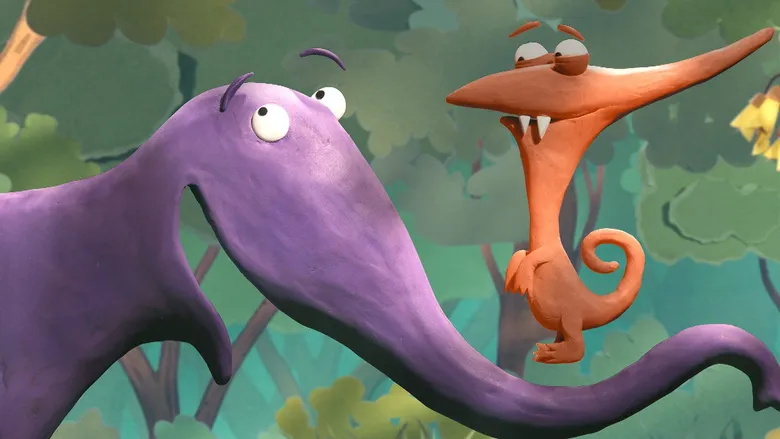
Kiri, a bold little dinosaur, and Lou, a gentle purple creature, are best friends who decide to go swimming in their forest. The water turns out to be too cold for Lou, and when Kiri splashes him and laughs, his feelings are hurt and he quietly goes off on his own. A trio of birds sings while Kiri realises she has upset her friend and feels bad about it. She finds Lou, apologises for being mean, and the two make up.

Kiri & Lou
S01 E04

Kiri & Lou

Imaginary Friend

Balanced
recommended age Unlock co-watching from 2
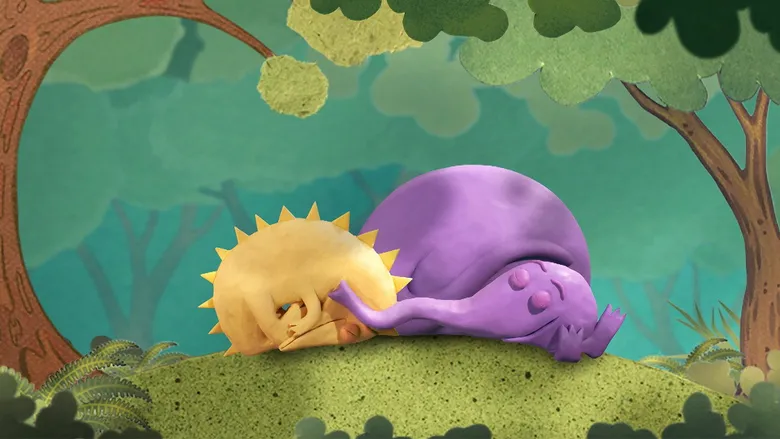
Kiri, a small dinosaur, learns that her friend Lou has an imaginary friend named Dalvanius and begins to feel left out. Alone in the forest, she sings a 'Lonely Song' about having no one to play with, and her forest friends gather to comfort her and remind her she is not alone. After asking for some space, Kiri tries imagining her own friend and is delighted when the pretend play feels real. The episode ends as Lou invites her to come and play, and she rushes off to join in.

Kiri & Lou
S01 E05

Kiri & Lou

Super Sticky Situation

Balanced
recommended age Unlock co-watching from 2
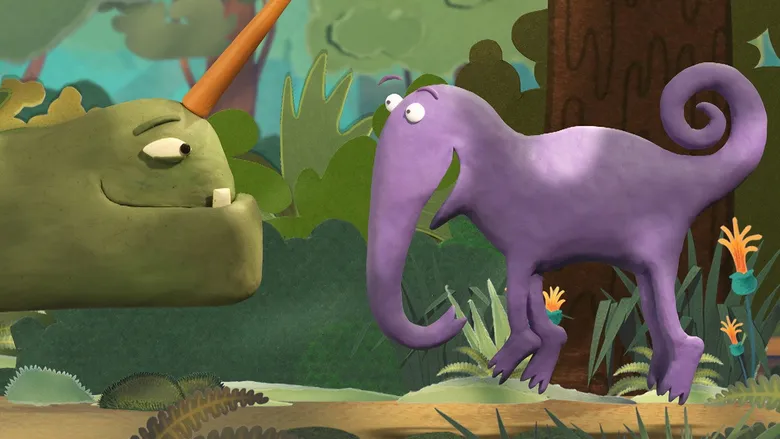
Lou, a purple creature with a long neck and a trunk, wakes to find himself stranded on a lily pad in the middle of a forest lake. He panics, then meets his Calm Inner Voice, who helps him stay calm and reminds him he is clever enough to think of something. Meanwhile his friend Kiri, a bold little dinosaur, searches all around the lake asking the other creatures for help. The episode ends when Kiri finds Lou and tells him she was starting to worry.

Kiri & Lou
S01 E06

Kiri & Lou

Amazing Ears

Balanced
recommended age Unlock co-watching from 2
Kiri, a small dinosaur, and Lou, a gentle purple creature, set out to meet Dalvanius, a shy friend who is so good at camouflage that he seems invisible. In a green prehistoric forest they coax him out, and when he finally reveals his very large ears they celebrate them with a song called 'Amazing Ears.' When other creatures laugh at his ears, Dalvanius is hurt and hides again, so Kiri and Lou tell them off, explaining that being different is no reason to laugh at someone. The episode closes on a brief, comic scuffle as the friends take Dalvanius's side.

Explore more

By age 3 years
By platform Apple TV+

Share

Pass this find on to another parent

Link preview

Kiri & Lou | Good, co-watching from age 2

Kiri & Lou | Good, co-watching from age 2 - Slowscreen

Good · Co-watching from age 2. Kiri & Lou follows two clay creature friends through small upsets in their prehistoric forest home. The tone is calm and soothing...

slowscreen.com

https://slowscreen.com/en/series/kiri-lou

https://slowscreen.com/en/series/kiri-lou

Slowscreen

Kiri & Lou | Good, co-watching from age 2 - Slowscreen

Good · Co-watching from age 2. Kiri & Lou follows two clay creature friends through small upsets in their prehistoric forest home. The tone is calm and soothing...

Kiri & Lou | Good, co-watching from age 2

slowscreen.com

Kiri & Lou | Good, co-watching from age 2 - Slowscreen

Good · Co-watching from age 2. Kiri & Lou follows two clay creature friends through small upsets in their prehistoric forest home. The tone is calm and soothing...

Kiri & Lou | Good, co-watching from age 2
slowscreen.com

Kiri & Lou | Good, co-watching from age 2 - Slowscreen

slowscreen.com · Posted by you

Kiri & Lou | Good, co-watching from age 2 - Slowscreen

0 Share
Kiri & Lou | Good, co-watching from age 2
To
Subject Kiri & Lou | Good, co-watching from age 2

Good · Co-watching from age 2. Kiri & Lou follows two clay creature friends through small upsets in their prehistoric forest home. The tone is calm and soothing...

https://slowscreen.com/en/series/kiri-lou

Share on WhatsApp Share on X Share on Facebook Share on Telegram Share on Reddit Share on Email

Just launched: free lifetime premium for the first 1,000 members to activate their account.

Create your account

Search by title, show, tag, or topic

We use functional cookies and Google Analytics to improve our site. Learn more