


















This program is stimulating. It actively demands attention and can feel intense. For the recommended age, this may be on the more intense side.
The pacing is fast. Images follow each other quickly, leaving little time to pause and take in what is happening.
The sound is soft and supportive.
The visuals are calm and well-organized.
One clear goal carries the whole story: the circus band has the hiccups from spicy salsa and the children set out to find a mariachi band to perform for the visiting president. Events follow each other in a sensible order, from the music shop to Plaza Garibaldi to finding Elena, so a child can track what is happening and why. New cultural facts and characters arrive in a fairly steady stream, which asks for some attention but stays tied to the story. Actions lead to logical results, like the spicy salsa causing the hiccups that start everything off.
The mood stays warm and supportive from start to finish. When accidents happen, characters respond with kindness rather than blame, with lines like 'no harm done my friend' and 'everything's going to be okay little one'. The worry about finding a band in time is mild and is always followed by reassurance or a workable solution. Characters treat each other with respect and behave consistently, so the emotional ground feels safe and predictable for this age.
The children take real ownership of the problem. Carmen suggests asking her guitar teacher Elena, and the group reasons its way forward, deciding to listen for mariachi music to track the band down across the city. When one guitarist turns out to be missing, Carmen steps in to fill the gap herself. The thinking is visible across several steps, with the small caveat that the starting trouble is handed to them by the salsa rather than something the children set in motion.
Language is clear and conversational, built from full sentences a preschooler can follow. Spanish words are woven in and translated on the spot, such as 'hola' for hello and 'gracias' for thank you, and new terms like 'mariachi' arrive with enough context to make sense. The dialogue mostly informs and describes rather than just exclaiming. A few exchanges move quickly, but word use stays consistent and meaningful throughout.
The episode connects to the real world through genuine cultural content: a real city, the Spanish language, and Mexican music traditions a child could recognise and ask about. Everyday actions like helping someone gather what they dropped, apologising and asking for help carry straight over into daily life. Alongside this sits a fantasy layer, a talking moon and a talking globe, that keeps part of the world imaginary. The social situations, a teacher and her student, a travelling family, helping a neighbour, mirror patterns children already know.
More information
This score shows how inclusively the series portrays diverse people, families and cultures. Scale: Limited → Varied → Rich → Inclusive.
This episode puts Mexican culture and the Spanish language at its centre, with a Spanish-speaking lead in Carmen, mariachi music, real Mexico City locations, and her grandmother's folk tale woven through the story. A range of people appear, from musicians and a shop owner to circus performers and a visiting national president, spanning different ages and walks of life. Roles and initiative are shared across the cast, and feelings are shown openly without being pinned to a character's gender or type. The main limit is that the breadth comes through one featured culture and through cultural cues, since the cast itself is made up of animal characters.
This score shows whether the series stays close to everyday reality or leans into fantasy. Scale: Fantasy → Mixed reality → Realistic.
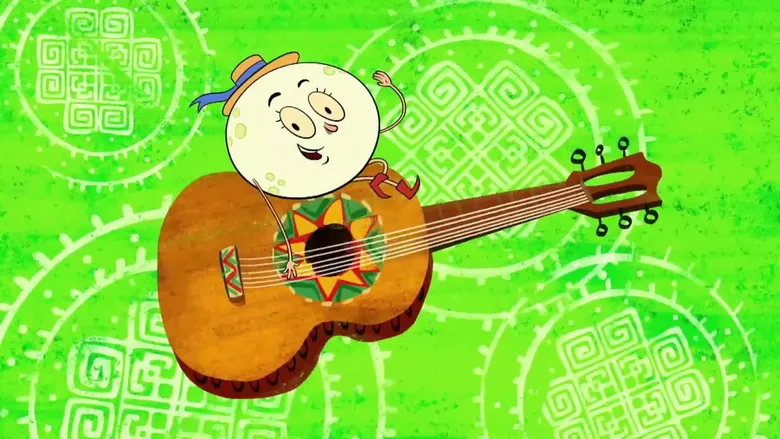
This episode sets a real place at its center: the children explore Mexico City, learn Spanish greetings, and discover mariachi music, instruments, and Plaza Garibaldi. Around that grounded core sit two gentle fantasy figures, Luna the talking moon and a Magic Globe that shares facts, which a child will read as imaginative rather than realistic. There is no villain anywhere; the trouble comes entirely from situations, like a band getting the hiccups from spicy salsa and a guitar getting knocked over. The light, consistent fantasy paired with real cultural learning fits a four to six year old comfortably.
This score shows how enjoyable the series is for parents watching along. Scale: Tedious → Tolerable → Pleasant → Enjoyable.
The strongest draw for an adult in the room is the production itself, with clean animation and a warm mariachi soundtrack that is easy to sit through. The story holds together too, following the children and Luna as they search Mexico City to save the night's performance. What it lacks is a second layer for grown-ups, since the humour and dialogue stay pitched squarely at young children. Pleasant to have on and simple to follow, without much that rewards an adult co-viewer on its own terms.
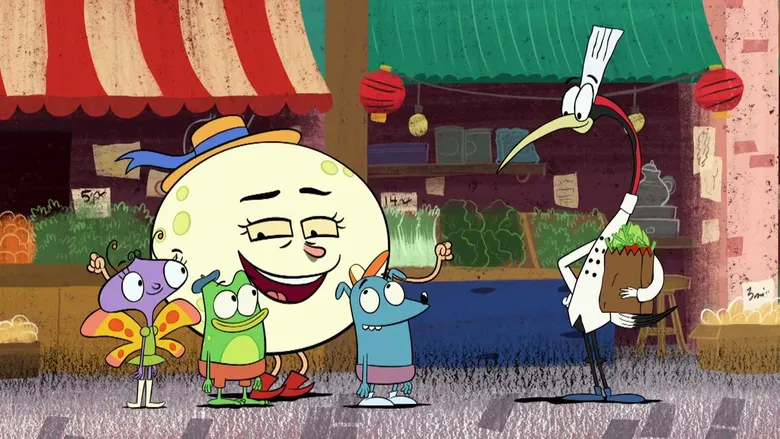
In Mexico City, circus children Carmen, Leo and Andy learn that the circus band has the hiccups from eating spicy salsa and cannot perform for the visiting president. Carmen leads a search across the city for her guitar teacher Elena and her mariachi band, asking a music shop owner named Julio for directions along the way. They find Elena at Plaza Garibaldi, and when one guitarist is missing, Carmen fills in herself so the mariachi band can play and save the show. The episode closes with a short folk tale Carmen retells about five silly travelers resting under a tree.