










This program is well-balanced. It remains mostly easy to follow and process. It is a good fit for the recommended age.
The pacing is fast. Images follow each other quickly, leaving little time to pause and take in what is happening.
The sound is soft and supportive.
The visuals are calm and well-organized.
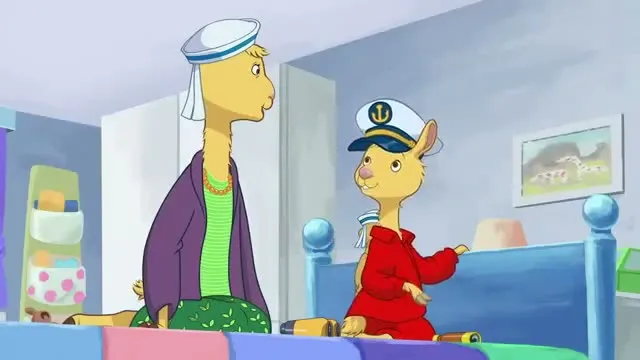
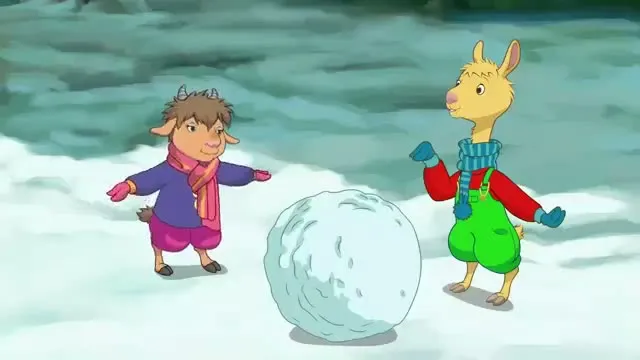
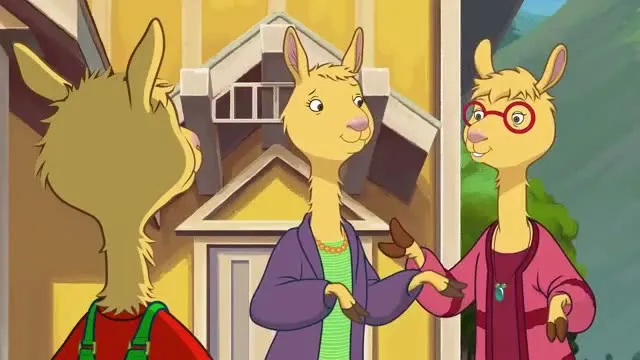
One clear thread runs from start to finish: a snow sculpture contest is announced, Llama Llama is asked to judge it, and he works out how to choose a winner. Events follow in order, from the announcement at school to the anticipation at bedtime to the contest in the park and the final decision, so a child always knows where they are. New information arrives at a comfortable rate for this age, mostly through characters naming what they are doing and thinking. Actions lead to sensible outcomes, like Llama Llama taking a break and then finding an answer, which keeps the logic easy to track.
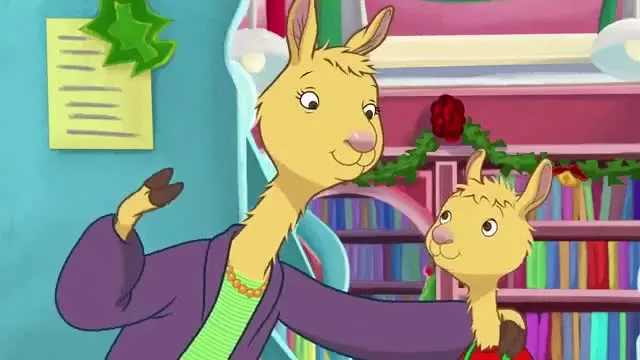
The tone between characters is warm and supportive throughout. Friends tell Llama Llama they trust him to be fair, Mama reassures him at bedtime and in the library, and no one is mocked or put down. The strongest feelings are mild: playful roaring as a pretend snow monster and a small worry about how to pick just one winner, both of which settle quickly into calm reassurance or a solution. Emotional shifts are gentle and signposted, so a four-year-old is unlikely to feel caught off guard.
Llama Llama carries a real problem: he must judge fairly, keep the rules, and choose a single winner when every sculpture is different. His thinking is visible in steps, from naming the difficulty to taking a hot chocolate break, listening to Mama's snowflake idea, and arriving at his own creative fix of giving each entry its own category. The judging role is handed to him by the contest rather than something he sets out to do, which tempers how much of the initiative is his own. Still, the final idea is clearly his, and the reasoning that leads there is shown rather than simply announced.
The dialogue is clear and easy to follow, with speech that stays consistent and purposeful. Language reaches a little beyond the everyday in a good way, introducing words like 'sculpture', 'announcement', 'judge', 'fair', and even 'coliseum', usually explained by what is happening on screen. Sentences are mostly complete and well formed, and much of the talk gives information or describes plans rather than just exclaiming. A small caveat is that some exchanges lean on excited repetition of how great things are, which carries less meaning than the rest.
The activities connect to things a child knows: playing in the snow, building snow figures, visiting the library, and treating friends fairly in a friendly competition. The episode also slips in a real fact, that no two snowflakes are alike, and ties it neatly to the idea that everyone's work is different and worth valuing. Because these are talking animals in an imagined town, some of it sits in a light fantasy frame, which is fine at this age given how coherent and grounded the world stays. The social situations, a school announcement, a family bedtime, and a group contest, mirror everyday life closely enough to carry over off screen.
More information
This score shows how inclusively the series portrays diverse people, families and cultures. Scale: Limited → Varied → Rich → Inclusive.
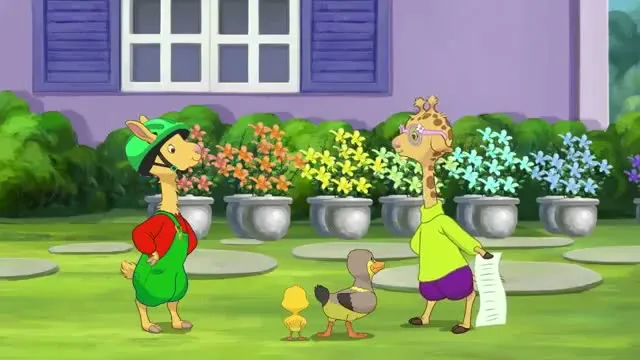
The episode is set in a snowy suburb populated by a friendly mix of animals: llamas, a zebra, giraffes, sheep and goats, each with their own look and personality. Family variety shows up quietly, with Llama Llama raised by his mother Mama on her own, and adults like the teacher Zelda Zebra shown as capable and trusted. Boys and girls take part equally in the snow sculpture contest, and the female teacher leads the class while Llama Llama is trusted to judge fairly. The world stays fairly uniform in look and setting, but roles are shared without rigid patterns tied to who a character is.
This score shows whether the series stays close to everyday reality or leans into fantasy. Scale: Fantasy → Mixed reality → Realistic.
The world of this episode is drawn straight from everyday life: playing in the snow, an exciting school announcement, a town contest, a trip to the library, and going to bed too excited to sleep. The only imaginative touches are that the characters are animals and a brief pretend game where Llama Llama chases a friend playing a 'snow monster'. There is no villain anywhere; the tension comes entirely from Llama Llama worrying about how to judge his friends' snow sculptures fairly, which he resolves by giving each one its own category. For a young child this grounded, recognizable setting is easy to relate to and mirrors situations they know from their own days.
This score shows how enjoyable the series is for parents watching along. Scale: Tedious → Tolerable → Pleasant → Enjoyable.
This holds up well for a grown-up in the room. The story gives Llama Llama a real problem to solve, the voices stay soft and the snowy palette is easy on the eyes, and the animation is clean and consistent. The humor sits squarely with the child audience, so an adult follows along more than they laugh, but nothing here grates.
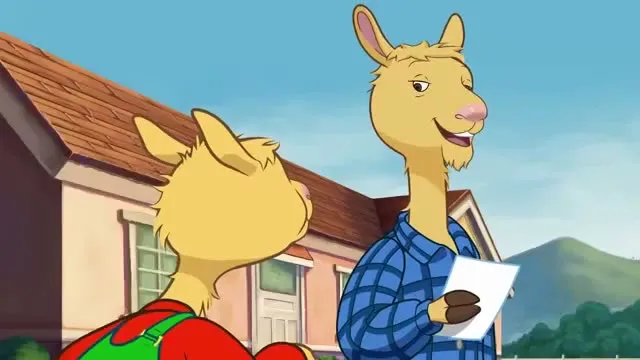
Llama Llama spends a snowy day playing when his teacher Zelda Zebra announces a kids' snow sculpture contest and asks him to be the judge. He worries about keeping the rules and choosing just one winner when every friend's sculpture is so different. After a hot chocolate break and a library trip with Mama, he learns that no two snowflakes are alike. He decides each sculpture wins its own category, and Zelda Zebra reveals a final sculpture of all the children.