





















This program is well-balanced. It remains mostly easy to follow and process. It is a good fit for the recommended age.
The pacing is moderate. The story remains easy for a child to follow.
The sound is clearly present and regularly draws attention.
The visuals are calm and well-organized.
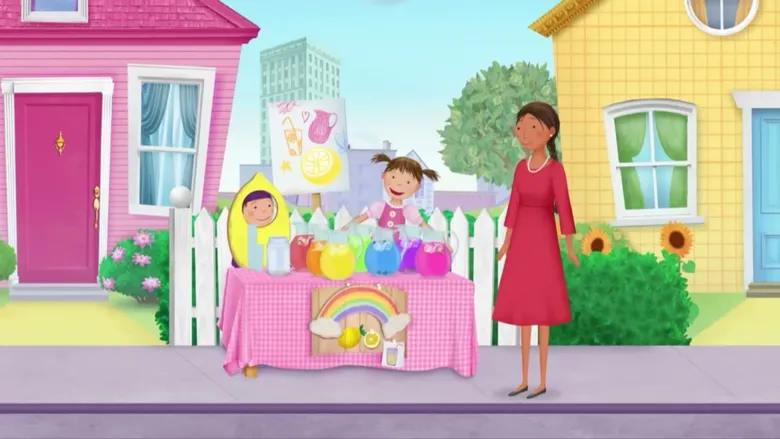
One clear goal carries the whole episode: Pinkalicious and Peter want to earn money for a paint set and a remote control blimp, so they open a lemonade stand. Events follow in a logical chain, each setback leading into the next idea, with a recognizable beginning, middle and end. Cause and effect stay easy to follow, for instance 'different people like different tastes' leading straight to the decision to make many flavors. The flavor-mixing stretch introduces several new ideas close together, the one denser moment in an otherwise clearly built story.
Feelings stay mild and well looked after. The children meet small letdowns, an empty piggy bank, a customer who finds the lemonade too sour, running out of colors, and each is met calmly and turned into a fresh plan. Daddy is warm and encouraging, the siblings cooperate kindly, and there is only light, good-natured teasing between them. Reassurance and a fix arrive close behind every wobble, so the emotional ground feels steady, with just a brief flutter when the stand gets crowded.
This episode stands out for how much the children think and try for themselves. Pinkalicious and Peter own the problem from start to finish, brainstorming signs, a costume, new flavors and finally a jingle, testing each idea and adjusting when it falls short. Their reasoning is visible and sensible: no customers means they need to be noticed, so they keep finding new ways to draw people in. Adults step in only when invited, leaving the real discovery to the children.
The language fits a preschool listener well, with clear full sentences and new words introduced through context, such as a jingle explained as 'a catchy little song.' Most of the talk does real work, explaining plans, naming recipes and reasoning out the next step, rather than filling space with exclamations. Playful invented words like 'Rainbowade' and 'pinkatastic' are used consistently, and the speech is easy to understand throughout. A scattering of excited 'yes' and 'yuck' moments sits alongside the steadier, meaningful dialogue.
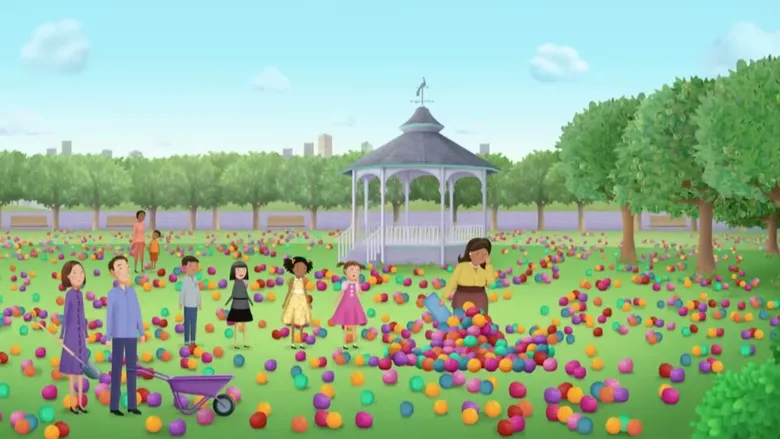
Almost everything here connects to real life: saving allowance, running a lemonade stand, mixing juices and fruit into different drinks, making posters and inventing a song to draw people in. The steps are shown clearly enough that a child could recognize and copy them, and the closing real-children segment makes that link explicit by showing kids using the same poster-and-song idea to clean up a park. The social world is familiar too, with family, neighbors and customers pitching in, plus the lesson that different people like different things. Objects and activities carry a clear, everyday purpose.
More information
This score shows how inclusively the series portrays diverse people, families and cultures. Scale: Limited → Varied → Rich → Inclusive.
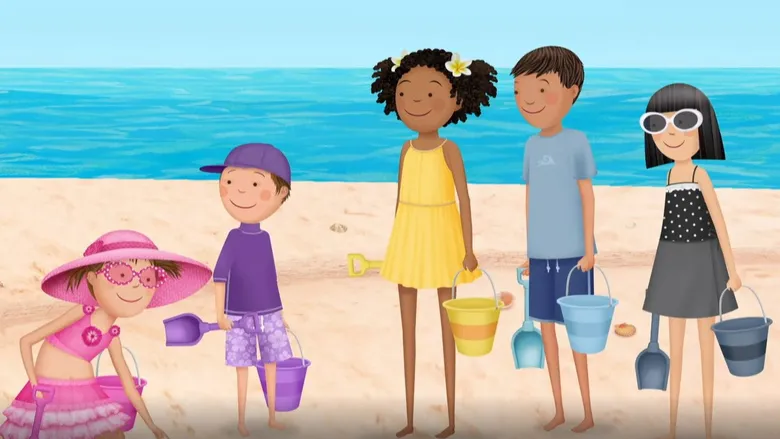
Pinkalicious and her younger brother Peter run the lemonade stand together, and the story keeps ideas and initiative shared between them rather than tied to one child. The animated cast around them adds some variety through customers and named helpers like Rafael and Jasmine, though the central family and their neighborhood stay fairly uniform. A short live-action ending broadens the view, showing a mixed group of real children of different backgrounds cooperating to clean up a litter-strewn park. The result offers cooperative, evenly shared roles and a moderate range of people, leaning on its real-world clip for the clearest diversity.
This score shows whether the series stays close to everyday reality or leans into fantasy. Scale: Fantasy → Mixed reality → Realistic.
This is a firmly real-world episode: two siblings set up a lemonade stand to save money for toys, and every twist comes from everyday problem-solving rather than any villain. Imagination shows up only as playful pretend, like a dinosaur mascot or a dress-up 'lemon-person', so there are no magical rules that need to hold together. The recognizable, grounded setup is a comfortable match for a four-year-old, who will recognize piggy banks, toy stores, and helpful neighbors. A short live-action ending shows real children making posters to clean up their park, keeping the whole thing tied to real life.
This score shows how enjoyable the series is for parents watching along. Scale: Tedious → Tolerable → Pleasant → Enjoyable.
There is a clear, goal-driven story here: two children want toys, build a lemonade stand, and keep solving fresh problems until it works, which gives an adult something to follow. The craft is strong, with clean animation, a consistent pink storybook look, and original songs. For the watching parent, the humor stays mostly child-pitched, leaning on Peter's literal misunderstandings rather than jokes aimed over a child's head. The endless 'pinka-' word coinages, the heavily saturated pink palette, and a jingle that repeats many times in a row are the main things an adult in the room will notice.
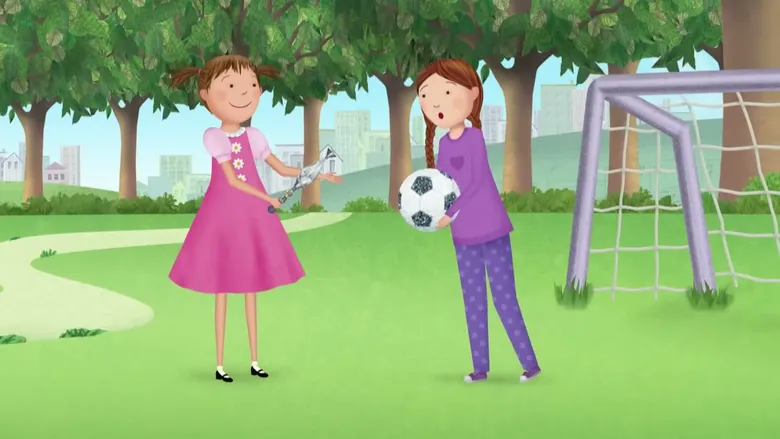
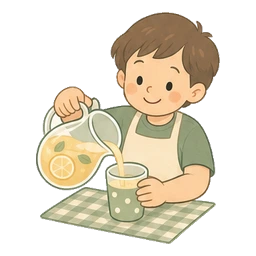
Pinkalicious and her younger brother Peter want to buy a paint set and a remote control blimp, so they open a lemonade stand in their Pinkville neighborhood to earn the money. When no one stops by, they try colorful signs, a lemon-person costume, a whole rainbow of fruit flavors, and finally a catchy jingle to draw customers in. The line eventually grows so long that their father and neighbors help mix more Rainbowade, and the children earn enough for both toys. A short closing segment shows real children using the same poster-and-song idea to organize a park cleanup.