




This program is stimulating. It actively demands attention and can feel intense. For the recommended age, this may be on the more intense side.
The pacing is fast. Images follow each other quickly, leaving little time to pause and take in what is happening.
The sound is clearly present and regularly draws attention.
The visuals are calm and well-organized.
One clear thread runs the whole way through: a dull gray wall becomes a community mural. Events follow a clean order, spotting the wall, having the idea, getting it approved, gathering paint, trying pictures, then choosing paw prints, so a young child can always tell what is happening and why. Each step produces a predictable result, like the council vote leading straight to permission. The only stretch that packs a lot in is the opening, where several town characters are named in quick succession.
This episode is emotionally steady and kind throughout. There is no villain and no real danger, and the warmest thread is how the family treats Paxton: when he gets overwhelmed deciding what to paint, his parents reassure him with 'it's okay, don't get yourself all tied up in knots,' and his siblings cheer him on with 'Congrats, Paxton.' Tone stays even from start to finish, and the one small wobble of frustration is soothed in the very same moment it appears. Adults stay supportive and consistent, never mocking or dismissive.
The story is driven by a child's own idea, Paxton proposing 'We should paint a picture on this wall,' and the pups carry the problem-solving from there. They try sample paintings, hold a vote, hit a wall when they cannot pick one, and then adjust to a better plan where every dog adds a paw print, which is a real worked-through process with a visible change of approach. The parents guide and approve rather than take over, leaving the thinking to the pups. The caveat is that the grown-ups smooth the path at each stage, so the challenge never gets very demanding.
Sentences are short, concrete and easy to follow, with useful new words like 'mural,' 'city council' and 'vote' introduced inside a situation that explains them. The dialogue stays clear and is used correctly, and dog wordplay such as 'a tail-wagging idea' and 'make your bark' adds colour, though a few puns will pass over the youngest listeners. A fair amount of the talk is cheering and exclamations ('Yeah!', 'Bow wow!', 'Woo-hoo!') rather than information. Overall the language fits a young preschooler well.
Almost everything here transfers straight to a child's own day: mixing paint colours, making paw or hand prints, choosing by a show of raised paws, and pitching in to improve a shared space. The activities have a clear purpose and visible steps, and the social world, a family, a market keeper, a mail carrier and a city council, mirrors real neighbourhood life. The imaginative layer is simply that the characters are dogs who talk and walk like people, while the setting and tasks stay grounded. That keeps the real-world connection strong for this age.
More information
This score shows how inclusively the series portrays diverse people, families and cultures. Scale: Limited → Varied → Rich → Inclusive.
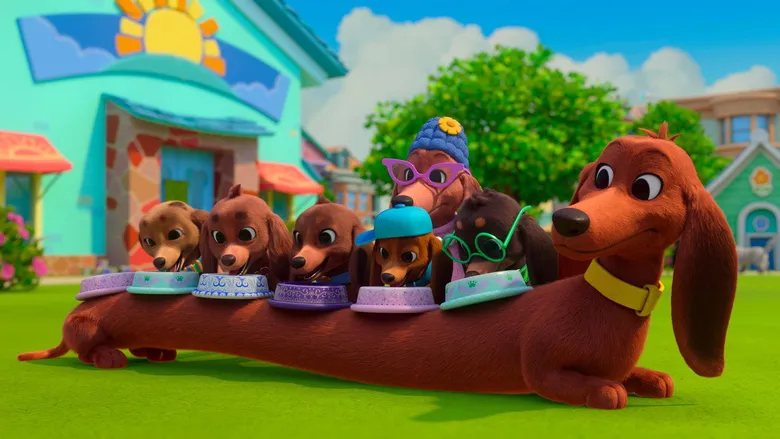
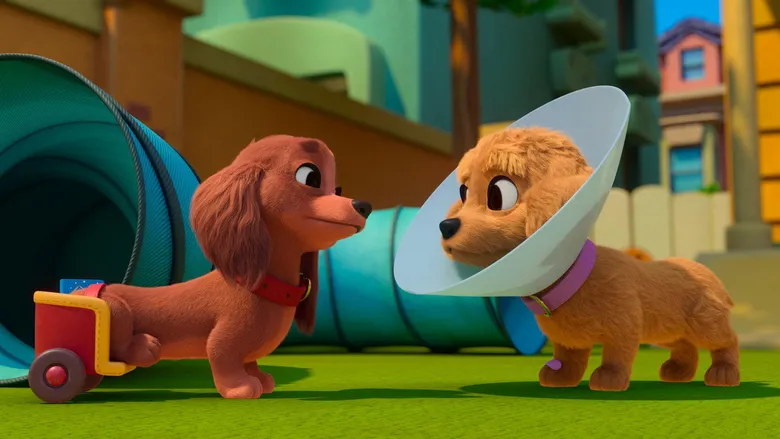
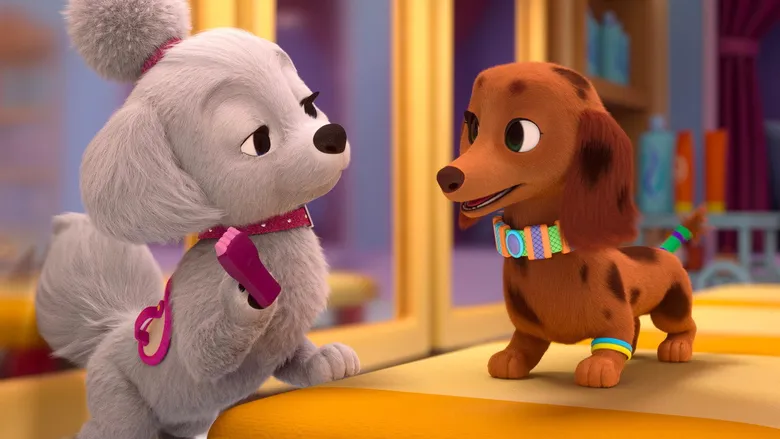
Montgomery is a town made up entirely of dogs, and the variety comes from different breeds, sizes and colours along with a spread of community jobs rather than from human cultures. The Doxie family sits at the centre: Greta is the town mayor while Pretzel stays home with their five pups, so leadership and caregiving are not tied to one gender. Pups of both genders put ideas forward, and the wider community settles decisions together by voting at city hall. The main limits are the all-dog cast, which leaves human cultural and ethnic variety out of the picture, and a story built around a single family household.
This score shows whether the series stays close to everyday reality or leans into fantasy. Scale: Fantasy → Mixed reality → Realistic.
The world of Montgomery is a recognizable town with a market, a city hall, a mail carrier and a neighborhood park, and the pups spend the episode on everyday tasks like painting a mural, voting and brightening up a dull wall. The one imaginative leap is that everyone in town is a talking dog who walks, works and runs a small government, but this stays light and friendly with no magic involved. There is no villain anywhere; the only problem is a blank, boring wall and the puppies' indecision about what to paint, so tension comes from situations rather than a bad guy. For a young preschooler this gentle mix of real-life activities and a consistent talking-dog world sits comfortably in range.
This score shows how enjoyable the series is for parents watching along. Scale: Tedious → Tolerable → Pleasant → Enjoyable.
For the adult on the couch, this sits in comfortable middle ground. The animation is polished and the mural story actually goes somewhere, following Paxton from a gloomy wall to a community project with a council vote along the way. What is missing is a layer written for you: the humor stays in gentle dog puns pitched at the child, and the repeated 'paws up' chant can wear thin on a loop. Easy enough to share without irritation, but it will not hold a grown-up's attention on its own.
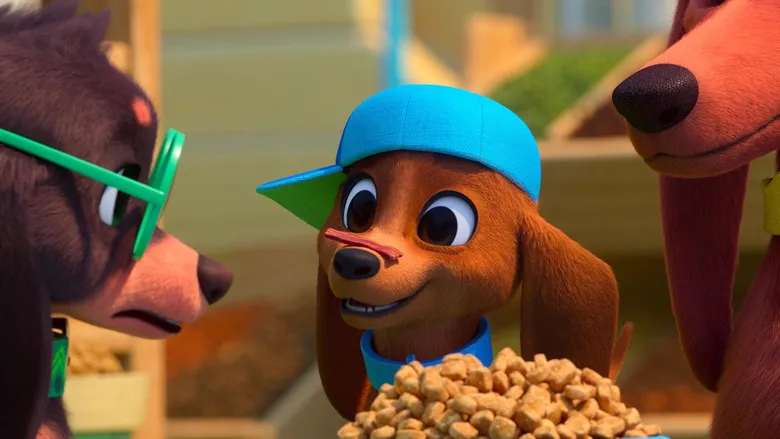
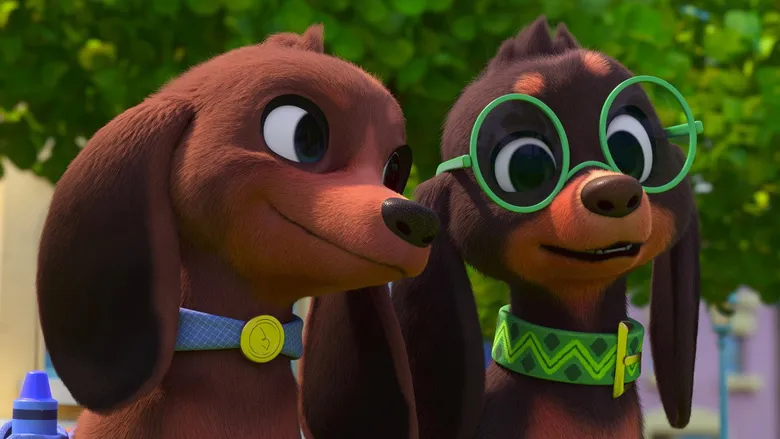
In the town of Montgomery, the Doxie family of dachshunds, parents Greta and Pretzel and their five pups, walk Mom to her job as mayor and notice a dull, blank wall that no dog wants to be near. Paxton suggests painting a mural, the city council votes to approve it, and the pups gather paint and try out designs at home. When they cannot agree on a single picture, they decide to let every dog add a paw print instead. The wall fills with colourful prints, dogs gather to play nearby, and Paxton is proud to have 'made his bark.'