

Slowscreen SlowScreen
Toggle sidebar

Just launched: free lifetime premium for the first 1,000 members to activate their account.

Start free

Silly Sundays

Good

Recommended age Unlock

Co-watching from age 2

Balanced

Exact score locked

Watch on HBO
Availability in
Save
Silly Sundays

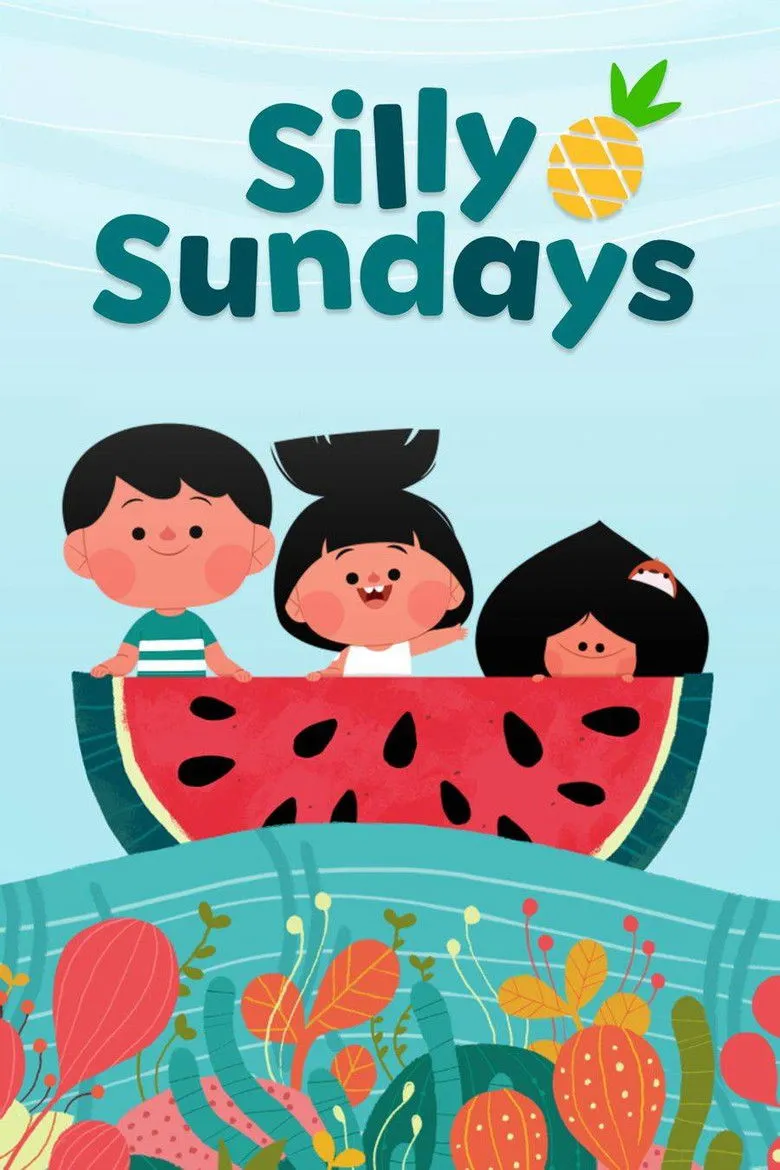
Silly Sundays follows young children and their warm family through small everyday adventures in a sunny seaside town. The tone is calm and playful, made for toddlers, with gentle lessons in problem-solving and kindness.

  • Gentle handling of disappointment and big feelings.
  • Shows real tasks like cooking and gardening.
  • Active grandmother gives a lively older role model.
  • A brand name is briefly visible on screen.
  • Brief sad moments for the youngest viewers.

See the exact scores

The review is yours to read. Create a free account to reveal the exact SlowScreen score and every pillar score.

Create free account

Score Breakdown

The visuals stay calm and well organized in every episode, with clear, uncluttered images that are easy for a young child to take in. The sound is the busier element, staying intense and almost continuously present throughout. Pacing is where the episodes differ most: some, like 'Broken Ducky' and 'Save The Castle', move quickly with images following each other in fast succession, while 'Picnic Time!' is noticeably calmer and gives a child time to watch and understand. Across the board the experience remains balanced and mostly easy to follow, though the steady wall of sound and the quicker episodes ask a bit more of the youngest viewers.
Every episode follows one clear thread from start to finish, with a recognizable beginning, middle and end that a young child can hold onto. New ideas arrive one small step at a time and cause and effect stays visible, such as the children trying a moat, watching it overflow, then switching to a wall in 'Save The Castle'. Small wrinkles do appear, like the painted stand-in for Ducky or the long ingredient-by-ingredient stretch in 'Mom's Sandwich', which can briefly ask more of a very young viewer. On the whole the storytelling is simple and logical, so a child rarely loses the thread.
The emotional tone stays warm and steady throughout the series, with children and adults treating each other kindly and politely. Difficult feelings like disappointment or tiredness are named openly and met with support in the same or next scene, as when a mother says 'It is okay you cannot run like other ducks' or thanks a child 'for being so considerate.' Nothing frightening builds, and small frustrations are smoothed over quickly so tension never lingers. A few episodes swing between mild alarm and relief a little more often, which for the youngest viewers is slightly more back-and-forth, though every moment stays gentle.
In most episodes the children drive the problem themselves, thinking out loud and trying one idea after another until something works. 'Save The Castle' is the strongest example, with the children inventing a moat, then a wall, then a bigger wall, visibly adjusting each time their first try fails and modeling real persistence. The reasoning stays simple and well matched to a young child rather than deeply worked through. The exception is 'Broken Ducky', where the central problem is set off by an outside event and settled more through adult reassurance than through a plan the child works out, so the trial-and-error is lighter there.
The dialogue leans on short, concrete sentences and everyday words that match what is on screen, like 'Can't run', cucumber and tomato, or the on-screen definition of 'moat' as 'a long hole where the water goes'. Repeated lines and rhymes, such as 'Up, up, up the hill!' and the wishing chant, give a satisfying rhythm and invite a child to join in. Much of the talk does real work, explaining, offering and reassuring, and polite phrases like 'please' and 'thank you' model useful everyday language. The main limit is a steady stream of cheerful exclamations ('yum', 'yay', 'diggy, diggy, dig') and a few stretchier lines, like Granny's joke about arthritis, that sit above the youngest child's reach.
The series stays grounded in everyday life a young child recognizes, from a favourite toy that breaks to a family walk, a beach day and making food for mum. Most of what happens can be copied offline with ordinary objects, such as layering vegetables on bread, filling buckets and digging at the beach, or putting scraps in the compost bin for the garden. The social situations mirror real home life closely, with siblings, parents and grandparents helping one another. 'Make A Wish!' is the outlier, since its dandelion wishes turn on magic rather than everyday cause and effect, so its payoffs transfer less directly to a child's own play.

More information

This score shows how inclusively the series portrays diverse people, families and cultures. Scale: Limited → Varied → Rich → Inclusive.
The clear strength across the series is range in age and body type within a warm family world, from babies and toddlers to children, parents, an uncle and a lively grandmother, with one episode breaking the frail-elder mould by putting Granny on roller skates. Caregiving and problem-solving are shared evenly, with girls and boys driving the action as equals and fathers shown cooking, doing laundry or playing rather than staying distant. The consistent limit is breadth: nearly everyone belongs to the same family and shares one stylized skin tone and look, so there is little visible variation in ethnic or cultural background. A mild gendered pattern lingers in places, such as a mother managing feelings while a father stays a quieter helper, though overall the roles are notably free of fixed clichés.
This score shows whether the series stays close to everyday reality or leans into fantasy. Scale: Fantasy → Mixed reality → Realistic.
The series sits firmly in everyday family life, with recognizable settings like a home, a garden, a beach and a wooded hill, which suits very young children well. There is no villain anywhere and no hero-versus-bad-guy plot; the only problems are small and friendly, such as a broken toy, an incoming wave or tired legs, solved through kindness and teamwork. Light pretend play appears, like asking dad to 'be the wall', and stays close to the make-believe real children already do. The exception is 'Make A Wish!', where dandelion wishes grant rain and a pile of pineapples, so magic rather than the everyday setting drives most of what happens, though the show keeps its own wishing rules consistent.
This score shows how enjoyable the series is for parents watching along. Scale: Tedious → Tolerable → Pleasant → Enjoyable.
Honestly, this is easy company rather than a series that will pull you in on its own. The clean, warm animation and the genuinely lovely seaside view at the end of 'Picnic Time!' are pleasant on the eyes, and a few moments will earn a grown-up smile, like recruiting a drowsy dad off his towel to become a 'human wall' or the duck-themed wordplay. The flip side is the steady, excited chanting ('Up, up, up the hill!') that wears thin after a while, and jokes pitched squarely at the youngest viewers. You can happily sit on the couch beside your child here, just do not expect much aimed at you.

Season 1

5 episodes

Silly Sundays
S01 E01

Silly Sundays

Broken Ducky

Balanced
recommended age Unlock co-watching from 2
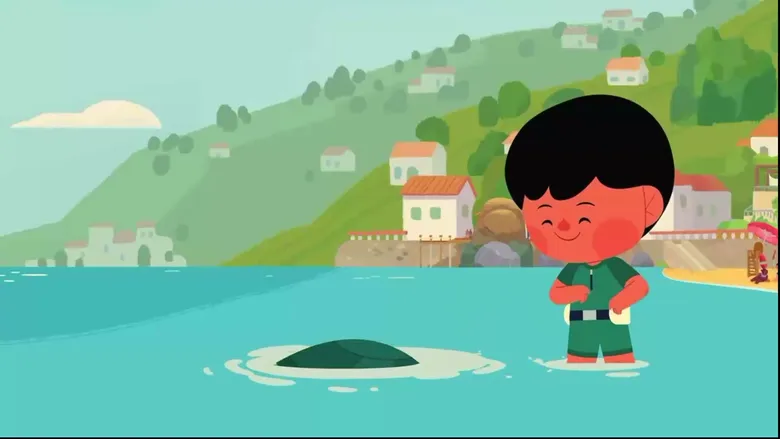
A young girl named Sonia has a new toy ducky that will not move, and she is convinced it is broken. Her brother Mel, her uncle, her parents and her visiting granny each try to help, testing whether it swims, flies or needs winding, in a sunlit family home by the sea. The family realizes the ducky simply cannot run like a real duck, and they find new ways to include it in their play. The episode closes with everyone playing together and a short song.

Silly Sundays
S01 E02

Silly Sundays

Watermelon Rescue

Stimulating
recommended age Unlock co-watching from 2
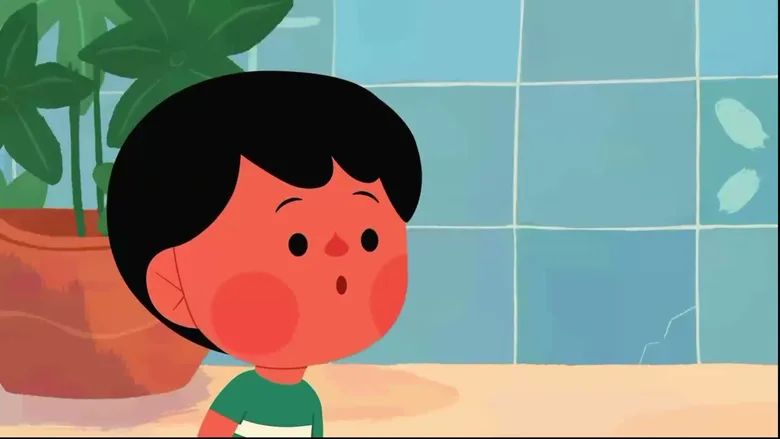
At a sunny seaside town, a family of children, their dad, uncle and grandparents spend the day at the beach guarding a large watermelon they treat as a treasure. When the melon rolls into the sea, everyone joins a chaotic chase, mixing it up with a volleyball and a turtle along the way. The melon ends up smashed, and Granny reassures the children that everyone did their best. The family shares a picnic with watermelon salad and a closing song about the fruit.

Silly Sundays
S01 E03

Silly Sundays

New Birdy

Balanced
recommended age Unlock co-watching from 2
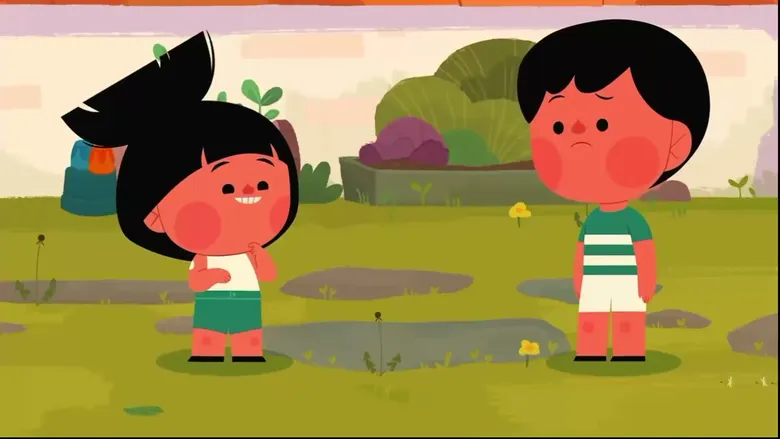
A group of children and two sparrows put on a pretend dance show on a sunny family terrace, with Sonia as the star, Mel and Poi as DJs, and Ugo presenting. When a new bird, Birdie, keeps trying to join in, Sonia refuses to share the spotlight and grows frustrated. Family members step in, and Granny suggests that the more stars there are, the brighter the sky is. The episode ends with everyone welcomed in and dancing together.

Silly Sundays
S01 E04

Silly Sundays

Make a Wish

Balanced
recommended age Unlock co-watching from 2
Three siblings, Sonia, Ugo and Mel, find a golden lamp and try to summon a genie, then discover they can make wishes by blowing dandelion seeds in their seaside garden. They chant rhymes, retry when wishes go wrong, and briefly blame each other when the dandelions run out. Granny gathers them and shares that a wish can be made on anything, and that they can help wishes along through their own actions. The episode closes with the children wishing to make each other laugh and a short music-and-dance segment.

Silly Sundays
S01 E05

Silly Sundays

Forever Castle

Balanced
recommended age Unlock co-watching from 2
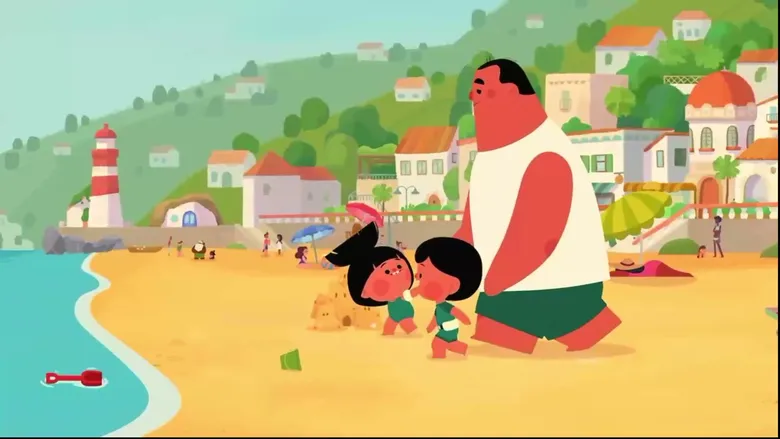
On a sunny beach, two children named Sonia and their sibling build what they call the biggest sandcastle they have ever made, only for the waves to keep washing it away. They try one idea after another, digging a moat, raising a wall, even asking their dad to lie down as a barrier, and finally the whole family helps move the castle. When a wave takes it anyway, their grandmother reminds them that as long as there is sand they can always build a new one. The episode closes with the family planning an even bigger castle and an upbeat adventure song.

Explore more

By age 2 years
By platform HBO

Share

Pass this find on to another parent

Link preview

Silly Sundays | Good, co-watching from age 2

Silly Sundays | Good, co-watching from age 2 - Slowscreen

Good · Co-watching from age 2. Silly Sundays follows young children and their warm family through small everyday adventures in a sunny seaside town. The tone is...

slowscreen.com

https://slowscreen.com/en/series/silly-sundays

https://slowscreen.com/en/series/silly-sundays

Slowscreen

Silly Sundays | Good, co-watching from age 2 - Slowscreen

Good · Co-watching from age 2. Silly Sundays follows young children and their warm family through small everyday adventures in a sunny seaside town. The tone is...

Silly Sundays | Good, co-watching from age 2

slowscreen.com

Silly Sundays | Good, co-watching from age 2 - Slowscreen

Good · Co-watching from age 2. Silly Sundays follows young children and their warm family through small everyday adventures in a sunny seaside town. The tone is...

Silly Sundays | Good, co-watching from age 2
slowscreen.com

Silly Sundays | Good, co-watching from age 2 - Slowscreen

slowscreen.com · Posted by you

Silly Sundays | Good, co-watching from age 2 - Slowscreen

0 Share
Silly Sundays | Good, co-watching from age 2
To
Subject Silly Sundays | Good, co-watching from age 2

Good · Co-watching from age 2. Silly Sundays follows young children and their warm family through small everyday adventures in a sunny seaside town. The tone is...

https://slowscreen.com/en/series/silly-sundays

Share on WhatsApp Share on X Share on Facebook Share on Telegram Share on Reddit Share on Email

Just launched: free lifetime premium for the first 1,000 members to activate their account.

Create your account

Search by title, show, tag, or topic

We use functional cookies and Google Analytics to improve our site. Learn more