
















This program is well-balanced. It remains mostly easy to follow and process. It is a good fit for the recommended age.
The pacing is fast. Images follow each other quickly, leaving little time to pause and take in what is happening.
The sound is intense and continuously present.
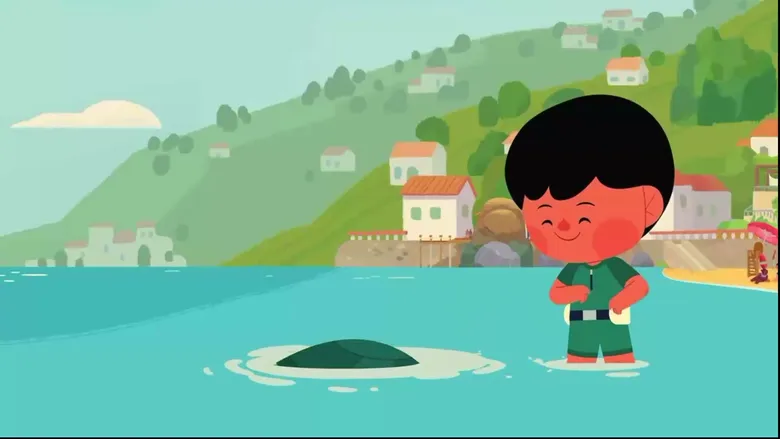
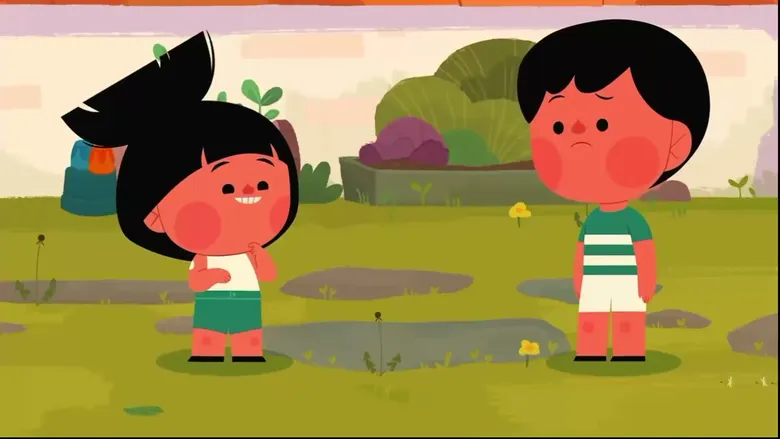
The visuals are calm and well-organized.
One clear thread carries the whole episode: two children build a sandcastle and try to protect it from the waves. Events follow in an order a young child can track, from digging a moat to building a wall to moving the castle, each attempt growing out of the last. New ideas arrive one at a time, and the link between the waves and the crumbling sand is always visible, so cause and effect stay easy to follow. A little more happens per moment than the very youngest could absorb, but the build-up is orderly and never jumps around.
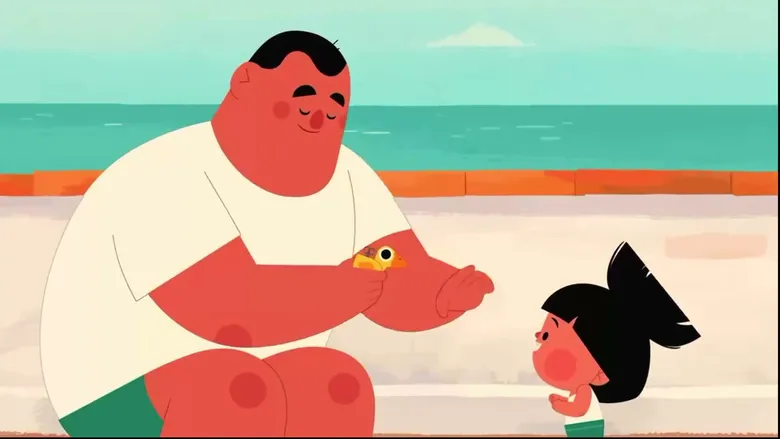
The tone between everyone is warm and supportive: the father happily lies down to become a castle wall, the mother lends a hand, and the grandmother listens with real care. Feelings run gently, with small spikes of worry when a wave threatens and quick relief when a plan works, and no one is mocked or belittled. When the castle is finally lost, the sadness is met right away by the grandmother's reassurance that a new one can always be built, so the low moment is soothed rather than left hanging. Emotional shifts land softly and stay within a comforting range.
The children drive almost every idea themselves, naming a problem and testing solution after solution: a moat for the water, then a wall, then a bigger wall, then moving the whole castle. Each attempt is tried, seen to fall short, and followed by a new plan, so the thinking is visible and the reasoning holds together ('a moat is a long hole where the water goes'). Adults help carry things out but do not take over the ideas, leaving the initiative with the kids. The episode ends by turning a setback into a fresh plan for an even bigger castle.
The children speak in short, concrete sentences that suit a toddler, and a new word like 'moat' is introduced with a plain explanation right after. Words are used consistently and clearly, and the family dialogue stays functional, describing what to do and why. Alongside the useful talk there is a fair amount of pure excitement ('Yay', 'Woo-hoo', 'the biggest castle'), which is age-fitting but leans expressive rather than informative. Overall the language is clear and purposeful for this age.
Everything happens in a recognizable world of beach play that a child can copy the next day: digging, patting sand, filling buckets, and building walls. The family gathering, with parents, a grandmother, and an aunt all pitching in, mirrors real relationships and everyday togetherness. A few playful touches, like a parent pretending to be a wall or wishing for a dinosaur wall, add light imagination without pulling away from the real activity. The closing idea that you can always build again ties the fun back to a simple, usable lesson about starting over.
More information
This score shows how inclusively the series portrays diverse people, families and cultures. Scale: Limited → Varied → Rich → Inclusive.
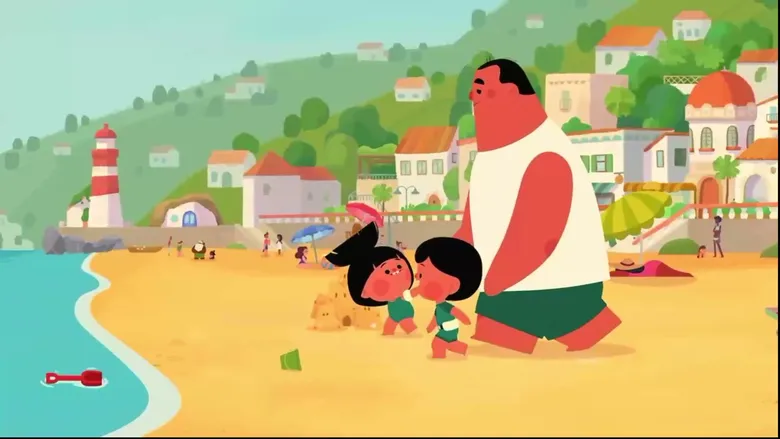
This episode follows a large family across three generations at the beach, with young children building sandcastles while parents, an aunt, an uncle and a grandmother join in. Everyone shares the same brown skin and dark hair, and the design gives real space to variation in age and body type, from small children and a baby to a heavy-set father and an elderly grandmother with glasses. Boys and girls take the lead in the building and problem solving together, while the adults step in supportively when the children ask for help. The result is a warm, multigenerational picture, though it stays within one family and one cultural world.
This score shows whether the series stays close to everyday reality or leans into fantasy. Scale: Fantasy → Mixed reality → Realistic.
This episode stays close to a young child's real world: two children build a sandcastle at the beach, waves wash it away, and the whole family joins in to help. There is no villain and no magic; the only obstacle is the incoming tide, which the children treat as a playful challenge to dig moats and build walls against. The gentle mix of everyday reality and light pretend play sits comfortably with a two-year-old's experience. Nothing here asks a toddler to grasp fantasy worlds or scary confrontations.
This score shows how enjoyable the series is for parents watching along. Scale: Tedious → Tolerable → Pleasant → Enjoyable.
This is a beautifully crafted watch for a grown-up in the room, with a warm hand-drawn look, gentle voices, and a story that actually holds together. The parents get their own dry asides, from a mother praising a wobbly sandcastle as 'minimalist art' to a grandmother mistaking the flattened castle for 'nice sand lamps.' The sound stays soft and speech-led with no shrill refrains to grate on adult ears. Between the polished production and the small jokes pitched over the children's heads, an adult co-viewer is genuinely rewarded here.
On a sunny beach, two children named Sonia and their sibling build what they call the biggest sandcastle they have ever made, only for the waves to keep washing it away. They try one idea after another, digging a moat, raising a wall, even asking their dad to lie down as a barrier, and finally the whole family helps move the castle. When a wave takes it anyway, their grandmother reminds them that as long as there is sand they can always build a new one. The episode closes with the family planning an even bigger castle and an upbeat adventure song.