
Slowscreen SlowScreen
Toggle sidebar

Just launched: free lifetime premium for the first 1,000 members to activate their account.

Start free

Art Museum

Mediocre

Recommended age Unlock

Co-watching from age 3

Stimulating

Exact score locked

Watch on Paramount +
Save
Art Museum

Share

Pass this find on to another parent

Link preview

The Upside Down Show: Art Museum | Mediocre, co-watching from age 3

The Upside Down Show: Art Museum | Mediocre, co-watching from age 3 - Slowscreen

Mediocre · Co-watching from age 3. Two live-action hosts, Shane and David, star in this 'Upside Down Show' episode in which Shane paints what he calls his best...

slowscreen.com

https://slowscreen.com/en/series/the-upside-down-show/s1/e3-art-museum

https://slowscreen.com/en/series/the-upside-down-show/s1/e3-art-museum

Slowscreen

The Upside Down Show: Art Museum | Mediocre, co-watching from age 3 - Slowscreen

Mediocre · Co-watching from age 3. Two live-action hosts, Shane and David, star in this 'Upside Down Show' episode in which Shane paints what he calls his best...

The Upside Down Show: Art Museum | Mediocre, co-watching from age 3

slowscreen.com

The Upside Down Show: Art Museum | Mediocre, co-watching from age 3 - Slowscreen

Mediocre · Co-watching from age 3. Two live-action hosts, Shane and David, star in this 'Upside Down Show' episode in which Shane paints what he calls his best...

The Upside Down Show: Art Museum | Mediocre, co-watching from age 3
slowscreen.com

The Upside Down Show: Art Museum | Mediocre, co-watching from age 3 - Slowscreen

slowscreen.com · Posted by you

The Upside Down Show: Art Museum | Mediocre, co-watching from age 3 - Slowscreen

0 Share
The Upside Down Show: Art Museum | Mediocre, co-watching from age 3
To
Subject The Upside Down Show: Art Museum | Mediocre, co-watching from age 3

Mediocre · Co-watching from age 3. Two live-action hosts, Shane and David, star in this 'Upside Down Show' episode in which Shane paints what he calls his best...

https://slowscreen.com/en/series/the-upside-down-show/s1/e3-art-museum

Share on WhatsApp Share on X Share on Facebook Share on Telegram Share on Reddit Share on Email

See the exact scores

The review is yours to read. Create a free account to reveal the exact SlowScreen score and every pillar score.

Create free account
This program is stimulating. It actively demands attention and can feel intense. For the recommended age, this may be on the more intense side. The pacing is calm. A child has time to watch and understand what is happening. The sound is intense and continuously present. The visuals are calm and well-organized.
There is one clear thread to follow, Shane has made a painting and the pair keep searching for the right place to display it, which gives the episode a spine. The difficulty is how much gets packed in along the way: new characters, invented rooms, and jokes arrive one on top of another, and the jumps between them run on dream logic rather than clear cause and effect. A three-year-old will likely lose the main thread between the many surreal detours. The single storyline helps the score, but the dense, loosely connected events hold it back.
The two hosts are warm and encouraging with each other, swapping praise like 'it is your best work ever' and helping one another through every silly obstacle, so the emotional ground stays friendly and safe. Feelings stay light, and any small worry, such as Shane 'despairing' over where to hang his picture, is quickly soothed and resolved. What holds this pillar back is the constant high intensity and the abrupt switches between bits, which give a young child little gentle build-up from one feeling to the next. The supportive tone is a genuine strength, with the caveat that the intensity rarely settles.
Shane and David drive the action themselves, the whole episode springs from their own wish to find a home for the painting, and they keep trying new spots when one does not work. That gives a child a real model of initiative and of not giving up. The weakness is how the problems get solved: most are resolved by pressing a magic remote button or by a sudden 'inspiration' rather than by visible, step-by-step reasoning a child could copy. So the drive to solve is clear, but the thinking behind the solutions stays thin.
Language is the weakest part of this episode for a three-year-old. Dialogue comes thick with puns, sarcasm, and invented phrases like 'Transylvanian turquoise' and 'heavens to Betsy', layered with overlapping chatter, so little of it lands as clear, usable meaning at this age. There are simple, concrete moments, naming colors or explaining that an art museum is 'where people go to look at pictures and drawings and sculptures', but they are outnumbered by wordplay aimed over a toddler's head. Much of the talk works as comic noise rather than meaningful communication, which is what keeps this pillar low.
This pillar leans low because most of what happens lives in pure fantasy: a magic remote, an imaginary pet elephant, a sticky room, a talking fly. Those bits are inventive but hard for a child to carry into real life. The real-world value sits in the art-making, the finger-painting demonstration shows how colors mix into new ones, red and blue into purple, and it models pride in making something, which a child could try at home with paper and paint. Because the transferable, real activities are surrounded by so much surreal invention, the everyday usefulness stays limited.

More information

This score shows how inclusively the series portrays diverse people, families and cultures. Scale: Limited → Varied → Rich → Inclusive.
This episode centres on two white adult men, Shane and David, who do almost everything on screen, with a young boy joining them for the finger-painting part. There are no women on screen and no visible variety in ethnicity, age or family life, so the picture of who is present stays narrow. The behaviour itself is not stereotyped: the men are playful, emotional and creative as equals, and the boy is treated as a real artist whose work gets praised. Even so, because all the initiative and know-how rest with the same two men, the show offers little range in either who appears or the roles they hold.
This score shows whether the series stays close to everyday reality or leans into fantasy. Scale: Fantasy → Mixed reality → Realistic.
This show is built on a playful magic remote that the two brothers, Shane and David, invite the child to press, which pulls the story through shrinking, a fog room and a talking fly rather than through everyday life. There is no villain anywhere; the problems come from one simple situation, finding a place to hang a painting, and from gentle banter between the brothers. The invented world keeps its own rules well, since each remote button reliably does what it says. For a three-year-old, who is best served by mostly realistic stories with light imagination, the constant surreal shifts and mimed objects are a lot to follow, and that is the main thing holding this subscore back.
This score shows how enjoyable the series is for parents watching along. Scale: Tedious → Tolerable → Pleasant → Enjoyable.
This show is built for co-viewing, with two comic performers layering wordplay and visual gags that work for adults as much as for children. The quest to find a home for Shane's painting gives the episode a real spine, even though the story is mostly a frame for sketches. The voices stay natural and the bright sets never turn harsh, so it sits easily in the room. Production is clean and inventive, from the pretend remote control effects to the mock-serious commentary over a finger painting.

Sensory overload

Near-constant movement, frequent vocal sound effects, and overlapping rapid dialogue run with almost no quiet pauses.

Flashing lights

A bright flash effect punctuates the opening transition and returns in the closing seconds of the episode.

Two live-action hosts, Shane and David, star in this 'Upside Down Show' episode in which Shane paints what he calls his best work and the pair set out to find the perfect place to display it. They try the refrigerator, a wall, and a door before deciding the painting belongs in an art museum, passing through a sticky room, a foggy room, and a finger-painting museum along the way. Throughout, the viewer is invited to 'press buttons on the remote' to pause, rewind, and shrink or grow things. In the end the friends find a home for the painting and hand Shane fresh paints to create another one.

Season 1

5 episodes

The Upside Down Show
S01 E01

The Upside Down Show

Movies

Stimulating
recommended age Unlock co-watching from 3
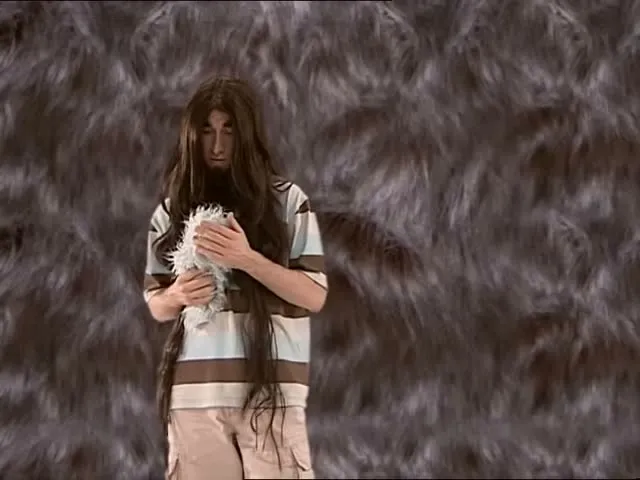
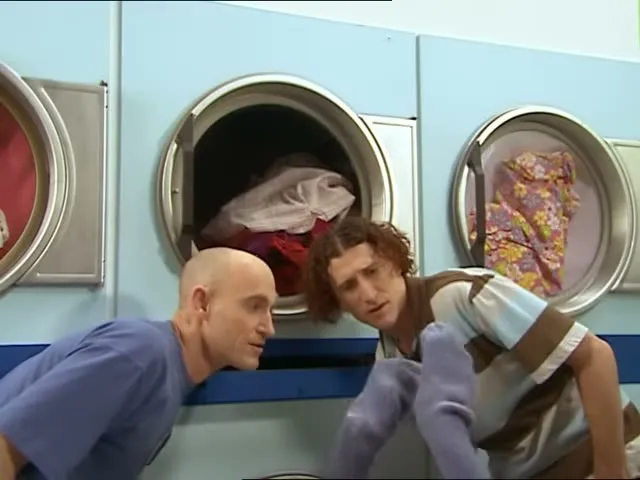
Two brothers, David and Shane, set out to find a movie theater so they can show off a film directed by their orange puppet friend. They wander by mistake into a laundromat and a dance studio, meet finger-puppet heroes and a sock named Leftie, and invite the viewer to operate a pretend remote that pauses, rewinds, and fast-forwards the action. They work through a squabble over one chair by sharing it and learn about rhyming along the way. They finally reach a real cinema where the puppet's movie plays with space, pirates, and cowboys, and they sign off encouraging children to make their own movies.

The Upside Down Show
S01 E02

The Upside Down Show

Barbershop

Stimulating
recommended age Unlock co-watching from 3
Two brothers, David and Shane, share a colourful house and a pretend remote control that the viewer is asked to operate. Shane has grown an enormous amount of hair but is too nervous to visit a real barbershop, so David helps him with encouragement and a comfort blanket named Bob. Along the way they pass through several silly imaginary rooms, meet singing hairbrushes and keep searching for the barbershop while Shane stalls. In the end Shane sits in the barber's chair, gets his haircut and hands out stickers to everyone.

The Upside Down Show
S01 E03

The Upside Down Show

Art Museum

Stimulating
recommended age Unlock co-watching from 3
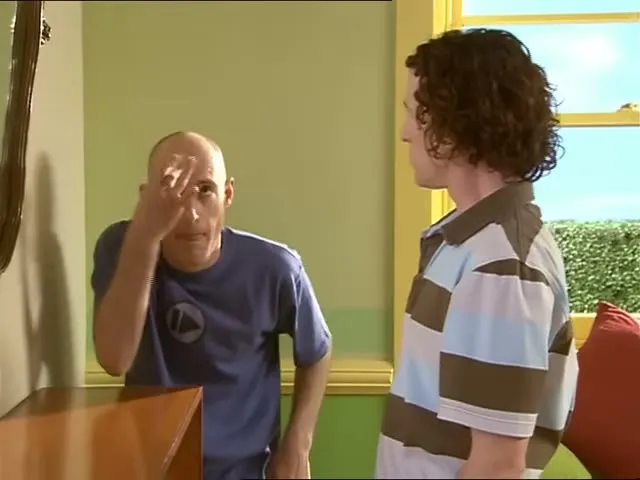
Two live-action hosts, Shane and David, star in this 'Upside Down Show' episode in which Shane paints what he calls his best work and the pair set out to find the perfect place to display it. They try the refrigerator, a wall, and a door before deciding the painting belongs in an art museum, passing through a sticky room, a foggy room, and a finger-painting museum along the way. Throughout, the viewer is invited to 'press buttons on the remote' to pause, rewind, and shrink or grow things. In the end the friends find a home for the painting and hand Shane fresh paints to create another one.

The Upside Down Show
S01 E04

The Upside Down Show

Pet Shop

Stimulating
recommended age Unlock co-watching from 3
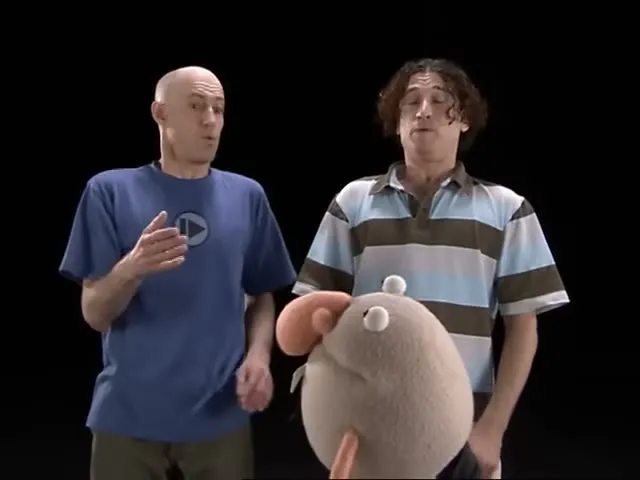
Two brothers, David and Shane, host this live action comedy on bright studio sets and speak straight to the viewer, who is asked to press buttons on an imaginary remote. David decides he must have a pet, so the pair search for a pet shop, opening doors into invented places like a puppy room, a parrot room and even the moon. Along the way they pretend to be dogs, meet a parrot that repeats everything, and try one silly idea after another. In the end David adopts a chair as his pet and invites the viewer to do the same.

The Upside Down Show
S01 E05

The Upside Down Show

Camping

Stimulating
recommended age Unlock co-watching from 3
David and Shane, two brothers who live in a brightly coloured house, discover that their bedrooms have disappeared and set out to find somewhere to sleep. They try one silly option after another, including a dog's room, sleeping standing up like horses, hanging upside down like bats and oddly shaped beds, while asking the viewer to press buttons on an imaginary remote. A neighbour, Mrs. Bell, finally explains camping and shows them how to use a sleeping bag. The episode ends with the brothers and their puppet friends climbing into sleeping bags to sleep.

Explore more

From this series The Upside Down Show
By age 3 years
By platform Paramount +

Just launched: free lifetime premium for the first 1,000 members to activate their account.

Create your account

Search by title, show, tag, or topic

We use functional cookies and Google Analytics to improve our site. Learn more