

Slowscreen SlowScreen
Toggle sidebar

Just launched: free lifetime premium for the first 1,000 members to activate their account.

Start free

Word Party

Sufficient

Recommended age Unlock

Co-watching from age 3

Stimulating

Exact score locked

Watch on Netflix
Availability in
Save
Word Party

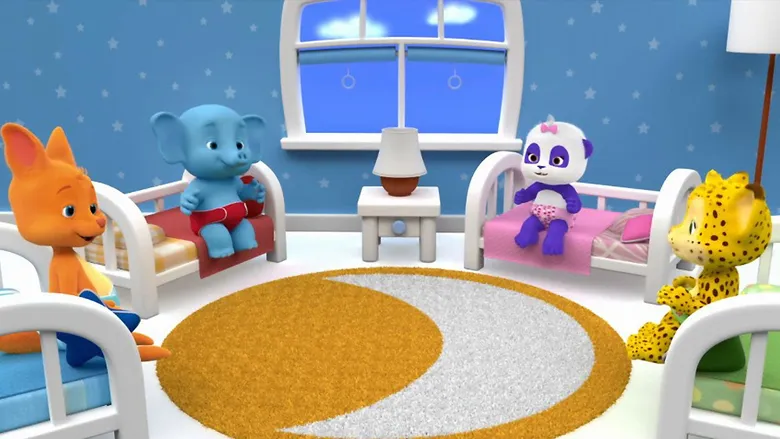
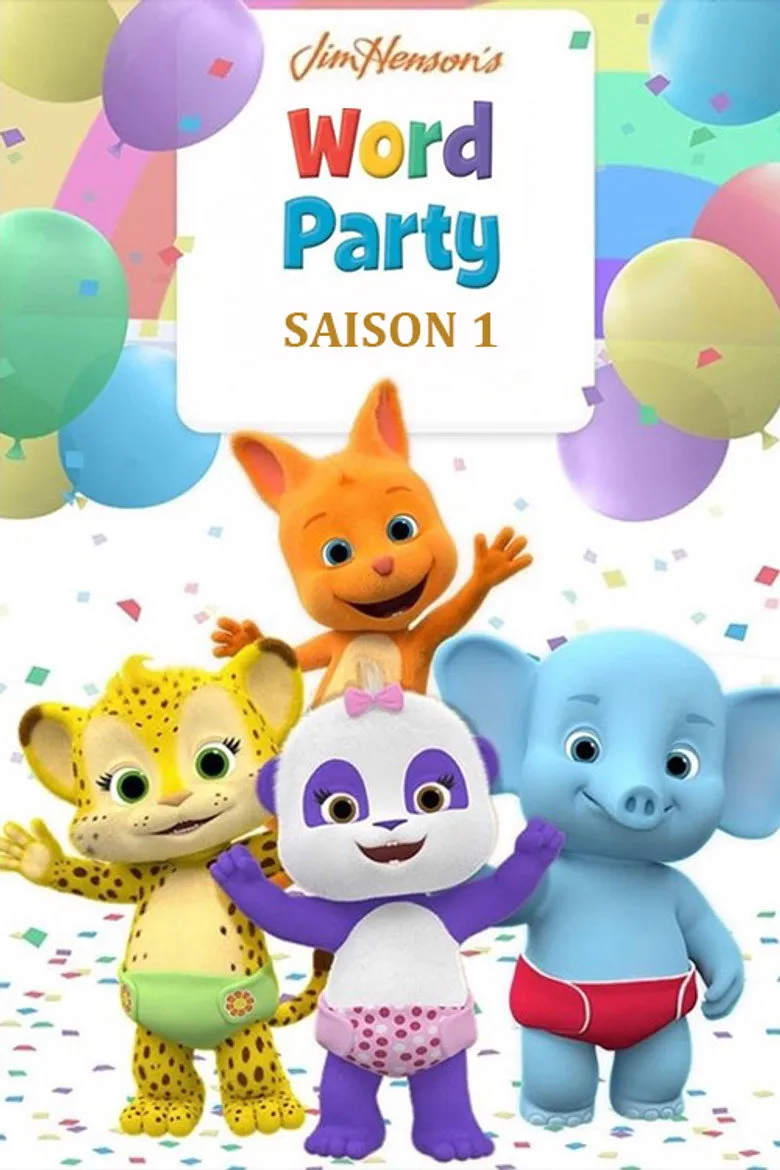
Word Party follows four baby animals, Bailey, Franny, Kip and Lulu, learning new words together in their shared playroom home. The tone is upbeat and playful, aimed at toddlers, with early vocabulary and social lessons.

  • New words taught through repetition and song.
  • Friends apologise and share after small squabbles.
  • Calm narrator encourages turn-taking.
  • Simple stories suit very young attention spans.
  • Heavy direct address to the viewer.
  • Repetitive songs and format across episodes.
  • Mild squabbling over sharing and turns.

See the exact scores

The review is yours to read. Create a free account to reveal the exact SlowScreen score and every pillar score.

Create free account

Score Breakdown

The pacing is fast and the visuals stay busy, with frequent changes and a lot of movement on screen. Images follow each other quickly, leaving little time to pause and take in what is happening, so the experience actively demands attention and can feel intense for the youngest viewers. The sound is gentler, usually soft and supportive, though in some episodes it steps forward and pulls more attention. For sensitive children this is worth pairing with a calm setting or a shorter sitting.
Every episode follows one clear thread, usually a simple goal like learning the names of farm animals, vehicles or colors, and the story builds in a recognisable beginning, middle and end. New ideas arrive one at a time, so a young child can follow what is happening, and actions lead to sensible next steps, such as not knowing the boy chicken's name and going to find Word to learn it. The recurring song interludes and visits to characters like Clicky Clock briefly step outside the story before it returns. This is most noticeable in 'Meet the Babies', where several characters, objects and songs arrive at once and the side segments pull harder at the through-line.
The tone stays warm and supportive throughout. When a character is upset, losing a race, having a balloon pop, or feeling unsure, friends and the narrator step in quickly with comfort and reassurance, and the upset is settled within the same stretch of scenes. Squabbles flare gently, over who gets to be the chicken or which toy to play with, and they end in apologies and 'I love you' rather than lingering tension. Feelings shift gradually instead of lurching between extremes, so a child is consistently left knowing the friends are okay again.
The babies show real initiative, proposing what to try and starting most situations themselves, from paging through a picture book to digging through the toy box. Their reasoning is visible in simple steps, but solutions tend to land in one jump rather than through trying, failing and adjusting. The narrator often points the way, and a magical helper, the glowing word wall or a toy that conjures what they need, frequently delivers the final answer rather than the children working it out. The strongest moments, like Franny discovering her slow bulldozer is good at moving dirt, show what happens when the children are left to reason a problem through.
Language is simple and concrete, built around target words a young child can grab onto, such as farm animals, vehicles and colors, and these are repeated often so the meaning sticks. The series explains words in context, noting that a sailboat 'sails on the water' or that 'turquoise is a middle color between green and blue.' The caveat is a steady layer of baby talk and rhythmic chanting like 'please please please' and 'tick tick, clock clock' that carries little information and can muddy a few lines. The core teaching language stays clear and purposeful, fitting the younger end of this age well.
The learning targets carry into daily life: naming animals, vehicles and colors, often anchored to real photographs or everyday things like breakfast fruit that a child can recognise and copy. The social moments are just as recognisable, with sharing, taking turns, saying sorry and comforting a disappointed friend running through every episode. What softens the real-world link is the fantasy wrapping: the babies live on their own without parents, and a magical clock and a word-helper deliver vocabulary on demand. For this age the light imagination is acceptable, though the make-believe devices do much of the work the children could be doing themselves.

More information

This score shows how inclusively the series portrays diverse people, families and cultures. Scale: Limited → Varied → Rich → Inclusive.
The cast is built entirely around a small group of baby animals, an elephant, a cheetah, a panda and their friends, with no human characters, families or caregivers on screen. Because of this, the everyday markers of human diversity, different cultural backgrounds, family forms, ages or living situations, are not part of the picture, and the world stays within a single home and playroom. Within that group the characters share the spotlight evenly: everyone takes a turn leading the play, initiative and the calming role pass around, and feelings are not tied to whether a character is a boy or a girl. The series also makes room for difference in gentle ways, welcoming Lulu while she is still learning her words and valuing a slow vehicle for what it is good at.
This score shows whether the series stays close to everyday reality or leans into fantasy. Scale: Fantasy → Mixed reality → Realistic.
The series stays close to a young child's everyday world: the babies eat breakfast, play with toy cars and balloons, page through picture books and learn words through pretend play they narrate out loud. There is no villain anywhere and no frightening conflict; the small setbacks, a popped balloon or a squabble over who gets to be the chicken, are settled kindly with sharing and apologies. A light layer of imagination sits on top, since the whole cast is talking baby animals and a few helpers like a singing clock appear, but the make-believe keeps to its own steady logic. For this age the blend of recognisable routines and gentle imagination is a comfortable match, with 'Meet the Babies' leaning a little more heavily on the imaginative side.
This score shows how enjoyable the series is for parents watching along. Scale: Tedious → Tolerable → Pleasant → Enjoyable.
Be honest with yourself before you settle in: this one is built for the smallest person on the couch, not for you. The plots are thin learning arcs, padded with repeated naming songs and high-pitched baby voices that wear thin on a loop. The saving grace is the production, polished 3D puppetry from a well-known studio, with clean animation and a sound mix that keeps speech front and center. It is pleasant enough to have on in the room, but expect to drift, because there is little here written with a grown-up in mind.

Season 1

5 episodes

Word Party
S01 E01

Word Party

Meet the Babies

Stimulating
recommended age Unlock co-watching from 3
Four baby animals (Bailey the elephant, Franny the cheetah, Kip the wallaby and Lulu the panda) wake up at home and welcome the viewer as 'big kids' there to teach them new words. Lulu does not know what kind of animal she is, so the group flips through an animal picture book and then calls on a magical talking dictionary named Word Wally to find the word 'panda'. Between the main beats, the babies break into short musical segments about the Click Clock, the What's-It Toy, and the playroom. The episode ends with a celebratory 'word party' dance number after Lulu learns her word.

Word Party
S01 E02

Word Party

Down on the Farm

Stimulating
recommended age Unlock co-watching from 3
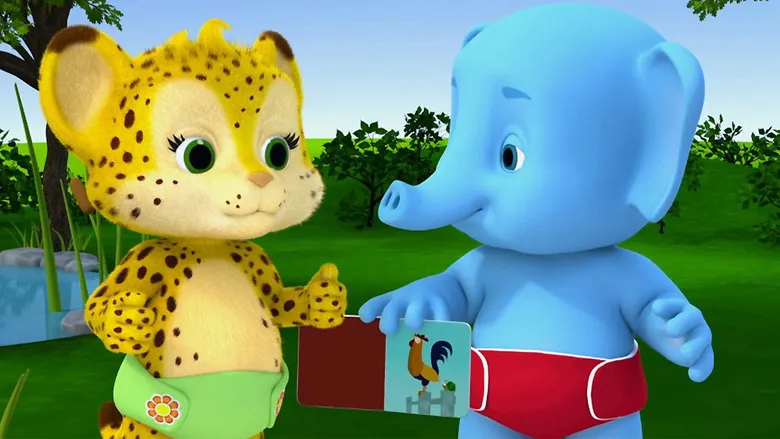
Four baby animals, Lulu, Bailey, Franny and Kip, decide to play farm and pretend to be different farm animals. A disagreement breaks out when more than one of them wants to be the chicken, and they work it out by learning that a girl chicken is a hen and a boy chicken is a rooster. A word-learning segment then recaps the animal names with real photographs, followed by a short dance. The episode closes with the babies stopping to eat after their game.

Word Party
S01 E03

Word Party

To the Moon

Stimulating
recommended age Unlock co-watching from 3
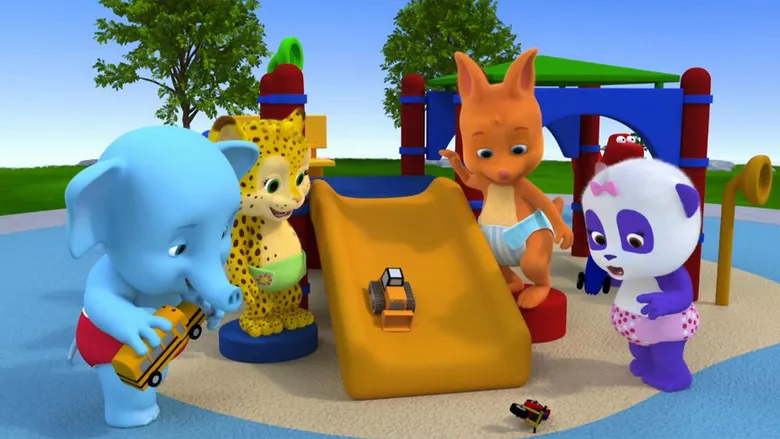
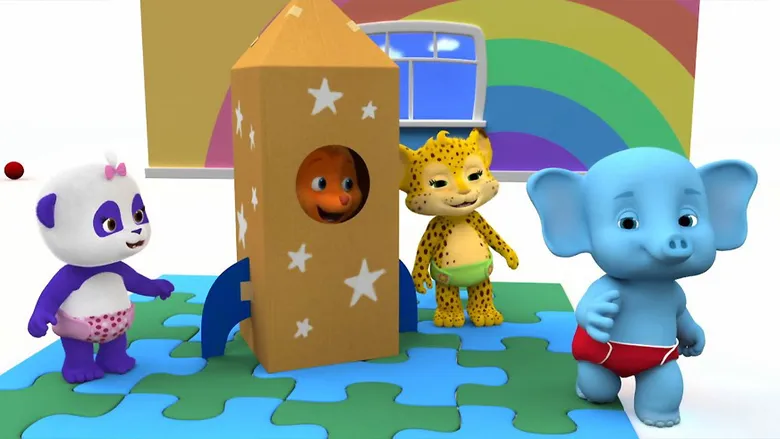
A group of baby animals play together in their playroom and turn one big cardboard box into a series of pretend vehicles. With help from the viewer they name a fire truck, a sailboat and an airplane, then learn the new word 'rocket'. Kip, who keeps struggling to think of a vehicle, finally chooses to pretend they fly to the moon. The episode ends with Kip blasting off, seeing the moon and stars, and waving goodbye.

Word Party
S01 E04

Word Party

The Slow Racer

Stimulating
recommended age Unlock co-watching from 3
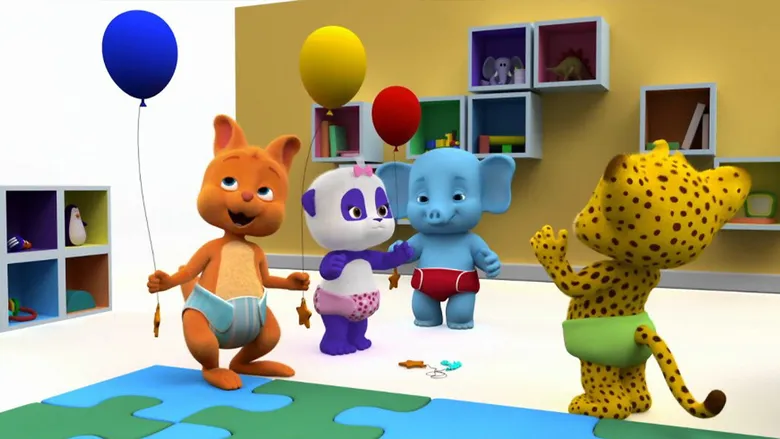
Four baby animals, Franny, Lulu, Kip and Bailey, decide to race toy vehicles after Lulu the cheetah keeps winning every running race. They dig through a toy box and find a race car, a bus, a motorcycle and a bulldozer, briefly squabbling over who gets which before apologising and sharing. With help from Clicky Clock and the word wall, the babies learn the name of each vehicle, including Franny's slow bulldozer. The episode ends when Franny discovers her bulldozer is good at moving dirt and Clicky Clock announces it is time for lunch.

Word Party
S01 E05

Word Party

Burst My Balloon

Stimulating
recommended age Unlock co-watching from 3
A group of baby animals, including the lion cub Bailey and the elephant Lulu, finish breakfast and find colored balloons waiting in their playroom. When Bailey accidentally pops Lulu's balloon during a game, Lulu is sad and cannot name the color she wants. The friends hold a word party to teach her the color names, asking the viewer to help, and a toy provides a new turquoise balloon. The babies play together and wave goodbye.

Explore more

By age 3 years
By platform Netflix

Share

Pass this find on to another parent

Link preview

Word Party | Sufficient, co-watching from age 3

Word Party | Sufficient, co-watching from age 3 - Slowscreen

Sufficient · Co-watching from age 3. Word Party follows four baby animals, Bailey, Franny, Kip and Lulu, learning new words together in their shared playroom ho...

slowscreen.com

https://slowscreen.com/en/series/word-party

https://slowscreen.com/en/series/word-party

Slowscreen

Word Party | Sufficient, co-watching from age 3 - Slowscreen

Sufficient · Co-watching from age 3. Word Party follows four baby animals, Bailey, Franny, Kip and Lulu, learning new words together in their shared playroom ho...

Word Party | Sufficient, co-watching from age 3

slowscreen.com

Word Party | Sufficient, co-watching from age 3 - Slowscreen

Sufficient · Co-watching from age 3. Word Party follows four baby animals, Bailey, Franny, Kip and Lulu, learning new words together in their shared playroom ho...

Word Party | Sufficient, co-watching from age 3
slowscreen.com

Word Party | Sufficient, co-watching from age 3 - Slowscreen

slowscreen.com · Posted by you

Word Party | Sufficient, co-watching from age 3 - Slowscreen

0 Share
Word Party | Sufficient, co-watching from age 3
To
Subject Word Party | Sufficient, co-watching from age 3

Sufficient · Co-watching from age 3. Word Party follows four baby animals, Bailey, Franny, Kip and Lulu, learning new words together in their shared playroom ho...

https://slowscreen.com/en/series/word-party

Share on WhatsApp Share on X Share on Facebook Share on Telegram Share on Reddit Share on Email

Just launched: free lifetime premium for the first 1,000 members to activate their account.

Create your account

Search by title, show, tag, or topic

We use functional cookies and Google Analytics to improve our site. Learn more