





Slowscreen SlowScreen
Toggle sidebar

Just launched: free lifetime premium for the first 1,000 members to activate their account.

Start free

The Wolf and the Seven Little Kids

Sufficient

Recommended age Unlock

Co-watching from age 4

Stimulating

Exact score locked

Watch on Netflix Prime Video HBO Tubi TV Toon Goggles
Save
The Wolf and the Seven Little Kids

Share

Pass this find on to another parent

Link preview

Masha and the Bear: The Wolf and the Seven Little Kids | Sufficient, co-watching from age 4

Masha and the Bear: The Wolf and the Seven Little Kids | Sufficient, co-watching from age 4 - Slowscreen

Sufficient · Co-watching from age 4. In her own room, Masha tells her toys the fairy tale of the wolf and the seven little goats. A mother goat leaves for the s...

slowscreen.com

https://slowscreen.com/en/video/masha-en-de-beer-de-wolf-en-de-zeven-geitjes

https://slowscreen.com/en/video/masha-en-de-beer-de-wolf-en-de-zeven-geitjes

Slowscreen

Masha and the Bear: The Wolf and the Seven Little Kids | Sufficient, co-watching from age 4 - Slowscreen

Sufficient · Co-watching from age 4. In her own room, Masha tells her toys the fairy tale of the wolf and the seven little goats. A mother goat leaves for the s...

Masha and the Bear: The Wolf and the Seven Little Kids | Sufficient, co-watching from age 4

slowscreen.com

Masha and the Bear: The Wolf and the Seven Little Kids | Sufficient, co-watching from age 4 - Slowscreen

Sufficient · Co-watching from age 4. In her own room, Masha tells her toys the fairy tale of the wolf and the seven little goats. A mother goat leaves for the s...

Masha and the Bear: The Wolf and the Seven Little Kids | Sufficient, co-watching from age 4
slowscreen.com

Masha and the Bear: The Wolf and the Seven Little Kids | Sufficient, co-watching from age 4 - Slowscreen

slowscreen.com · Posted by you

Masha and the Bear: The Wolf and the Seven Little Kids | Sufficient, co-watching from age 4 - Slowscreen

0 Share
Masha and the Bear: The Wolf and the Seven Little Kids | Sufficient, co-watching from age 4
To
Subject Masha and the Bear: The Wolf and the Seven Little Kids | Sufficient, co-watching from age 4

Sufficient · Co-watching from age 4. In her own room, Masha tells her toys the fairy tale of the wolf and the seven little goats. A mother goat leaves for the s...

https://slowscreen.com/en/video/masha-en-de-beer-de-wolf-en-de-zeven-geitjes

Share on WhatsApp Share on X Share on Facebook Share on Telegram Share on Reddit Share on Email

See the exact scores

The review is yours to read. Create a free account to reveal the exact SlowScreen score and every pillar score.

Create free account
This program is stimulating. It actively demands attention and can feel intense. For the recommended age, this may be on the more intense side. The pacing is moderate. The story remains easy for a child to follow. The sound is soft and supportive. The visuals are well-balanced, with a clear overall view.
The episode holds one clear thread from start to finish: a mother goat leaves, warns her kids, and a wolf tries to trick his way in. Events follow a recognisable beginning, middle and end, and actions lead to sensible consequences, such as the goats opening the door once they trust the voice. The small caveat is that Masha keeps interrupting herself with asides ('was it milk? maybe cabbage'), which adds a few detours a young child has to hold in mind.
The story leans on real menace: the wolf swallows the little goats one by one, glares from the dark, and warns the seventh 'jij pak ik ook nog' ('I'll get you too'). Reassurance does arrive when the mother returns and drives the wolf off, but the threat runs long and the shift into fear can feel sudden for this age. Mama goat is caring and consistent, yet the wolf's cruelty and gloating set an uneasy tone that a four-year-old may find unsettling.
Most of the visible planning belongs to the wolf, who schemes, visits the blacksmith to soften his voice and climbs the chimney, rather than to a character a child would want to copy. The seventh goat does show initiative by hiding in the oven, and the mother solves the crisis by lighting the fire, each a small chain of cause and effect. Still, the thinking on show is mainly a villain outsmarting others, which limits how much genuine, imitable problem-solving the child takes away.
The Dutch is clear and mostly told in full sentences, with a rich vocabulary that suits a four-year-old learning new words from context, including 'smid' (blacksmith), 'moker' (sledgehammer) and 'schoorsteen' (chimney). Language is used purposefully to carry the story and the repeated door-song reinforces meaning rather than filling space. The one caveat is Masha's rambling self-corrections, which occasionally blur what is fact and what she is unsure about.
This is a fairy tale of talking animals where a wolf swallows goats whole and blows at a brick oven, so little of what happens transfers to a child's own day. The clearest real-world thread is the safety message, 'doe de deur niet open voor vreemdelingen' ('do not open the door for strangers'), and the recognisable family dynamic of a parent setting rules before leaving. Beyond that lesson the activities stay in the world of make-believe, offering few steps a child could carry into offline play.

More information

This score shows how inclusively the series portrays diverse people, families and cultures. Scale: Limited → Varied → Rich → Inclusive.
This episode has a young girl and a bear frame a classic fairy tale, which is then acted out entirely by animals: a mother goat, her seven kids, a wolf, and a blacksmith. The cast is narrow, with no real variety in human background, age or body type, and the caregiving and working roles follow familiar patterns. The mother goat keeps house, shops and cooks, the wolf is a single-note threat, and the blacksmith is a male craftsman. The picture of who people are and how they live together stays traditional and limited.
This score shows whether the series stays close to everyday reality or leans into fantasy. Scale: Fantasy → Mixed reality → Realistic.
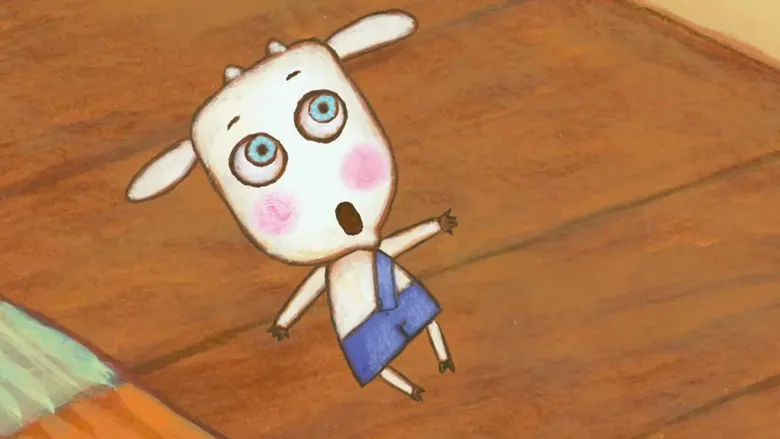
This episode nests a classic fairy tale inside a frame: Masha tells her toys the story of 'The Wolf and the Seven Little Kids' before it returns to her at the end. The tale unfolds in a painted storybook world of talking goats and a wolf, so it sits firmly on the imagined side rather than everyday life. It leans on a clear good-against-bad structure, with the big bad wolf as a flat villain who tricks and eats the little goats, which is the traditional shape of the story but offers little character depth. The fairy-tale logic holds together consistently, and the mix suits older preschoolers, though the predator theme and a few tense, dark moments make it more intense than the youngest in this age band may want.
This score shows how enjoyable the series is for parents watching along. Scale: Tedious → Tolerable → Pleasant → Enjoyable.
This one rewards the grown-up in the room more than most. The episode wraps a full fairy tale, the wolf and the seven little goats, inside Masha telling the story to her toys, and she narrates it as a scatterbrained storyteller who keeps losing track of whether the goat mother went out for milk or cabbage. The tale carries a real beginning, middle and end, the two visual worlds are handsome, and the only rough edges are the wolf's raspy, high shriek and a door song refrain that comes back a few times. Comfortable company for a watching parent, with small caveats rather than real irritation.

Themes

Fairy tales

Central

Masha retells the classic tale 'De wolf en de zeven geitjes' to her toys.

Good vs evil

Central

The story pits the caring mother goat and her kids against the scheming Big Bad Wolf.

Safety

Central

The repeated lesson is not opening the door for strangers, said by both Masha and mama goat.

Scary scenes

The wolf's eyes glow in a fully darkened frame as he hunts the last goat.

Antagonist

The Big Bad Wolf is a persistent villain threatening the kids throughout.

Fantasy violence

The wolf swallows six little goats one by one and threatens to eat the seventh.

Danger

The trapped seventh goat is stalked while the wolf tries to blow down the oven and enter the chimney.

Screen use

Masha ends by pressing buttons on a video app and modelling searching for cartoons.

Attention hooks

Masha tells the viewer 'Vooruit, probeer zelf maar' ('Go on, try it yourself') while browsing for more videos.

Stereotypes

Flat villain

The wolf is one-dimensionally 'boze' and 'stout' ('mean' and 'naughty') with no motive beyond eating the goats.

Villain appearance coding

The wolf is drawn dark and sharp-toothed and glares with glowing eyes from blackness.
In her own room, Masha tells her toys the fairy tale of the wolf and the seven little goats. A mother goat leaves for the shop and warns her kids not to open the door for strangers, but the Big Bad Wolf disguises his voice, tricks his way in and swallows six of them while the youngest hides in the oven. When the mother returns she lights the oven, burns the wolf's tail and sends him fleeing into the woods, and the kids tell her what happened. The episode ends with Masha searching a video screen for another cartoon.

Explore more

From this series Masha and the Bear
By age 4 years

Just launched: free lifetime premium for the first 1,000 members to activate their account.

Create your account

Search by title, show, tag, or topic

We use functional cookies and Google Analytics to improve our site. Learn more