




Slowscreen SlowScreen
Toggle sidebar

Just launched: free lifetime premium for the first 1,000 members to activate their account.

Start free

Masha and the Bear

Mediocre

Recommended age Unlock

Co-watching from age 4

Stimulating

Exact score locked

Watch on Netflix Prime Video Tubi TV Toon Goggles
Availability in
Save
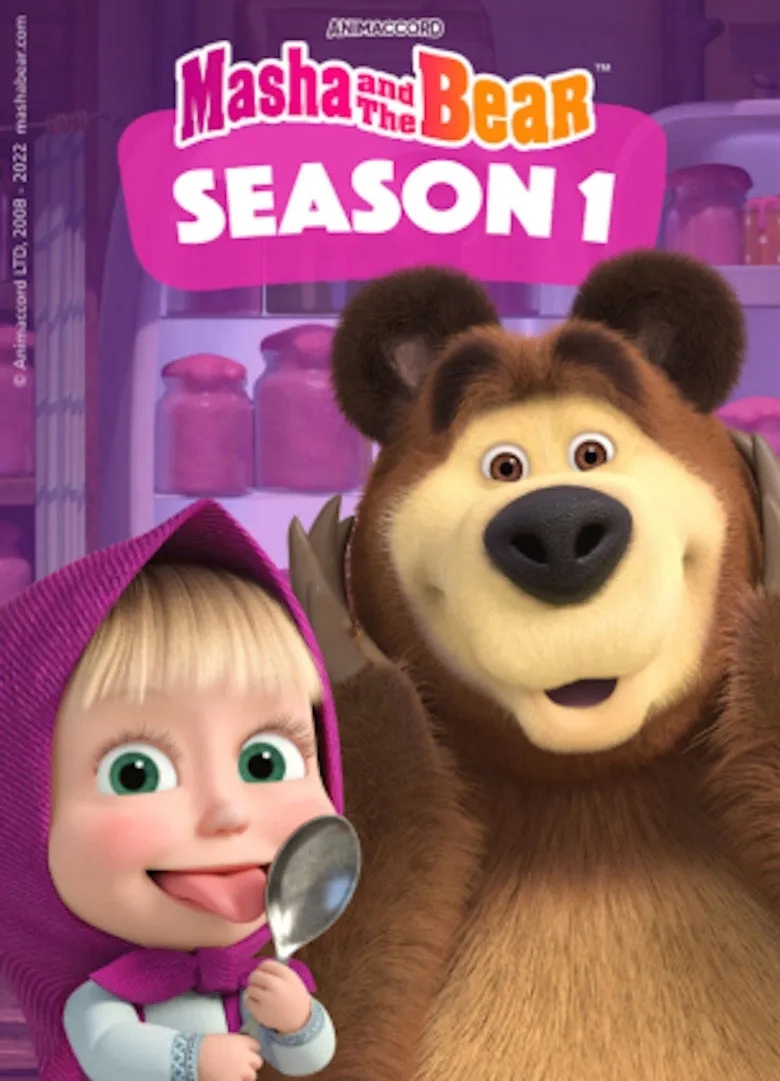
Masha and the Bear

Masha is an energetic little girl who lives in a Russian forest, sharing mischief with a patient brown bear. The tone is playful and lively, aimed at preschoolers, with gentle social lessons.

  • A caring bear who patiently looks after Masha.
  • Imaginative play turns everyday moments into games.
  • Strong feel for nature and changing seasons.
  • Self-contained stories with satisfying endings.
  • Lots of slapstick chaos and broken belongings.
  • Masha can be impulsive and overwhelming for others.
  • A few moments feel mildly tense for the youngest.

See the exact scores

The review is yours to read. Create a free account to reveal the exact SlowScreen score and every pillar score.

Create free account

Score Breakdown

Most episodes move at a fast pace, with images following each other quickly and little time to pause and take in what is happening. The sound is clearly present and regularly pulls attention, which can feel intense for the youngest viewers. The visuals themselves stay calm and well organised throughout. The 'Roodkapje' episode is the exception, with a calmer pace and softer, supportive sound that is easier to follow.
Every episode follows a clear storyline with a recognisable beginning, middle and end, and cause and effect is easy to track visually even when there is little dialogue. When Masha jumps on the bed it collapses, and when a candle tips the tree catches fire, so a young child can follow what leads to what. The recurring caveat is the slapstick: scenes often stack several new gags or events on top of each other, which pushes the information load to the upper edge of what a preschooler comfortably holds. The 'Roodkapje' episode steps away from a single plot by telling two fairy tales back to back, which asks a little more attention than the tighter episodes.
The emotional register is often unsettled. The Bear is repeatedly framed as the put-upon adult Masha runs circles around, her disruption is rarely gently corrected, and characters tease and mock one another. Tension tends to resolve late or simply roll into more chaos rather than into real reassurance, and some episodes lean harsh, with adults pleased to be rid of the child or antagonists hurt for laughs. The 'Roodkapje' retelling adds graphic moments, such as the wolf swallowing characters whole before his stomach bursts. A genuinely tender beat does appear, like the closing porridge and tuck-in scene, but these are the exception rather than the rule.
Initiative is rarely the problem: Masha drives the action and the Bear visibly tries one strategy after another, from hiding his key to cooking porridge to calm her. What holds this back is that the problem-solving is mostly slapstick rather than reasoned steps a child could copy. Plans tend to fail through chaos, and many situations resolve by luck or outside rescue rather than through trying, failing and adjusting. The New Year and hibernation stories do show a clearer sequence of attempts, but the thinking behind them stays unspoken and is only shown, never named.
Most episodes are almost entirely wordless, carried by music, sound effects and isolated exclamations like 'hey', 'oh' and 'yummy' rather than full sentences. For a child who is actively building vocabulary and sentence structure, these offer very little to imitate, label or repeat. The clear exception is the 'Roodkapje' episode, where a narrator tells the fairy tales in complete, well-structured storybook Dutch with richer words like 'snuit' and 'blaaskracht' used in context. There the speech runs brisk and literary, so some passages move faster than a young listener can fully absorb.
Recognisable everyday activities do appear, such as cooking, cleaning, decorating a tree, wrapping gifts and preparing for winter, which a young child can connect to familiar routines. These sit inside a fantasy world of a house-dwelling bear and talking forest animals, and Masha's headline behaviours, jumping on beds, raiding cupboards and breaking furniture, are played for comedy rather than offered as something to copy. Warm social moments lift this in places, like neighbours helping each other celebrate, and the 'Roodkapje' episode closes on a real lesson about visiting grandma and not opening the door to strangers. On the whole, though, little of what happens carries over into a child's daily life.

More information

This score shows how inclusively the series portrays diverse people, families and cultures. Scale: Limited → Varied → Rich → Inclusive.
The on-screen world is consistently narrow. A small light-skinned Russian girl, Masha, and a male brown bear anchor every episode, surrounded by talking forest animals and the occasional figure such as Father Frost, with no other families, cultural backgrounds or ethnic variation. Everything is framed through a single cultural lens of Russian folklore, and this picture stays stable from one episode to the next. Masha clearly drives the action, while the supporting roles settle into familiar patterns: a patient male caregiver and, where antagonists appear, foolish or threatening males. The 'Roodkapje' episode leans hardest on traditional lines, with mothers and grandmothers as the sole caregivers and male characters cast as threats or craftsmen.
This score shows whether the series stays close to everyday reality or leans into fantasy. Scale: Fantasy → Mixed reality → Realistic.
The series blends a recognisable countryside of villages, forest and seasons with a fully imagined core: a brown bear who lives in a house, cooks at a stove and acts as a caregiver, alongside animals that talk and behave like people. In most episodes there is no villain at all, and conflict comes from Masha's curiosity and clumsiness rather than an antagonist. Two episodes change that: the 'Roodkapje' retelling builds both tales around the textbook 'grote boze wolf', and the wolf pack in 'Dansen met Wolven' recurs as flat antagonists in a clear good-versus-evil frame. The fantasy rules stay consistent throughout, though the slapstick and the darker fairy-tale moments lean toward the older end of the preschool range.
This score shows how enjoyable the series is for parents watching along. Scale: Tedious → Tolerable → Pleasant → Enjoyable.
If you end up on the couch for this one, there is genuinely something here for you. The animation is cinema-grade, the humour leans on silent-comedy physicality rather than non-stop chatter, and each episode tells a real story instead of looping the same beat. The catch is Masha herself: her shrill, relentless energy is the one thing that will wear on you after a while, and the 'Roodkapje' episode takes some surprisingly dark detours with the wolf. In short bursts it is an easy watch for the grown-up in the room, with that one high-pitched caveat.

Season 1

8 episodes

Masha and the Bear - Little Red Riding Hood

Masha and the Bear - Little Red Riding Hood

Little Red Riding Hood

Balanced
recommended age Unlock co-watching from 4
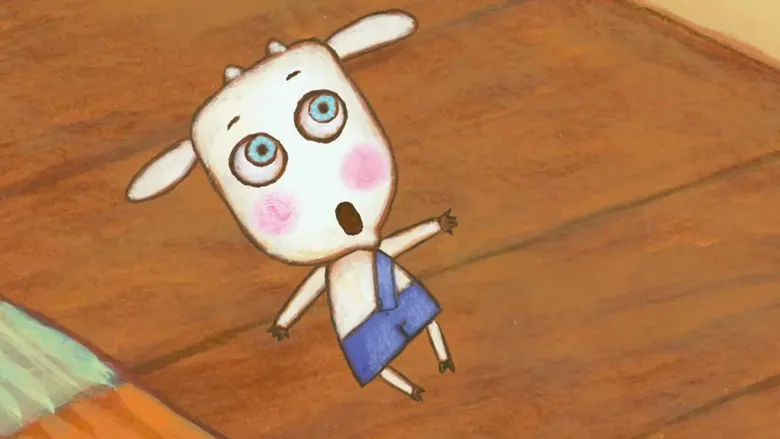
A narrator retells Little Red Riding Hood, folded together with the gingerbread ball tale, as one of Masha's stories. Red Riding Hood sets off through the forest to her sick grandmother, meets a talking gingerbread, and runs into the big bad wolf, who eats the grandmother, the girl and the gingerbread in turn. The wolf's overstuffed belly then bursts and everyone jumps out safely, while the gingerbread rolls off and is finally eaten by a fox. The narrator ends with lessons about not telling strangers where you are going and visiting your family more often.

Masha and the Bear - The Wolf and the Seven Little Kids

Masha and the Bear - The Wolf and the Seven Little Kids

The Wolf and the Seven Little Kids

Stimulating
recommended age Unlock co-watching from 4
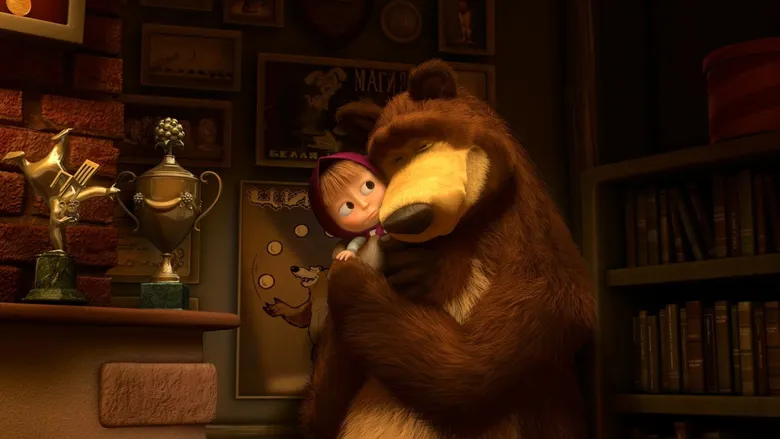
In her own room, Masha tells her toys the fairy tale of the wolf and the seven little goats. A mother goat leaves for the shop and warns her kids not to open the door for strangers, but the Big Bad Wolf disguises his voice, tricks his way in and swallows six of them while the youngest hides in the oven. When the mother returns she lights the oven, burns the wolf's tail and sends him fleeing into the woods, and the kids tell her what happened. The episode ends with Masha searching a video screen for another cartoon.

Masha and the Bear
S01 E01

Masha and the Bear

How They Met

Stimulating
recommended age Unlock co-watching from 4
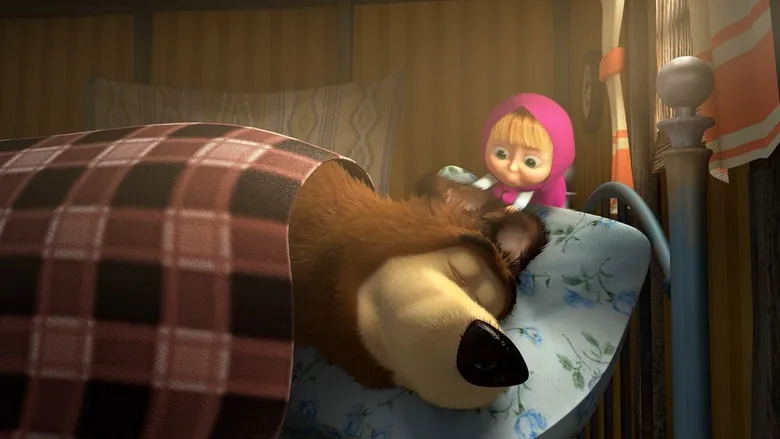
A small girl named Masha lives near a railway and chases the farm animals until they hide from her, so she wanders into the forest. She finds a tidy wooden house belonging to a bear and turns it upside down while he is out fishing. When the bear returns and discovers the chaos, he tries to chase her off, but then worries about her being alone in the woods and goes searching with a lantern. He finds her back inside his house, asleep, and lets her stay.

Masha and the Bear
S01 E02

Masha and the Bear

Don't Wake Till Spring!

Stimulating
recommended age Unlock co-watching from 4
Autumn arrives and the Bear prepares his cabin for hibernation, settling into bed for a long sleep. Masha discovers he is shutting himself away and keeps finding her way back inside, bouncing on the bed and accidentally knocking over a row of beehives that send a swarm chasing them. To calm her down the Bear cooks a pot of porridge and feeds her at the table. The episode closes with Masha falling asleep mid-spoonful, the Bear carrying her to bed and the camera resting on the moonlit forest where a deer watches from outside the window.

Masha and the Bear
S01 E03

Masha and the Bear

One, Two, Three! Light the Christmas Tree!

Stimulating
recommended age Unlock co-watching from 4
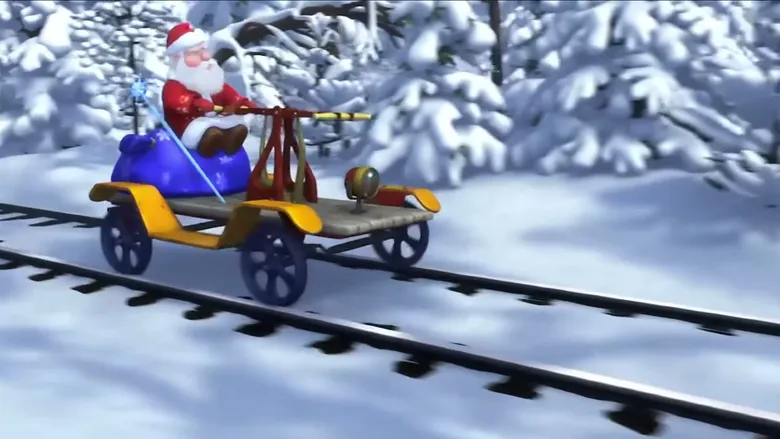
Masha and the Bear prepare for Christmas in the Bear's cozy forest home, decorating a tree while Masha turns everything into chaos. The story moves outdoors into the snowy woods, where Santa travels on rail-carts and delivers gifts to the forest animals on his list. Back home, Santa lights the tree with his magic staff. The episode ends with the tree glowing and fireworks over the village.

Masha and the Bear
S01 E07

Masha and the Bear

Prances with Wolves

Stimulating
recommended age Unlock co-watching from 4
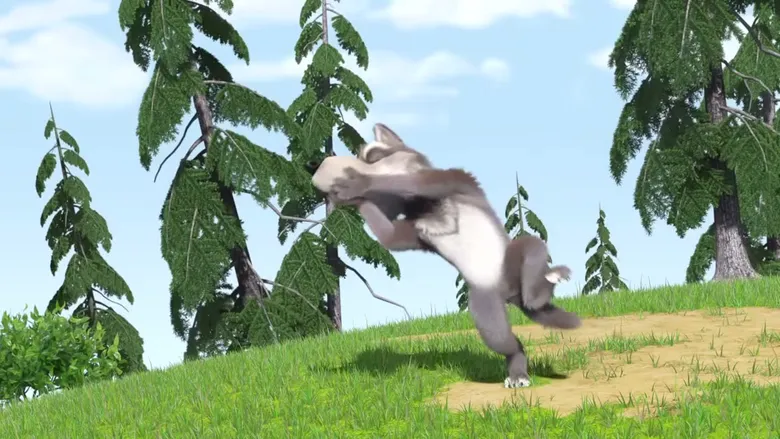
In a Russian forest, the energetic girl Masha discovers an old ambulance where two wolves live, while the wolves scheme to trade her to the brown bear for a barrel of honey. Masha turns the ambulance into a doctor's office and insists on treating the wolves, chasing them with checkups and pretend medicine until they flee. The comedy plays out mostly through fast action and sound effects rather than dialogue. By the end the wolves' plan falls apart and Masha carries honey to the bear.

Masha and the Bear
S01 E08

Masha and the Bear

Call me please!

Stimulating
recommended age Unlock co-watching from 4
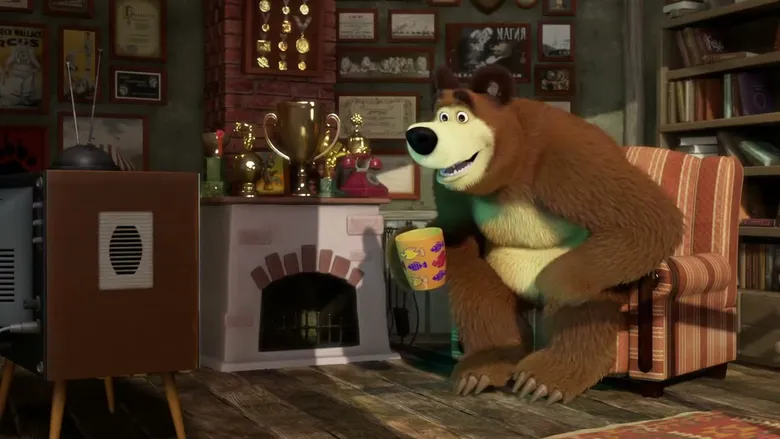
Masha takes the Bear's old mobile phone and heads into the forest to make calls while he tries to enjoy a football match and a relaxation show on television. Her wandering leads to comic run-ins, including a tense pause when a grey wolf blocks her path, and the Bear repeatedly scrambles as his quiet afternoon falls apart. The action plays out in the Bear's trophy-filled house and along sunny forest trails. After the story the credits roll, then a bonus segment shows Masha as a detective searching a video screen and inviting the viewer to look up more episodes.

Masha and the Bear
S01 E14

Masha and the Bear

Watch Out!

Stimulating
recommended age Unlock co-watching from 4
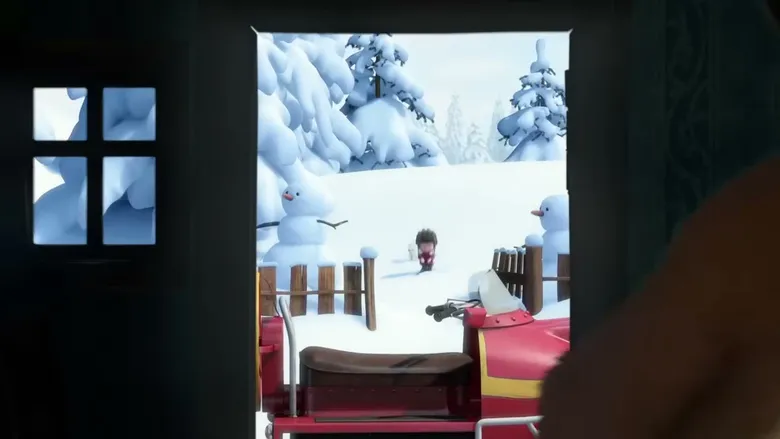
In a snowy forest, the lively girl Masha gets hold of Bear's first-aid kit and then his red snowmobile, setting off a runaway ride full of crashes, near-misses and a pack of wolves. Bear is dragged into the chaos and spends the episode reacting to and cleaning up after her. In the end the pair make it home, and Masha admits her mistake, saying she will never do it again and accepting a spell in the corner. The closing scene has Masha dressed as a detective, using a tablet to search for cartoons and telling viewers to try it themselves.

Explore more

Share

Pass this find on to another parent

Link preview

Masha and the Bear | Mediocre, co-watching from age 4

Masha and the Bear | Mediocre, co-watching from age 4 - Slowscreen

Mediocre · Co-watching from age 4. Masha is an energetic little girl who lives in a Russian forest, sharing mischief with a patient brown bear. The tone is play...

slowscreen.com

https://slowscreen.com/en/series/masha-en-de-beer

https://slowscreen.com/en/series/masha-en-de-beer

Slowscreen

Masha and the Bear | Mediocre, co-watching from age 4 - Slowscreen

Mediocre · Co-watching from age 4. Masha is an energetic little girl who lives in a Russian forest, sharing mischief with a patient brown bear. The tone is play...

Masha and the Bear | Mediocre, co-watching from age 4

slowscreen.com

Masha and the Bear | Mediocre, co-watching from age 4 - Slowscreen

Mediocre · Co-watching from age 4. Masha is an energetic little girl who lives in a Russian forest, sharing mischief with a patient brown bear. The tone is play...

Masha and the Bear | Mediocre, co-watching from age 4
slowscreen.com

Masha and the Bear | Mediocre, co-watching from age 4 - Slowscreen

slowscreen.com · Posted by you

Masha and the Bear | Mediocre, co-watching from age 4 - Slowscreen

0 Share
Masha and the Bear | Mediocre, co-watching from age 4
To
Subject Masha and the Bear | Mediocre, co-watching from age 4

Mediocre · Co-watching from age 4. Masha is an energetic little girl who lives in a Russian forest, sharing mischief with a patient brown bear. The tone is play...

https://slowscreen.com/en/series/masha-en-de-beer

Share on WhatsApp Share on X Share on Facebook Share on Telegram Share on Reddit Share on Email

Just launched: free lifetime premium for the first 1,000 members to activate their account.

Create your account

Search by title, show, tag, or topic

We use functional cookies and Google Analytics to improve our site. Learn more