


This program is well-balanced. It remains mostly easy to follow and process. It is a good fit for the recommended age.
The pacing is moderate. The story remains easy for a child to follow.
The sound is intense and continuously present.
The visuals are well-balanced, with a clear overall view.
There is one easy thread to follow, as the letters appear in order from A to Z, so a child always knows roughly where things are heading. Each letter gets its own clear moment, and the opening shows a satisfying cause and effect when blocks join to spell a word like 'land' and bring it to life. The main caveat is that twenty-six new letters arrive one after another, which is a lot of fresh information for the very youngest to take in. The simple, repeated structure of one letter at a time does help keep it followable.
The mood stays light and friendly the whole way through. The letters are playful and good-natured, singing 'let us go together' and urging each other on with 'come on', and nothing turns frightening or harsh. Emotions stay gentle, so there is little tension a child would need to recover from. One small note is that the feel shifts from one letter's personality to the next, such as a growly green block followed by a cheerful one, though these stay mild and good-humoured.
The episode shows letters making sounds rather than characters working through problems, so there is little trying, failing and adjusting for a child to follow. The clearest piece of figuring-things-out is in the opening, where blocks join together and a word appears, but this lands as a quick result rather than a worked-through process. The letters do take some initiative, coming together on their own and inviting each other along. Beyond that, there is not much space here for independent problem-solving.
Most of what a child hears are single letter sounds, like the 'fff' for F or the 'mmm' for M, which suit a toddler just starting to notice letters. These sounds are clear and purposeful within the phonics idea. The limitation is that there is very little full speech, only a few short phrases such as 'come on' and 'let us go together', and almost no complete sentences to model. So the language is clean and simple, but thin on real conversation.
The episode carries genuine learning value, helping a child link letters to their sounds, and saying those sounds is something a child can copy straight away. At the same time, the world here is fully made-up: letters with faces living in a cloudy landscape, joining by magic to make words. That keeps it at a distance from everyday life and recognisable situations. The cooperation between the letters hints at working together, but the setting itself does not reflect the people, places and routines a young child knows.
More information
This score shows how inclusively the series portrays diverse people, families and cultures. Scale: Limited → Varied → Rich → Inclusive.
Alphablocks is built around 26 letters brought to life, each a different colour with its own small personality, so the screen offers plenty of visual variety but none of the human diversity of background, family or daily life. Roles are shared out evenly, with every letter from A to Z getting the same kind of turn and no group holding all the initiative. There is no harmful stereotyping here, simply an abstract alphabet concept that leaves little room to show how different people live together. Parents looking for varied human faces or family forms will not find them, though nothing on screen pushes a narrow social norm.
This score shows whether the series stays close to everyday reality or leans into fantasy. Scale: Fantasy → Mixed reality → Realistic.
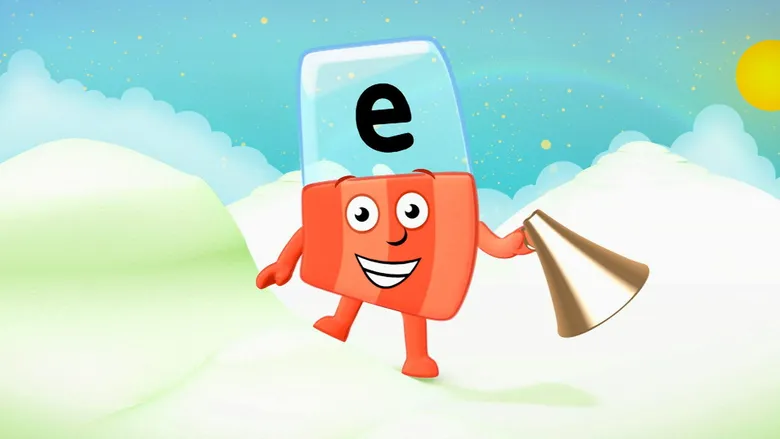
Alphablocks turns the alphabet into a cast of cheerful blocks who live in an open, cloudy sky and make their letter sounds, sliding together to spell simple words like 'land' and 'box'. It is an entirely invented world rather than an everyday one, yet it runs on a single clear rule that never breaks, which keeps the imagination easy to follow. There is no villain and no real conflict, just the gentle puzzle of sounds becoming words. The calm tone suits young children well, though the imaginative premise and the spelling focus sit a touch above the simplest, most realistic fare a two-year-old usually meets.
This score shows how enjoyable the series is for parents watching along. Scale: Tedious → Tolerable → Pleasant → Enjoyable.
This first episode works as an introduction to the alphabet rather than a story, so there is little for an adult to follow along with or laugh at. Each letter appears in turn and makes its own sound, which keeps the plot thin and repetitive. The upside is a calm presentation, with a soft palette and gentle music that make it easy to have in the room. The animation and character design are polished and consistent, which lifts the overall experience.
Themes
Alphabet
Central
Each block carries one letter and makes its sound as the episode runs from A through Z.
Phonics
Central
Letters voice their individual sounds such as 'fff', 'mmm' and 'nnn' for the viewer to hear.
Wordplay
Recurring
At the start the blocks join hands to spell words like 'land' and 'box', with on-screen text 'We can make anything'.
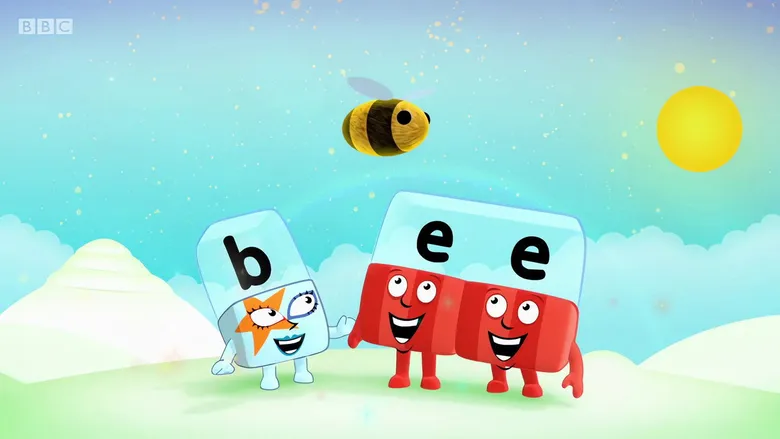
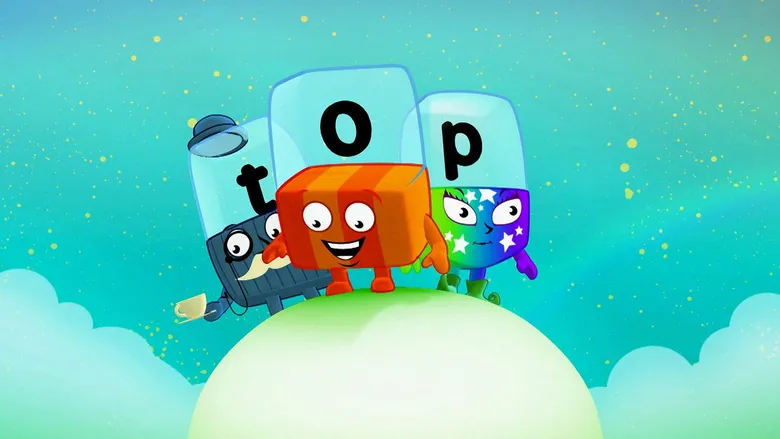
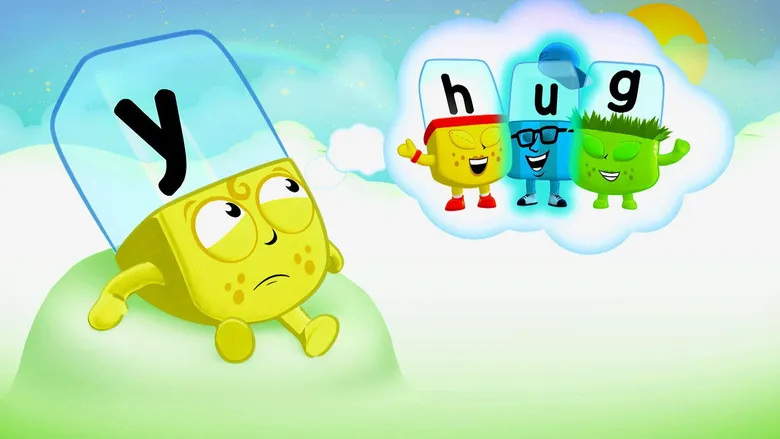
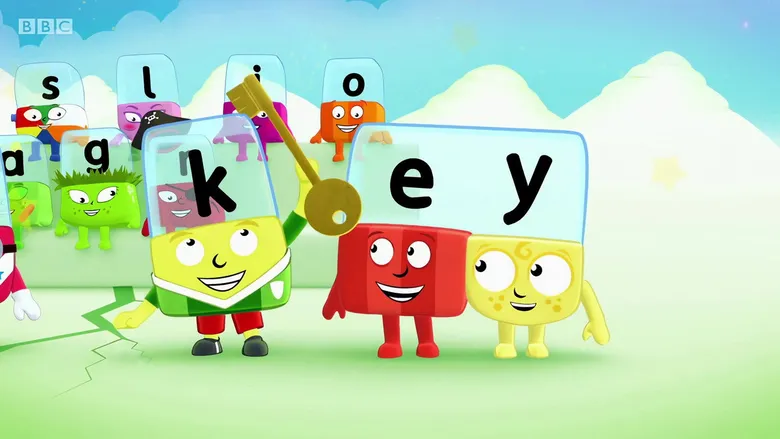
The Alphablocks, a set of cube-shaped letter characters, appear one by one in a soft, snowy pastel landscape. Each letter makes its own sound, and at the start the blocks join hands to spell words like 'land' and 'box'. The episode works through the alphabet from A to Z, carried by a light song with the refrain 'let us go together'. It closes with the end credits.