
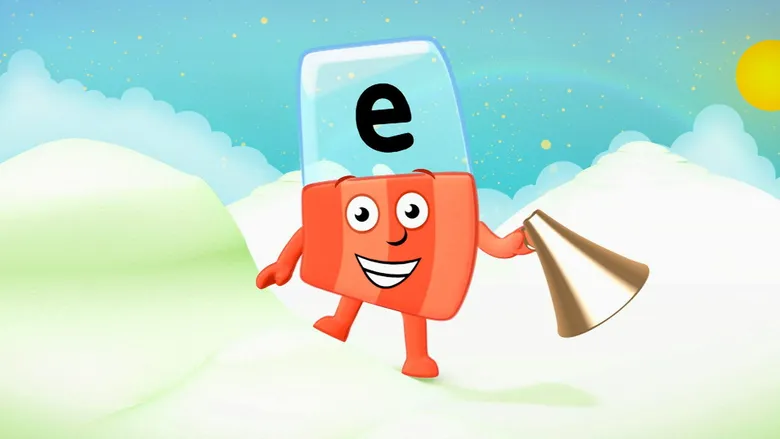
This program is well-balanced. It remains mostly easy to follow and process. It is a good fit for the recommended age.
The pacing is calm. A child has time to watch and understand what is happening.
The sound is intense and continuously present.
The visuals are well-balanced, with a clear overall view.
The episode keeps one clear focus, the letter E showing how many words he can help build, and events follow a tidy order from a single E to a double E and finally five of them. Each combination leads predictably to a finished word, so the cause and the result are easy to follow. The catch for a two-year-old is how much arrives at once: bed, bee, tree, eel and beekeeper pile up with new spellings in every segment. Older preschoolers will track it more comfortably than the youngest children.
The emotional tone stays warm and upbeat, with the letters cooperating and singing about living 'together in harmony' rather than competing or squabbling. There is no anger, fear or sadness, and the one mild wobble, when E frets that he needs more E's to finish the big word, resolves into applause and celebration soon after. Characters treat each other kindly and behave consistently from scene to scene. The small caveat is E's repeated boast that he is 'the busiest letter in the alphabet', which reads as cheerful rather than unkind.
The characters drive the action themselves, with E eagerly calling for more E's to build bigger words, but the thinking on show stays simple. Putting two E's together to make a sound and then a word is mostly cause and effect plus imitation, without much trial, error or visible adjustment. The climb to the five-E word beekeeper has recognizable steps as more letters join in, yet the solution arrives smoothly rather than through real working-out. For a two-year-old the modelled curiosity is a plus, even if the reasoning rarely deepens.
The words are clear and used correctly, and the songs lean on simple, concrete nouns like bee, tree, eel and bed that a young child can picture. Much of the talk does real work, naming letters and showing how they blend, and the repeated lines reinforce meaning rather than pad it out. A few playful turns such as 'you really never met a better letter yet' and ideas like 'harmony' sit a step above what a two-year-old will fully grasp. On the whole the language is meaningful and tied closely to what is happening on screen.
The world is almost entirely abstract, with talking letter blocks combining in a sky of clouds rather than anything a toddler meets in daily life, so the direct real-world transfer is limited. The core idea, that letters carry sounds that build into words, does connect to early reading, and touches of family language like 'brother E' and 'the family' echo recognizable relationships. Still, the on-screen actions of blocks magically merging are not things a child can copy with real objects. The lasting value sits in letter familiarity more than in everyday, hands-on activity.
More information
This score shows how inclusively the series portrays diverse people, families and cultures. Scale: Limited → Varied → Rich → Inclusive.
Alphablocks builds its whole world from personified letters, so there are no human characters and none of the variety in background, family or culture that representation usually means. The letters differ in colour and small personality traits, like the busy E and the silent E, but every figure here is treated as male, which keeps the range narrow. On the positive side, the blocks work together as equals to form words, with no single character placed above the others. The format is built around phonics rather than people, so on the question of showing a broad, inclusive picture of how people live together it offers very little.
This score shows whether the series stays close to everyday reality or leans into fantasy. Scale: Fantasy → Mixed reality → Realistic.
This is a fully imagined world: letters with faces and arms float through a sky of clouds, joining together to spell words that come to life. There is no villain, and the gentle conflict comes only from the letters working out how to combine, which they do cooperatively ('we can live together in harmony'). The fantasy keeps to its own steady rules, with each letter making its sound and real words taking shape when they join. For a 2-year-old the balance tips well past the mostly-realistic content that suits this age, and the reading focus sits a step ahead of where they are.
This score shows how enjoyable the series is for parents watching along. Scale: Tedious → Tolerable → Pleasant → Enjoyable.
This is a polished phonics series that looks and sounds good, with catchy songs and tidy animation that make it easy to have on in the room. For an adult co-viewer there is little beyond the surface, since both the humor and the plot stay firmly aimed at children learning their letters. The repeated chants and the looping theme song can start to grate, though the solid production keeps it from becoming tiring. It works better as pleasant background company than as something a parent will want to follow along with.
Themes
Alphabet
Central
The episode centers on the letter E demonstrating his sound and how he joins other letters.
Literacy
Central
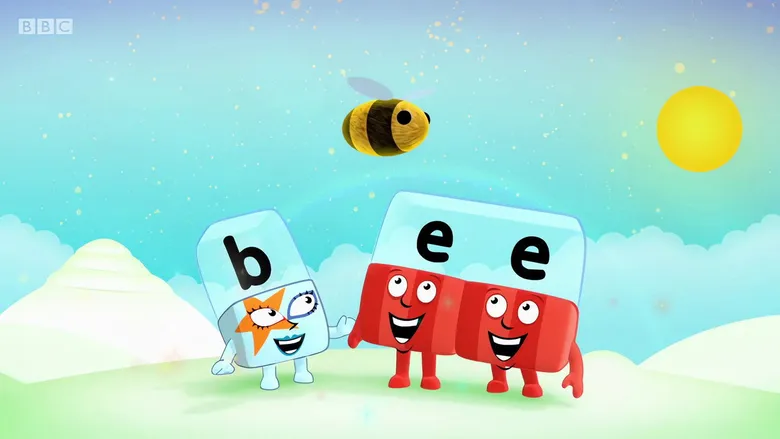
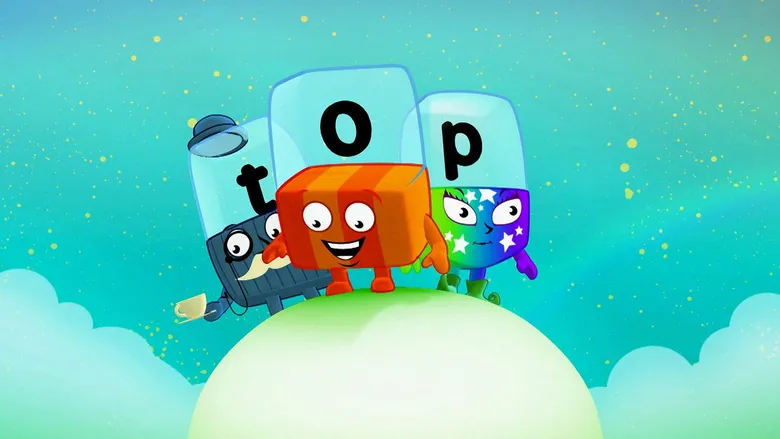
Letters blend to spell readable words such as bed, bee, tree, eel and beekeeper.
A bright red letter, E, sings that he is the busiest, friendliest letter in the alphabet and sets out to prove it. In a colorful world of clouds and green hills, he doubles and triples up with other E's to build words such as bee, tree and eel. When a word needs five E's he grows tired, but more E's arrive and together they spell beekeeper. The episode closes with E reprising his opening song.