























This program is well-balanced. It remains mostly easy to follow and process. It is a good fit for the recommended age.
The pacing is calm. A child has time to watch and understand what is happening.
The sound is soft and supportive.
The visuals are calm and well-organized.
One clear question drives the whole episode: figuring out what Blue wants to do when Magenta comes over. Events follow in a logical order, each of the three clues found and drawn in the notebook before the thinking chair pulls them together, so the beginning, middle and end are easy to follow. New ideas arrive one at a time, such as the opposites game with the food race cars (shortest and longest, biggest and smallest). Actions lead to predictable results, which helps a three-year-old stay oriented in the story.
The emotional tone stays calm and friendly from start to finish, with cheerful, supportive exchanges between Josh, Blue and the other characters. Nobody is mocked or shamed; when Josh calls himself 'Silly Josh' for not hearing his own phone, it is playful self-deprecation that a child reads as a light joke. There is almost no tension to recover from, and the few small surprises, like discovering a clue is on Josh himself, resolve warmly and immediately. Characters behave consistently and treat each other with respect throughout.
The episode makes thinking visible: Josh gathers clues, lays them out and reasons aloud in the thinking chair before landing on 'take a picture'. He models a repeatable set of steps, naming the problem, collecting evidence and combining it, and the child is invited to guess along at each turn. Much of the initiative is carried by the format rather than sprung fresh by the characters, and answers are often supplied quickly after a short pause. Still, the opposites puzzles and the final deduction give a young child a genuine, followable problem-solving structure.
Language is a real strength here. Sentences are short, concrete and clearly spoken, with plenty of purposeful repetition ('Blue's clues', 'handy dandy notebook') that reinforces meaning rather than filling space. Josh introduces useful concepts through context, such as opposites and describing words like bumpiest and smoothest, at a pace a three-year-old can absorb. Many lines are single-word prompts left open for the child to complete, which suits this age even though it lowers the share of full sentences.
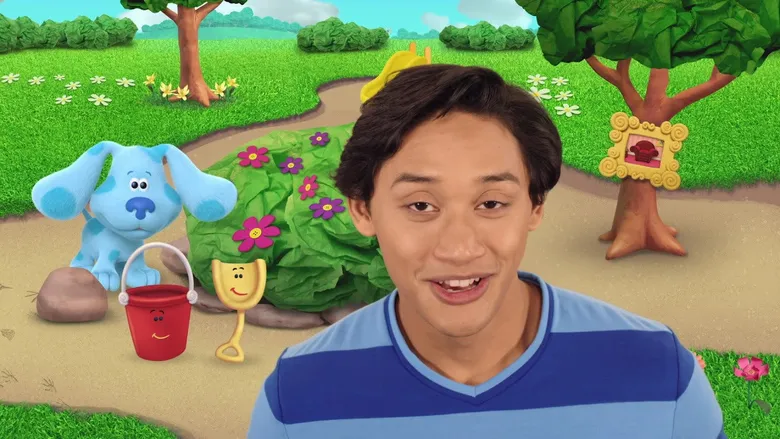
The episode mixes recognisable real-world activities, making a snack, drawing, taking a photo with a phone, playing hide and seek, with a heavy layer of fantasy. A live-action host shares the screen with a talking animated dog, talking salt and pepper shakers, and paw-print clues, and Josh 'skidoos' into a drawn playground world. For a three-year-old, that fantasy load sits above the level where the world stays mostly grounded, which limits how directly the actions carry over into daily life. The social situations themselves, welcoming a friend for a playdate and helping others, are familiar and relatable.
More information
This score shows how inclusively the series portrays diverse people, families and cultures. Scale: Limited → Varied → Rich → Inclusive.
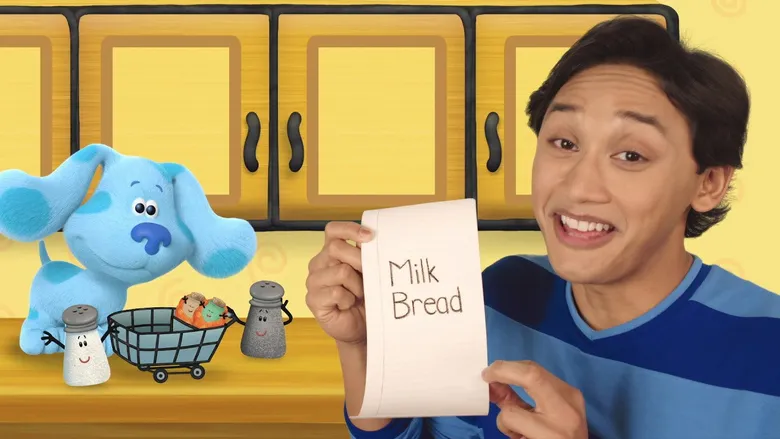
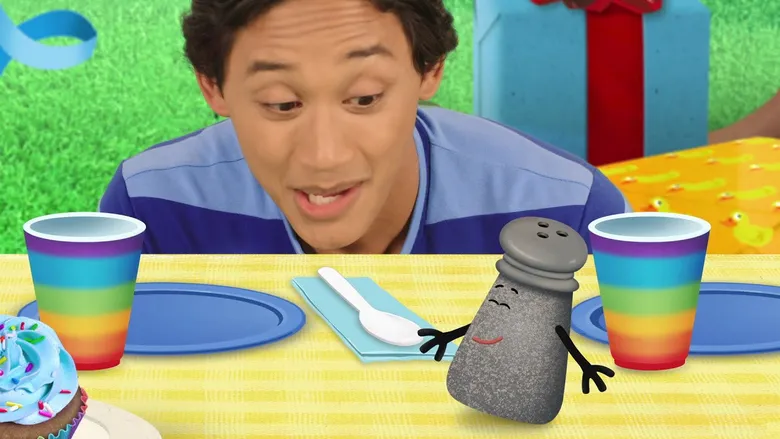
The episode is carried by a warm young male host of Asian heritage who guides children through a gentle guessing game alongside animated animals and household characters. A short segment of real children adds visibly different skin tones and ages, including an older woman playing with a child, which widens the human picture beyond the single host. Roles and initiative are spread around rather than fixed to one type of character: Blue sets the game the others follow, Mr. Salt and Mrs. Pepper prepare a snack side by side, and the host stays caring and helpful throughout. The result is a friendly, fairly balanced picture, with most human variety concentrated in one brief montage rather than woven through the whole episode.
This score shows whether the series stays close to everyday reality or leans into fantasy. Scale: Fantasy → Mixed reality → Realistic.
This episode wraps an everyday premise, a friend coming over for a playdate, inside a colourful animated world where a real host named Josh talks with a dog called Blue and household objects like a salt and pepper shaker who cook together. There is no villain and no fight; the only 'problem' is a friendly guessing game where Josh finds three clues to work out what Blue wants to do. The imaginary parts follow steady, familiar rules, so a young child always knows what is coming. The mix leans more fantastical than a 3-year-old strictly needs, but the tone is calm and the real-life anchors like phone calls and taking photos keep it grounded.
This score shows how enjoyable the series is for parents watching along. Scale: Tedious → Tolerable → Pleasant → Enjoyable.
Blue's Clues & You! blends a live-action host with 2D animation and clay-style characters in a bright, clean production that holds up for a watching adult. The classic three-clue formula is thin and highly repetitive as a story, but host Josh keeps things buoyant with a few gently self-aware asides that land for grown-ups, and the pacing stays calm rather than frantic. Voices are warm and the palette, while colorful, never turns shrill or grating. Overall this is easy company in the room, more pleasant than most for a co-viewing parent, even if the plot itself asks little of you.
In this episode a live-action host named Josh and his animated puppy Blue play a round of Blue's Clues to work out what Blue wants to do when her friend Magenta comes to visit. Along the way they help Mr. Salt and Mrs. Pepper make snacks, join Shovel and Pail in hide and seek, and collect three clues: Josh himself, a smile and a phone. Sitting in the thinking chair, Josh puts the clues together and realises Blue wants to take a picture. Magenta arrives and everyone poses for a group photo before the goodbye song.