








This program is stimulating. It actively demands attention and can feel intense. For the recommended age, this may be on the more intense side.
The pacing is fast. Images follow each other quickly, leaving little time to pause and take in what is happening.
The sound is clearly present and regularly draws attention.
The visuals are busy, with a lot of movement and frequent changes.
The episode holds together around a single outing: a family spends the day at a wildlife park and works toward a group bear dance at the end. Events follow a recognizable order, from arriving and spotting animals like a sloth and a bear to gathering for the closing dance. Because the storyline is carried by a string of songs, the throughline can feel loosely linked rather than tightly plotted, and new animals arrive one after another without much building on each other. Each moment still stays simple enough for a young child to follow what is happening and why.
The mood stays warm and predictable from start to finish. The parents kneel to the children's level, smile, and welcome everyone into the singing and dancing, and the children treat each other kindly with no teasing or tantrums. When small bursts of excitement build, they settle back into the same gentle, happy register rather than swinging toward distress. The one caveat is that the feeling stays almost uniformly upbeat, so there is little modeling of bigger emotions being named and worked through.
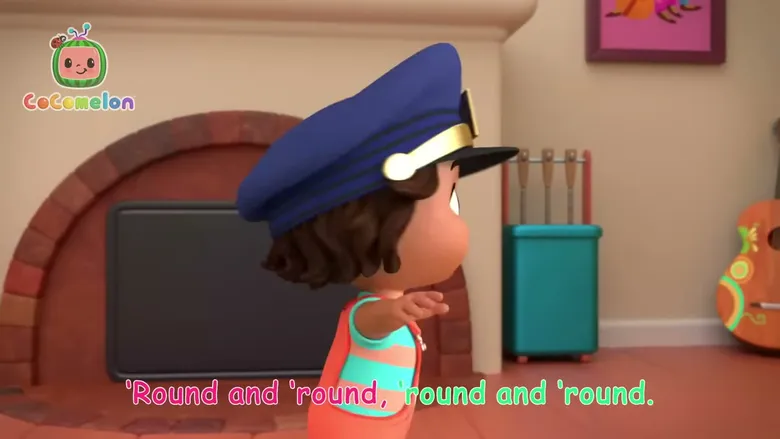
The adults lead nearly everything here: a father strums his guitar and sets the songs, and the children mainly follow along with the dance moves. There is little real problem to wrestle with and few moments where a child tries something, finds it does not work, and adjusts. JJ and the others copy rather than figure things out, so independent thinking and initiative stay in the background. The bear dance is taught and imitated rather than discovered.
Language is clear and well matched to a two year old, built from short lines and concrete words like bear, dance, and the names of the zoo animals. The singing is easy to follow and the words are used consistently, with repeated refrains that reinforce what the children are seeing and doing. Because so much of the talk is carried by song, the descriptive lyrics sit alongside stretches of expressive chants and sounds. On the whole the words stay meaningful and tied to the action on screen.
The outing maps directly onto something families really do: visiting a zoo, naming animals, and moving along to music. Dancing, singing, and watching a sloth or a bear are all things a child could carry straight into their own day. The world stays grounded and recognizable, a real feeling park with parents, children, and animals that behave like animals. The main limit is that much of the screen time goes to song and movement rather than to activities with a clear step by step purpose.
More information
This score shows how inclusively the series portrays diverse people, families and cultures. Scale: Limited → Varied → Rich → Inclusive.
Cocomelon Lane offers a naturally varied cast of children and adults across different skin tones and backgrounds, set in familiar places like a home, a park, and a zoo. The diverse children are recurring friends who share the play and the activities on equal footing, and a singing, caregiving father broadens the usual picture of who nurtures. Variety is strongest in ethnicity and cultural background, while body types and ages stay closer to the house norm. The result is an inclusive everyday world where difference is simply part of the story rather than a special topic.
This score shows whether the series stays close to everyday reality or leans into fantasy. Scale: Fantasy → Mixed reality → Realistic.
Cocomelon Lane sets JJ and his friends in a recognizable everyday world: a neighborhood, a playground, a park, and a petting zoo with real animals like goats and a pink flamingo, where the children sing, play, and share a dance. No villain appears at any point, and any small bumps come from gentle situations rather than a bad character. The only touch of imagination is a friendly brown bear who joins the dancing, and the cheerful musical tone stays consistent throughout. For a child of this age, the mix of familiar activities and light playfulness lands comfortably.
This score shows how enjoyable the series is for parents watching along. Scale: Tedious → Tolerable → Pleasant → Enjoyable.
This episode is built for the child first, with little for a parent to latch onto beyond a few gentle emotional beats. A light story about JJ working toward a bear dance gives the songs a thread to follow, though it stays simple and repetitive. The bright, saturated palette and looping sing-song tunes become a noticeable presence for an adult in the room. The animation and sound mix are polished, which is where the production clearly stands out.
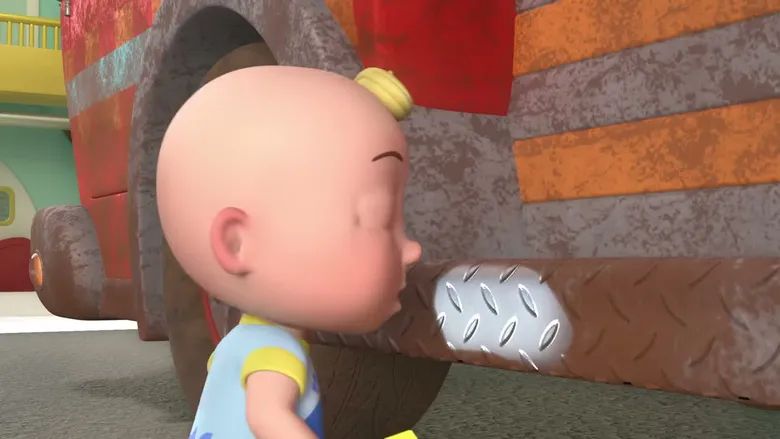
JJ, his friends and their parents spend the day at a wildlife park, looking at animals such as a sloth, a flamingo and bears. A father with a guitar leads a series of songs while a mother and the children sing and dance along. The outing builds toward a group bear dance that everyone joins in. The episode stays in the park from start to finish.