

















This program is stimulating. It actively demands attention and can feel intense. For the recommended age, this may be on the more intense side.
The pacing is fast. Images follow each other quickly, leaving little time to pause and take in what is happening.
The sound is soft and supportive.
The visuals are busy, with a lot of movement and frequent changes.
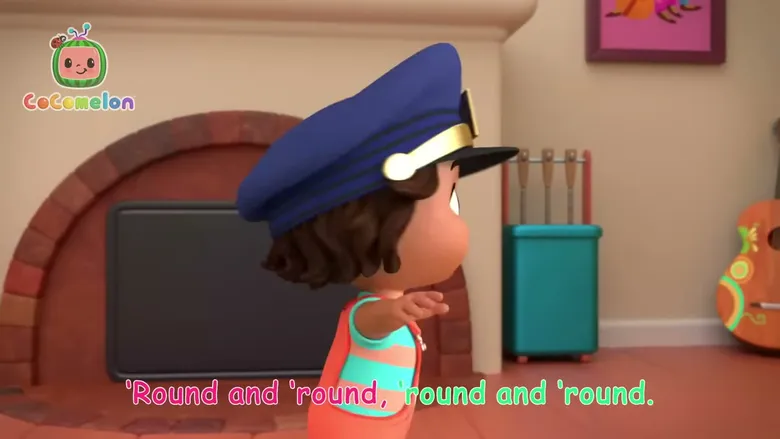
The episode follows one clear thread: Nina's growing interest in the garbage truck and how waste and recycling are collected. Events build in a sensible order, from curiosity on her street to meeting the truck and the worker, so a young child can follow what is happening and why. New ideas, like sorting recyclables and what the truck does, tend to arrive one at a time and connect to clear outcomes. The song breaks occasionally step away from the storyline, but the central thread stays easy to track.
The emotional climate is warm and steady. Characters are friendly and supportive, the adults speak kindly, and there is no teasing or conflict to unsettle a young viewer. When Nina is unsure about the large truck, reassurance follows quickly and her hesitation turns to delight in the same moment. Emotions stay mostly positive throughout, with only gentle shifts, which suits a two-year-old well.
Nina shows curiosity and asks about the truck, but the adults do most of the explaining, so there is little for her to puzzle out on her own. The episode is built around discovery and being shown how things work rather than trying, failing and adjusting. Cause and effect appears in simple form, such as putting items in the right bin, yet meaningful problem-solving steps are thin. A child mostly sees interest rewarded with answers, not independent thinking.
Language is simple, clear and concrete, a good match for a toddler. Words like garbage, truck, bin and recycle are repeated and tied to what is on screen, which reinforces their meaning. Sentences are short and the songs carry useful information rather than empty filler. Some lines are sing-song refrains and exclamations instead of full sentences, but that fits how young children listen and join in.
The episode connects directly to everyday life: garbage collection, sorting recycling and meeting a community worker are all things a child can recognise from their own street. The actions are easy to copy at home, such as putting waste in the right bin or waving at the passing truck. The neighbourhood, the family and the sanitation worker reflect familiar real-world relationships and roles. Light touches like floating musical notes are the only departures from a realistic, recognisable world.
More information
This score shows how inclusively the series portrays diverse people, families and cultures. Scale: Limited → Varied → Rich → Inclusive.
This episode of CoComelon Lane shows a neighborhood where children and adults of many backgrounds share the same world, with a brown-skinned girl named Nina at the centre of the story. Difference in skin tone and hair is woven in as an ordinary part of daily life rather than pointed out, and caregivers of different backgrounds appear side by side watching over the kids. Roles and initiative are spread evenly, with Nina leading the curiosity, the garbage truck worker sharing how the job works, and the children playing and singing together as equals. The main limit is that bodies and ages stay fairly similar inside the stylised animation, so most of the variety lives in ethnic and family makeup.
This score shows whether the series stays close to everyday reality or leans into fantasy. Scale: Fantasy → Mixed reality → Realistic.
Nina Meets the Garbage Truck stays close to a child's real world: a neighborhood of houses and families, recycling bins, a green trash can, and a working garbage truck with its driver. There is no villain and no magical realm, just everyday curiosity about how waste and recycling are collected, carried along by songs. The familiar setting and the absence of any frightening or fantastical figure make it an easy match for the youngest viewers. The rounded character designs and the habit of bursting into song are the only steps away from plain reality.
This score shows how enjoyable the series is for parents watching along. Scale: Tedious → Tolerable → Pleasant → Enjoyable.
This is a polished, song-driven episode built for toddlers, following Nina as she meets the garbage truck and learns about recycling on her street. The animation is smooth and professionally finished, but there is little here for an adult sharing the couch: no humor or references aimed at grown-ups, and a thin story stretched out by repeated songs. Bright, saturated colors and looping refrains can wear on adult ears over a full sitting. As shared viewing it offers craft to admire but not much to actually engage with.
Themes
Vehicles
Central
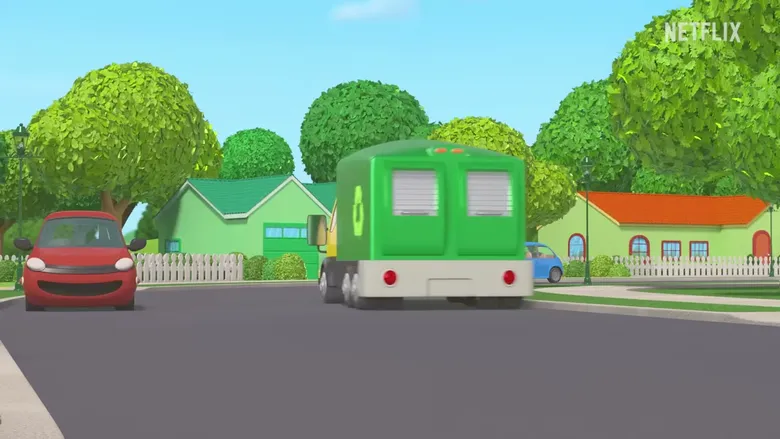
The whole episode centers on a green garbage truck that Nina watches collect bins on her street.
Recycling
Recurring
Bins marked with the recycling symbol are shown and sorted repeatedly.
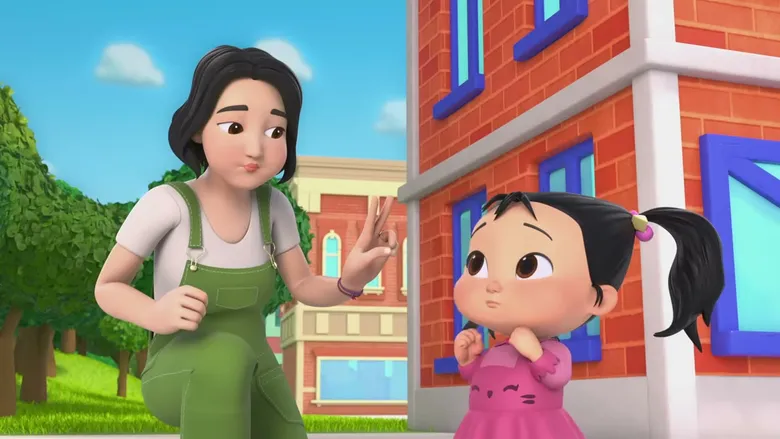
Nina, a young girl, becomes curious about the garbage truck that visits her suburban street. With her father and a sanitation worker, she watches how the bins are emptied and how recycling is sorted, with several songs about the truck along the way. Other neighborhood children join in waving and singing. The episode closes with the wider group together and a final shot of the CoComelon baby.