





















This program feels calm and predictable. It gives room to watch and process. For the recommended age, this may feel calm or somewhat slow.
The pacing is calm. A child has time to watch and understand what is happening.
The sound is soft and supportive.
The visuals are calm and well-organized.
One simple storyline carries the whole episode: Daniel's parents go out, Prince Tuesday babysits, Daniel misses them, the tiger toy goes missing, and the toy is found before parents return. Events arrive sequentially with clear transitions (jungle play, pajamas, teeth, bed, search, reunion) and each beat introduces only one or two new ideas. Cause and effect is recognisable throughout, as when Prince Tuesday asks 'where was the last place you had tiger?' and they retrace the play locations. The structure is exactly the kind of clean, linear narrative a three-year-old can follow.
Feelings are named, validated, and held with warmth. Prince Tuesday gently mirrors Daniel's worry with 'I know you miss your mom and dad but they'll be back later', and the repeated 'Grown-ups come back' refrain functions as an emotional anchor for any child anxious about separation. The adults are consistently kind and competent, Daniel is treated with dignity, and there is no mocking or contemptuous humor. Any small wobble of sadness is met with attunement in the same scene, which is exactly the recovery pattern this age band needs.
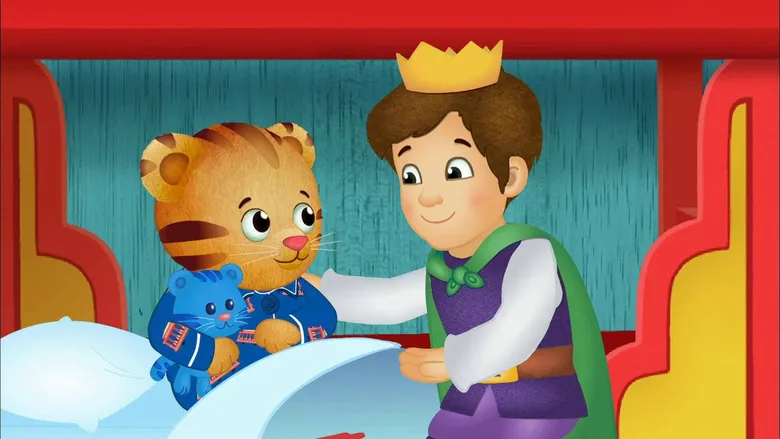
Daniel shows real agency: he insists on picking out his own trolley pajamas, dresses himself in the bathroom, and helps actively in the search for tiger. The missing-toy plot is built as a visible problem-solving routine, with Prince Tuesday modeling the steps ('hmm let's think, where was the last place you had tiger?') before they revisit the pillow island and the cave together. Initiative is shared between child and adult rather than imposed, and the resolution is earned through multiple recognisable steps. A small caveat: the babysitter mostly leads the reasoning, so Daniel's own thinking is supported rather than fully independent.
Sentences are short, clear, and concrete, matched well to a young preschooler ('here are your pajamas', 'good night to you', 'I see slithery snakes in the river'). Words are used consistently and meaningfully, and repetition like 'grown-ups come back' actively reinforces the emotional message rather than acting as filler. The mix leans towards functional dialogue, asking, instructing, describing, with songs that carry real content. Speech is clean and easy to follow throughout.
Almost every activity maps directly onto a three-year-old's own life: a babysitter arriving, saying goodbye to parents, choosing pajamas, brushing teeth, going potty, climbing into bed, and missing a favorite stuffed animal. The social dynamics around parent separation and the comfort of routine are deeply recognisable. The light layer of imagination (jungle play with binoculars and a cave made of pillows) shows exactly how children turn living rooms into adventures, which is itself transferable. Talking tigers and princes are a small fantasy frame, but the situations underneath are firmly rooted in everyday family life.
More information
This score shows how inclusively the series portrays diverse people, families and cultures. Scale: Limited → Varied → Rich → Inclusive.
This episode of Daniel Tiger centers on Daniel's tiger family and his babysitter Prince Tuesday, so the visible cast is quite small. Family forms and the diversity of life-worlds get little breadth here, but the show does push back on common gender patterns: a male teen takes on the caregiving role, both parents leave together for a fun night out, and the young boy is allowed to openly miss his parents and feel sad. The episode is moderate on visible diversity but more thoughtful on role distribution.
This score shows whether the series stays close to everyday reality or leans into fantasy. Scale: Fantasy → Mixed reality → Realistic.
Daniel Tiger's world is a make-believe neighborhood of talking animals and a royal family, but the daily situations sit very close to real life: a babysitter arrives, parents go out, pajamas go on, teeth get brushed, and a stuffed animal goes missing. There is no villain in this episode. The only tension comes from Daniel's feelings about his parents being away and from the lost 'Tigey,' which Prince Tuesday helps him find. The fantasy stays consistent throughout, and the mix of light imagination and recognisable home routine fits a 3-year-old well.
This score shows how enjoyable the series is for parents watching along. Scale: Tedious → Tolerable → Pleasant → Enjoyable.
This episode handles a relatable parenting moment, a first night with a babysitter, in a calm and emotionally honest way. There is little adult-aimed humor or wordplay, but the gentle pacing, soft voices, and recognizable theme make it easy to sit through. The repeated 'grown-ups come back' refrain near the end leans heavy, yet the craft and emotional clarity keep it comfortable as a co-viewing choice.
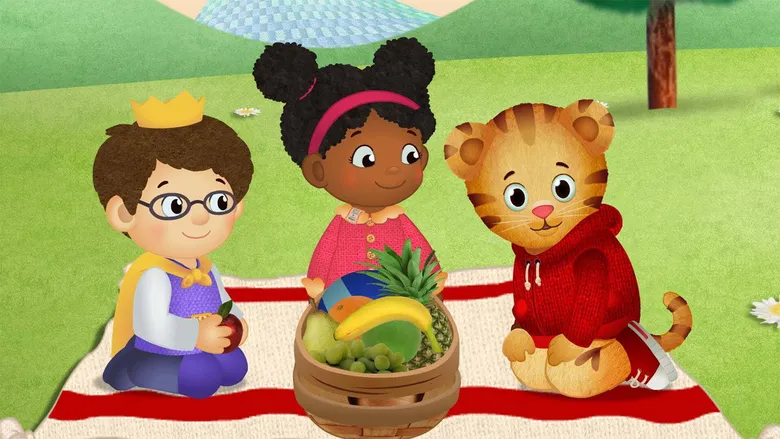
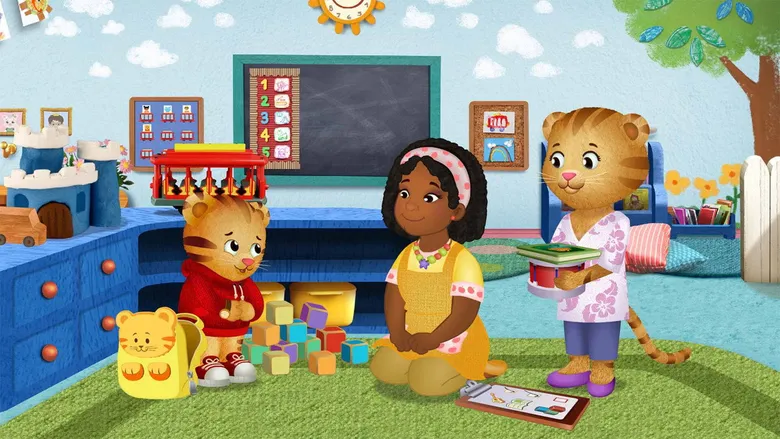
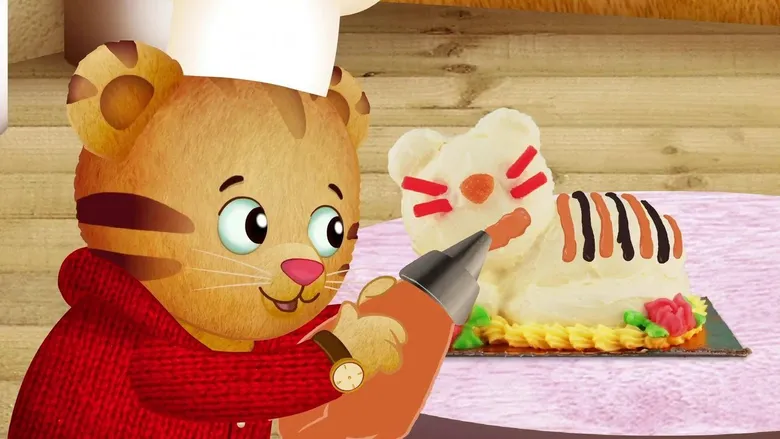
Daniel Tiger is playing pretend jungle with his stuffed tiger when Prince Tuesday arrives to babysit so Mom and Dad can go out dancing. Daniel walks Prince Tuesday through his bedtime routine of pajamas, potty, and brushing teeth, but realises at lights-out that his tiger toy is missing. Together they retrace the evening's play and find tiger in the pillow cave, after which Daniel falls asleep. Mom and Dad return as promised, give the fuzzy goodnight kiss, and the episode closes on the 'Grown-ups come back' song.