







This program is highly stimulating. It may be difficult to calmly process everything. For the recommended age, this can feel clearly intense.
The pacing is fast. Images follow each other quickly, leaving little time to pause and take in what is happening.
The sound is intense and continuously present.
The visuals are busy, with a lot of movement and frequent changes.
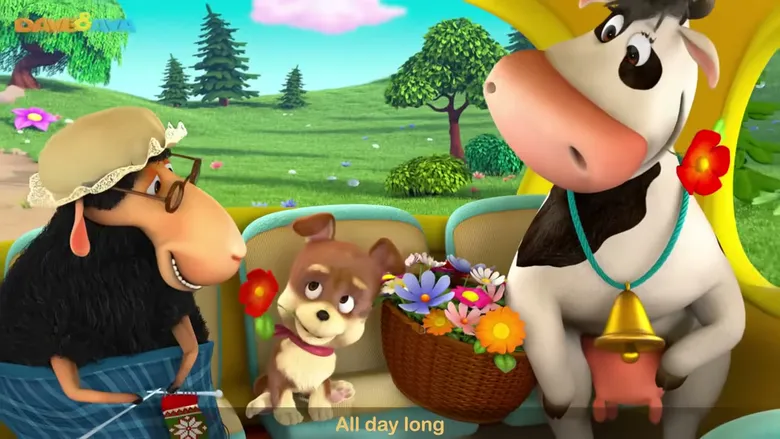
The episode holds to a single thread: a yellow bus travels through town while one animal at a time is introduced with its sound, so there is only ever one thing to follow. New information arrives in small amounts, usually just one new animal per verse, which keeps it easy for a young child to take in. It opens and closes on the 'wheels go round and round' refrain, giving a recognizable beginning and end. The clear limitation is that little connects as cause and effect; the animals simply appear and make their noises without one event leading to the next.
The emotional tone stays warm and even, with smiling children and animals singing together and no anger, fear or sadness anywhere in the episode. There are no frightening moments or sudden upsets, so nothing needs soothing and a young child stays comfortable throughout. Dave and Ava treat each other kindly and behave the same way from verse to verse, which makes the world feel predictable. The one small caveat is that the feeling is so uniformly upbeat that there is little emotional range to notice or talk about.
Nothing in the episode asks a character to think through or solve anything; it is a sing-along about animals on a bus with no goal, obstacle or question to work out. No one takes initiative, tries something, or learns from a result, because there is no problem to face. A child watching sees animals named and their sounds repeated rather than any reasoning or step-by-step figuring out. The content offers no model of working toward a solution.
The language fits a young child well: short, clear, repeated lines such as 'The dog on the bus goes woof woof woof' pair a familiar animal with its sound and reinforce the link through repetition. The framing sentences are complete and consistent, and the same simple structure supports children singing along. Word use stays correct and stable across every verse. The small caveat is that much of the audio is pure sound such as 'meow meow meow' and 'moo moo moo' rather than new words, so the spoken vocabulary stays narrow.
The clearest real-world value is learning animal sounds, which a child can copy offline by mimicking a dog's woof or a cow's moo. Beyond that the world stays imaginary: animals ride a bus and sing in a candy-colored fantasy landscape, which limits how much carries over to daily life. Riding a bus is a recognizable everyday context, but the activities themselves have little practical purpose or step-by-step meaning. The recognizable animals and their true sounds are the main bridge to things a child already knows.
More information
This score shows how inclusively the series portrays diverse people, families and cultures. Scale: Limited → Varied → Rich → Inclusive.
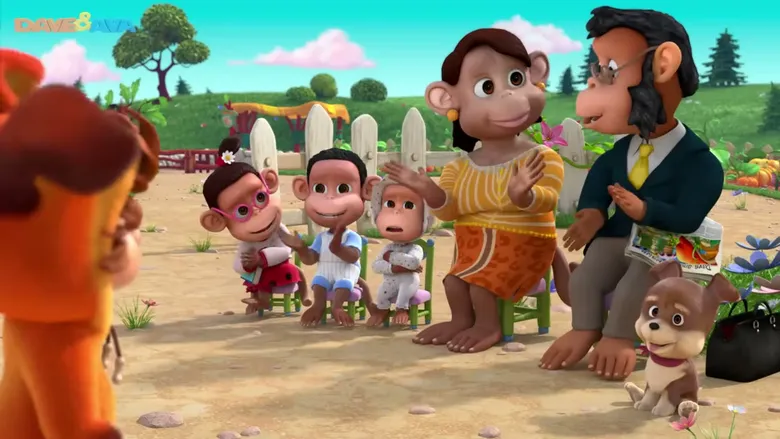
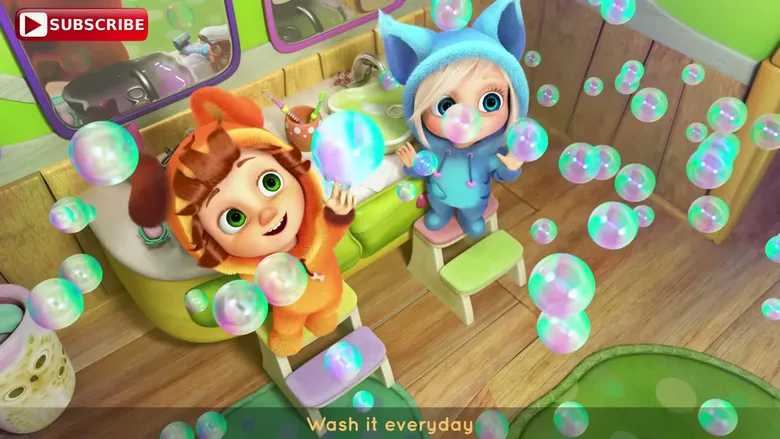
This is a sung nursery rhyme rather than a story, so it offers almost no picture of how different people live together. The visible human cast is two similar-looking toddlers, a boy named Dave and a girl named Ava dressed as a puppy and a kitten, surrounded by farm animals who each take a turn making their sound. What it handles evenly is the balance: the two children share the screen on equal footing and every animal gets its own moment, with no character pushed into the background or boxed into a clichéd role. Parents looking for a broad, inclusive picture of people will find little here, but there is also nothing that pushes a narrow or stereotyped view.
This score shows whether the series stays close to everyday reality or leans into fantasy. Scale: Fantasy → Mixed reality → Realistic.
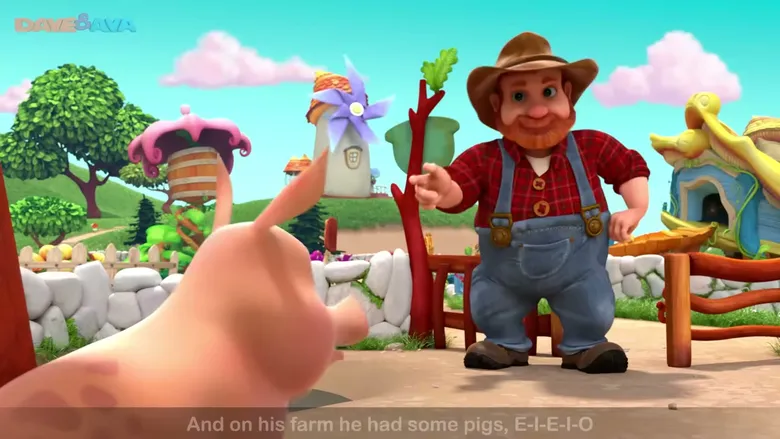
This sing-along stays close to a child's real world: a yellow bus that drives round the town and farm animals that each make their own familiar sound. There is no villain and no conflict anywhere, just a steady, friendly journey from one animal to the next. The only touch of imagination, animals riding and singing on the bus together, is gentle and stays consistent from start to finish. For a three-year-old this balance of the familiar with a little playfulness is a comfortable fit.
This score shows how enjoyable the series is for parents watching along. Scale: Tedious → Tolerable → Pleasant → Enjoyable.
This is a nursery rhyme video with solid production craft but very little for an adult watching along. The 3D animation is polished and the singing voices are pleasant, yet the content is a single verse repeated for each animal, with no plot to follow and no humor pitched at a parent. The looping melody and the long runs of repeated animal sounds become a mild earworm over time. For an adult in the room it stays watchable but offers nothing beyond the song itself.
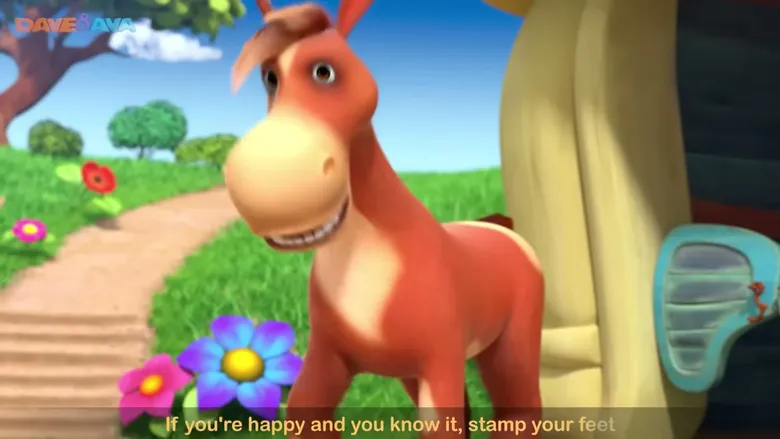
Two toddlers, Dave in an orange dog costume and Ava in a blue cat costume, ride along with a busload of animals in a sung version of 'The Wheels on the Bus.' Each verse adds one animal and repeats the sound it makes, from the dog's woof to the mouse's squeak, set in a bright countryside and town. The song returns to the wheels refrain to close. The final stretch thanks viewers and prompts them to subscribe and download the channel's app.