















This program is well-balanced. It remains mostly easy to follow and process. It is a good fit for the recommended age.
The pacing is calm. A child has time to watch and understand what is happening.
The sound is clearly present and regularly draws attention.
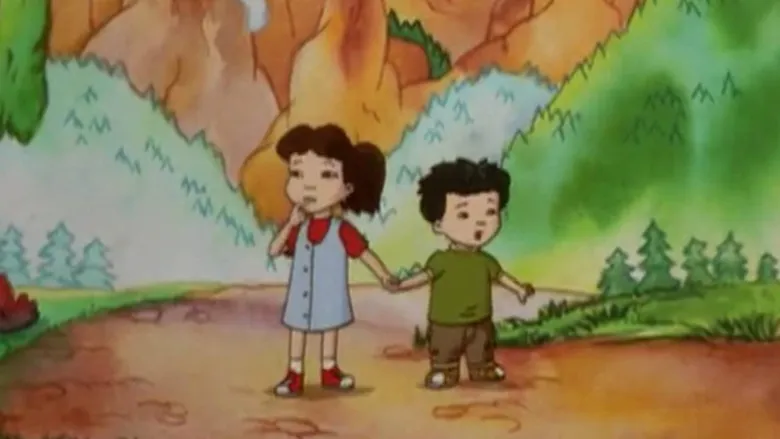
The visuals are calm and well-organized.
The story keeps to one clear thread: the children travel into Dragon Land and the adventure stays focused on flying with their dragon friends. It has a recognizable beginning, middle, and end, with the home playroom framing the trip at both ends, and events connect logically so a young child can follow what leads to what. New ideas are introduced in small, digestible pieces. A couple of group scenes bring a little more to follow at once, but the central line never gets lost.
Interactions are warm and supportive throughout, with the children and dragons treating each other kindly and encouraging one another. Emotions stay gentle, and any worry or frustration is met with reassurance and settled within the same part of the story. The older dragon Quetzal and the friendly group model patience and care. The only mild friction is the good-natured squabbling between the two heads of the two-headed dragon, which stays playful.
Characters set their own goals, with the children and dragons wanting to fly and working toward it by trying, asking friends for help, and adjusting along the way. The steps are shown clearly and the reasoning is easy for a young child to follow, and the friends encourage taking initiative. The small caveat is that some outcomes rely on dragon magic and being carried rather than purely on the children's own effort, which softens the sense of independent mastery.
The language fits a young preschooler well: short, clear sentences built from concrete words about flying, wings, and friends, plus the dragons' names. Dialogue is purposeful, mostly giving information, describing what is happening, or offering encouragement, with little hollow filler. Word use stays consistent and the voices are clear and easy to understand. This keeps the meaning accessible for a three-year-old.
The episode carries recognizable social and emotional lessons, such as friendship, helping one another, and keeping at something difficult, and the sibling relationship between Emmy and Max mirrors real family life. It scores lower here because most of the action takes place in a fantasy world of talking, flying dragons reached by a magic scale, so the activities themselves are hard for a child to copy offline. The strongest real-world anchors are the home playroom framing and the everyday way the friends treat each other. For a three-year-old, the heavy fantasy limits how directly the content transfers to daily life.
More information
This score shows how inclusively the series portrays diverse people, families and cultures. Scale: Limited → Varied → Rich → Inclusive.
This Dragon Tales episode follows two siblings, a sister and her younger brother, who travel to a make-believe Dragon Land and help their dragon friends. Human representation is thin, just one family of two children with no other people shown, so most of the on-screen variety comes from the dragons rather than from a wide picture of human life. Where the show is stronger is in how it shares roles: the girl leads confidently, both children and dragons show a full range of feelings, and a shy female dragon's effort to fly sits at the heart of the story. Boys and girls cooperate as equals and an elderly dragon guides the group without dominating it, so behaviour stays varied and free of rigid cliches.
This score shows whether the series stays close to everyday reality or leans into fantasy. Scale: Fantasy → Mixed reality → Realistic.
Dragon Tales pairs a recognizable real-world frame, two siblings in their playroom, with adventures in a fully imagined Dragon Land reached through a magic scale. Its clearest strength is the complete absence of villains: the story turns on Max's wish to fly and on gentle support from friends like the teacher dragon 'Quetzal'. The fantasy stays internally consistent, with the scale and the wishing rhyme always working the same way. The main caveat for this age is that a full magical realm with flying dragons is more imaginative than the mostly realistic mix that suits a 3-year-old best, though the warm tone and relatable themes keep it accessible.
This score shows how enjoyable the series is for parents watching along. Scale: Tedious → Tolerable → Pleasant → Enjoyable.
Dragon Tales works well as a co-viewing show: the watercolor backgrounds and warm voice work are easy on adult ears and eyes, and the episode follows a real story rather than looping a single activity. The trade-off is that nearly everything is pitched at the preschool viewer, so a parent finds little wordplay or layered humor of their own. The bickering two-headed dragon Zak and Wheezie supply most of the lighter moments, and the wish-to-fly plot carries enough shape to follow. Solid craft and a calm presence, held back mainly by the absence of anything written for the adult in the room.
Themes
Flying
Central
Dragons soar through the sky and carry the children on their backs, the centre of the 'To Fly With Dragons' adventure.
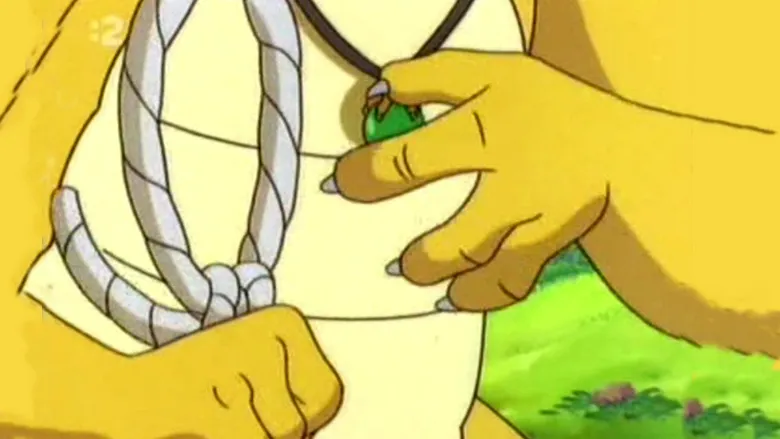
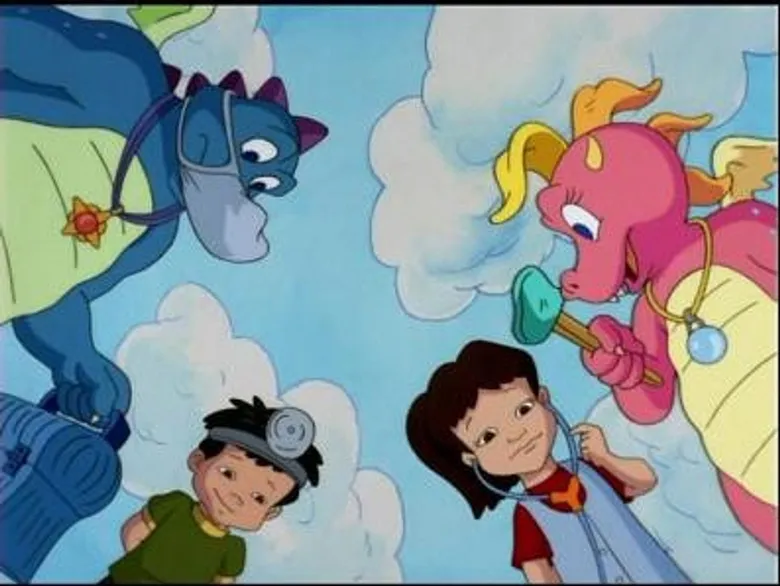
Siblings Emmy and Max use a glowing magic dragon scale to travel from their playroom into Dragon Land, a colourful world of friendly dragons. There they play and adventure with dragon friends like the blue dragon Ord and the pink dragon Cassie, around the theme of flying. The friends try, help one another, and share the experience of soaring through the sky. At the end the children return home to their playroom, still holding the dragon scale.