







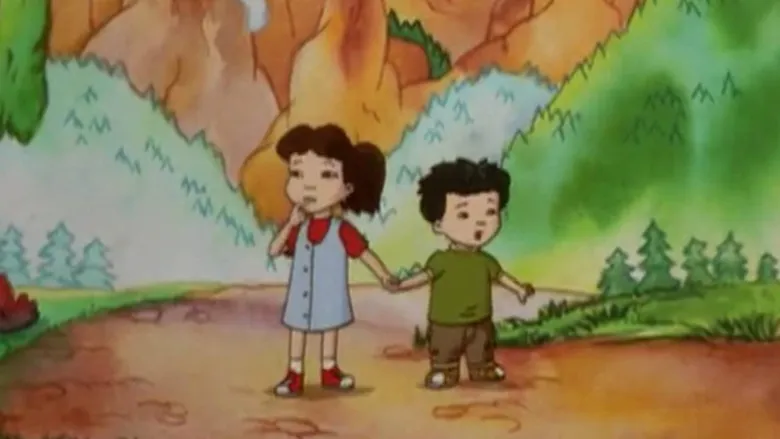
This program is well-balanced. It remains mostly easy to follow and process. It is a good fit for the recommended age.
The pacing is fast. Images follow each other quickly, leaving little time to pause and take in what is happening.
The sound is intense and continuously present.
The visuals are calm and well-organized.
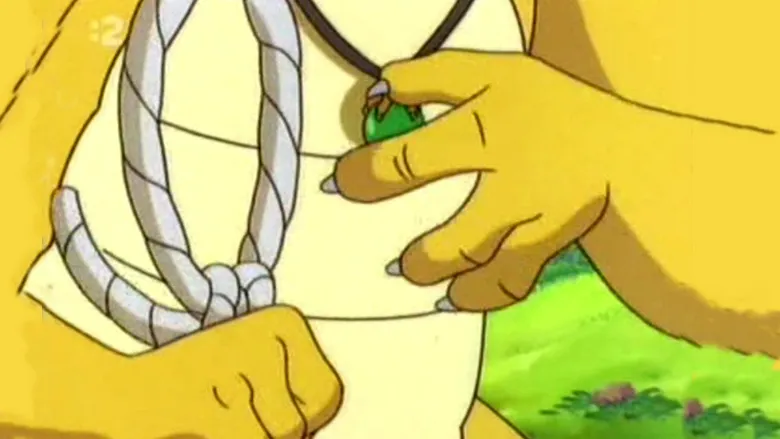
The story is easy to follow, built around one clear adventure that moves from the children's home into Dragon Land and back again. Events arrive in a sensible order with a recognisable beginning, middle, and end, so a young child can track what is happening and why. New ideas, such as a large yellow dragon with a tangled rope, are introduced one at a time rather than all at once, and actions lead to consequences a child can predict. The small caveat is that the episode carries two linked threads, a knot to untangle and a birthday to celebrate, which asks slightly more of a three-year-old's attention.
The emotional tone is warm and supportive throughout. Characters treat each other with kindness, gather around Ord when he feels down, and behave consistently, so a child knows what to expect from each friend. When feelings run high, such as disappointment around the birthday or frustration with the tangled rope, the upset stays gentle and is always followed by reassurance and a resolved problem within the same part of the story. The only nuance is that a few moments of sadness and frustration appear, but each is handled with care and never left hanging.
The friends take the lead in solving their own problems rather than waiting to be rescued. Working out the tangled rope is shown as a hands-on process of trying something, seeing what happens, and adjusting, which models real problem-solving for a young viewer. Helping Ord enjoy his birthday is approached the same way, with the characters settling on a plan and following it through. The small limit is that the steps stay simple, which suits a three-year-old but offers less to puzzle over for older children.
The dialogue is clear and well matched to a young child, centring on everyday ideas like feelings, friends, and a birthday party. Speech is easy to understand and voiced with care, and the words are used in ways that reinforce what is happening on screen rather than empty noise. Conversation mostly carries real meaning, explaining plans and describing the problem the friends are solving. The only nuance is that some exchanges lean on simple exclamations, which is natural for the age but slightly lowers how much every line teaches.
This pillar is held back because the story takes place mostly in a fantasy world of talking dragons, magic travel, and flying, which a three-year-old cannot connect directly to daily life. There are real anchors worth noting: untangling a knotted rope is a genuine, step-by-step skill, and the birthday with a cake and balloons mirrors something children recognise. The social situations, helping a friend, sharing a celebration, and working together, also reflect real relationships. Even so, much of what the characters do, flying and visiting an imaginary land, cannot be carried over into a child's own play with everyday objects.
More information
This score shows how inclusively the series portrays diverse people, families and cultures. Scale: Limited → Varied → Rich → Inclusive.
Dragon Tales follows two Latino-presenting siblings, Emmy and Max, who travel to a fantasy Dragon Land and team up with a colorful group of dragons. Centering Latino children as the leads is meaningful, and the older sister takes an equal, often leading role alongside her younger brother, so initiative is not tied to gender. The wider cast is made up of dragons of different colors, sizes, and temperaments who show a broad range of feelings and cooperate with the children as equals. The main limitation is that the human representation stays within one family and one background, so most of the visible variety is carried by the fantasy creatures rather than by a broad picture of real-world people.
This score shows whether the series stays close to everyday reality or leans into fantasy. Scale: Fantasy → Mixed reality → Realistic.
Dragon Tales places relatable feelings, a birthday and learning a new skill, inside the fully magical world of Dragon Land, where the children Max and Emmy play with talking, flying dragons. There is no villain anywhere; problems come from everyday situations and the dragons work them out together with warmth. The fantasy stays internally consistent, with a glowing dragon scale and a spoken rhyme that reliably carry the children between their home and Dragon Land. The one caveat for a young preschooler is that the world leans more fantastical than the mostly realistic mix this age suits best, though the gentle tone keeps it within reach.
This score shows how enjoyable the series is for parents watching along. Scale: Tedious → Tolerable → Pleasant → Enjoyable.
This pair of Dragon Tales episodes follows two human siblings and their dragon friends through gentle problem-of-the-day adventures, with just enough story to hold an adult's attention but little written for one. The plots, a tangle that needs solving in 'Knot a Problem' and a birthday that does not go as hoped in 'Ord's Unhappy Birthday', carry real emotional arcs, though the dialogue and humor stay firmly pitched at young children. On the credit side it is easy on adult ears and eyes, with a calm pace, soft green palette, and steady traditional animation. What holds it back as adult company is the absence of a second layer: there are no jokes or references aimed at the parent in the room.
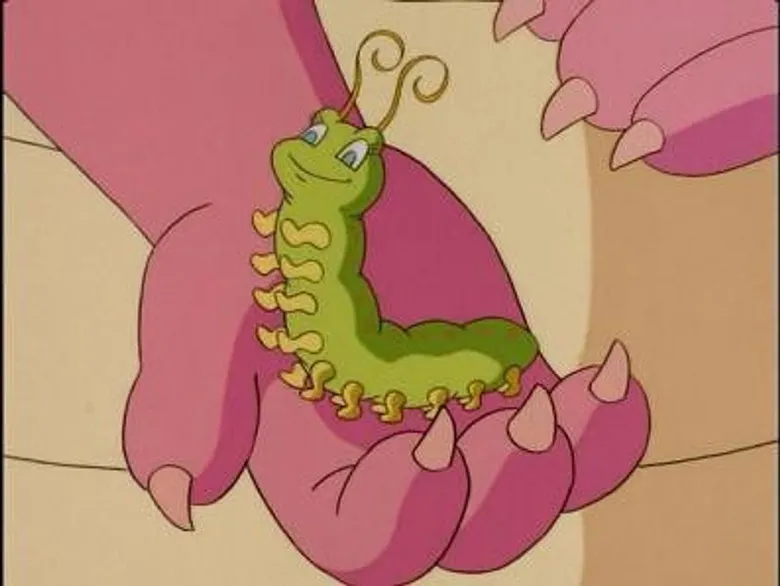
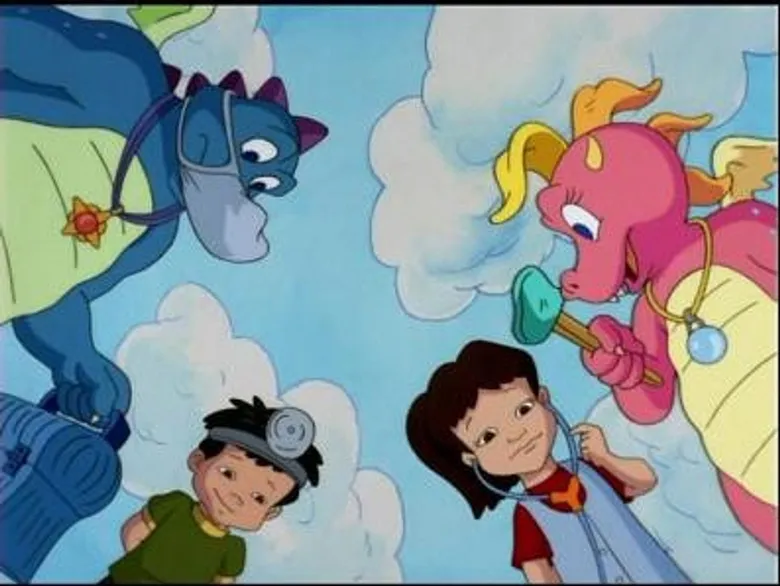
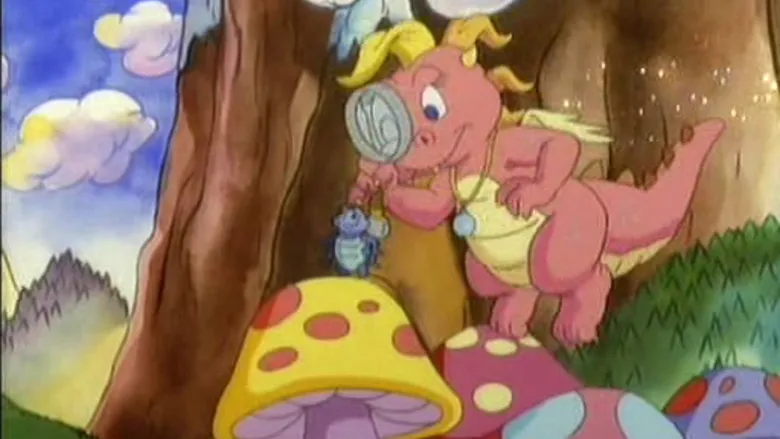
Max and Emmy, two young siblings, travel from their playroom into Dragon Land, a colourful imaginary world. There they spend time with their dragon friends Ord, Cassie, and the two-headed Zak and Wheezie, and meet a large yellow dragon. Together the friends work through a tangled rope and the ups and downs of celebrating Ord's birthday. After cheering Ord up and solving the problem, the children return home.