












This program is stimulating. It actively demands attention and can feel intense. For the recommended age, this may be on the more intense side.
The pacing is fast. Images follow each other quickly, leaving little time to pause and take in what is happening.
The sound is intense and continuously present.
The visuals are calm and well-organized.
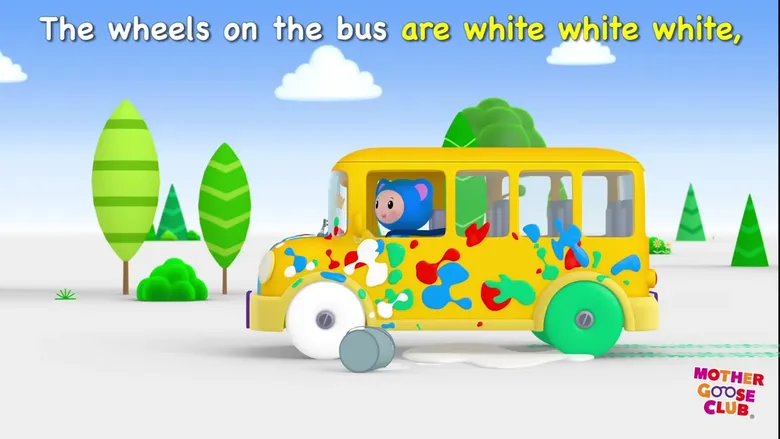
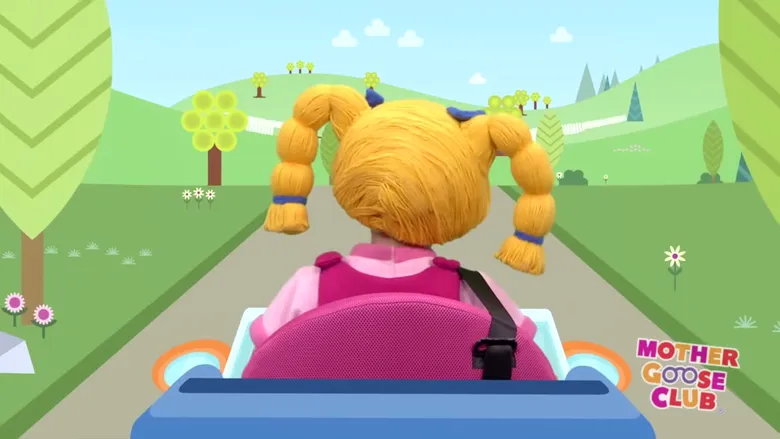
The episode follows one simple thread: Eve sets out to color her clean bus and drives it through one paint puddle after another. Each verse adds a single new color, so a young child only has to track one idea at a time, and the logic stays clear, drive through red and the bus turns red. The beginning, middle and end are easy to follow, from the shiny yellow bus to the finished rainbow bus. The heavy repetition keeps each step light, with the small trade-off that very little new happens once the pattern is set.
The mood stays warm and upbeat from start to finish, with no anger, fear or sadness to manage. When Eve accidentally splashes paint near Mary, the moment passes gently: Mary offers to help and Eve thanks her, and the two settle on happily admiring the rainbow bus. Characters treat each other with kindness, and there is no teasing or nagging anywhere. The single small 'oops, yikes' is resolved right away in the same scene, so nothing is left hanging for a young viewer.
There is little real problem to work through here, so the thinking stays at the surface. Eve does act on her own idea, choosing to color the bus and picking where to drive, which shows initiative, but she never hits a snag that needs a plan or a second try. The 'solution' at the end is simply deciding she likes the colorful result rather than a worked-out set of steps. A child sees a fun choice being made, but not much reasoning or trial and error to learn from.
The words are simple and concrete, exactly the kind a three-year-old can grab onto: the color names, 'bus', 'wheels' and the repeated line 'all through the town'. The closing conversation models clear, polite exchanges, and Eve names every color on her bus correctly. The catch is the amount of hollow repetition, long strings of 'red red red red' that fill time without adding meaning. Useful naming and friendly dialogue sit alongside a lot of filler.
The central action, driving a bus through puddles of paint that recolor it, is not something a child can carry into daily life. Colors and the friendly idea of offering help are real and useful, but the activity itself is make-believe rather than a recognizable everyday task. The most relatable moment is the short exchange where Mary offers to help wash the bus, a small slice of ordinary friendship. Beyond learning color names, there is little here that transfers off the screen.
More information
This score shows how inclusively the series portrays diverse people, families and cultures. Scale: Limited → Varied → Rich → Inclusive.
Almost the entire video follows one baby, Eve, driving a toy bus through pools of paint while a voice names each color. A second child, Mary, appears only near the end to offer help cleaning up, and a painting on an easel behind them shows a brown-skinned boy holding hands with a light-skinned girl. The active cast is just two light-skinned children, with no families, older people, or different homes or routines, so the picture of who exists is narrow. The few roles on screen are kind and not locked into clichés, but the tiny cast and single activity leave little room to show a real range of people working together.
This score shows whether the series stays close to everyday reality or leans into fantasy. Scale: Fantasy → Mixed reality → Realistic.
This color song keeps one foot in the real world, with a bus, a town and familiar colors, while adding the playful idea of a baby driving through paint to change the bus's color. There is no villain and no scary conflict; the closest thing to a problem is a friendly 'sorry about the paint' that is quickly settled with an offer to help wash it. The make-believe follows steady rules, with each color building toward a rainbow bus at the end. For this age, the blend of the familiar and the lightly imaginative is a comfortable fit.
This score shows how enjoyable the series is for parents watching along. Scale: Tedious → Tolerable → Pleasant → Enjoyable.
There is little here for an adult sharing the couch. The episode is built almost entirely around chanting color names to the Wheels on the Bus tune, with only a brief paint-splash exchange between Mary and Eve to carry any story. The looping refrains and repeated single words wear thin quickly for grown-up ears, while the animation stays clean but simple. Production is competent, yet the appeal sits firmly with the youngest child in the room.
Themes
Colors
Central
Each verse names and shows a new color as the bus turns red, blue, green, white, pink and black.
Vehicles
Central
A yellow school bus that Eve drives is on screen for nearly the whole video.
Eve, a young character in a blue mouse costume, drives her freshly cleaned yellow bus and decides to make it 'really really dirty' by rolling it through puddles of paint. To the tune of 'Wheels on the Bus', the bus picks up red, blue, green, white, pink and black, one color per verse. At the end Eve meets her friend Mary, who has been painting, and the two agree the now multicolored bus has become a rainbow bus. The story is carried almost entirely by song, with a short spoken exchange to close.