



Slowscreen SlowScreen
Toggle sidebar

Just launched: free lifetime premium for the first 1,000 members to activate their account.

Start free

The Magic School Bus

Good

Recommended age Unlock

Co-watching from age 2

Balanced

Exact score locked

Watch on Netflix Prime Video Paramount + Tubi TV
Availability in
Save
The Magic School Bus

The Magic School Bus takes Ms. Frizzle and her class on field trips into space, the body, oceans and habitats. The tone is lively and curious, aimed at young school-age children, teaching real science.

  • Real science explained through hands-on adventure.
  • Curiosity and questions drive every trip.
  • The class solves problems together.
  • Mistakes are treated as part of learning.
  • Fast, busy pacing and quick speech.
  • A few mildly tense or spooky moments.
  • Occasional flashing lights.

See the exact scores

The review is yours to read. Create a free account to reveal the exact SlowScreen score and every pillar score.

Create free account

Score Breakdown

The sound stays soft and supportive throughout, and the visuals are calm and clearly organized, so what a child sees and hears is easy to take in. Pacing is where the series varies: most trips move at a moderate speed that a child can comfortably follow, but a few, such as the journey through space and the visit to the haunted house, move quickly and leave little room to pause. This matters because the fast stretches can feel busy for the youngest viewers, even when the images themselves stay tidy. On balance the experience sits in a workable middle, with the occasional brisk episode as the main thing to watch.
Every episode follows one clear thread from start to finish, whether the class is searching for Ms. Frizzle across the solar system or tracking how pond scum links to a tuna sandwich. Events build in a recognizable order with a beginning, middle and end, and cause and effect is spelled out plainly, so a child can see why each thing happens. The consistent limitation is density: each trip packs in many new terms and ideas at once, from blood cells and antibodies to food chains and vibration, which is a lot for a five-year-old to hold. The stories stay easy to track, but a younger child may need a second watch to absorb all the facts.
The overall feeling is warm and supportive, with Ms. Frizzle staying patient and encouraging, telling Phoebe 'there's nothing wrong with being wrong' and reassuring a worried class. Tense moments do appear regularly, from creatures looming over the shrunken class to a swooping heron or the spooky sounds of a haunted house, but each scare settles quickly into reassurance or a solved problem so fear rarely lingers. The recurring rough edge is friction between the children: boasting, light teasing, and jabs like 'don't be such a chicken' or repeated blame aimed at anxious Arnold. The emotional weather swings between comic panic and calm fairly often, cushioned by humour, which keeps the tone steady though not fully soothing for a sensitive young viewer.
The children do the thinking, and the series shows their reasoning out loud step by step: they name a problem, try something, watch it fail, and adjust. Carlos works out that sound comes from vibration and strips his instrument down so it can ring, while the class deduces where Ms. Frizzle is by noticing that colder means closer to Pluto. Solutions unfold through visible steps of guessing, testing and ruling ideas out, so a child sees how careful observation turns into understanding. Ms. Frizzle sometimes steers the trip and nudges with questions rather than handing over answers, so initiative is often shared, yet the modeled problem-solving is genuine and rewarding.
Language is clear, correctly used and full of real information, with characters explaining genuine ideas in complete sentences, from how digestion works to why big ears keep a jackrabbit cool. Speech serves to inform and describe rather than fill space, and key ideas are repeated to reinforce meaning. The steady caveat is vocabulary that reaches high for a five-year-old, with words like 'esophagus', 'phytoplankton', 'habitat' and 'reverberant' arriving quickly, often introduced through pictures and context. Much of the harder wordplay is played for humour, so the core lesson still lands, though children at the older end of the range will follow it most comfortably.
The science is accurate and connects to a child's real world, covering the body, food chains, deserts, decomposition and how sound is made, and several episodes even close by pointing out where the story simplified the facts. Recognizable school and friendship situations, along with skills like careful observation and reasoning from evidence, give a child something to carry off-screen. The recurring limit is transferability: most of the action happens through a magic bus that shrinks, flies and travels inside bodies, so the events themselves cannot be copied at home. A child comes away understanding nature and their own body more than gaining hands-on activities to repeat, though the sound-and-vibration episode does invite some real testing.

More information

This score shows how inclusively the series portrays diverse people, families and cultures. Scale: Limited → Varied → Rich → Inclusive.
The class at the centre is consistently mixed, with Black, Asian, Latino and white children all returning as named, recurring characters rather than background faces, led by Ms. Frizzle, a woman who is the science expert everyone turns to. Initiative, curiosity, knowledge and feelings are spread evenly across boys and girls: Dorothy Ann does the research, Wanda drives the plot, anxious Arnold worries, and Carlos cracks jokes, so personality rather than gender defines each child. One episode widens the picture with two older women scientists and a spoken moment about people who cannot hear. The steady limitation is life-world variety, since almost everything happens at school and on field trips, so different homes, ages and family forms stay off screen.
This score shows whether the series stays close to everyday reality or leans into fantasy. Scale: Fantasy → Mixed reality → Realistic.
Each episode plants an ordinary classroom and true science inside one big fantasy device: a school bus that shrinks, flies and turns the class into whatever the lesson needs. The everyday frame, a teacher, friends, a school project, is easy for a child to recognize, and the invented rules stay consistent, with several episodes winking at their own impossibilities at the end. There is no villain anywhere; tension comes from being lost, a lost pet, a mysterious noise or a natural predator, never from a bad character. This steady blend of the familiar and the fantastical, always anchored to real facts, sits comfortably within reach for a child of this age.
This score shows how enjoyable the series is for parents watching along. Scale: Tedious → Tolerable → Pleasant → Enjoyable.
This one genuinely rewards you on the couch. Ms. Frizzle's steady stream of puns, the layered wordplay, and a closing call-in gag where an off-screen skeptic picks apart the show's science are pitched squarely at grown-ups, and each episode holds together as a real story rather than a repeated loop. The sound stays speech-led with no refrain spam or shrill autotune to grate on you, and the hand-drawn animation is confident and expressive. The only mild strain is the busy voices and the occasional flashing, effects-heavy sequence, plus a bit of energetic kid-shouting, but it lands far closer to co-viewing you can enjoy than background noise to endure.

Season 1

8 episodes

The Magic School Bus
S01 E01

The Magic School Bus

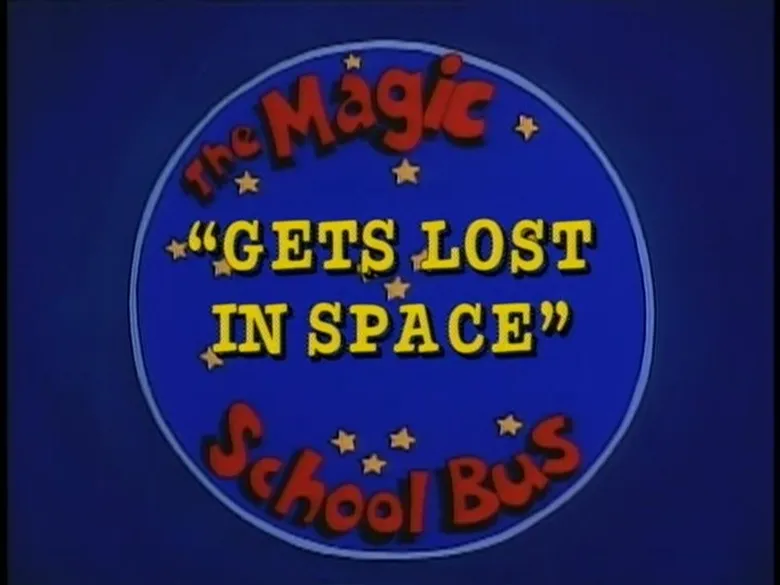
Gets Lost in Space

Balanced
recommended age Unlock co-watching from 2
When the planetarium is closed, Ms. Frizzle takes her class on a field trip through the solar system aboard the magic school bus, joined by Arnold's boastful cousin Janet. After an asteroid knocks Ms. Frizzle out of the bus, the children use her science clues to figure out which planet she landed on, working their way from Jupiter out to Pluto. They find her, and Janet lets go of her need to collect proof of everywhere she has been. The episode closes with a producer answering children's phoned-in questions about what the show got right and wrong.

The Magic School Bus
S01 E02

The Magic School Bus

For Lunch

Balanced
recommended age Unlock co-watching from 2
Miss Frizzle's class boards the magic school bus and shrinks down to travel through classmate Arnold's digestive system after he swallows a piece of chewing gum. Along the way they see how teeth grind food, how the stomach adds acid and how the small intestine absorbs nutrients into the bloodstream, while Arnold stays at school trying to break records. When Wanda drifts deep into the large intestine, the class works together to rescue her and ride back out the way they came. The episode ends with a producer taking a phone call that points out where the cartoon simplified the real science.

The Magic School Bus
S01 E03

The Magic School Bus

Inside Ralphie

Stimulating
recommended age Unlock co-watching from 2
Ralphie wakes up with a fever and a sore throat on the day his class is supposed to run a live broadcast. His mother, a doctor, sends him back to bed, so Miss Frizzle brings the class and the Magic School Bus to his room and shrinks everyone down to report from inside his body. Traveling through his bloodstream and throat, the children watch white blood cells, antibodies and medicine defeat the bacteria causing his infection. The episode ends with Ralphie recovering and a phone-in segment answering viewer questions about germs, shots and staying healthy.

The Magic School Bus
S01 E04

The Magic School Bus

Gets Eaten

Balanced
recommended age Unlock co-watching from 2
On a class field trip with Ms. Frizzle, Keisha and Arnold realise they forgot their report and must explain how the green scum on Arnold's shoe connects to Keisha's tuna fish sandwich. The magic school bus shrinks the class down and takes them into the ocean, where they meet phytoplankton, zooplankton, anchovies and finally a tuna. Step by step they discover the ocean food chain and work out that everything is linked. Back in class they present their finished report, and a closing phone call recaps the idea of food chains and webs.

The Magic School Bus
S01 E05

The Magic School Bus

Hops Home

Balanced
recommended age Unlock co-watching from 2
Wanda brings her pet bullfrog Bella to the classroom, but Bella hops out an open window during class. Miss Frizzle turns the search into a field trip on the Magic School Bus, which shrinks and hops the students through a meadow, a tree, a fast stream and finally a beaver pond, testing each spot for the food, water, space and shelter a frog needs. Wanda finds Bella safe at the pond, where a heron and a new frog friend named Herman make it clear this is her real home. Wanda decides to leave Bella there and say goodbye, and the class returns to school.

The Magic School Bus
S01 E06

The Magic School Bus

Meets the Rot Squad

Balanced
recommended age Unlock co-watching from 2
Ms. Frizzle's class holds a rotten-food contest, and winner Wanda receives a young tree she wants to plant in a vacant lot full of dead logs. When Wanda calls a service to haul away one rotting log, the Magic School Bus shrinks the class to bug size so they can see the fungi, beetles and slime molds living inside it. The children learn that rot is nature recycling itself and race to stop Larry from removing the log. In the end they save it, plant Wanda's tree, and feed it compost.

The Magic School Bus
S01 E07

The Magic School Bus

All Dried Up

Balanced
recommended age Unlock co-watching from 2
Ms. Frizzle's class builds a desert diorama and Phoebe becomes convinced the desert animals need rescuing from heat, hunger and thirst. The magic school bus flies them into a real desert, where they watch a lizard, jackrabbit, tortoise and other animals cope with the harsh conditions on their own. A sudden rainstorm floods the land and, by morning, the desert blooms, showing how everything there is adapted to survive. The episode closes with a phone call in which a caller quizzes the bus about desert facts and asks after Phoebe.

The Magic School Bus
S01 E08

The Magic School Bus

In the Haunted House

Balanced
recommended age Unlock co-watching from 2
Carlos has invented an instrument for a school concert, but it makes only a 'loopy' sound and he cannot fix it in time. When the magic school bus overheats, Ms. Frizzle's class ends up spending the night in what turns out to be the Sound Museum, a spooky old house where they chase mysterious noises and learn that sound is made by vibration. Guided by their questions and a living descendant of the museum's founder, Carlos works out that his instrument needs to vibrate freely, strips it down, and finally produces the sound he imagined. The episode closes with a phone call to the show's producer that reviews how sound and hearing work.

Explore more

Share

Pass this find on to another parent

Link preview

The Magic School Bus | Good, co-watching from age 2

The Magic School Bus | Good, co-watching from age 2 - Slowscreen

Good · Co-watching from age 2. The Magic School Bus takes Ms. Frizzle and her class on field trips into space, the body, oceans and habitats. The tone is lively...

slowscreen.com

https://slowscreen.com/en/series/the-magic-school-bus

https://slowscreen.com/en/series/the-magic-school-bus

Slowscreen

The Magic School Bus | Good, co-watching from age 2 - Slowscreen

Good · Co-watching from age 2. The Magic School Bus takes Ms. Frizzle and her class on field trips into space, the body, oceans and habitats. The tone is lively...

The Magic School Bus | Good, co-watching from age 2

slowscreen.com

The Magic School Bus | Good, co-watching from age 2 - Slowscreen

Good · Co-watching from age 2. The Magic School Bus takes Ms. Frizzle and her class on field trips into space, the body, oceans and habitats. The tone is lively...

The Magic School Bus | Good, co-watching from age 2
slowscreen.com

The Magic School Bus | Good, co-watching from age 2 - Slowscreen

slowscreen.com · Posted by you

The Magic School Bus | Good, co-watching from age 2 - Slowscreen

0 Share
The Magic School Bus | Good, co-watching from age 2
To
Subject The Magic School Bus | Good, co-watching from age 2

Good · Co-watching from age 2. The Magic School Bus takes Ms. Frizzle and her class on field trips into space, the body, oceans and habitats. The tone is lively...

https://slowscreen.com/en/series/the-magic-school-bus

Share on WhatsApp Share on X Share on Facebook Share on Telegram Share on Reddit Share on Email

Just launched: free lifetime premium for the first 1,000 members to activate their account.

Create your account

Search by title, show, tag, or topic

We use functional cookies and Google Analytics to improve our site. Learn more