



Slowscreen SlowScreen
Toggle sidebar

Just launched: free lifetime premium for the first 1,000 members to activate their account.

Start free

Gets Eaten

Good

Recommended age Unlock

Co-watching from age 2

Balanced

Exact score locked

Watch on Netflix Prime Video Paramount + Tubi TV
Save
Gets Eaten

Share

Pass this find on to another parent

Link preview

The Magic School Bus: Gets Eaten | Good, co-watching from age 2

The Magic School Bus: Gets Eaten | Good, co-watching from age 2 - Slowscreen

Good · Co-watching from age 2. On a class field trip with Ms. Frizzle, Keisha and Arnold realise they forgot their report and must explain how the green scum on...

slowscreen.com

https://slowscreen.com/en/series/the-magic-school-bus/s1/e4-gets-eaten

https://slowscreen.com/en/series/the-magic-school-bus/s1/e4-gets-eaten

Slowscreen

The Magic School Bus: Gets Eaten | Good, co-watching from age 2 - Slowscreen

Good · Co-watching from age 2. On a class field trip with Ms. Frizzle, Keisha and Arnold realise they forgot their report and must explain how the green scum on...

The Magic School Bus: Gets Eaten | Good, co-watching from age 2

slowscreen.com

The Magic School Bus: Gets Eaten | Good, co-watching from age 2 - Slowscreen

Good · Co-watching from age 2. On a class field trip with Ms. Frizzle, Keisha and Arnold realise they forgot their report and must explain how the green scum on...

The Magic School Bus: Gets Eaten | Good, co-watching from age 2
slowscreen.com

The Magic School Bus: Gets Eaten | Good, co-watching from age 2 - Slowscreen

slowscreen.com · Posted by you

The Magic School Bus: Gets Eaten | Good, co-watching from age 2 - Slowscreen

0 Share
The Magic School Bus: Gets Eaten | Good, co-watching from age 2
To
Subject The Magic School Bus: Gets Eaten | Good, co-watching from age 2

Good · Co-watching from age 2. On a class field trip with Ms. Frizzle, Keisha and Arnold realise they forgot their report and must explain how the green scum on...

https://slowscreen.com/en/series/the-magic-school-bus/s1/e4-gets-eaten

Share on WhatsApp Share on X Share on Facebook Share on Telegram Share on Reddit Share on Email

See the exact scores

The review is yours to read. Create a free account to reveal the exact SlowScreen score and every pillar score.

Create free account
This program is well-balanced. It remains mostly easy to follow and process. It is a good fit for the recommended age. The pacing is moderate. The story remains easy for a child to follow. The sound is soft and supportive. The visuals are calm and well-organized.
One clear thread carries the whole episode: Keisha and Arnold have to explain how pond scum connects to a tuna fish sandwich, and every stop on the field trip feeds that single question. The build is orderly, with a beginning, a middle of gathering clues and an ending where they present the finished report, and each creature eating the next follows a clear cause and effect. The main limitation is how much new information arrives at once, since phytoplankton, zooplankton, anchovies, tuna and the whole food chain idea are packed in quickly for this age. A younger five year old may need a second watch to hold all the links together.
The tone between the children is warm and supportive: Keisha refuses to give up on Arnold, the class cheers each other's reports and Ms. Frizzle stays encouraging throughout. Tension does appear when creatures loom to eat the shrunken class and Arnold frets that he should have stayed home, and these moments carry real jolts, though each one settles soon after with a reassuring line or a safe return to the bus. Emotions swing between comic panic and calm fairly often, which is the small caveat here. Overall a child is left feeling that worries get named and then resolved.
This episode stands out for putting the thinking squarely on the children. Keisha and Arnold own their problem, keep testing ideas ('we have to work with what we've got'), gather evidence with the magnifier and reason step by step from scum to zooplankton to anchovy to tuna until the connection clicks. The solving is spread across the whole trip with real observation, a wrong guess about adjectives and a final worked out answer they present themselves. Cause and effect drives every step, so a child sees how careful looking turns into understanding.
The dialogue is clear, well formed and used consistently, with full sentences and plenty of informative talk that describes and explains rather than just exclaiming. The catch for a five year old is the vocabulary: words like phytoplankton, zooplankton, albacore, digestive system and food web arrive quickly, alongside puns and wordplay that will sail over many young heads. The meaning is always accurate and the speech is easy to hear, so the language is meaningful, just pitched a little above this age. Children at the older end of the band will follow it more comfortably than the youngest.
The real world hook is genuine: the children are doing a school report, observing nature and learning how living things depend on each other, which connects to everyday classroom life and to a real beach. That value sits inside a large layer of fantasy, though, since the bus shrinks and travels inside a fish, so many of the on screen actions cannot be copied at home. The science itself is sound and the ending ties phytoplankton and grass back to real plants, giving the invented journey a real anchor. The classroom, friendships and teamwork are all recognisable, which keeps it grounded socially even when the adventure is not.

More information

This score shows how inclusively the series portrays diverse people, families and cultures. Scale: Limited → Varied → Rich → Inclusive.
The classroom brings together children of different ethnic backgrounds as an ordinary part of the story, with Black, Asian, Latino and white kids all working side by side. Ms. Frizzle, the adventurous science teacher, drives the field trip and holds the knowledge, while a Black man appears as an adult in a later phone call. Tasks and initiative are shared across the group: girls and boys pair up, ask questions and solve the puzzle together, with Keisha guiding her partner Arnold through the food-chain problem. There is little variation in family life, ages or living situations, since the setting stays on the class and the ocean trip, but who does what is not tied to gender or background.
This score shows whether the series stays close to everyday reality or leans into fantasy. Scale: Fantasy → Mixed reality → Realistic.
The world mixes real classroom life and true ocean science with a bus that shrinks and travels through a food chain, so imagination carries much of the action even though the facts underneath are real. There is no villain here; the tension comes from a forgotten homework report and from small creatures being eaten by bigger ones, which the class treats as how nature works rather than as anyone being bad. The fantasy sticks to its own rules and even points out that ordinary buses cannot do this, only the magic one can. For a five-year-old the blend of the familiar and the fantastical lands well, with only brief moments of being nearly eaten that are quickly softened by humour.
This score shows how enjoyable the series is for parents watching along. Scale: Tedious → Tolerable → Pleasant → Enjoyable.
This is a rewarding sit-through for a watching parent. The story follows two kids trying to figure out how pond scum connects to a tuna sandwich, and it builds toward a clear payoff instead of looping the same beat. Ms. Frizzle's steady stream of puns and the closing phone-call gag are pitched squarely at grown-ups, and the animation and voice work hold up well. The only mild caveat is a handful of loud, panicky moments and a few bright flash effects during the fast rides.

Themes

School

Recurring

The episode centres on a two beach things that go together class report.

Ocean

Recurring

Most of the episode happens underwater as the shrunken bus explores the sea.

Curiosity

Recurring

Ms. Frizzle urges the class to look for connections and explore the environment.

Adventure

Recurring

The magic bus shrinks and travels through the ocean and inside a tuna.

Food

Recurring

The tuna fish sandwich and the food chain of who eats whom drive the plot.

Light flashes

Contains rapid flashing that may affect photosensitive viewers.

Danger

Larger sea creatures repeatedly loom to eat the shrunken class before they escape into the bus.

Flashing lights

A few brief bright flashes occur during the underwater and wave sequences.

Scary scenes

Creatures suddenly lunge at the tiny children, prompting shouts of 'Whoa!'

On a class field trip with Ms. Frizzle, Keisha and Arnold realise they forgot their report and must explain how the green scum on Arnold's shoe connects to Keisha's tuna fish sandwich. The magic school bus shrinks the class down and takes them into the ocean, where they meet phytoplankton, zooplankton, anchovies and finally a tuna. Step by step they discover the ocean food chain and work out that everything is linked. Back in class they present their finished report, and a closing phone call recaps the idea of food chains and webs.

Season 1

8 episodes

The Magic School Bus
S01 E01

The Magic School Bus

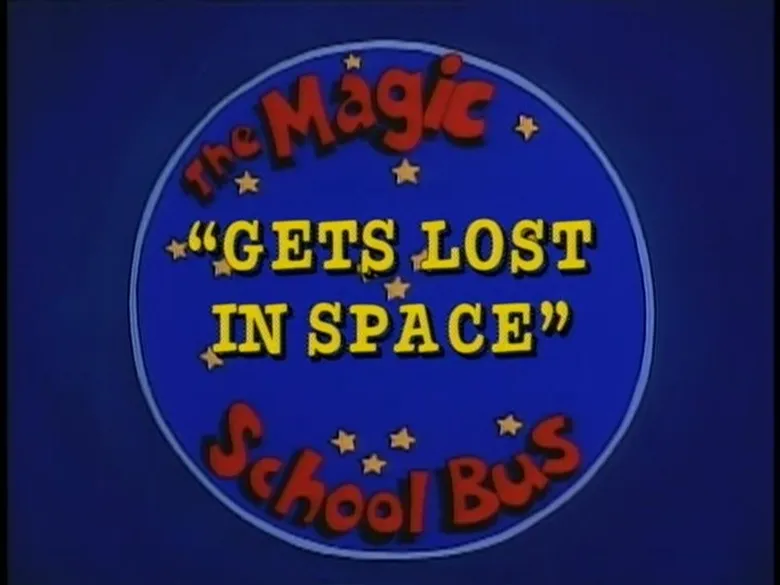
Gets Lost in Space

Balanced
recommended age Unlock co-watching from 2
When the planetarium is closed, Ms. Frizzle takes her class on a field trip through the solar system aboard the magic school bus, joined by Arnold's boastful cousin Janet. After an asteroid knocks Ms. Frizzle out of the bus, the children use her science clues to figure out which planet she landed on, working their way from Jupiter out to Pluto. They find her, and Janet lets go of her need to collect proof of everywhere she has been. The episode closes with a producer answering children's phoned-in questions about what the show got right and wrong.

The Magic School Bus
S01 E02

The Magic School Bus

For Lunch

Balanced
recommended age Unlock co-watching from 2
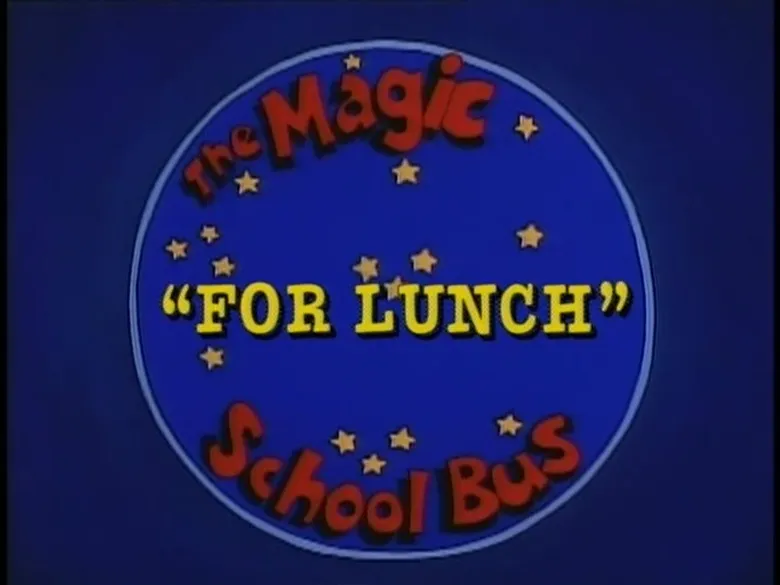
Miss Frizzle's class boards the magic school bus and shrinks down to travel through classmate Arnold's digestive system after he swallows a piece of chewing gum. Along the way they see how teeth grind food, how the stomach adds acid and how the small intestine absorbs nutrients into the bloodstream, while Arnold stays at school trying to break records. When Wanda drifts deep into the large intestine, the class works together to rescue her and ride back out the way they came. The episode ends with a producer taking a phone call that points out where the cartoon simplified the real science.

The Magic School Bus
S01 E03

The Magic School Bus

Inside Ralphie

Stimulating
recommended age Unlock co-watching from 2
Ralphie wakes up with a fever and a sore throat on the day his class is supposed to run a live broadcast. His mother, a doctor, sends him back to bed, so Miss Frizzle brings the class and the Magic School Bus to his room and shrinks everyone down to report from inside his body. Traveling through his bloodstream and throat, the children watch white blood cells, antibodies and medicine defeat the bacteria causing his infection. The episode ends with Ralphie recovering and a phone-in segment answering viewer questions about germs, shots and staying healthy.

The Magic School Bus
S01 E04

The Magic School Bus

Gets Eaten

Balanced
recommended age Unlock co-watching from 2
On a class field trip with Ms. Frizzle, Keisha and Arnold realise they forgot their report and must explain how the green scum on Arnold's shoe connects to Keisha's tuna fish sandwich. The magic school bus shrinks the class down and takes them into the ocean, where they meet phytoplankton, zooplankton, anchovies and finally a tuna. Step by step they discover the ocean food chain and work out that everything is linked. Back in class they present their finished report, and a closing phone call recaps the idea of food chains and webs.

The Magic School Bus
S01 E05

The Magic School Bus

Hops Home

Balanced
recommended age Unlock co-watching from 2
Wanda brings her pet bullfrog Bella to the classroom, but Bella hops out an open window during class. Miss Frizzle turns the search into a field trip on the Magic School Bus, which shrinks and hops the students through a meadow, a tree, a fast stream and finally a beaver pond, testing each spot for the food, water, space and shelter a frog needs. Wanda finds Bella safe at the pond, where a heron and a new frog friend named Herman make it clear this is her real home. Wanda decides to leave Bella there and say goodbye, and the class returns to school.

The Magic School Bus
S01 E06

The Magic School Bus

Meets the Rot Squad

Balanced
recommended age Unlock co-watching from 2
Ms. Frizzle's class holds a rotten-food contest, and winner Wanda receives a young tree she wants to plant in a vacant lot full of dead logs. When Wanda calls a service to haul away one rotting log, the Magic School Bus shrinks the class to bug size so they can see the fungi, beetles and slime molds living inside it. The children learn that rot is nature recycling itself and race to stop Larry from removing the log. In the end they save it, plant Wanda's tree, and feed it compost.

The Magic School Bus
S01 E07

The Magic School Bus

All Dried Up

Balanced
recommended age Unlock co-watching from 2
Ms. Frizzle's class builds a desert diorama and Phoebe becomes convinced the desert animals need rescuing from heat, hunger and thirst. The magic school bus flies them into a real desert, where they watch a lizard, jackrabbit, tortoise and other animals cope with the harsh conditions on their own. A sudden rainstorm floods the land and, by morning, the desert blooms, showing how everything there is adapted to survive. The episode closes with a phone call in which a caller quizzes the bus about desert facts and asks after Phoebe.

The Magic School Bus
S01 E08

The Magic School Bus

In the Haunted House

Balanced
recommended age Unlock co-watching from 2
Carlos has invented an instrument for a school concert, but it makes only a 'loopy' sound and he cannot fix it in time. When the magic school bus overheats, Ms. Frizzle's class ends up spending the night in what turns out to be the Sound Museum, a spooky old house where they chase mysterious noises and learn that sound is made by vibration. Guided by their questions and a living descendant of the museum's founder, Carlos works out that his instrument needs to vibrate freely, strips it down, and finally produces the sound he imagined. The episode closes with a phone call to the show's producer that reviews how sound and hearing work.

Just launched: free lifetime premium for the first 1,000 members to activate their account.

Create your account

Search by title, show, tag, or topic

We use functional cookies and Google Analytics to improve our site. Learn more