


















This program is well-balanced. It remains mostly easy to follow and process. It is a good fit for the recommended age.
The pacing is fast. Images follow each other quickly, leaving little time to pause and take in what is happening.
The sound is intense and continuously present.
The visuals are calm and well-organized.
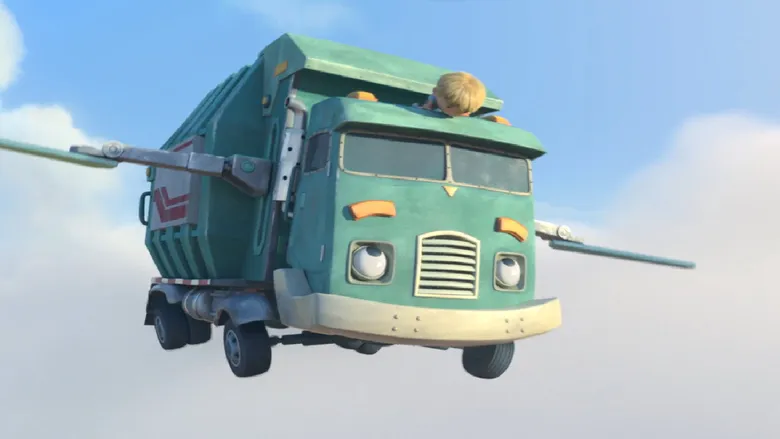
One clear question drives the whole episode: can the friends help Trash Truck fly? Every scene builds on the previous attempt, with a recognisable beginning (the wish), middle (trying wings, paper, advice from the teacher and grandfather), and ending (a final loving solution). New information arrives in small portions, usually one idea or object at a time, which suits a three-year-old's processing capacity. Actions consistently lead to logical results, such as flapping cardboard wings failing because the truck is too heavy.
The tone is consistently warm and supportive: Hank speaks softly to his friends, the teacher Miss Mona explains kindly, and grandpa is patient. When Trash Truck becomes sad ('hij is sip' / 'he is glum') after the failed flights, the group immediately rallies to cheer him up, giving children a clear recovery moment after each small disappointment. Emotional shifts are gradual rather than abrupt, and no character is mocked, shamed, or ridiculed. The friendship between a boy and his truck models attunement and gentle reassurance throughout.
Hank and his animal friends drive the entire plot through their own initiative, deciding to help Trash Truck and trying several ideas in sequence: collecting wings, asking Walter the bear for help, visiting the airport, gathering scrap parts. Each failed attempt is followed by reflection and a new strategy ('Rome wasn't built in a day. At least four more wings.'), making the thinking process visible to the viewer. Miss Mona contributes real reasoning about lift and propellers, while grandpa adds the emotional insight that the truck just needs to believe he can do it. The resolution feels earned because the children worked through multiple meaningful steps.
Dialogue is calm, clear, and largely concrete, with characters using full sentences such as 'We laten Vuilniswagen vliegen' ('We're going to make Trash Truck fly') and 'Hij slaapt als een beer' ('He sleeps like a bear'). Some explanatory passages about airflow and propellers stretch beyond what a three-year-old will fully grasp, which holds this pillar back slightly. Words are used consistently and functionally, supporting the plan-and-try rhythm of the story. Speech is well articulated with comfortable spacing between lines.
The episode scores moderately here because the central activity, making a sentient garbage truck fly with cardboard wings, is pure fantasy and not transferable to a three-year-old's daily life. The world includes a talking truck, a bear, an armadillo, and a beaver as characters, which leans further from the realism band recommended for this age. What does carry over is the social reflection: friendship, asking adults for help, trying again after failure, and a warm family greeting at the end ('Hoi mam, hoi pap' / 'Hi mom, hi dad'). The persistence and kindness modelled are valuable, even if the literal task is not.
More information
This score shows how inclusively the series portrays diverse people, families and cultures. Scale: Limited → Varied → Rich → Inclusive.
The cast centers on a young blond boy and his animal and vehicle friends in a rural setting, with only a handful of human characters who all read as white. Family life looks like a traditional nuclear setup, and there is little visible variation in cultural background, body type, or family form. Roles are gentle and not aggressively stereotyped, with a caring adult man kneeling to comfort the child and the boy showing a wide range of emotions, but the protagonist seat goes once again to a single white boy while women appear only briefly.
This score shows whether the series stays close to everyday reality or leans into fantasy. Scale: Fantasy → Mixed reality → Realistic.
Trash Truck sets its story in a recognizable rural backyard and surrounding fields, but the action is carried by anthropomorphic characters: a young boy named Hank has a giant talking trash truck as his best friend, along with a bear and an ostrich-like bird companion. There is no villain, and tension comes from everyday adventures and building projects rather than hero-versus-bad-guy framing. The fantasy stays internally consistent throughout. For a three-year-old the level of anthropomorphism sits a step above the lightly-imaginative mix that fits this age band best, though the gentle tone keeps it accessible.
This score shows how enjoyable the series is for parents watching along. Scale: Tedious → Tolerable → Pleasant → Enjoyable.
Trash Truck delivers high production craft and warm storytelling that adults can sit through comfortably. The animation is polished with cinematic golden-hour lighting and expressive character design, and the audio stays gentle rather than shrill. The plot has real shape (Hank meeting his trash truck friend, encounters with a bear and a bird) so an adult can follow along, but the humor and dialogue stay firmly child-pitched with little layered for grown-up co-viewers.
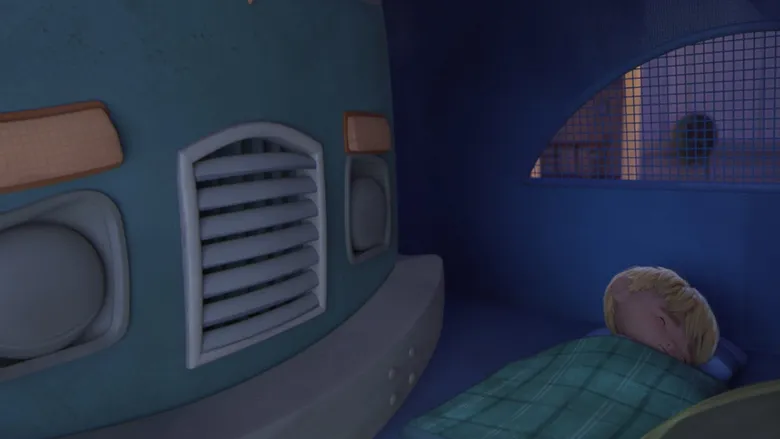
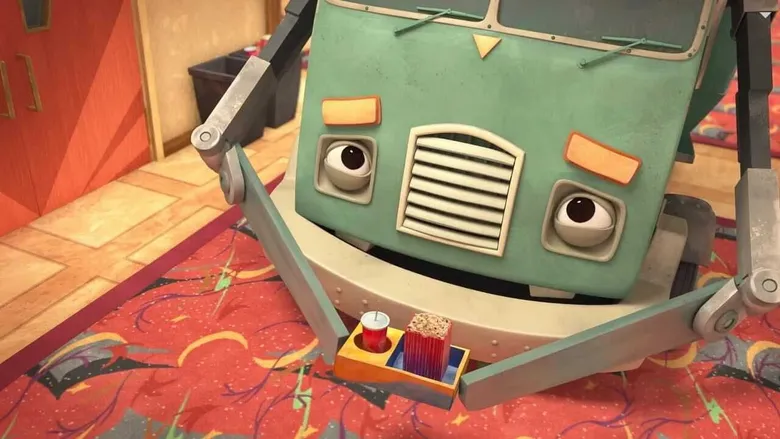
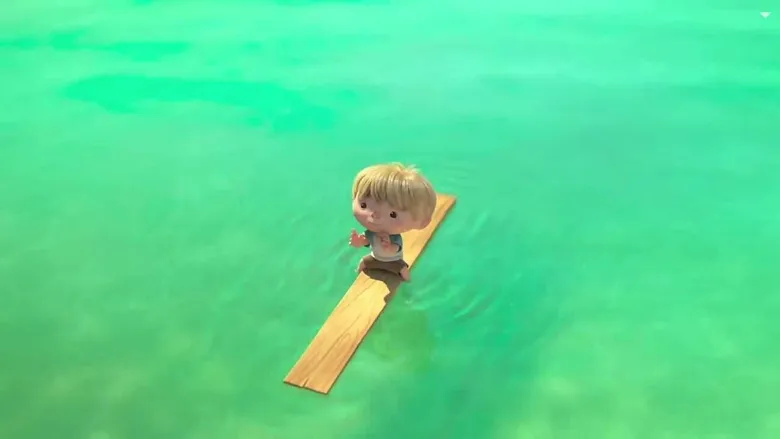
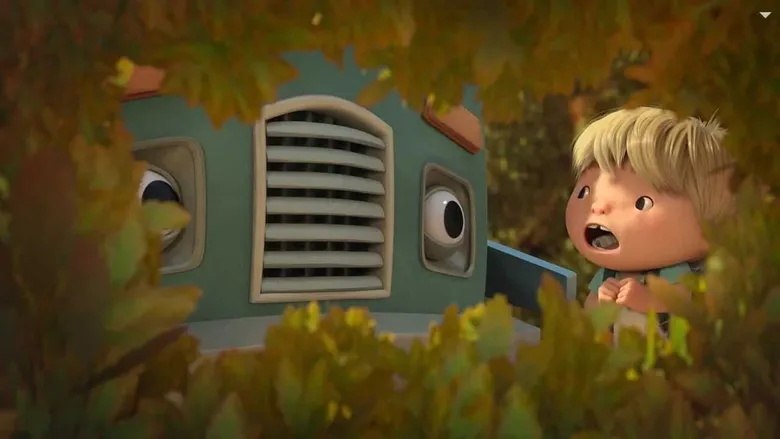
In this first episode of Trash Truck, a young boy named Hank decides to help his best friend, a giant green garbage truck, fulfil his dream of flying. With his animal friends Walter the bear, Donny and others, Hank tries homemade wings, paper-folding tips from grandpa at the airport and lessons about lift from his teacher Miss Mona. After several failed attempts and a moment of sadness, the truck finally rises into the evening sky, and Hank returns home to his parents at sunset.