






















This program is well-balanced. It remains mostly easy to follow and process. It is a good fit for the recommended age.
The pacing is fast. Images follow each other quickly, leaving little time to pause and take in what is happening.
The sound is clearly present and regularly draws attention.
The visuals are well-balanced, with a clear overall view.
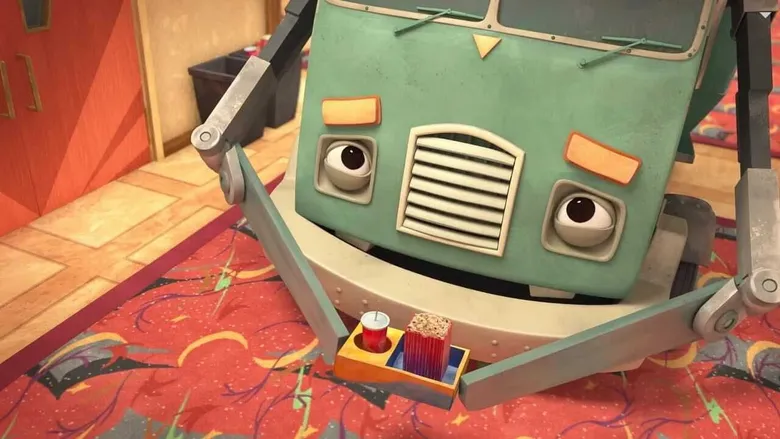
The story follows one clear thread: Hank's cousin Olivia comes to visit, they share a scrapbook of Trash Truck's adventures, and the friends imagine a surfing trip together. Events arrive one at a time with clear transitions between the porch, the meadow and the imagined ocean, so a three-year-old can hold the thread from beginning to end. New ideas are introduced sparingly, often through a single object like the scrapbook or the surfboard, which keeps the information load very light. Cause and effect are mostly visible, though some of the imagined surfing logic is more dreamlike than literal.
The emotional climate stays warm and steady throughout. Hank, Olivia and the trash truck treat each other with patience and visible affection, with hugs, smiles and shared excitement rather than teasing or sarcasm. When small bumps appear, like initial shyness between the cousins or a wobble on the surfboard, the next beat brings reassurance, a friendly nudge or a successful retry, so worry never sits for long. Transitions between feelings are gradual, with no sudden flips from calm to alarm.
Autonomy is shown mostly through self-directed play rather than structured problem solving, which holds this pillar in the middle band. Hank and Olivia decide on their own to dig out the scrapbook, build a pretend surfboard setup and lead the imagined adventure, so initiative is clearly theirs. However, most challenges are resolved in one or two implicit beats rather than through a visible sequence of attempt, evaluation and adjustment. A young viewer sees that children can drive their own play, but the model for working through a real obstacle is light.
Language is tuned closely to a young preschooler. Sentences are short and concrete ('Look at this!', 'Come on, Trash Truck'), names are repeated often, and the trash truck itself only honks and rumbles, which gives Hank's words extra space. Dialogue is clear and used to point at what is happening on screen, so words and visuals reinforce each other. There is a fair share of exclamations and play noises mixed in with the full sentences, which fits this age but keeps the score from reaching the top band.
Transferable, real-world content sits in the middle here. The home life pieces, like swinging on a tire, paging through a scrapbook with a cousin and welcoming a visiting family member, map directly onto a child's daily experience. However, a large stretch of the episode lives inside an imagined surf adventure with a sentient truck, a surfing raccoon and a bear riding waves, which is fantasy rather than something a child can practice offline. For a three-year-old the realism mix is on the loose side, which holds this pillar down even though the friendship and family dynamics are recognizable.
More information
This score shows how inclusively the series portrays diverse people, families and cultures. Scale: Limited → Varied → Rich → Inclusive.
This episode follows a young blond boy and his animated trash truck friend through a rural setting and a beach adventure. The human cast is small and visually homogeneous, with all visible people appearing light-skinned and blond. Roles fall into familiar patterns: the boy drives the action while a mother-like adult appears in a caregiving background role, and the loyal truck serves as companion. There is little room here to show variety in backgrounds or social worlds.
This score shows whether the series stays close to everyday reality or leans into fantasy. Scale: Fantasy → Mixed reality → Realistic.
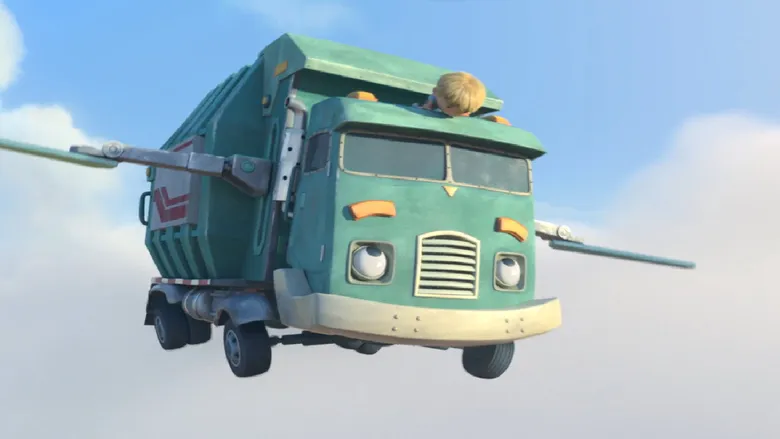
Trash Truck mixes a recognisable rural world (farmhouse, fields, country roads, blue sky) with two friendly fantasy companions for the boy Hank: a sentient garbage truck and a bear who behaves like a playmate. There is no villain in this episode; the action revolves around play and adventure, including an imaginative sequence where the truck appears to surf large ocean waves. The fantasy logic stays consistent throughout, with the truck and bear always acting as gentle friends rather than shifting their nature. For a 3 year old the mix sits at the upper edge of light imagination, since the imagined surfing scene goes beyond everyday experience.
This score shows how enjoyable the series is for parents watching along. Scale: Tedious → Tolerable → Pleasant → Enjoyable.
Trash Truck is a polished production with strong craft and a gentle, story-driven episode about Hank and his garbage truck friend heading out on a beach adventure. Adults sharing the couch get a visually pleasing show with quiet emotional beats, though the humor stays largely child-pitched. The calm pacing, warm voices, and absence of shrill refrains make it easy on adult ears, and the high-end animation rewards anyone who looks up from their phone.
Hank, a young boy who lives on a rural homestead with a sentient green trash truck for a best friend, welcomes his cousin Olivia for a visit. After a shy first hello, the two children pull out a scrapbook of past adventures and decide to stage a surfing trip. They build a pretend surfboard in the yard and slip into a long imagined sequence where Hank, Olivia, the trash truck and their animal friends ride giant blue waves together.