





















This program is well-balanced. It remains mostly easy to follow and process. It is a good fit for the recommended age.
The pacing is fast. Images follow each other quickly, leaving little time to pause and take in what is happening.
The sound is soft and supportive.
The visuals are calm and well-organized.
The episode follows a single thread from start to finish: Fig becomes curious about things that roll and works his way toward making something roll on its own. Events arrive one at a time and connect clearly, so a young child can follow what leads to what. Each push, drop, and nudge produces a visible result, making the cause and effect easy to track. New ideas are introduced one notion at a time, without piling extra details on top of each other.
The mood stays warm and steady throughout. Fig and his friends treat each other with patience and encouragement, and no one is mocked or shamed when something goes wrong. Mild frustration when a plan does not work is quickly met with a fresh idea and a reassuring outcome. Feelings shift gently from one to the next, so there are no sudden emotional jolts for a child to absorb.
Fig drives the discovery himself, following his own curiosity rather than waiting to be told what to do. When his first attempts to make something roll do not work, he stops, looks closely, and tries a different approach, so the trial-and-error thinking is visible on screen. By the end he has worked through several steps to build a contraption that actually rolls. The reasoning behind each move stays clear, showing why one idea leads to the next.
A calm narrator and the characters speak in short, clear sentences that suit a preschool listener, naming what is happening as Fig explores rolling and round shapes. The words are used consistently and the speech is easy to follow, with ideas like rolling and balancing made clear through what is shown. Most of the talk carries real information or describes the action rather than filling space with empty noise. There are long passages without dialogue, but when language appears it is purposeful.
The play has real-world roots a child can carry off the screen: rolling balls, testing round shapes, and building a simple cart that moves on its own all map onto things a child can try at home. The friendships and teamwork follow familiar everyday patterns, with characters helping and figuring things out together. The setting itself is an invented world of talking animals rather than a real place, though its rules stay consistent and grounded in how rolling and balance actually work. The hands-on tinkering is where its practical value is strongest.
More information
This score shows how inclusively the series portrays diverse people, families and cultures. Scale: Limited → Varied → Rich → Inclusive.
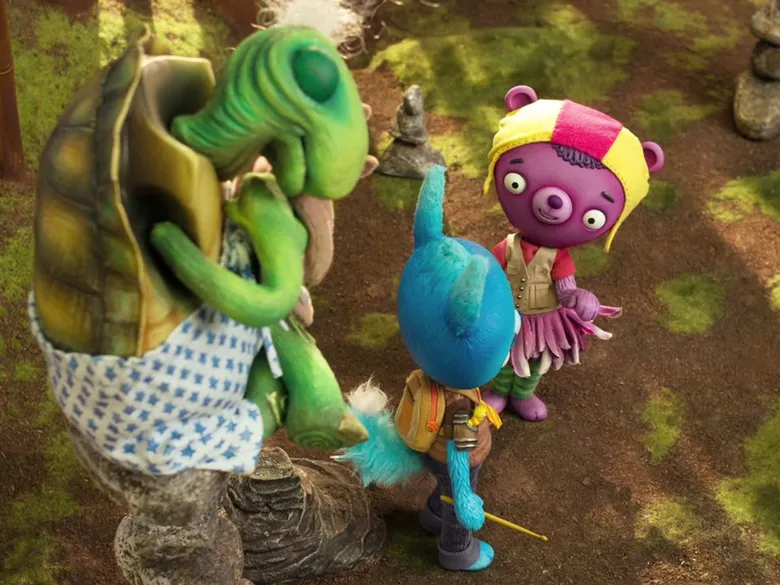
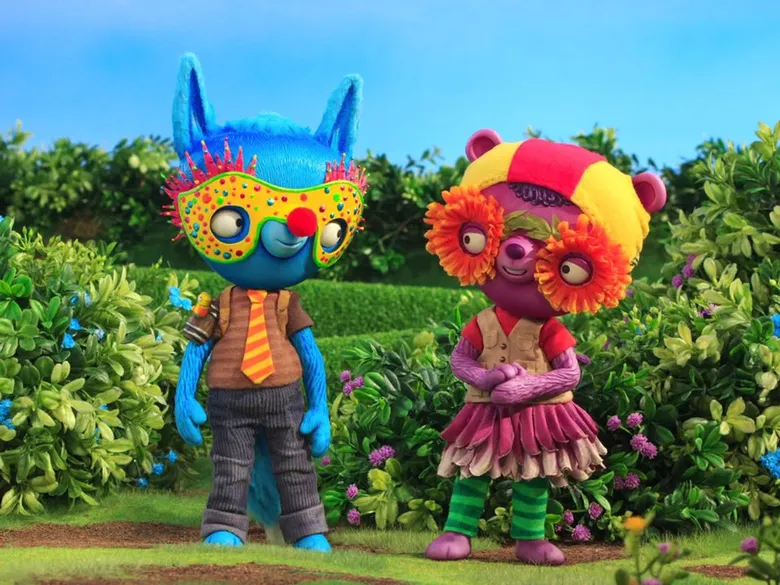
Tumble Leaf builds its world from a range of animal characters, so there is visual variety in species, body shapes and ages, but no human cultural diversity, family forms or broader life-worlds come into view. The blue fox Fig is the clear and constant lead, carrying the curiosity and problem-solving in every scene, while the supporting characters mostly react or lend a hand. Female-coded characters stay at the edges, with the most visible one shown in a domestic, apron-wearing role. The result is a friendly, cooperative world that still rests on a narrow, male-centered pattern.
This score shows whether the series stays close to everyday reality or leans into fantasy. Scale: Fantasy → Mixed reality → Realistic.
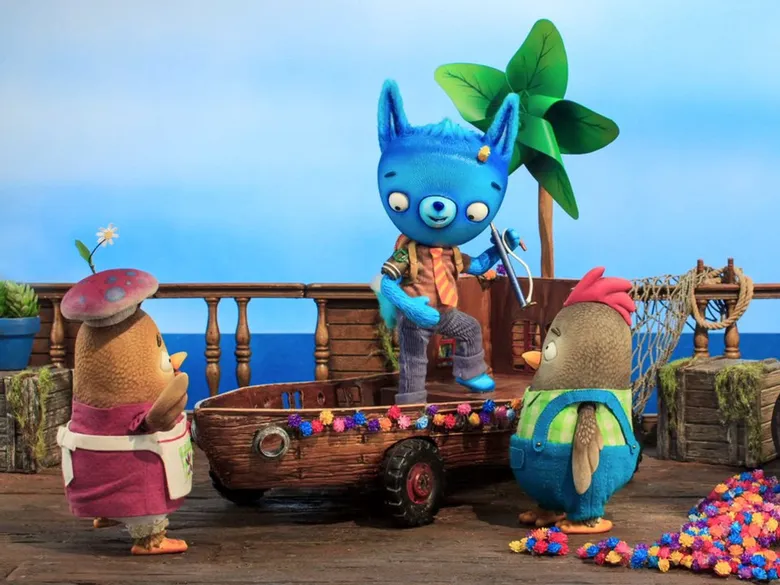
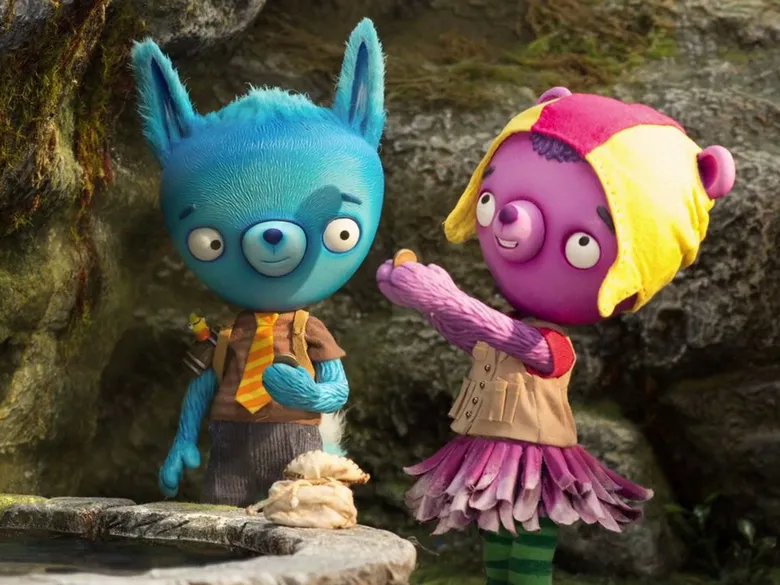
This is a calm world of discovery where a blue fox named Fig and his animal friends explore simple ideas like rolling, ramps and round objects. There is no villain and no fright. The small challenges come from the situations themselves, and every character is friendly and helpful. The imaginative seaside setting keeps its own steady logic, so the fantasy never feels random, though the world itself, with its talking animals and storybook landscape, leans more imagined than everyday.
This score shows how enjoyable the series is for parents watching along. Scale: Tedious → Tolerable → Pleasant → Enjoyable.
This is a calm, carefully made episode that an adult can comfortably sit through. The stop-motion craft and the soft, unhurried soundscape are a real pleasure for a grown-up in the room, and Fig's steady path from spotting something round to getting a heavy boulder rolling gives enough story to follow. The humor and ideas stay aimed at young children, so there is little extra layer for the parent, but nothing here grates.
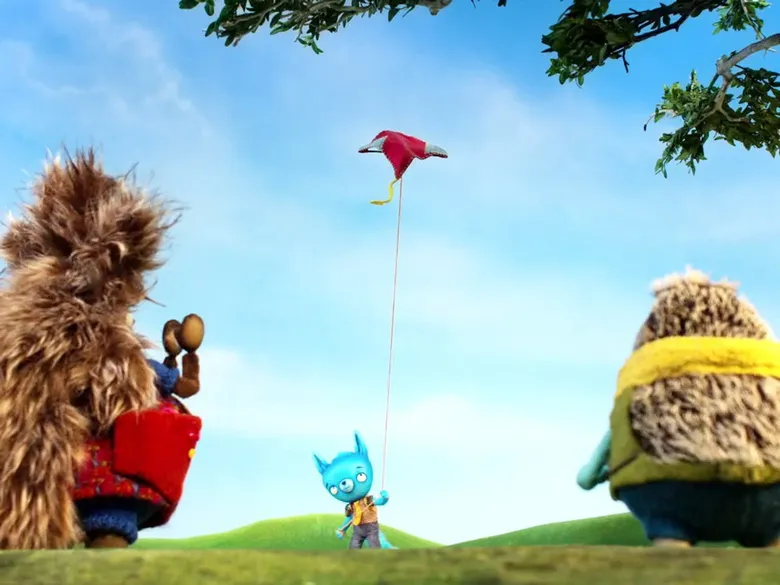
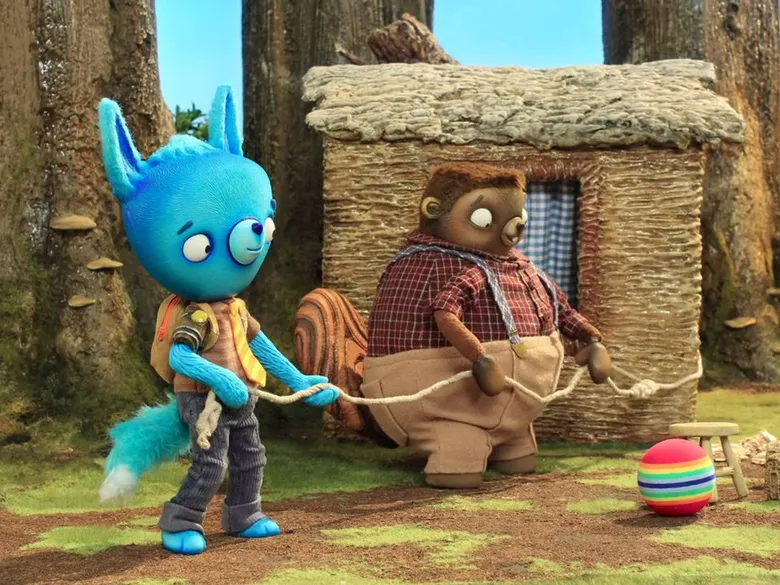
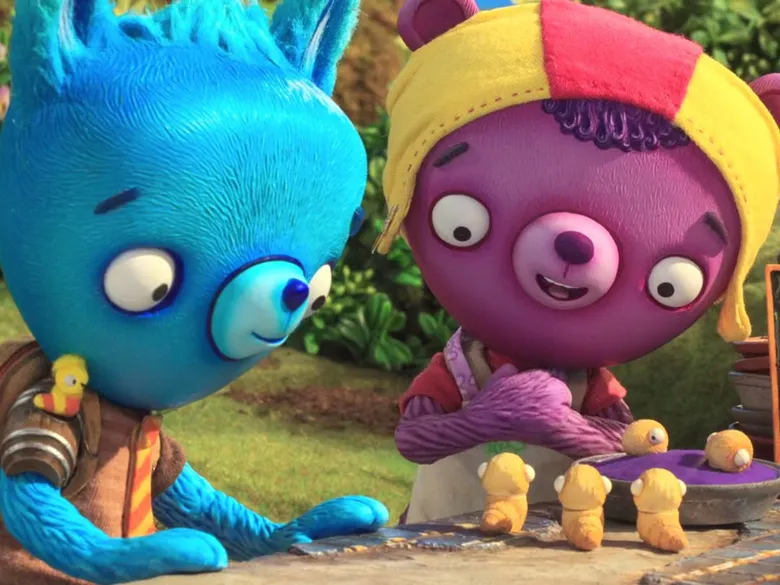
Fig, a small blue fox, becomes fascinated by things that roll after he finds a round object near his home. With his brown bear friend, he explores balls, round stones, and other rolling shapes across a beach and a wooded village. Through trial and error he works out how to build a cart that rolls on its own. The episode ends back near his beached boat home once his rolling experiments come together.