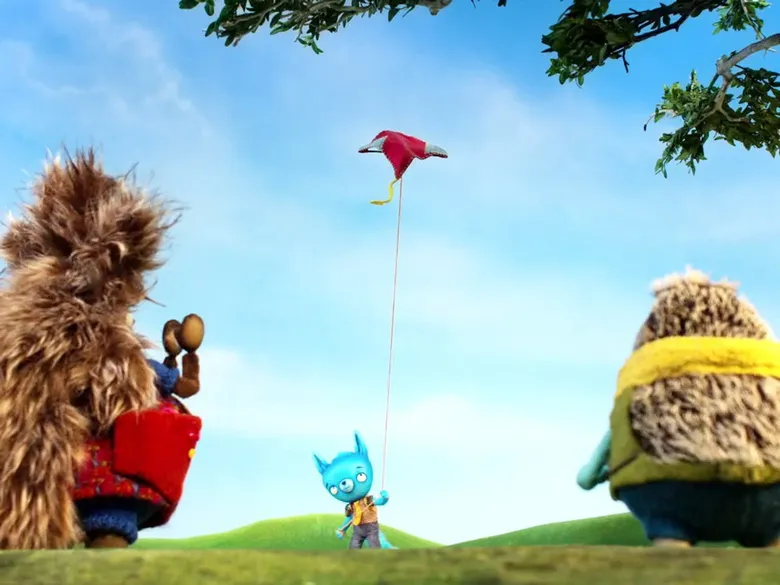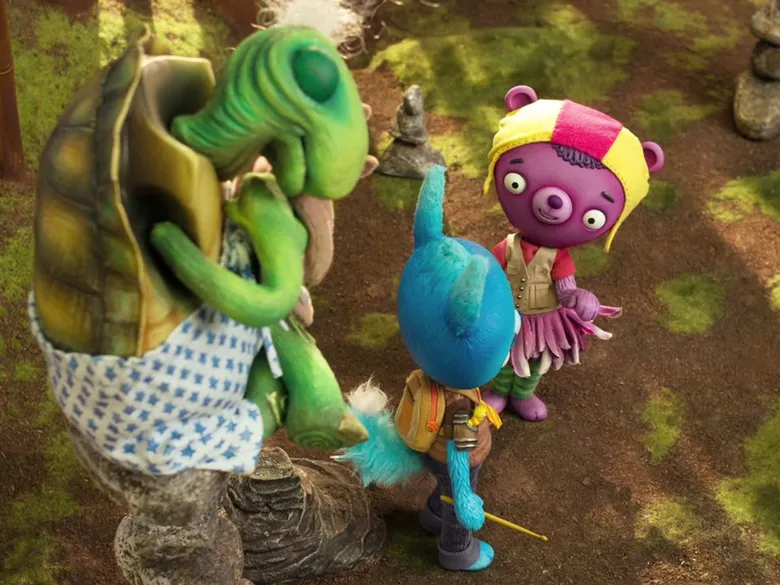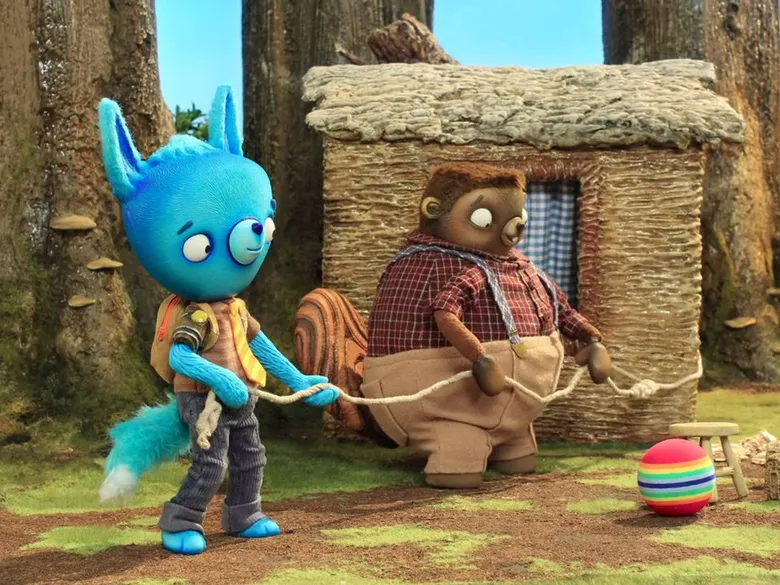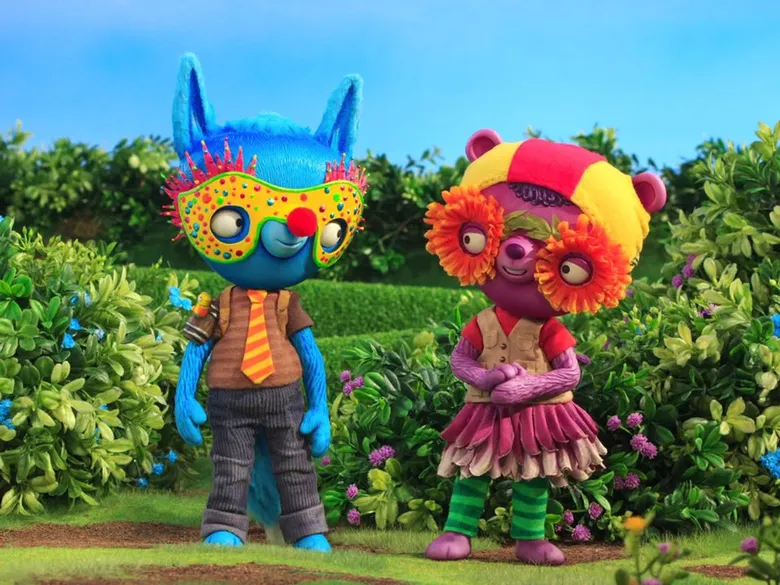



















This episode keeps the sensory load light and easy to take in. The handcrafted stop-motion world unfolds in long, steady shots with quiet pauses between actions, and wordless reaction moments give a child time to settle. There is no shouting at the camera, no cliffhanger hook and no rush of jarring cuts; a soft island soundscape carries the story instead. Even the busier kite-running scenes on the hill stay relaxed rather than frantic.
The episode follows one clear goal from beginning to end: Fig wants to get his red kite into the air. Events arrive one at a time with a recognizable beginning, middle and end, so a young child can follow what is happening without getting lost. Each step builds on the last, and actions lead to sensible results, such as the kite lifting only once there is enough wind. New ideas are introduced sparingly, keeping the thread simple to hold onto.
Emotionally this is a safe, reassuring watch. Characters treat each other with warmth and patience, and Fig stays good-natured even when the kite refuses to fly, showing calm persistence rather than a meltdown. The few small moments of frustration are mild and pass quickly, with encouragement and success close behind. Feelings shift gently, so there are no sudden emotional jolts for the child to absorb.
Fig drives the whole adventure himself. He finds the kite among his objects, decides he wants to fly it, and then works through the problem with visible trial and error: he tries one approach, sees it does not work, and adjusts. His thinking unfolds across several attempts before he discovers that wind and movement are what lift the kite. Cause and effect stay clear throughout his experiments, so the reasoning is easy to follow.
The language is clear and purposeful. A gentle narrator and the characters use short, concrete sentences that name what is happening, introducing words like wind and fly in a way a preschooler can pick up from context. Speech is easy to understand and used to carry meaning rather than as filler. The episode leans on long wordless stretches, so spoken language is sparse, but what is said is well matched to this age.
There is solid real-world value here. Flying a kite is a genuine activity a child can try outdoors, and the episode shows the steps plus the simple idea that wind makes it work. Friendship, helping and island life come through in recognizable, everyday ways. The setting itself is a whimsical place of talking animals and a magical finding place, so part of the charm sits in imagination rather than literal life, but the central activity transfers cleanly off the screen.
More information
This score shows how inclusively the series portrays diverse people, families and cultures. Scale: Limited → Varied → Rich → Inclusive.
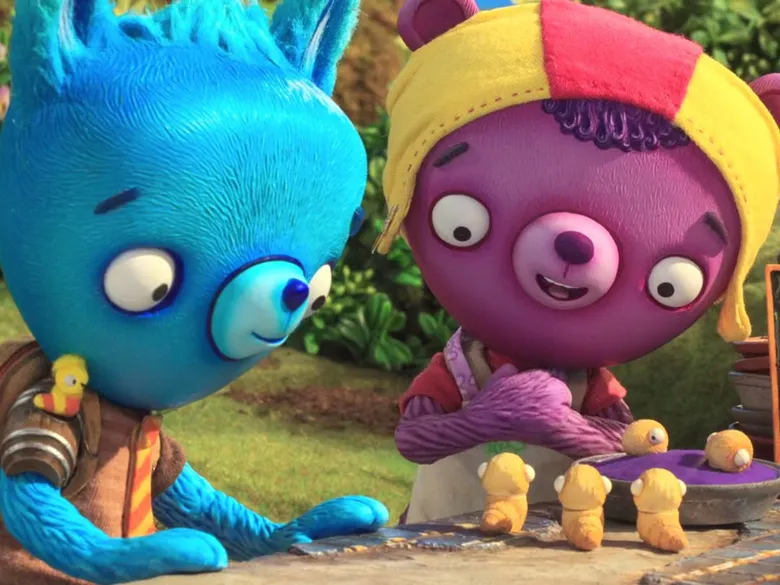
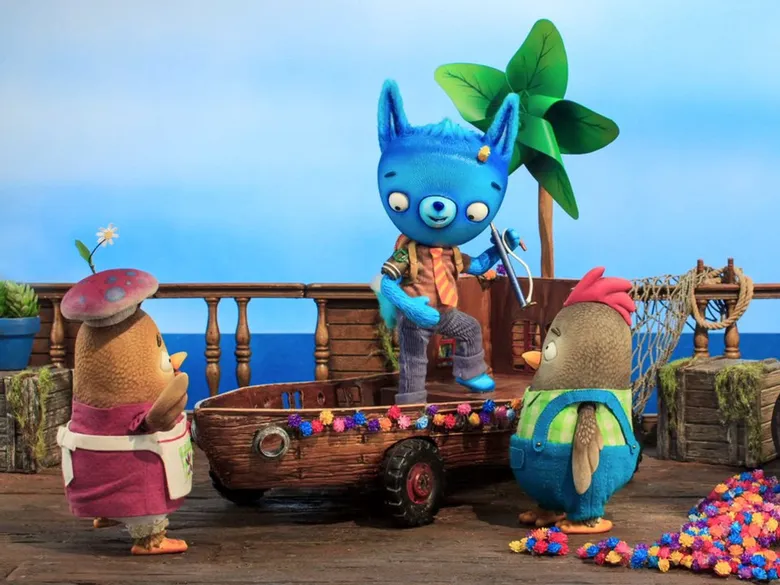
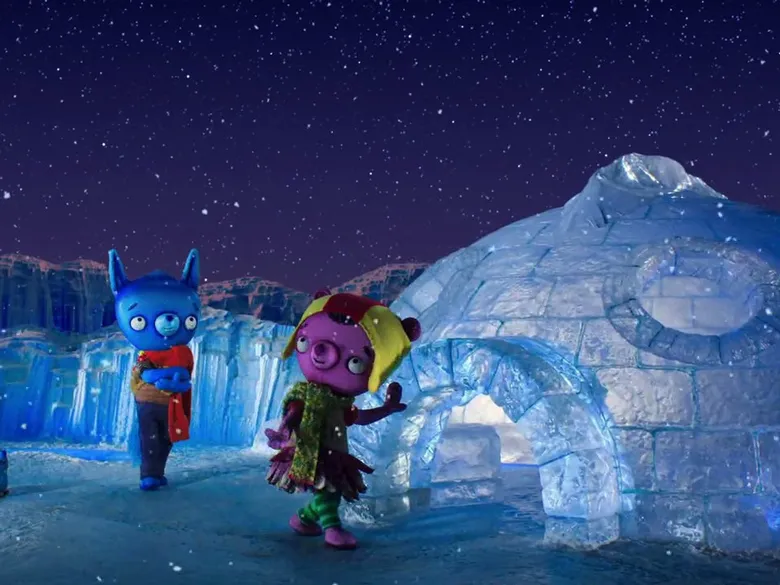
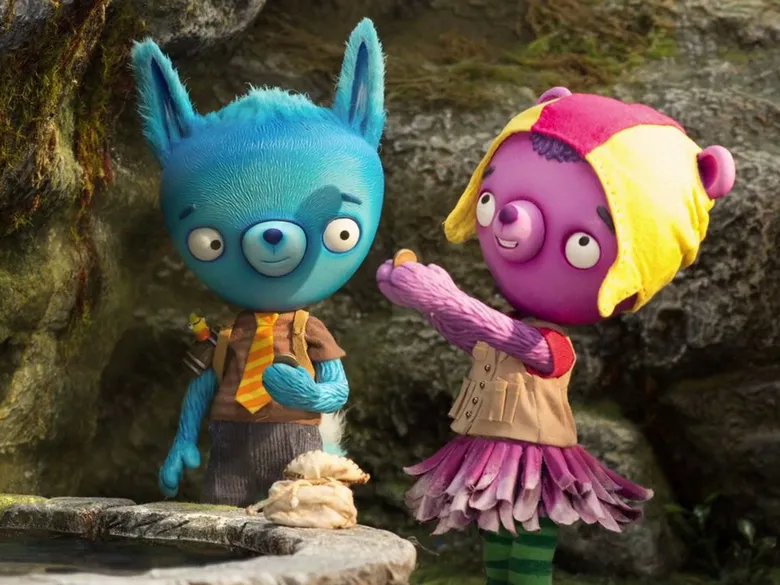
Tumble Leaf unfolds in one cosy world of animal characters led by Fig, a small blue fox who explores and tinkers his way through the day while his caterpillar friend Stick tags along. There is gentle variety in the creatures on screen and both boys and girls take part, but the wider markers of diversity, such as cultural background, different family set-ups or contrasting ways of living, are not really present. Fig carries the initiative and the spotlight from start to finish, with the others mostly playing friendly supporting parts rather than sharing the lead. The picture is harmonious but stays narrow in the kinds of lives and backgrounds it shows.
This score shows whether the series stays close to everyday reality or leans into fantasy. Scale: Fantasy → Mixed reality → Realistic.
The world of Tumble Leaf is imagined, a bright island of talking animals and playful, handmade-looking contraptions, yet what Fig actually does stays grounded and familiar. The heart of this episode is flying a red kite, working out how to catch the wind and keep it aloft, an activity a child knows and could try. There is no villain anywhere; the gentle challenge of the kite itself carries the story rather than any bad character. The imagined setting keeps its own steady logic and the mix of make-believe and real activity sits comfortably for a young child.
This score shows how enjoyable the series is for parents watching along. Scale: Tedious → Tolerable → Pleasant → Enjoyable.
This is one of the easier children's series to share a couch with. The handcrafted stop-motion is a genuine pleasure to look at, and the soft voices and mellow music keep it from grating, so a grown-up can happily have it on in the room. The story, Fig's patient effort to get a kite flying, is light but coherent enough to follow along. The humor stays aimed at the youngest viewers rather than offering much for adults, but the calm tone and craft make it rewarding company while a child watches.
Fig, a young blue fox, finds a red kite among the curious objects in his boathouse and decides to make it fly. He carries it out to a sandy beach and an open grassy hilltop and tries different ways to get it airborne, gradually learning that he needs wind and movement to lift it. After several patient attempts he succeeds and watches the kite climb into the sky. Along the way he spends time with friends around the island.