
















This program is well-balanced. It remains mostly easy to follow and process. It is a good fit for the recommended age.
The pacing is fast. Images follow each other quickly, leaving little time to pause and take in what is happening.
The sound is soft and supportive.
The visuals are calm and well-organized.
The episode is easy to follow because it sticks to a single thread: Juno is covered in sticky sap and needs to get clean. Events arrive in a clear order with a recognisable beginning, middle and end, and each event leads logically to the next, climbing the tree left sap on her, sap is sticky, so it must be washed off. New information arrives a little at a time, usually one idea per scene, which keeps the load light for a young child. The one moment that asks slightly more is a short look back at how Juno got sticky, but it is clearly signposted.
Emotionally this is a supportive, secure episode. Vida responds to Juno's worry with warmth and respect, telling her 'new things can be scary' and 'we can stop anytime you want', and she even apologises when she realises how nervous Juno is. Every wobble of fear is quickly met with comfort and a workable solution, so tension never sits unresolved. The small caveat is that Juno's fear surfaces again and again across the bath, which sensitive children may feel, even though each spike stays mild and is soothed right away.
There is a clear, visible problem-solving process here. Vida names the problem, investigates with a magnifying glass, works out that maple sap is the cause, and lays out a step-by-step plan to fix it. Juno gets real agency at the key moment, choosing her towel and bubbles, testing the water, and finally deciding 'Okay, I try'. The limitation is that most of the thinking is led by the expert vet rather than driven by the child, and the original problem comes from an accident rather than a goal Juno sets for herself.
The language is clear, purposeful and well matched to a young child. Most sentences are short and concrete, the dialogue does real work explaining what is happening, and new words like 'sap', 'diagnosis' and 'loofah' are defined the moment they appear. Juno speaks in simple toddler fragments such as 'I sticky?' and 'more bubbles', which mirrors how a small child really talks. The minor caveat is that those fragments and the occasional new term mean not every line is a complete, modelled sentence.
This episode connects strongly to real life. A bath to get clean, choosing a towel, testing the water and facing a worry in small steps are all things a child can carry straight into their own day, and the social world of a caring parent and a helper is instantly recognisable. It also slips in real knowledge, like how maple trees make sticky sap and how hippos close their nose and ears underwater. What keeps it from scoring higher is that the whole cast is talking animals in an imaginary town, so the realistic situations sit inside a fantasy frame.
More information
This score shows how inclusively the series portrays diverse people, families and cultures. Scale: Limited → Varied → Rich → Inclusive.
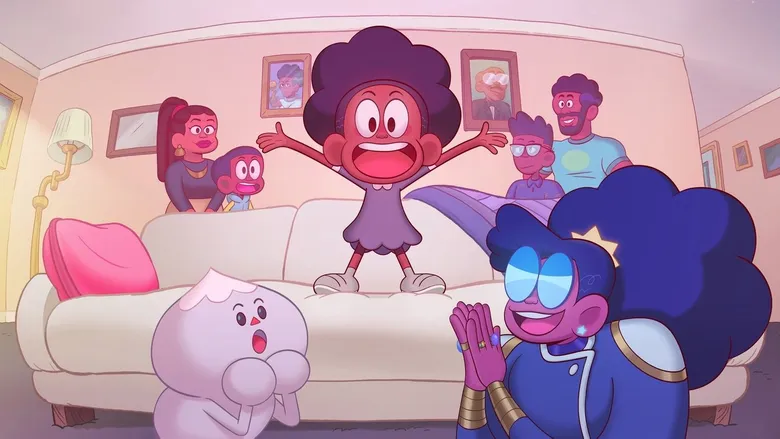
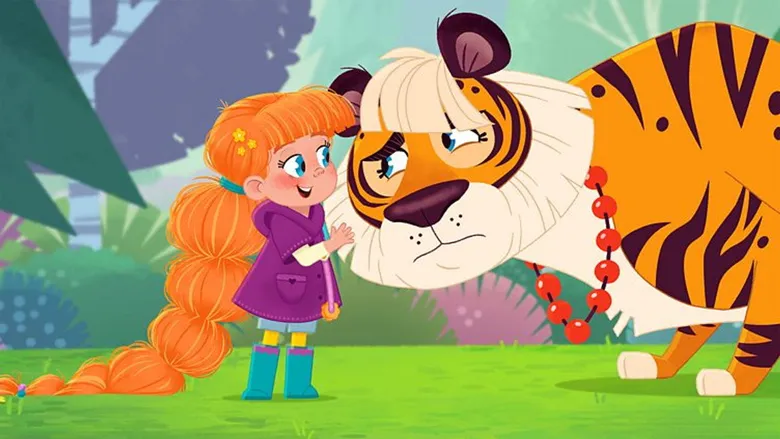
This is a vet show set in the woodland town of Sweetwood, where a young girl named Vida cares for a wide range of animal patients with help from her hamster, Popcorn. The cast spans many species and ages, includes a small animal who uses a wheelchair, and ends with Vida being welcomed home by her Papa, a family with visibly different skin tones shown as ordinary. Roles lean against the usual patterns, with a girl holding the expert, problem-solving role and a father as the parent at home. The one small caveat is that the broadest variety appears in the theme song and the final scene rather than woven through the story itself, and the two parents tending babies are both mothers.
This score shows whether the series stays close to everyday reality or leans into fantasy. Scale: Fantasy → Mixed reality → Realistic.
The episode is built around an everyday childhood situation: a baby hippo named Juno gets sticky tree sap on her after climbing for a leaf, then has to face a bath she is afraid of. The world is recognizable, a forest, a vet clinic, and a bathtub, even though the whole cast is talking animals, and the lessons are real, including how maple trees make sticky sap and how hippos close their nose and ears underwater. There is no villain anywhere; the only tension is Juno's fear, which the vet helps her work through one small step at a time. For a 3-year-old, this mostly realistic world with a light layer of talking-animal imagination is a comfortable match.
This score shows how enjoyable the series is for parents watching along. Scale: Tedious → Tolerable → Pleasant → Enjoyable.
This is a calm, well-made show that a parent can comfortably sit through, carried by clean animation and a clear little story about a baby hippo who gets covered in tree sap and learns to face a bath. The craft and gentle pacing are the real strengths, and the plot has enough shape to hold light adult attention, with a small mystery about how Juno got sticky and a genuine emotional arc. The main limitation is that the writing and humor are pitched squarely at young children, so there is little for a co-viewing adult beyond one hippo pun. It works as pleasant background company rather than as something a parent will actively enjoy.
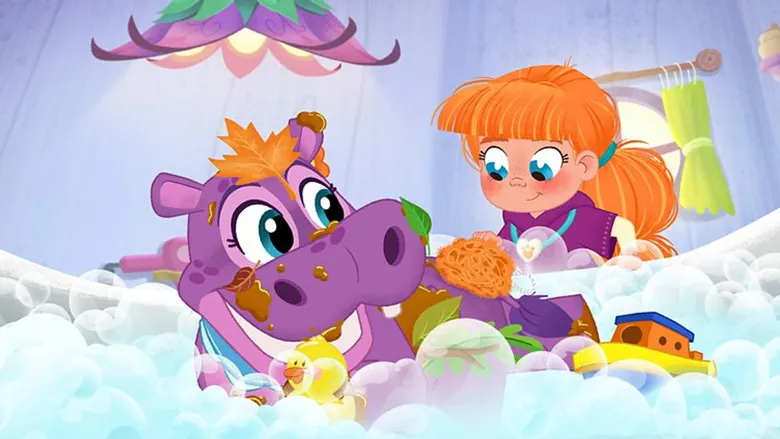
Juno, a young hippo, climbs a maple tree for a pretty leaf and ends up covered in sticky sap. Her mother takes her to Vida the vet, who works out the cause and prescribes a bubble bath, but Juno is frightened of the water. Vida guides her through small 'baby hippo steps', letting her choose the towel and bubbles and test the water, until Juno gets in and washes clean. Juno thanks Vida with the special leaf, and Vida heads home to her Papa.