













This program is well-balanced. It remains mostly easy to follow and process. It is a good fit for the recommended age.
The pacing is fast. Images follow each other quickly, leaving little time to pause and take in what is happening.
The sound is intense and continuously present.
The visuals are calm and well-organized.
The story follows one clear thread from beginning to end: the day's word is 'piano,' and the fox sets out to find it. Events arrive in a logical order with a recognizable beginning, middle, and end, and new ideas come one at a time so a young child can keep up. Cause and effect is spelled out plainly, such as the reasoning that a piano must stay dry, so it cannot be at the watery seaside or the snowy mountains and must be indoors. The only small caveat is that the closing recap retells the same discoveries, which helps memory but adds little that is new.
The emotional tone stays warm and consistent, with characters who encourage and praise each other instead of competing. Feelings stay gentle: curiosity about a noise, delight at finding the piano, and a quick 'oops, sorry' when one friend accidentally covers another in sand. Small bumps are smoothed over right away, so a child is never left holding on to tension. The one mild note is the repeated excited shout of 'I found it, I found it,' though it reads as genuine joy rather than upset.
The episode shows a satisfying amount of thinking out loud. The fox does not stumble onto the answer; she reasons about where a piano could stay dry, then tries a spoon and some saucepan lids, tests each against what she knows, and keeps going until she finds the real one. Each wrong guess is treated as useful information rather than a failure, which models patient trial and error. The main limit is that the goal is handed to the characters by the word game, so the push to begin comes from outside rather than from the characters' own idea.
The language is a good match for a young child: short, clear sentences built around concrete words like 'piano,' 'wet,' 'spoon,' and 'musical sound.' Words are used consistently and correctly, and the heavy repetition reinforces meaning rather than padding, so a new word is heard many times in helpful contexts. Most lines give real information or describe what something is for, such as explaining that saucepan lids keep food warm, with only occasional simple exclamations. The speech is clear and easy to follow throughout.
This pillar is held back by the fantasy framing. The lesson itself is practical, because the episode ties a real word to a real object and explains what everyday things are for: a spoon is mainly for eating, saucepan lids keep food warm, and a piano makes music. A child could carry the word and these object meanings into daily life. What limits the real-world value is the wrapper around the lesson, talking animals living inside a magic pop-up book, so the actions on screen are not things a child can copy directly even though the underlying ideas are grounded in everyday life.
More information
This score shows how inclusively the series portrays diverse people, families and cultures. Scale: Limited → Varied → Rich → Inclusive.
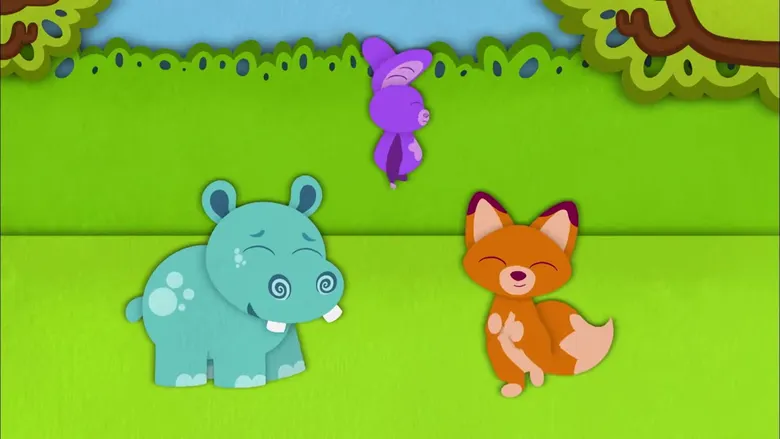
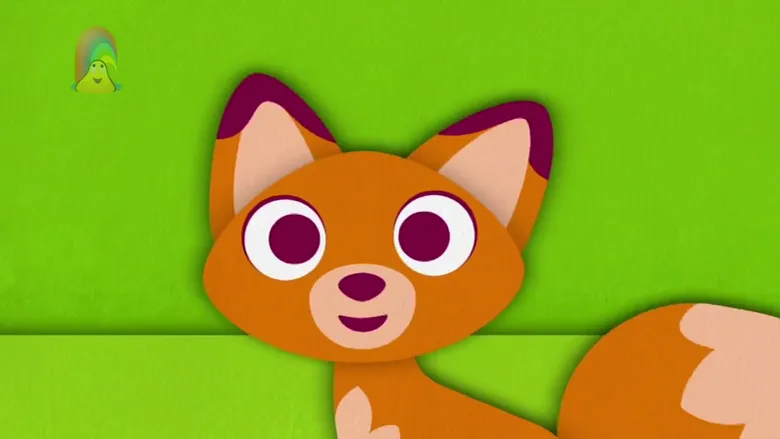
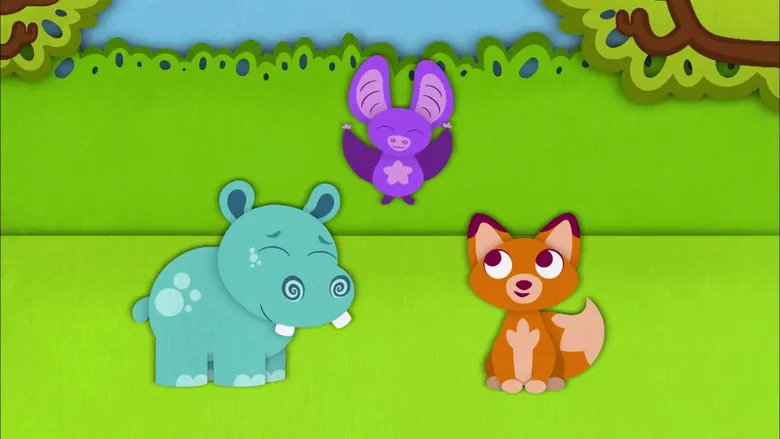
This is a small world of three animal friends, Ela the fox, Hari the hippo and Seren the bat, plus a live-action boy called Ben who opens their pop-up book. There is a clear gender mix among the three friends, and here the female fox takes the lead in searching for the day's word, which pushes against the idea that adventures are led by boys. They treat each other as equals, share the play and show their feelings openly, with no stereotyped roles. Human variety is thin though, since only one child appears with no families, adults or wider range of people, so most of the breadth comes from the animal characters rather than from people and how they live together.
This score shows whether the series stays close to everyday reality or leans into fantasy. Scale: Fantasy → Mixed reality → Realistic.
Abadas builds its world around three talking animal friends, Harry, Seren and Ella, who explore bright, imaginary storybook settings, so the show blends gentle fantasy with everyday learning. What grounds it is the focus on real objects a child knows: the friends puzzle out where to find a piano using sensible clues like 'a piano must never get wet,' alongside familiar items such as a spoon and saucepan lids, and short clips of real children appear between the animated scenes. There is no villain and no good-versus-bad storyline, every challenge is a friendly guessing game, and the imaginary world keeps to its own consistent rules. For a child this young the make-believe framing is a little more imaginative than pure real life, but the calm tone and recognizable objects keep it easy to relate to.
This score shows how enjoyable the series is for parents watching along. Scale: Tedious → Tolerable → Pleasant → Enjoyable.
Abadas is a calm, well-crafted guessing game that a parent can sit through comfortably, with soft voices and melodic music that never grate. The craft is solid and the bright storybook look stays consistent across the seaside, mountain, and kitchen scenes. What holds it back for adults is that everything is pitched squarely at young children, with no jokes or layers for a grown-up co-viewer, and the plot is a thin find-the-word formula padded with long musical search sequences. It is a pleasant room presence rather than something a parent would choose to watch on its own merits.
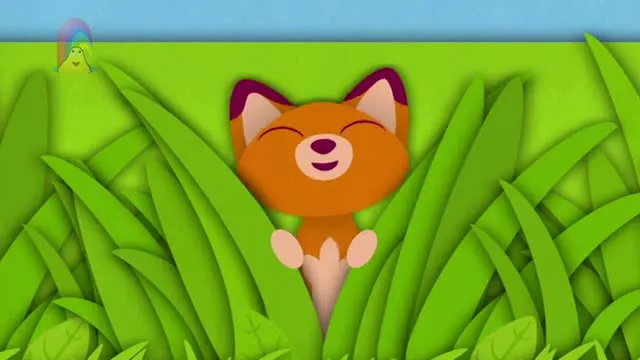
Three animal friends, Ela the fox, Hari the hippo, and Seren the bat, play in a pop-up-book world while a narrator runs a word game. The day's word is 'piano,' and Ela is chosen to find it. She works out that a piano must stay dry and so should be indoors, then searches a house, mistaking a spoon and some saucepan lids for the answer before discovering the real piano. She returns to tell her friends what she found, and the group says goodbye.