










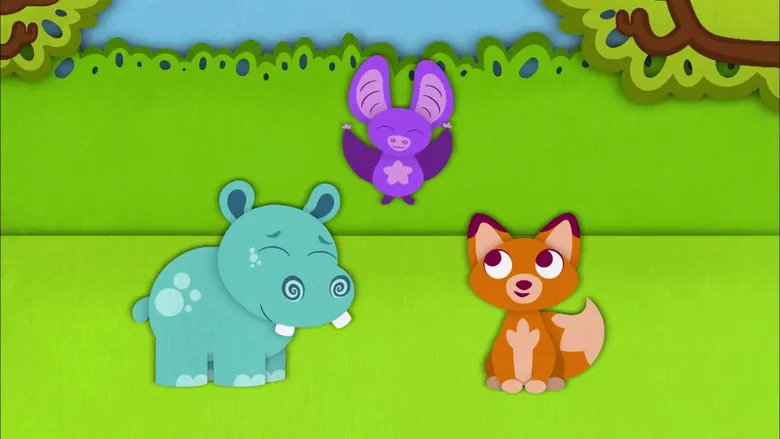
This program is well-balanced. It remains mostly easy to follow and process. It is a good fit for the recommended age.
The pacing is fast. Images follow each other quickly, leaving little time to pause and take in what is happening.
The sound is clearly present and regularly draws attention.
The visuals are calm and well-organized.
One clear question carries the whole episode: what is a lighthouse, and where would you find it? The story builds in logical steps, first ruling out the house and the mountains because ships cannot sail there, then deciding a lighthouse must be at the seaside. New ideas arrive one at a time, so a toddler can hold onto each thought before the next, and the cause and effect is spelled out plainly, such as the light spinning so ships can see it and sail safely. The one denser stretch is the explanation of how a lighthouse works, which packs in a little more than the rest of the episode.
The mood stays warm and gentle from start to finish. Characters cheer each other on with lines like 'well done, you found the lighthouse' and 'you really are amazing', and when the bat mistakes the moon or a torch for the lighthouse she is gently corrected and reassured rather than laughed at. There is no anger, fear, or sadness to unsettle a young child, and the few small moments such as 'oh dear, where can I hide' resolve happily within the same scene. Emotional shifts are gradual, so nothing feels jarring.
The episode shows real thinking out loud. To find the lighthouse, the characters reason through clues step by step, eliminating places where ships cannot go before settling on the seaside, then test one possibility after another, the moon, a funfair light, a torch, before confirming the real lighthouse. The bat takes the lead and follows the search through herself, which models curiosity and persistence for a young child. The solution is earned through several visible attempts rather than handed over, with only the initial nudge to start coming from the word game rather than the characters themselves.
The language is clear and purposeful, built around the new word 'lighthouse', which is broken into sounds and repeated so it sticks. Sentences are mostly short and concrete, naming real things a child can picture: a tall tower, a light on top, ships, the sea at night. A few explanations run a little long for a two-year-old, but the words carry real meaning, with most lines giving information or describing what the characters see. Cheerful exclamations like 'woohoo' and 'yay' pop up, yet they sit alongside the teaching rather than replacing it.
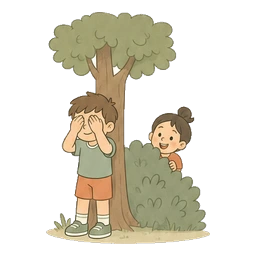
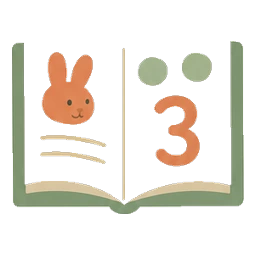
This pillar scores lower because the heart of the show is a fantasy: three talking creatures who live inside a magic pop-up book, including a bat that flies and a fox with a magic nose. The lighthouse facts themselves are real and accurate, and a live-action child anchors the play in something recognisable, so the learning does connect to the world. Familiar moments like hide-and-seek, counting, and saying goodbye are easy to carry into daily life, but the central activities, flying out to sea at night to hunt for a light, are not things a toddler can copy. The friendships and encouragement on screen mirror real play, which is the strongest real-world thread here.
More information
This score shows how inclusively the series portrays diverse people, families and cultures. Scale: Limited → Varied → Rich → Inclusive.
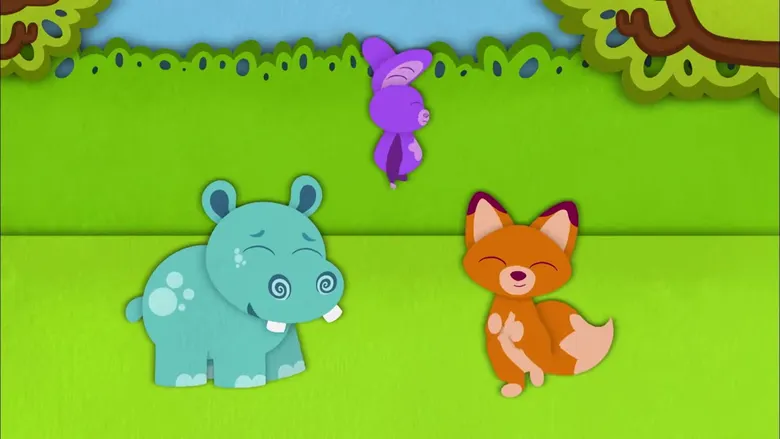
This animal-led story is framed by a single live-action child, a young boy who appears to be of South Asian heritage, who watches the three Abadas spring to life from his pop-up book. There is little breadth of people on screen: no families, no adults, and one human child rather than a mix of ages, bodies, or backgrounds. Where the show is stronger is in how its characters behave, with a female character, Seren, leading the night-time adventure and finding the lighthouse while the others contribute their own talents as equals. So the picture of people stays narrow, while the roles the characters play are balanced and free of the usual gender clichés.
This score shows whether the series stays close to everyday reality or leans into fantasy. Scale: Fantasy → Mixed reality → Realistic.
Abadas builds its world from gentle imagination layered over real-world learning. The three furry Abadas are make-believe creatures who live in a book and each have one special skill, but everything they explore is real and recognizable: a countryside game of hide and seek, the seaside, the moon, a torch, and a lighthouse whose light helps ships sail safely at night. There is no villain anywhere in the episode, and the only challenge is the friendly search for the lighthouse, solved through clues and observation. The blend of soft fantasy and concrete learning sits comfortably for this age, with the small caveat that the central characters are imagined flying animals rather than people a child would meet.
This score shows how enjoyable the series is for parents watching along. Scale: Tedious → Tolerable → Pleasant → Enjoyable.
Abadas, Lighthouse is a calm educational show that an adult can sit through without strain, but it offers little made for the grown-up in the room. There is a genuine little quest to follow as Seren the bat searches the night seaside for a lighthouse, ruling out the house and the mountains and passing the moon and a fairground ride before finding the real tower. What holds it back for a parent is that every joke and clue is pitched at the child, and the target word is chanted heavily from start to finish. The production is clean and the moonlit sea scenes are pleasant, though the character animation itself stays simple.
Themes
Literacy
Central
The whole episode is built around a word game where the Abadas learn and guess the word 'lighthouse'.
Ocean
Recurring
The search leads to a night-time seaside with a real lighthouse that guides ships.
Nighttime
Recurring
Seo the bat searches at night because she 'loves the nighttime', passing the moon and a torch in the dark.
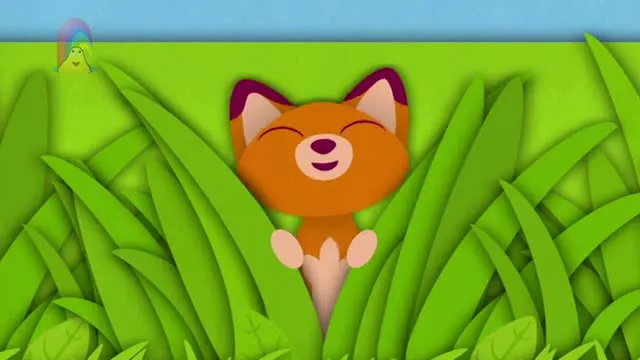
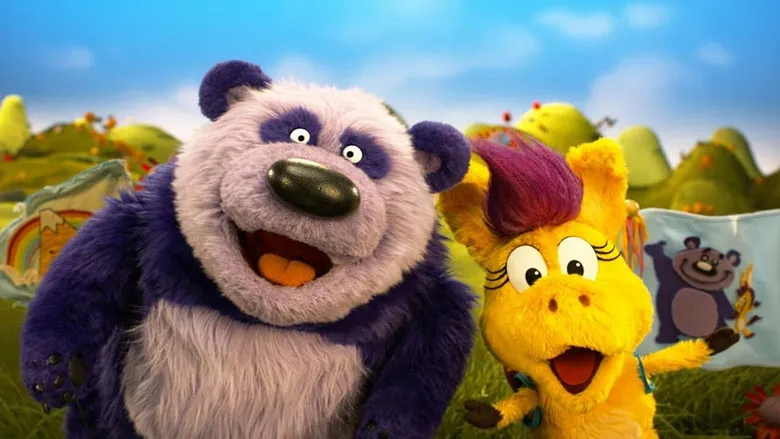
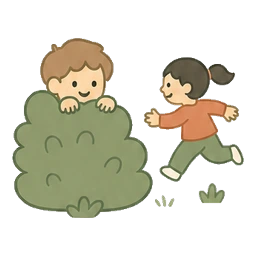
Three creatures called the Abadas, who live in a magic pop-up book, set out to learn a new word: lighthouse. After a game of hide-and-seek, they use clues to work out that a lighthouse stands at the seaside, and Seo the bat flies out at night to find it. She passes the moon, a funfair, and a torch before spotting the real lighthouse with its spinning light. The friends celebrate, say goodbye, and head back into their book.