










This program is stimulating. It actively demands attention and can feel intense. For the recommended age, this may be on the more intense side.
The pacing is fast. Images follow each other quickly, leaving little time to pause and take in what is happening.
The sound is clearly present and regularly draws attention.
The visuals are well-balanced, with a clear overall view.
One simple storyline carries the whole episode: the friends invent a bin-lorry game and Lu learns to share the roles. Events follow a clear order, from watching the real bin lorry, to playing, to the fall-out and the make-up, so a young child can follow what leads to what. New information arrives slowly and is wrapped in plenty of repetition, which keeps the load light. Actions have predictable results, like pushing the button to tip the bin, that match what just happened.
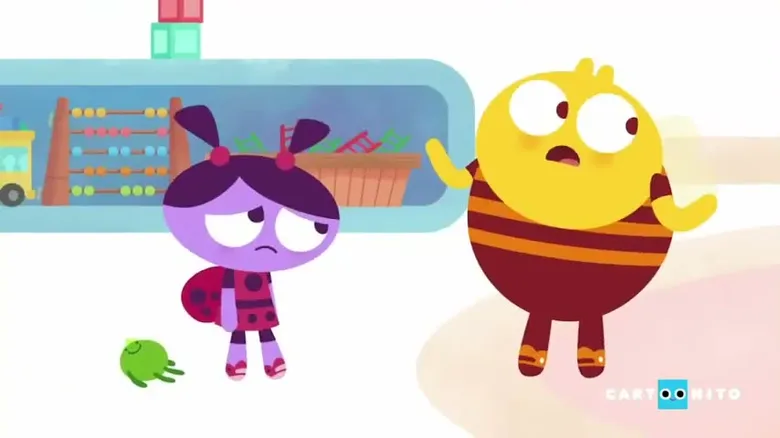
Emotions stay gentle and well-contained; the biggest upset is friends walking off when they cannot get a turn, and Lu feeling a little flat on her own. Feelings shift gradually rather than flipping suddenly, and the low point is repaired in the same stretch when Lu invites everyone back and the mood lifts. The one caveat is that Lu spends a good while insisting 'it's my game so I get to decide' before she comes round, so children see plenty of the bossy behaviour before the warm resolution. Her friends push back respectfully rather than mocking her, which keeps the overall tone kind.
The children drive the play themselves, inventing the game and handing out the roles without an adult stepping in. When Lu's selfishness leaves her alone, she works out the fix on her own, realising the game needs other players and going to fetch her friends. The reasoning is spelled out plainly, that a bin lorry is no fun without other bins, so the cause and effect is easy to follow. It is a small, single-step solution rather than a worked-through plan, which suits this age.
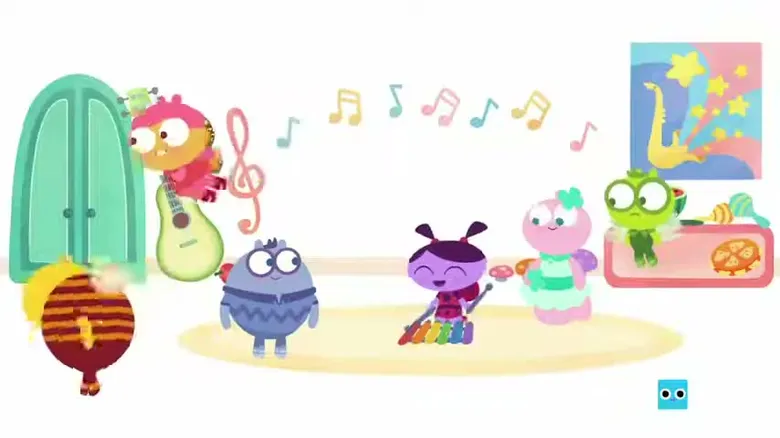
The spoken language fits young listeners, with short, concrete sentences about bins, rubbish and taking turns. The clear limitation is how much of the audio is playful noise rather than meaning: beep, clunk, wheelie and whey fill long stretches, and the closing song is built entirely from these nonsense syllables. The genuinely useful talk, like the friends explaining that everyone should get a turn, is there but shares space with a lot of expressive sound-making. The words that do carry meaning are used consistently and correctly.
The episode connects to things a toddler knows: a rubbish truck on the street, a parent at work, and taking turns in a game with friends. The pretend play and the sharing lesson transfer straight to daily life, and the social dynamics of who decides and who gets a turn mirror real playground moments. It all plays out in a made-up world of talking bugs rather than a real street, which softens the real-world link a little. The activities themselves, watching the bin collected and copying it in play, have a clear purpose a child can recognise and repeat.
More information
This score shows how inclusively the series portrays diverse people, families and cultures. Scale: Limited → Varied → Rich → Inclusive.
This is a garden world of brightly coloured bug characters built around one family and a small group of friends, with parents, children and a working adult all sharing the neighbourhood. There is little of the human variety in backgrounds, ages or family forms that would widen the picture, since every character is a stylised bug. Roles, though, stay open: the children play together as equals, both a mother and a father take part in family life, and feelings and tasks are not pinned to any one type of character. The central lesson, that the game is more fun when everyone gets a turn, keeps the social picture cooperative and balanced.
This score shows whether the series stays close to everyday reality or leans into fantasy. Scale: Fantasy → Mixed reality → Realistic.
The world of this episode stays close to a young child's daily life: a bin lorry doing its morning round, a trip to school, and a made-up game in the garden. The only imaginative layer is that the characters are bugs who talk and play like children, and that stays consistent throughout. There is no villain here; the trouble comes entirely from Lu wanting to be the bin on every turn and refusing to share, which toddlers recognise straight away. The blend of familiar situations and light imagination is well matched to this age.
This score shows how enjoyable the series is for parents watching along. Scale: Tedious → Tolerable → Pleasant → Enjoyable.
The episode follows a clear lesson about taking turns, which gives an adult enough of a story thread to follow along. There is little written for the grown-up in the room, however, and the repeated nonsense-word song plus the constant 'stinky rubbish' chants wear thin for older ears. The animation itself is clean and professionally made, with consistent character designs and a bright, tidy look. For a co-viewing parent it stays watchable but is built squarely for the child, not for shared enjoyment.
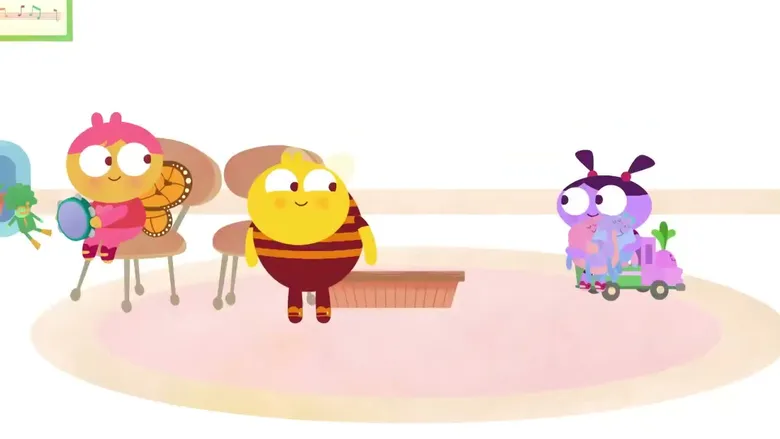
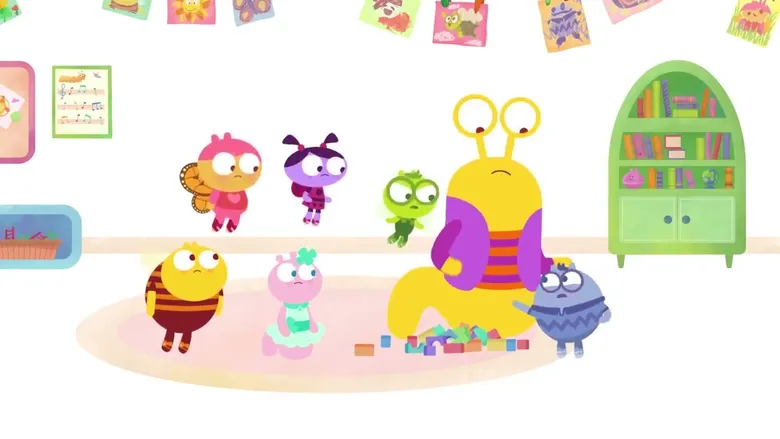
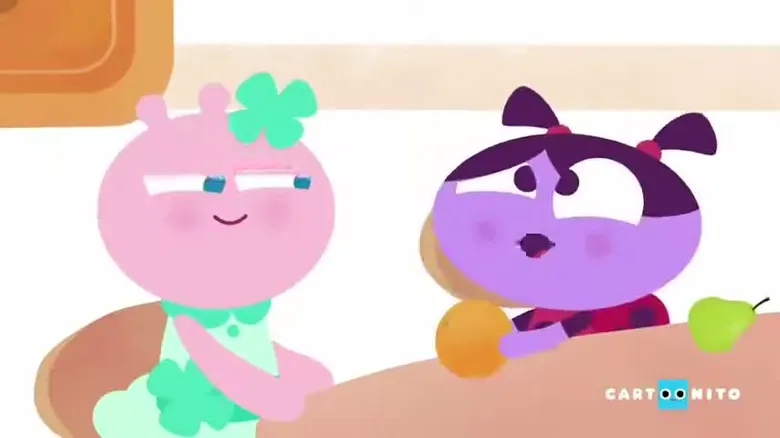
Lu, a young ladybird, and her bug friends watch a bin lorry collect rubbish in their neighbourhood, then invent a pretend bin-lorry game with roles for a driver, a bin wheeler and a bin. Lu keeps the best role for herself and refuses to let Biba and Barnaby take turns, so her friends leave and she plays alone. Finding the game no fun by herself, she invites everyone back so they can all share the roles. The episode ends with a silly word song made from the play sounds.