

Slowscreen SlowScreen
Toggle sidebar

Just launched: free lifetime premium for the first 1,000 members to activate their account.

Start free

Lu & The Bally Bunch

Sufficient

Recommended age Unlock

Co-watching from age 2

Stimulating

Exact score locked

Watch on HBO
Availability in
Save
Lu & The Bally Bunch

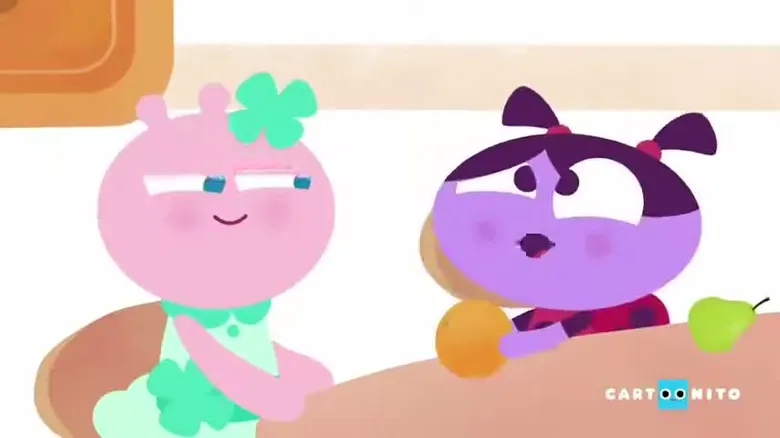
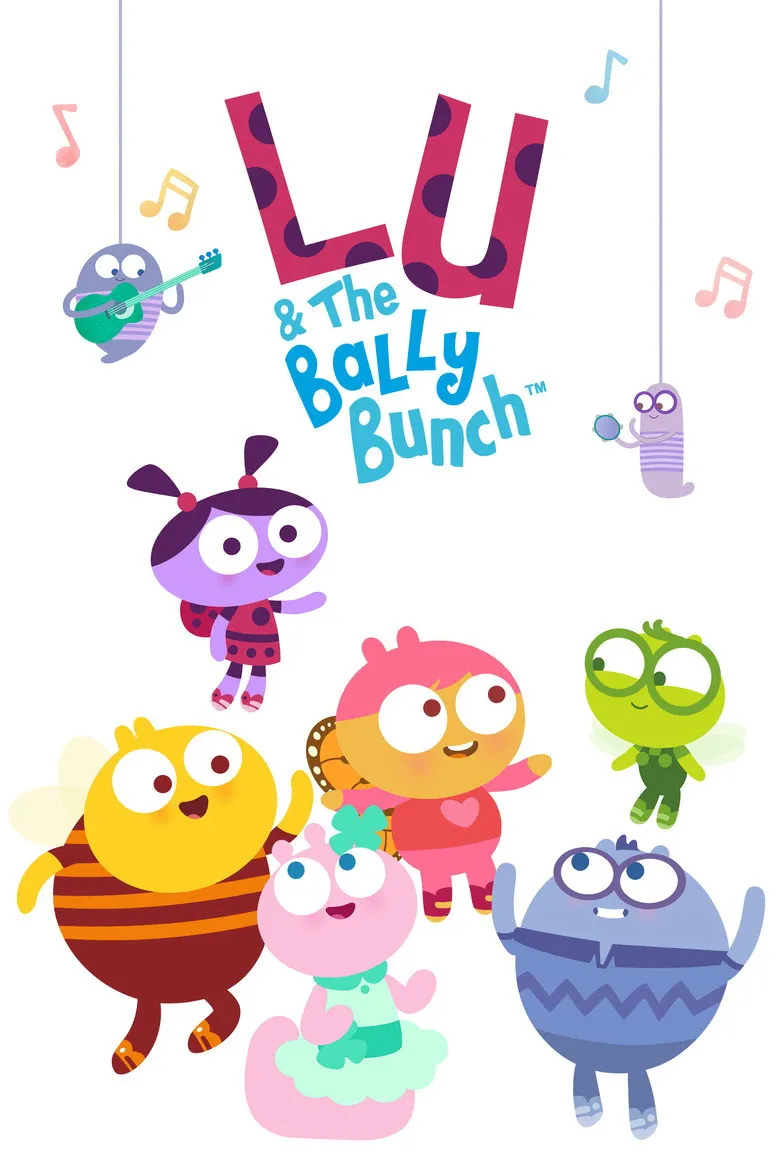
Lu and her small bug friends play, snack and learn together at home and at Shell School. The tone is calm and gentle, made for toddlers, with simple social and emotional learning.

  • Unhurried pacing suited to very young children.
  • Clear lessons on sharing and taking turns.
  • Children learn that everyone can choose their boundaries.
  • Conflicts are named and gently talked through.
  • Lu can be bossy and refuse to share.
  • Brief frustration and mild conflict in each episode.
  • Occasional flashing lights during the music scenes.

See the exact scores

The review is yours to read. Create a free account to reveal the exact SlowScreen score and every pillar score.

Create free account

Score Breakdown

The pacing stays fast throughout, with images following each other quickly and little room to pause and take in what is happening. Sound is usually well forward in the mix and regularly pulls attention, which makes most episodes feel stimulating for the youngest children. The visuals themselves stay clear and easy to take in as a whole. One calmer exception is 'Bug Hugs', where the sound is softer and supportive, so it is easier to follow.
Every episode follows a single, clear storyline from start to finish, whether the friends are building together, inventing a bin-lorry game, or making music at school. Events arrive in a logical order with a recognisable beginning, middle and end, and cause and effect stay easy to read, as when a tower stacked too high topples over. New ideas come in gradually, one at a time, which keeps the story easy for a young child to hold onto. A few episodes stretch this a little, introducing several versions of a game in quick succession or closing on a long musical finale that carries little fresh story.
Feelings are handled with care across the series. When upsets happen, a friend over a bitten pear, a child who feels left out, or a knocked-down tower, an adult or Lu steps in to name the emotion out loud and the hurt is settled within the same scene. Characters treat each other kindly, with no mocking or teasing, and feelings shift gradually rather than lurching between extremes. The one caveat is that a few moments, like a brief argument with raised voices or Lu insisting for a while that the game is hers to control, are real enough that the youngest viewers may feel them before the warm resolution arrives.
The children often drive the play themselves, inventing games and handing out roles without an adult stepping in. When it comes to sorting out the trouble, though, much of the harder thinking is steered by Lu or a teacher, who names the problem and walks the friends toward the answer rather than letting them puzzle it out alone. There is still genuine reasoning on show, as when one friend realises a bin lorry is no fun without other players and goes to fetch his friends, or works out that a tower was knocked down by mistake. The steps stay simple and single-stage, which suits this age, even if the solutions often lean on grown-up support to land.
The language is built from short, concrete sentences and everyday words like pear, blocks, tower and hug, well matched to a young listener and tied to what is happening on screen. Much of the talk does real work, describing what the friends are doing or guiding them through their feelings, and repeated key words carry genuine meaning. The clear limitation is how much of the audio is playful sound rather than meaning: chants, nonsense syllables and excited exclamations like 'beep', 'woo' and 'la la la' fill long stretches, and children often talk over each other in a rush. That overlapping chatter and the music can make some lines hard to catch for the youngest.
The everyday activities map neatly onto a young child's own world: stacking blocks, taking turns, asking before you take, sharing a snack and making music. The social situations at the heart of each episode, a squabble over food, who gets a turn, a friend who feels left out, are ones toddlers meet constantly, so the lessons transfer easily off the screen. What holds back the real-world grounding is that everyone on screen is a colourful imaginary bug in an invented setting rather than a real child in a real place. The feelings and activities themselves, though, stay grounded and easy to copy at home.

More information

This score shows how inclusively the series portrays diverse people, families and cultures. Scale: Limited → Varied → Rich → Inclusive.
The cast is a group of brightly coloured bug characters spanning two generations, children at home and at school alongside parents and a teacher. The variety is mostly visual, built from different creature types and colours rather than the human backgrounds, family forms or ways of living a child meets in real life, and the world stays a single, narrow community throughout. Where the series is consistently balanced is in behaviour: girls and boys all take initiative and play together as equals, adults are warm and fair, and feelings like jealousy, upset and generosity are spread across characters rather than tied to one type. The picture of who is present stays narrow across episodes, while the picture of how everyone behaves stays even-handed and free of clichés.
This score shows whether the series stays close to everyday reality or leans into fantasy. Scale: Fantasy → Mixed reality → Realistic.
The world is built from colourful bug characters in an invented setting, yet almost everything they do mirrors real toddler life: stacking blocks, lining up for a snack, going to school and working through a disagreement. No villain appears in any episode; the only friction comes from small, familiar bumps like a squabble over a pear or a friend who feels left out, always settled with calm talk about feelings. The light imaginative layer, talking bugs who ride a fly to class or a child playing 'magic fairy', stays consistent throughout and firmly inside pretend. For this age the gentle blend of true-to-life situations and mild make-believe sits comfortably.
This score shows how enjoyable the series is for parents watching along. Scale: Tedious → Tolerable → Pleasant → Enjoyable.
You will follow along easily enough, since each episode has a clear little lesson, a real callback or a genuine misunderstanding that gets talked through, so you are never lost on the couch. Beyond that there is not much written for you: the humour is pitched squarely at young children, and a single grown-up pun is about as far as it goes. The looping chants and closing songs, plus the squeaky, high-pitched voices, get noticeable in the room, though they rarely tip into grating. The animation is clean and bright and the sound is tidy, so it is pleasant enough to have on, just made for your child rather than for you.

Season 1

5 episodes

Lu & The Bally Bunch
S01 E01

Lu & The Bally Bunch

Fruit Caboose

Stimulating
recommended age Unlock co-watching from 2
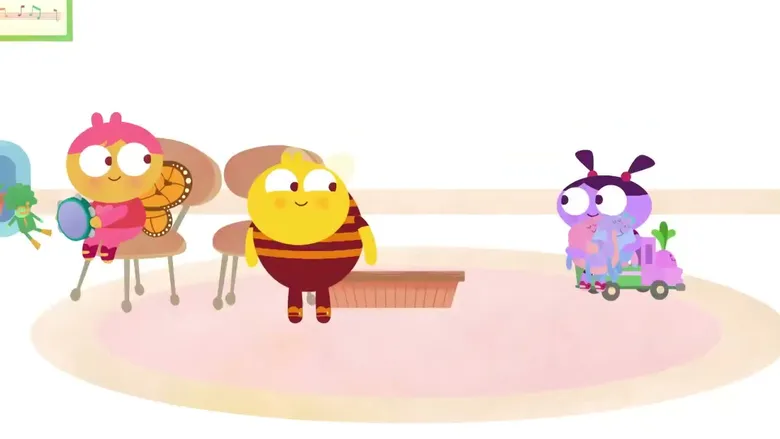
Lu, a gentle caterpillar, invites a group of small bug friends to build together with blocks before heading to the fruit caboose for a snack. When Dean takes a bite of the pear Lou wanted, the two argue, and Lu helps them name their feelings and agree to cut the pear so both get a fair share. The friends then share an orange and finish with a group wiggle-and-flap dance. The episode closes on the credits.

Lu & The Bally Bunch
S01 E02

Lu & The Bally Bunch

Bin Bug

Stimulating
recommended age Unlock co-watching from 2
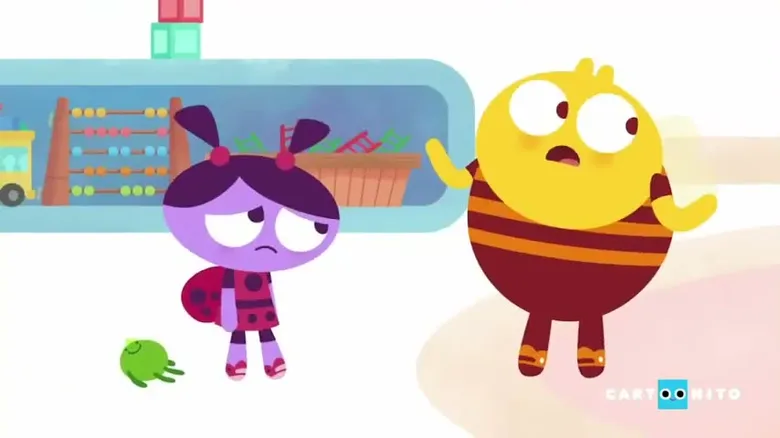
Lu, a young ladybird, and her bug friends watch a bin lorry collect rubbish in their neighbourhood, then invent a pretend bin-lorry game with roles for a driver, a bin wheeler and a bin. Lu keeps the best role for herself and refuses to let Biba and Barnaby take turns, so her friends leave and she plays alone. Finding the game no fun by herself, she invites everyone back so they can all share the roles. The episode ends with a silly word song made from the play sounds.

Lu & The Bally Bunch
S01 E03

Lu & The Bally Bunch

Bug Hugs

Stimulating
recommended age Unlock co-watching from 2
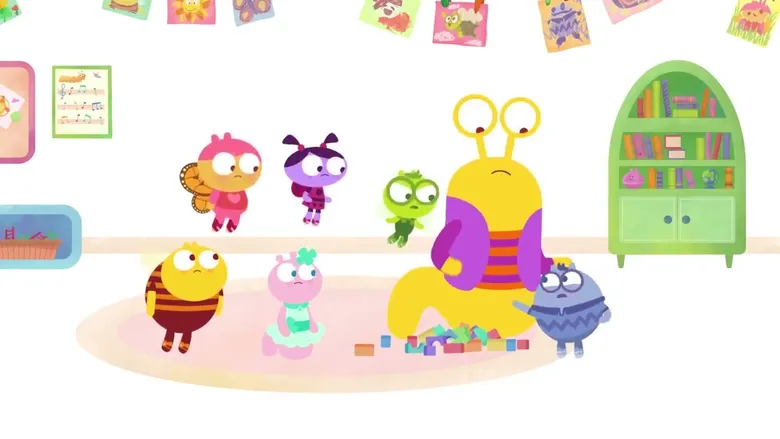
Lu starts the morning at home, helps find dad's missing keys, and heads off to Shell School with the teacher Shella. Through the day the friends play at being a magic fairy and a librarian, and a disagreement arises when Barnaby wants hugs that Elodie and Gus do not. With the teacher's help they learn that everyone gets to choose, and a hug can become a 'boop' instead. The episode closes with a playful boop game and the friends still happy together.

Lu & The Bally Bunch
S01 E04

Lu & The Bally Bunch

Tower Tower Wow

Stimulating
recommended age Unlock co-watching from 2
Lu the ladybird heads to Shell School, where she and her friends set out to build the tallest tower they can. When Dean knocks Gus's tower down as part of a game his own family plays, Gus is upset because no one explained the rules. A teacher helps the friends talk it through until they realize it was a misunderstanding. They end up happily playing 'tower tower wow' together, finishing with a wiggly dance.

Lu & The Bally Bunch
S01 E05

Lu & The Bally Bunch

Xylophone Blues

Stimulating
recommended age Unlock co-watching from 2
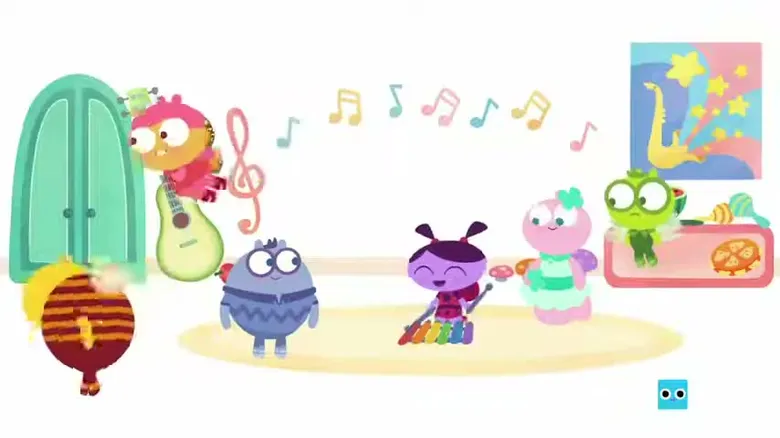
The bug-like friends of the Bally Bunch ride a bus to school and spend the day making music. Tara dances for her dad, Elodie is cheered for her playing, and one friend feels sad when no one claps for him. Lu and the others sing and drum together and show him that playing is fun on its own. The episode closes with a long group song built on the line 'we don't need claps, we just want to play'.

Share

Pass this find on to another parent

Link preview

Lu & The Bally Bunch | Sufficient, co-watching from age 2

Lu & The Bally Bunch | Sufficient, co-watching from age 2 - Slowscreen

Sufficient · Co-watching from age 2. Lu and her small bug friends play, snack and learn together at home and at Shell School. The tone is calm and gentle, made...

slowscreen.com

https://slowscreen.com/en/series/lu-the-bally-bunch

https://slowscreen.com/en/series/lu-the-bally-bunch

Slowscreen

Lu & The Bally Bunch | Sufficient, co-watching from age 2 - Slowscreen

Sufficient · Co-watching from age 2. Lu and her small bug friends play, snack and learn together at home and at Shell School. The tone is calm and gentle, made...

Lu & The Bally Bunch | Sufficient, co-watching from age 2

slowscreen.com

Lu & The Bally Bunch | Sufficient, co-watching from age 2 - Slowscreen

Sufficient · Co-watching from age 2. Lu and her small bug friends play, snack and learn together at home and at Shell School. The tone is calm and gentle, made...

Lu & The Bally Bunch | Sufficient, co-watching from age 2
slowscreen.com

Lu & The Bally Bunch | Sufficient, co-watching from age 2 - Slowscreen

slowscreen.com · Posted by you

Lu & The Bally Bunch | Sufficient, co-watching from age 2 - Slowscreen

0 Share
Lu & The Bally Bunch | Sufficient, co-watching from age 2
To
Subject Lu & The Bally Bunch | Sufficient, co-watching from age 2

Sufficient · Co-watching from age 2. Lu and her small bug friends play, snack and learn together at home and at Shell School. The tone is calm and gentle, made...

https://slowscreen.com/en/series/lu-the-bally-bunch

Share on WhatsApp Share on X Share on Facebook Share on Telegram Share on Reddit Share on Email

Just launched: free lifetime premium for the first 1,000 members to activate their account.

Create your account

Search by title, show, tag, or topic

We use functional cookies and Google Analytics to improve our site. Learn more