





This program is stimulating. It actively demands attention and can feel intense. For the recommended age, this may be on the more intense side.
The pacing is fast. Images follow each other quickly, leaving little time to pause and take in what is happening.
The sound is clearly present and regularly draws attention.
The visuals are well-balanced, with a clear overall view.
The episode follows one clear thread: the friends make music at school, one of them feels left out when no one claps, and the group discovers that playing matters more than applause. Events arrive in a recognisable order with a clear beginning, middle and end, and each action leads to an understandable result, such as lovely playing earning happy claps. New ideas are introduced gently, one at a time, which keeps the story easy for a young child to hold onto, with the small caveat that the long musical finale carries little fresh story.
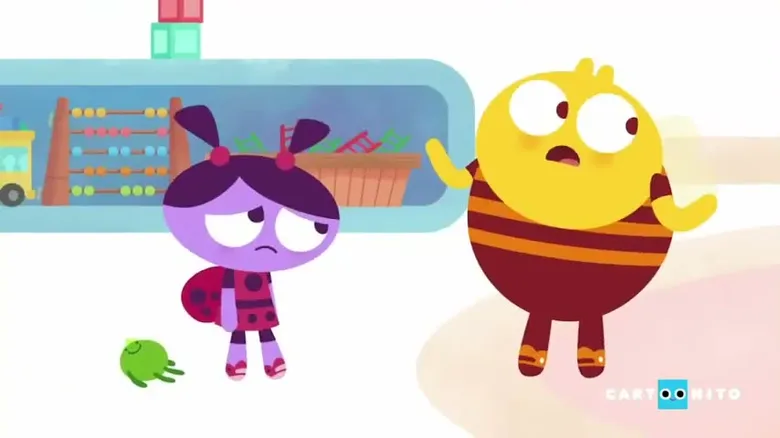
Feelings are handled with care. When one friend is sad that no one clapped, the others respond with warmth ('don't feel sad, I'll clap for you') and fold him into their song, so the upset is soothed soon after it appears. The characters treat each other kindly and consistently, a parent happily cheers a child's dancing, and there is no mocking or teasing. Emotions move gently from disappointment to joy rather than lurching between extremes.
The problem here is mostly an emotional one: a friend believes that no claps means no one likes his playing. The others help him see it differently, and he chooses to join in and sing again, which shows real initiative on the characters' part. The resolution is gentle but light on visible steps; the change of heart comes through reassurance and song rather than a worked-out, try-and-adjust process a child can follow along with.
The words are simple and concrete, well matched to a young child: short lines like 'I feel happy not sad' and 'we just want to play' are easy to grasp. A large part of the soundtrack, though, is singing and cheerful exclamations ('woohoo', 'yay', 'la la la') rather than full sentences, and the heavy music sometimes makes the spoken lines hard to make out. The repeated refrain about not needing claps does carry real meaning, so that repetition reinforces the message rather than being hollow.
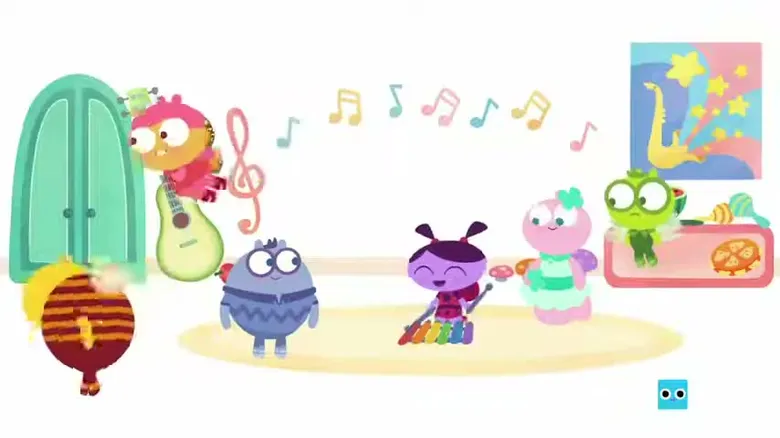
The activities are real and easy to copy at home: playing a xylophone, banging a drum, singing and dancing. The social situations are familiar too, with school, friends and a supportive parent, and the lesson about enjoying something for its own sake connects to everyday life. The characters themselves are fantasy bug-like creatures in a stylised world, which sits a little apart from a two-year-old's surroundings, though the music-making and the feelings at the centre stay grounded.
More information
This score shows how inclusively the series portrays diverse people, families and cultures. Scale: Limited → Varied → Rich → Inclusive.
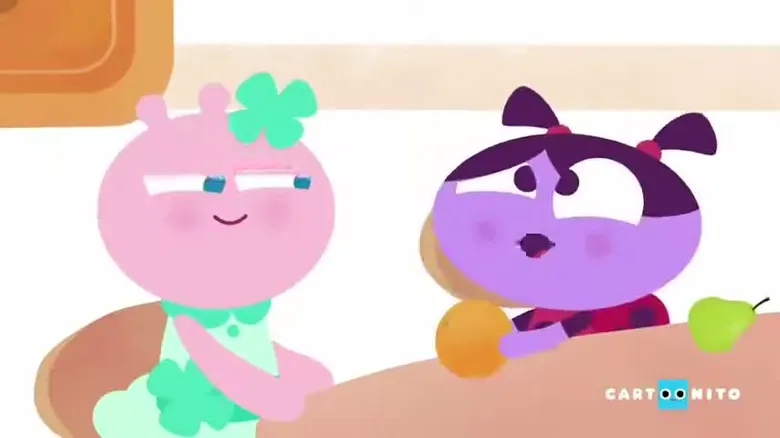
This music-focused episode features a broad ensemble of brightly coloured bug characters at home and in a playgroup, where they sing, dance and play instruments together. The variety is real but mostly visual, built from different creature designs rather than recognisable human backgrounds or different ways of living together, and only one parent is shown at home. Roles are encouragingly open: children of every type take part equally, the adults are warm and supportive, and feelings like jealousy and joy move across the characters rather than being fixed to one kind of figure. The overall picture is welcoming and balanced in behaviour, with its main limitation being the narrow, single-community world it shows.
This score shows whether the series stays close to everyday reality or leans into fantasy. Scale: Fantasy → Mixed reality → Realistic.
The world stays close to a child's everyday life: the characters head to school, take turns on a xylophone and drum, dance, and sing together. The cast is made up of stylized little creatures and applause is shown as a floating visual, so light imagination sits on top of familiar routines. No villain appears at any point; the only tension comes from a feeling, when one character is sad that no one claps, and it is resolved through friendship. For toddlers this is a comfortable, mostly realistic mix with gentle touches of fantasy.
This score shows how enjoyable the series is for parents watching along. Scale: Tedious → Tolerable → Pleasant → Enjoyable.
The episode is nicely produced and easy to have on in the background, with soft colors, gentle voices and a tidy sound mix. The first half carries a genuine little lesson about playing for the joy of it rather than for applause, which gives an adult something to follow. Beyond that there is little written for a grown-up co-viewer, and the closing minutes lean on one looping song. Pleasant to be around, but mostly made for the child rather than the parent.
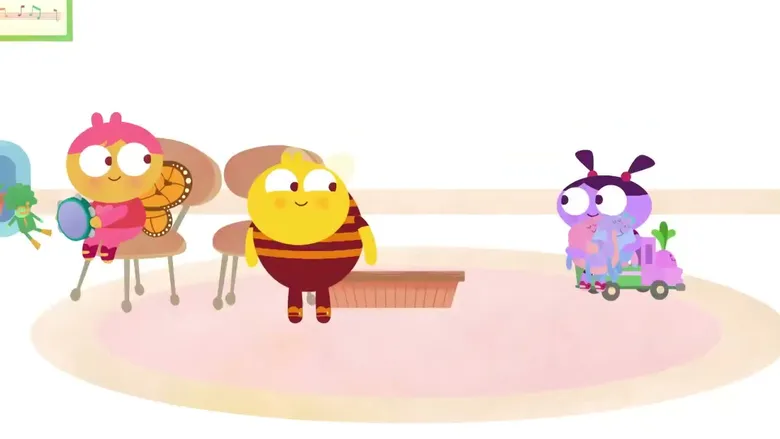
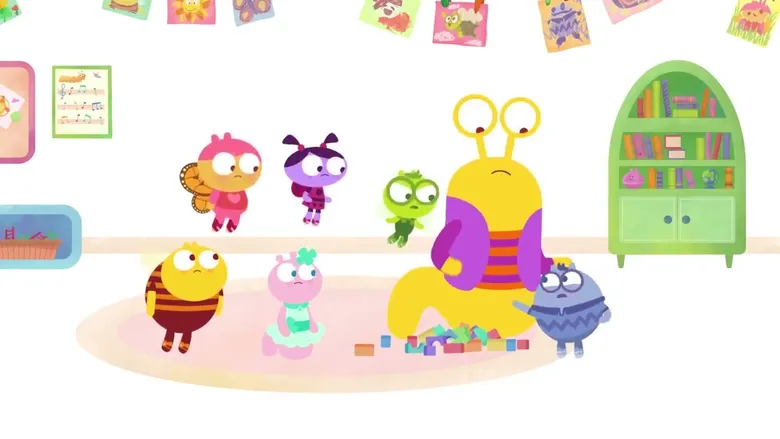
The bug-like friends of the Bally Bunch ride a bus to school and spend the day making music. Tara dances for her dad, Elodie is cheered for her playing, and one friend feels sad when no one claps for him. Lu and the others sing and drum together and show him that playing is fun on its own. The episode closes with a long group song built on the line 'we don't need claps, we just want to play'.