
















This program is well-balanced. It remains mostly easy to follow and process. It is a good fit for the recommended age.
The pacing is moderate. The story remains easy for a child to follow.
The sound is clearly present and regularly draws attention.
The visuals are busy, with a lot of movement and frequent changes.
One clear storyline carries the whole episode: a box of jumping fleas arrives, a dog turns up wanting a good scratch, and the two needs are matched. Events follow a recognizable beginning, middle and end, and actions lead to sensible outcomes, calling to the fleas makes them jump and the fleas give the dog the itch he wants. The small caveat is that a lot of talk is packed into each moment, so a young three-year-old will catch the gist more than every line. The thread itself, though, stays easy to follow.
The tone stays warm and respectful from start to finish. Mopatop listens to the dog, the characters thank one another, and everyone is treated kindly, with no mocking or whining to get their way. The only ripples of tension, the mice fretting about the fleas, are mild and settle within the same stretch, and feelings shift gently rather than lurching. The one small note is that the mice's loud dislike of the fleas is repeated a few times, though always lightly.
Mopatop works the problem out in the open: the dog wants a scratch, so he reasons that what is needed is something itchy, then tries a feather duster (it only makes the dog sneeze) and a woolly warmer (wrong colour) before landing on the fleas. The trial-and-error is visible and each step makes sense, with Moosey Mouse adding the idea that ties it together. The nuance is that the problems arrive from outside, a delivery and a visiting customer, rather than from the characters' own goals, so the work is more about responding than setting out to do something. Within that, the solving itself is shown well.
Most words are concrete and easy to picture, fleas, box, scratch, itch, bath, and the characters speak in clear, complete sentences. The clear limitation is the delivery: the dialogue is dense and crowded with rhymes and puns, a flea who cannot 'flee' and a nod to 'to be or not to be', that sail past a three-year-old. A fair share of the talk is also expressive filler ('oh', 'whoa', 'ah') rather than information. It communicates the simple story well enough while asking more of young listeners than the plot really needs.
The episode runs on imagination: a green shopkeeper, a talking dog and snail, and a box of fleas that jump on command. Real-world anchors do exist, a shop where someone helps a customer, the everyday ideas of an itch and a bath, and the politeness and gratitude between characters mirror real social life. But little of what happens transfers to a child's own day, since collecting jumping fleas for a scratch has no offline equivalent. The recognizable kindness carries more value here than the activities themselves.
More information
This score shows how inclusively the series portrays diverse people, families and cultures. Scale: Limited → Varied → Rich → Inclusive.
This episode builds its world entirely from puppet creatures in a single shop, so the usual range of people, cultures, ages and family forms does not really come into view. The characters do show distinct personalities and a mix of male and female voices, and they work together warmly to help a customer with a problem. Still, the shopkeeper holds the knowledge and most of the initiative, while the helper and the mice stay in supporting or reactive roles. The result is a friendly but narrow picture rather than a broad or varied one.
This score shows whether the series stays close to everyday reality or leans into fantasy. Scale: Fantasy → Mixed reality → Realistic.
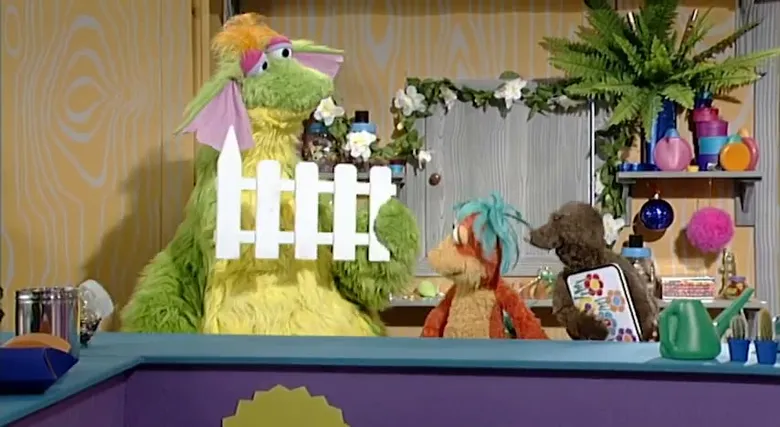
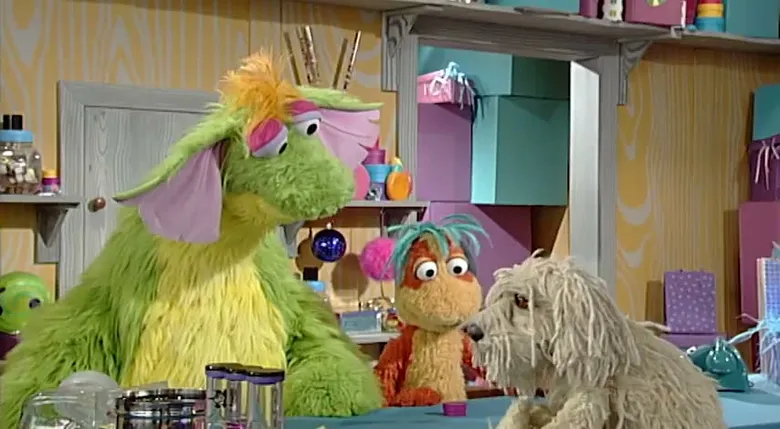
This episode takes place in a friendly shop where Mopatop and his helper Puppyduck assist whoever wanders in, here a shaggy dog named Dermot who longs for a good scratch. The world blends the familiar, a shop, a parcel arriving, a dog with an itch, with light make-believe, since the cast is made up of talking animals and creatures and the shop claims to stock anything you could dream of. There is no villain anywhere; the small problem grows out of the situation and is solved with patience and kindness. The gentle, consistent imagination sits comfortably within reach for this age.
This score shows how enjoyable the series is for parents watching along. Scale: Tedious → Tolerable → Pleasant → Enjoyable.
This holds up better than most preschool puppet shows for an adult sharing the room. The craft is genuine Henson work, with expressive puppets, a detailed shop set, and original songs that stay easy on the ear. The flea premise carries a small twist and even slips in a Shakespeare nod, though the repeated 'jump, please' calls and the scratch song lean on repetition. As background company for a parent it is pleasant rather than grating.
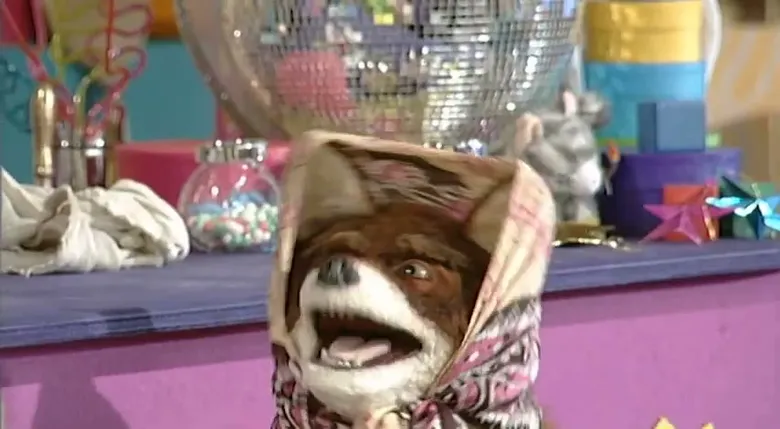
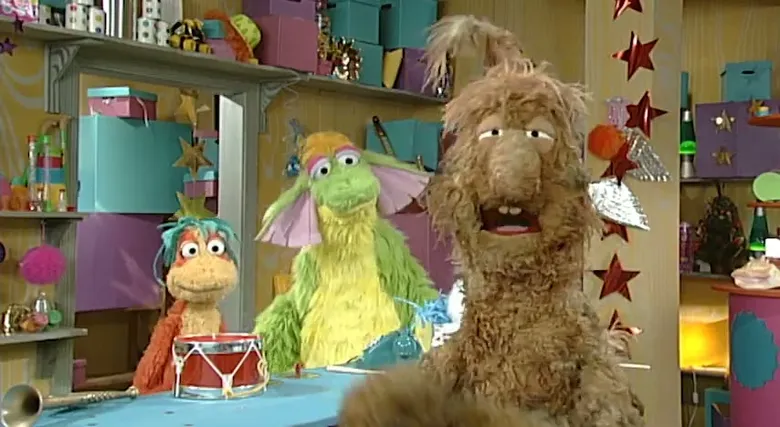
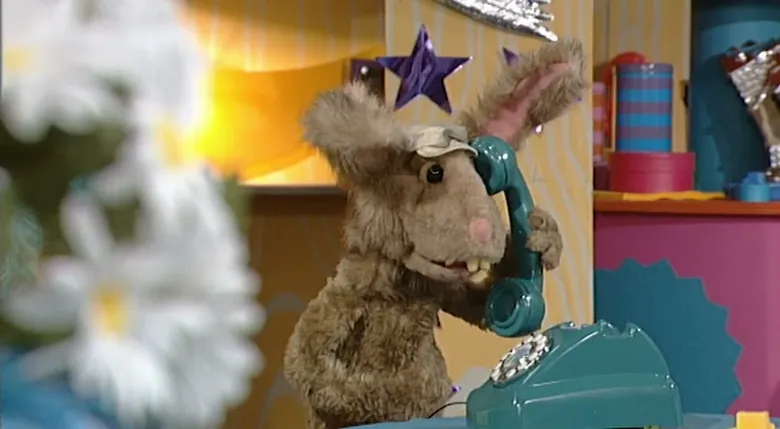
Mopatop runs a shop that claims to stock anything a customer could want. A box of jumping fleas arrives and upsets the mice, while a shaggy dog named Dermot visits wishing for a really good scratch he never gets because he is bathed every day. After trying a feather duster and a woolly warmer, Mopatop and the mice realise the fleas are exactly what the dog needs. Dermot gets his scratch, takes the fleas home in their box, and the shop closes for the day.