












This program is well-balanced. It remains mostly easy to follow and process. It is a good fit for the recommended age.
The pacing is moderate. The story remains easy for a child to follow.
The sound is clearly present and regularly draws attention.
The visuals are busy, with a lot of movement and frequent changes.
The episode follows one clear thread: it is the Hop Holiday, a mysterious thumping fills the shop, and a string of customers want to come in and hop. Events build in a recognisable order, from the empty shop, to the hopping visitors, to the discovery that the thumping is actually Puppyduck joining in. Each new arrival adds just one small idea at a time, so a three-year-old can follow what is happening. The constant wordplay around hop, stop and shop occasionally blurs the simple plot, but the cause and effect stays easy to track.
The mood stays warm and light from start to finish. Mopatop welcomes every customer kindly and gently reassures Puppyduck, who begins unsure about the noisy holiday and slowly comes round to it. His lowest point is a comic grumble about the thumping ('that hopping sound's going to drive me round the bend'), which never tips into real upset and is quickly smoothed over. Characters treat each other with steady friendliness, with no teasing or harsh words, so the emotional world feels safe and predictable.
Much of what happens is driven by the holiday itself rather than by characters working something out. There is one light puzzle: Mopatop wonders aloud who could be making the thumping and reasons that if he and Puppyduck are both standing still, someone else must be hopping, but it resolves in a step or two without real trial and error. Puppyduck makes one genuine choice of her own, deciding to try hopping after watching how much others enjoy it. Beyond that, the episode offers little room for characters to test an idea, hit a snag and adjust.
The dialogue uses short, clear sentences and concrete words a three-year-old can follow, built around the simple rhyming set of hop, stop, shop and drop. Mopatop's explanations give the language a real purpose, as when he works out 'it's the Hop Holiday, which means everyone is at home hopping,' and characters use words consistently and clearly. The catchy hopping songs lean more on playful repetition than on fresh meaning, so not every line carries new information. Overall the talk is purposeful and well matched to young listeners.
The episode lives in a make-believe world of talking creatures, a puppet shopkeeper and an invented Hop Holiday, so much of it does not map onto a child's daily life. The clearest real-world links are social ones a young child will recognise: greeting customers, saying goodbye, a friend recommending a favourite place, and deciding to give something new a try. Hopping is one action a child could copy at home, but most of the activity serves the fantasy rather than a practical task. The familiar shop and friendly manners give it some grounding, though the everyday payoff stays modest.
More information
This score shows how inclusively the series portrays diverse people, families and cultures. Scale: Limited → Varied → Rich → Inclusive.
This episode plays out among puppet animals in a single toy-and-trinket shop, so it does not show human diversity of culture, background, age or family life. There is a balance of male and female characters and a mouse family with a mother, father and child appears, but the variety here means different creatures rather than different kinds of people. Roles are spread reasonably evenly: Mopatop runs the shop and reassures, Puppyduck moves from doubt to joining in the fun, and customers of both kinds drop by. Nothing leans on harmful stereotypes, yet the overall picture of who exists in this world stays narrow.
This score shows whether the series stays close to everyday reality or leans into fantasy. Scale: Fantasy → Mixed reality → Realistic.
This is a calm, friendly story set in a shop where Mopatop greets visitors and helps them find what they are looking for. There is no villain, and the only mystery, a steady thumping noise, turns out to be cheerful hopping for an invented 'hop holiday'. The made-up parts stay consistent and easy to follow, and the imagination is light and grounded in everyday shopping. The one thing to note is that the whole cast is imaginary creatures rather than real people, though the situations themselves stay close to a child's experience.
This score shows how enjoyable the series is for parents watching along. Scale: Tedious → Tolerable → Pleasant → Enjoyable.
Mopatop Shop pairs careful Henson puppetry with a gentle, child-pitched tone that gives an adult co-viewer only mild rewards. A light mystery about a thumping noise that keeps customers away holds the episode together, though it leans heavily on repeated hopping songs. Warm voices and a soft palette make it easy to have on in the room, with the recurring hop refrain the main thing that can wear thin. Solid craft carries an otherwise simple, lightly told story.
Themes
Shopping
Central
The whole episode is set in Mopatop's shop where he greets a string of customers who pop in.
Celebration
Central
The action centres on the made-up 'Hop Holiday' that everyone is observing by hopping.
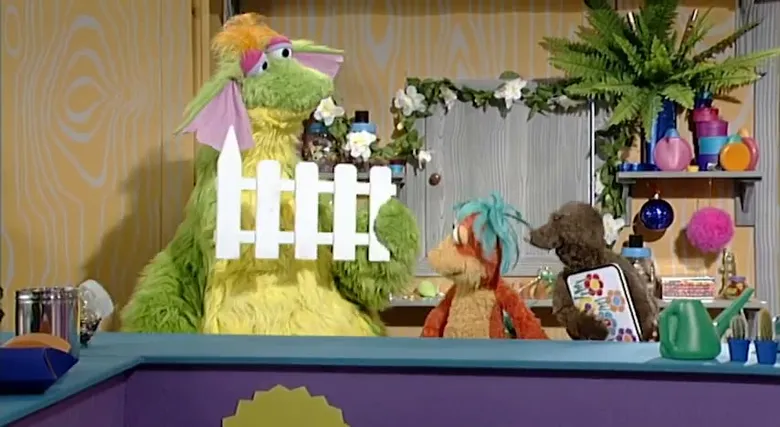
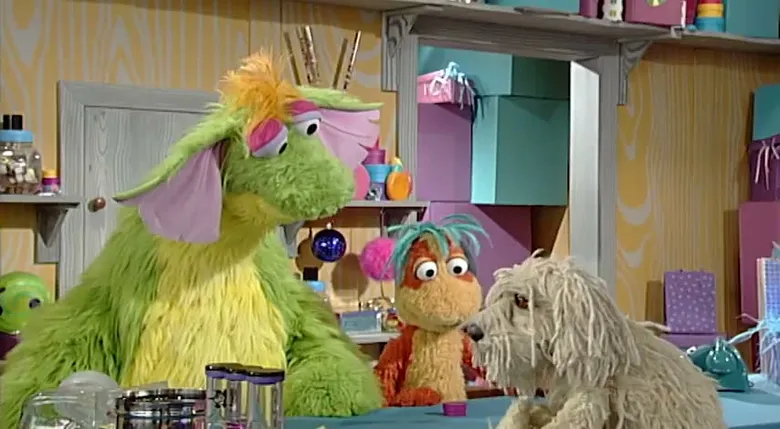
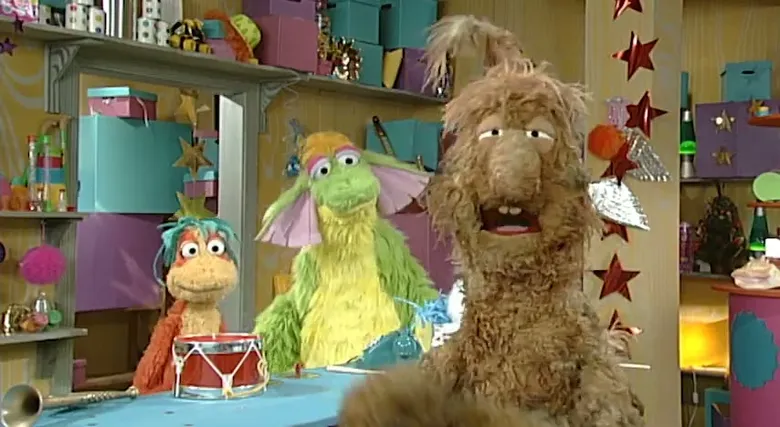
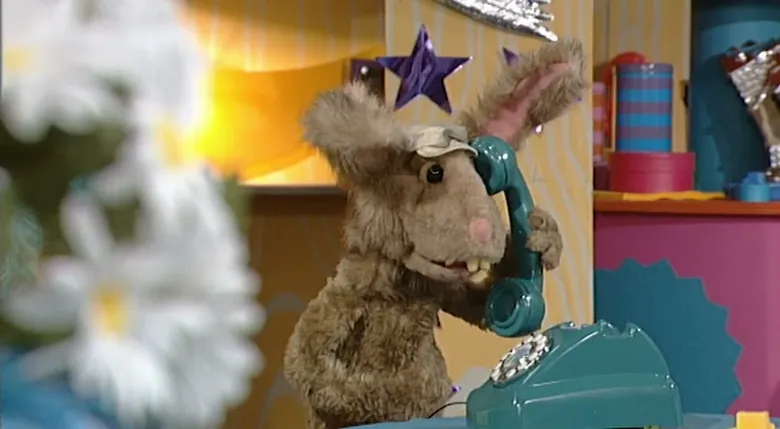
Mopatop runs a shop full of curious items with his assistant Puppyduck. It is the Hop Holiday, so customers keep popping in to hop while they shop, and a mysterious thumping noise has Mopatop blaming the mice upstairs. The thumping turns out to be Puppyduck, who was unsure about the noisy holiday at first. By the end she is hopping along happily, the holiday closes, and Mopatop shuts up the shop.