





















This program is well-balanced. It remains mostly easy to follow and process. It is a good fit for the recommended age.
The pacing is calm. A child has time to watch and understand what is happening.
The sound is clearly present and regularly draws attention.
The visuals are calm and well-organized.
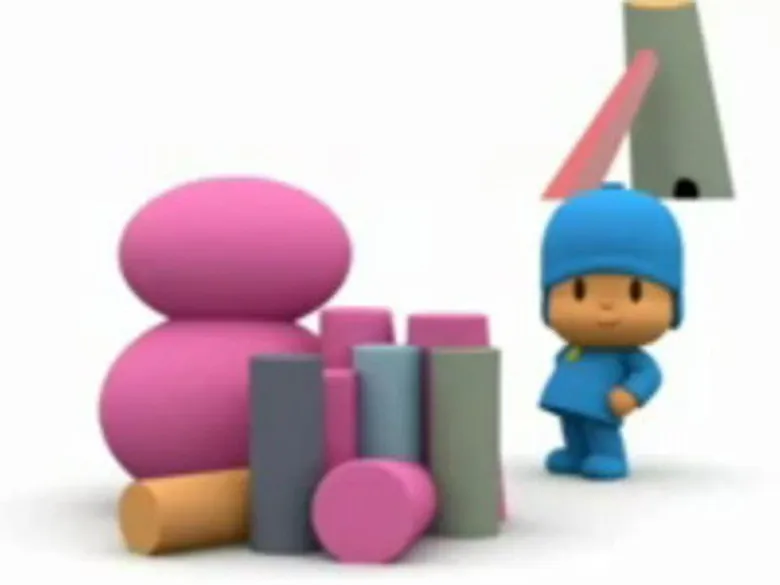
One clear storyline runs through the whole episode: Pocoyo needs to tidy his blocks before his friend Ellie comes over. Events build in a recognizable order, from making a mess with the tower to finding a playful way to clean it up, so a child can follow what leads to what. New ideas arrive one at a time, and each action has a predictable result, like the tower toppling or the blocks gathering into a pile. This clarity makes the episode easy to hold onto from start to finish.
The mood stays warm and steady, carried by a narrator who cheers Pocoyo on at every turn ('What a brilliant idea. Hooray for Pocoyo'). Feelings are light and joyful, and the small worry about cleaning up in time is settled gently and quickly. Characters treat each other with kindness, and there is no mocking, nagging or nastiness on show. A child is left feeling safe and supported throughout.
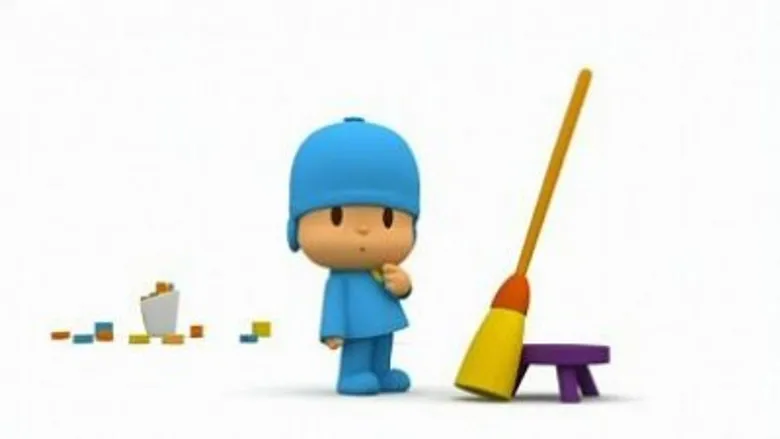
Pocoyo works out his own answer to the mess: he turns his pretend horse, hockey stick and guitar into a way to actually sweep the blocks together. The narrator nudges him along ('Now calm down, Pocoyo. Just think for a minute'), but the creative idea and the doing belong to Pocoyo himself. The steps are simple and the problem is solved without much trial and error, so the thinking on display is light rather than deep. Still, it gives a young child a clear picture of solving a real task through play.
The narrator speaks in short, clear sentences with concrete words a young child knows, naming the broom, the blocks and the friend coming to play. His delivery is crisp and easy to follow, and he often shapes a description into a question the child can answer ('Do you know what Pocoyo is pretending the broom is?'). Pocoyo himself speaks only in sounds, so meaning is carried by the narrator, whose language stays purposeful and matched to what is happening. The words line up well with the pictures on screen.
At its heart the episode shows a real, everyday task: tidying toys before a friend visits, something a child can copy directly at home. Sweeping, gathering blocks into a bucket and welcoming a guest all connect straight to daily life. The world itself is a plain empty space and the friend is a pink elephant, so the setting leans more imaginative than grounded, even while the activity at its centre stays practical. The social situation, cleaning up before company and then playing together, is one children will recognize.
More information
This score shows how inclusively the series portrays diverse people, families and cultures. Scale: Limited → Varied → Rich → Inclusive.
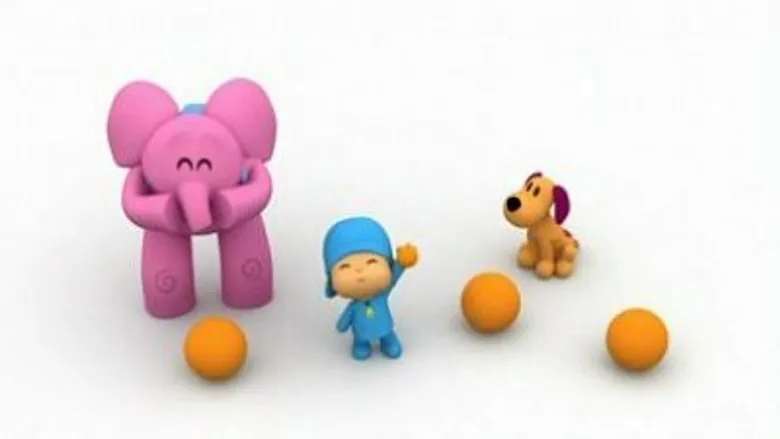
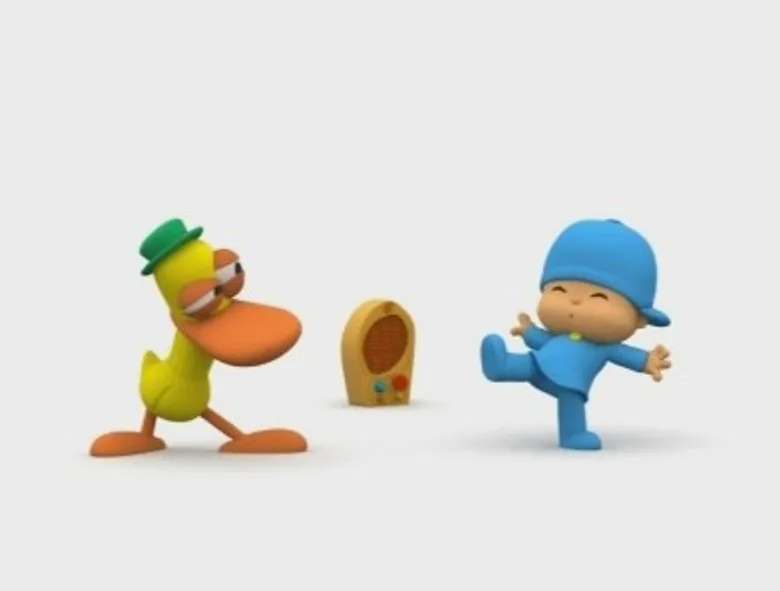
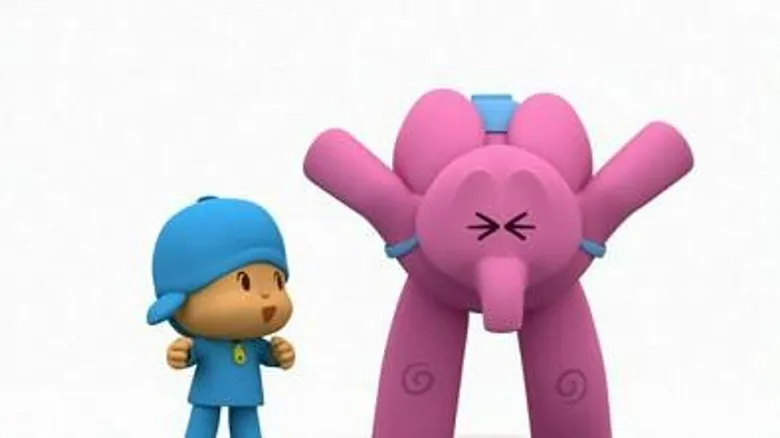
The episode centers almost entirely on Pocoyo, a small child in a blue outfit, playing alone against a plain, empty backdrop, with an adult male narrator guiding the moment and a pink elephant named Elly arriving to play near the end. The rest of Pocoyo's friends, a duck, a dog and a bird, appear only briefly in the opening title sequence. There are no human families, no cultural or ethnic markers, and no varied homes, jobs or everyday settings, so the world stays narrow. What is here is friendly and gentle, but it offers a very limited picture of the different ways people look and live.
This score shows whether the series stays close to everyday reality or leans into fantasy. Scale: Fantasy → Mixed reality → Realistic.
The world of this episode is built entirely from a young child's daily life: playing with building blocks, tidying up before a friend comes over, and turning a broom into a horse, a hockey stick, and a guitar through pretend play. There is no villain and no real conflict, only the gentle challenge of cleaning up, which Pocoyo solves by making it into a game. The only imaginative touches are Pocoyo's own make-believe, exactly the kind of pretending a real toddler does, and the narrator names each one clearly so it stays easy to follow. This realistic, lightly imaginative mix sits comfortably with what a three-year-old can recognize and copy.
This score shows how enjoyable the series is for parents watching along. Scale: Tedious → Tolerable → Pleasant → Enjoyable.
This one is easy to sit through. The narration carries a dry, playful wit that lands for a grown-up in the room, the visuals stay clean and calm on a plain background, and the sound never turns shrill or repetitive. The story is slim, one small task stretched into imaginative play, but it holds together with a clear beginning and payoff. For a co-viewing parent it is pleasant company rather than something to endure.
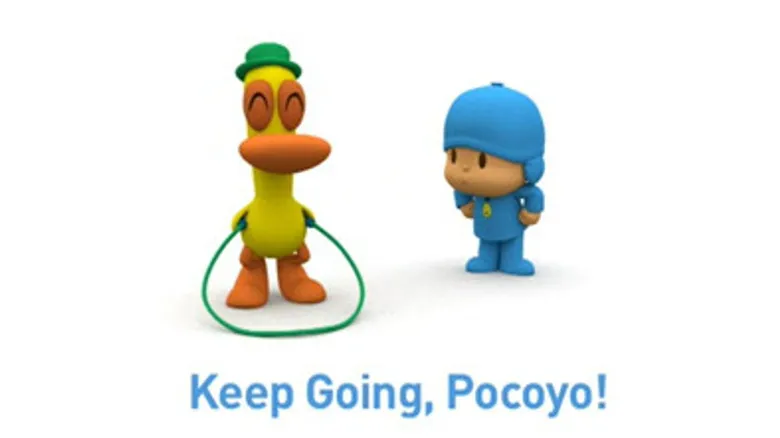
Pocoyo builds a block tower and knocks it down, then learns that his friend Ellie is coming over to play. A warm narrator reminds him to clean up, and Pocoyo grabs a broom, which he first turns into a pretend horse, hockey stick and guitar, making even more mess. In the end he uses that same playful energy to sweep the blocks away just in time. Ellie arrives and the two play together.