
















This program is well-balanced. It remains mostly easy to follow and process. It is a good fit for the recommended age.
The pacing is fast. Images follow each other quickly, leaving little time to pause and take in what is happening.
The sound is clearly present and regularly draws attention.
The visuals are calm and well-organized.
One clear storyline carries the whole episode: Sarah bakes a birthday cake for Duck. Events follow each other in a clean sequence, from washing hands and putting on aprons through choosing a recipe, mixing ingredients, baking, and celebrating with Duck and the cake at the park. New information arrives gently, one element at a time, which matches what a three-year-old can hold in mind. Cause and effect are spelled out ("baking powder makes it grow bigger"), so the world stays predictable.
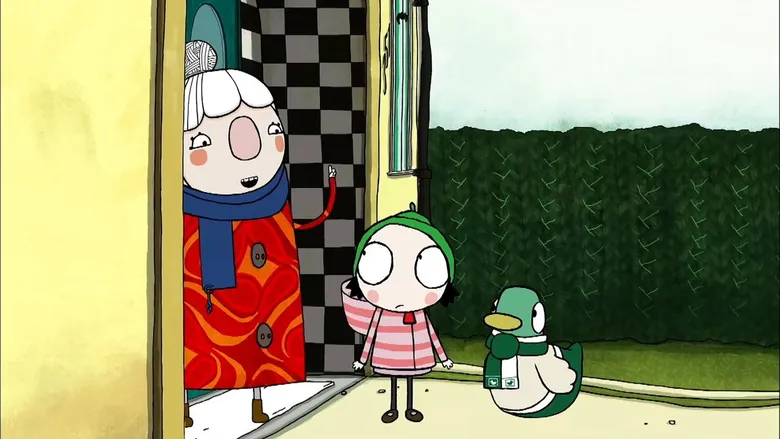
The emotional register stays soft and steady; nobody raises their voice, nobody is mocked, and Sarah treats Duck's fussy cake choice with patience and curiosity. A small moment of stress arrives when batter covers the recipe book, but it resolves inside the same scene as Bread Cake offers to talk Sarah through the steps. Transitions between feelings are gradual, and the warm narrator frames each shift reassuringly. Grandmother's gift adds another layer of warmth and consistent care.
Sarah takes the lead throughout: she decides to bake, asks Duck what kind of cake he wants, gathers each ingredient, and works out what to do when the recipe is ruined. The problem-solving steps are visible at the level a young preschooler can follow, with two or three small adjustments rather than long reasoning chains. The talking cake stepping in to dictate the remaining instructions does shortcut Sarah's own thinking a little, which holds the pillar back from the top band. Cause-and-effect logic stays explicit when each ingredient is added.
Most lines are short, concrete and tied to what is happening on screen, which suits a young preschooler well. Sarah and the narrator speak clearly with calm intonation, and key words like 'flour', 'milk', 'mix', 'oven', 'birthday' and 'poppy seeds' are repeated in context. The score is held down by a few specialist cake names ('Victoria sponge', 'fluffy duck') that will pass over a three-year-old's head, and by a fairly brisk delivery with little quiet space between sentences.
The central activity is fully real and imitable: washing hands, putting on an apron, measuring flour and poppy seeds, stirring, baking, and decorating. A child can recognise every object and every step from their own kitchen. The social setting is recognisable too, with a birthday at home, a posted gift from grandmother, and friends going to the park together. The pillar is held back slightly by the talking duck and talking bread cake, which layer light fantasy on top of an otherwise grounded routine.
More information
This score shows how inclusively the series portrays diverse people, families and cultures. Scale: Limited → Varied → Rich → Inclusive.
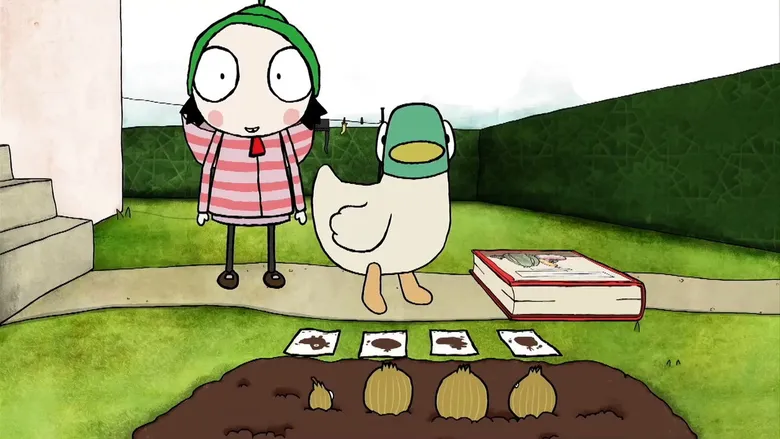
This episode features a very small cast built around Sarah, a light-skinned child with a green hat, and her friend Duck, plus a brief appearance from an older woman who delivers a gift and the off-screen voice of an adult narrator. Visible diversity is limited: ethnicity, family forms, and life-worlds stay within a narrow range, and most secondary characters are animals or anthropomorphic objects rather than people. Role distribution within this small group is more balanced, with Sarah taking initiative, Duck expressing preferences, and the narrator acting as a gentle guide rather than a commander. The traditional setup of a girl baking at home is presented without commentary, neither challenged nor reinforced as gendered.
This score shows whether the series stays close to everyday reality or leans into fantasy. Scale: Fantasy → Mixed reality → Realistic.
The show grounds itself in a very recognizable world: a home kitchen, baking a birthday cake, opening a present, going to the park. On top of that everyday frame sit a few imaginative touches: Duck talks (through quacks understood by everyone), a narrator addresses the characters as if visiting them, and the finished cake comes to life and chats. There is no villain at all; the only bumps are a spilled mixing bowl and a forgotten recipe. For a three-year-old the familiar baking and birthday routines are easy to follow, with the fantasy staying gentle and consistent.
This score shows how enjoyable the series is for parents watching along. Scale: Tedious → Tolerable → Pleasant → Enjoyable.
Sarah and Duck is one of the more parent-friendly preschool shows on offer. The narrator-character dialogue, dry British wit, and absurdist touches (a talking cake that demands to be mixed first) give adults real moments of amusement. The watercolor visuals and gentle voices keep irritation low, and the BBC craft is consistently strong.
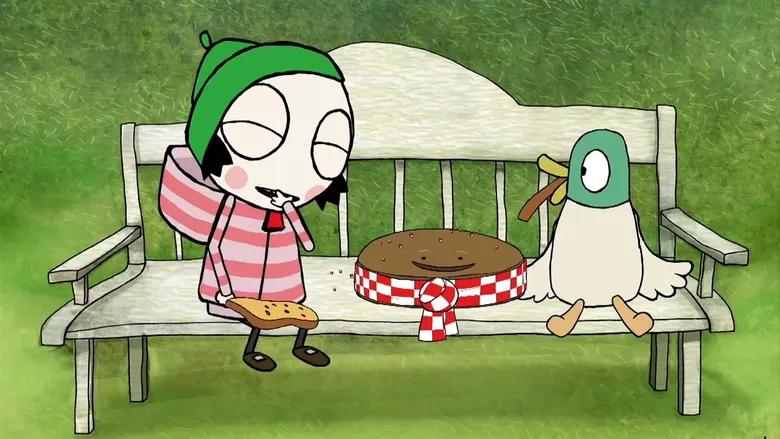
On the morning of Duck's birthday, Sarah decides to bake him a cake. After Duck picks an unusual 'bread cake' from the recipe book, Sarah gathers ingredients and starts mixing, only for batter to ruin the open recipe. The cake itself speaks up and dictates the remaining steps while a parcel arrives from Sarah's grandmother containing roller skates for Duck. Once baked, Sarah, Duck and the talking cake head to the park, where everyone sings a birthday song together.