














This program feels calm and predictable. It gives room to watch and process. For the recommended age, this may feel calm or somewhat slow.
The pacing is moderate. The story remains easy for a child to follow.
The sound is clearly present and regularly draws attention.
The visuals are calm and well-organized.
One clear question carries the whole episode: why does Donkey look sad? Events unfold in a recognisable sequence (garden, kitchen, bread shop, library, park) with explicit transitions and a clean ending when Scarf Lady returns. New ideas arrive one at a time so a young child can track each attempt to cheer Donkey up. Cause and effect is consistent: a try is made, the result is shown, the characters move on.
The emotional tone is consistently warm and attentive. Sarah and the narrator treat Donkey's apparent sadness with curiosity and care, never with mockery or panic, and Duck's later grumpiness is met with a gentle reveal rather than blame. There are no shouting matches, no shaming, and no scary turns; the worry around Donkey is small and is resolved as soon as the book explains that donkeys naturally look that way. Adults like Scarf Lady and the librarian appear competent and friendly.
Sarah leads the thinking from start to finish. She names the problem ('why are you so sad?'), proposes solutions one by one (carrot, music, bread), evaluates each result, and finally decides to visit the library to find out more. The library scene shows real research steps: ask the librarian, go to the right section, divide the shelves between them, read what the book says, and apply it. The episode models initiative and a multi-step solution path that is well-matched to a young preschooler.
Speech is clear, calmly paced, and almost always in full sentences. The narrator and Sarah describe what they see and what they are about to do, which gives meaning to every action on screen. Some phrasing leans a little advanced for three ('friendly animals and quite intelligent', 'as long as they get plenty of strokes, carrots and hugs'), but most of the vocabulary is concrete and tied to visible objects like grass, carrot, book, bread and park. Expressive sounds ('ah', 'um', 'oh') stay light and do not crowd out the informative talk.
Many of the activities map directly onto a child's own life: counting, visiting a bread shop, going to the library, looking after a pet, and going to the park. The library scene in particular models a useful real-world habit, looking things up in a book when you do not know the answer. The pillar does not reach the top band because Duck and Donkey talk and behave as friends, and Duck digs and buries food in ways no real duck would, which softens the realistic anchor for a three-year-old. The social dynamics, however, mirror everyday neighbour and friendship patterns clearly.
More information
This score shows how inclusively the series portrays diverse people, families and cultures. Scale: Limited → Varied → Rich → Inclusive.
The cast is small and built around Sarah, Duck and Donkey, with the older Scarf Lady and a brief librarian appearance as the only other human figures. Visible human characters all read as one light skinned, Western looking type, though there is a child and an older woman together which adds an intergenerational note. Within that narrow line up the roles work well: Sarah, a young girl, is the curious, empathetic problem solver who leads the search through the library, while the Scarf Lady is a calm caregiver and Duck and Donkey are equal companions rather than sidekicks.
This score shows whether the series stays close to everyday reality or leans into fantasy. Scale: Fantasy → Mixed reality → Realistic.
This Sarah and Duck episode lives mostly in everyday spaces (a back garden, a bread shop, the library, a park) with a light layer of imagination on top: a duck whose quacks Sarah understands, a friendly narrator voice, and a pet donkey who can look sad or happy. There is no villain and no good-versus-evil framing; the only 'problem' is figuring out why Donkey seems sad, which the characters solve through care and a trip to the library. The mix of real settings and gentle whimsy fits a 3-year-old comfortably and gives the child characters, animals and adults a kind, low-stakes world to follow.
This score shows how enjoyable the series is for parents watching along. Scale: Tedious → Tolerable → Pleasant → Enjoyable.
This show stands out as easy and rewarding for an adult to share. Roger Allam's narrator delivers dry observations with timing meant for grown-ups, the plot has a small twist worth following, and the audio mix is quiet and uncluttered. Production quality is craft-focused, with watercolour-style backgrounds and a soft, deliberate score.
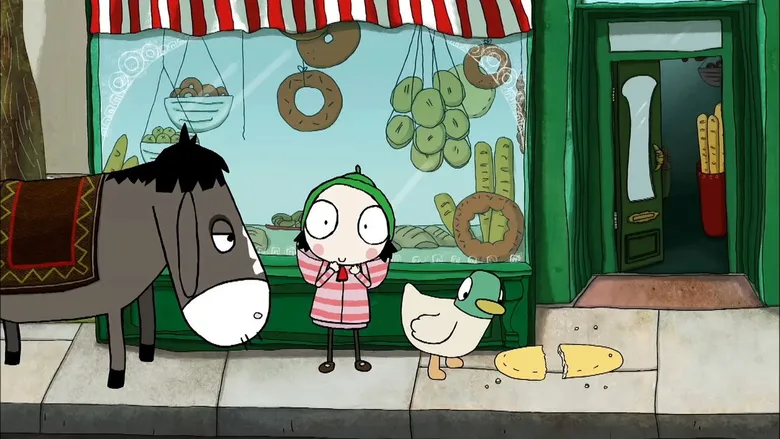
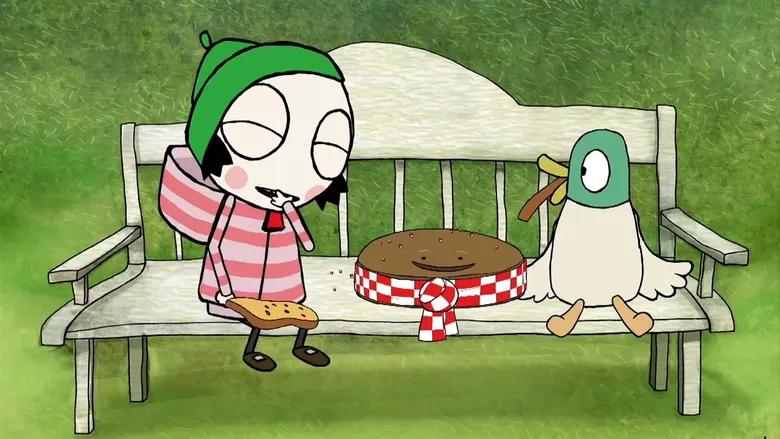
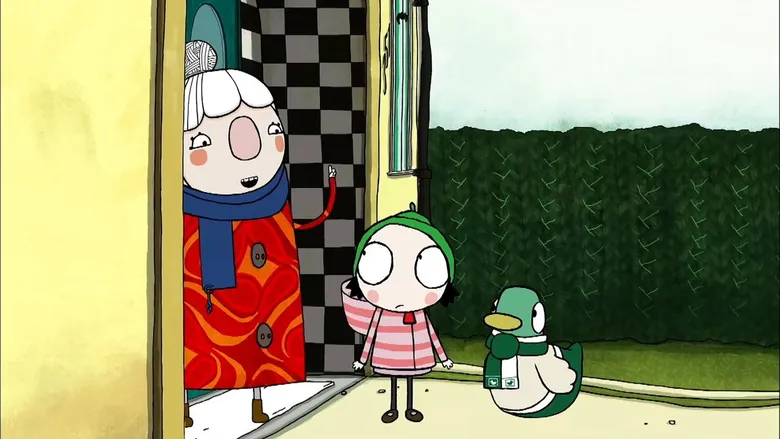
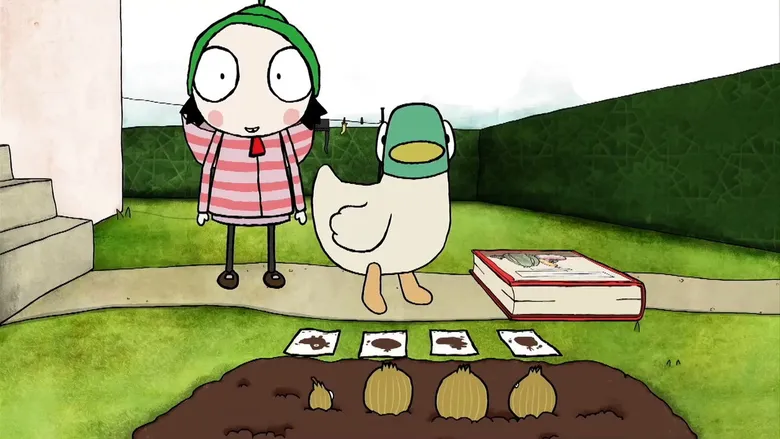
Sarah and Duck are looking after Donkey in the back garden while Scarf Lady is at the shops, and Donkey appears sad. Sarah tries a carrot, music on her tuber and a trip to the bread shop, but nothing changes his face. They visit the library, find a book about donkeys and learn that donkeys naturally look sad even when they are happy. After a walk in the park, Duck reveals he was upset because Sarah had buried his bread for him, and Scarf Lady returns to collect a contented Donkey.