
Slowscreen SlowScreen
Toggle sidebar

Just launched: free lifetime premium for the first 1,000 members to activate their account.

Start free

Iceland: A Land of Ice and Fire

Good

Recommended age Unlock

Co-watching from age 2

Balanced

Exact score locked

Watch on
Save
Iceland: A Land of Ice and Fire

Share

Pass this find on to another parent

Link preview

SciShow Kids: Iceland: A Land of Ice and Fire | Good, co-watching from age 2

SciShow Kids: Iceland: A Land of Ice and Fire | Good, co-watching from age 2 - Slowscreen

Good · Co-watching from age 2. Jessi, the host, welcomes back Squeaks, a robot rat, who shares photos from his trip to Vatnajokull National Park in Iceland. Tog...

slowscreen.com

https://slowscreen.com/en/series/scishow-kids/s1/e1-iceland-a-land-of-ice-and-fire

https://slowscreen.com/en/series/scishow-kids/s1/e1-iceland-a-land-of-ice-and-fire

Slowscreen

SciShow Kids: Iceland: A Land of Ice and Fire | Good, co-watching from age 2 - Slowscreen

Good · Co-watching from age 2. Jessi, the host, welcomes back Squeaks, a robot rat, who shares photos from his trip to Vatnajokull National Park in Iceland. Tog...

SciShow Kids: Iceland: A Land of Ice and Fire | Good, co-watching from age 2

slowscreen.com

SciShow Kids: Iceland: A Land of Ice and Fire | Good, co-watching from age 2 - Slowscreen

Good · Co-watching from age 2. Jessi, the host, welcomes back Squeaks, a robot rat, who shares photos from his trip to Vatnajokull National Park in Iceland. Tog...

SciShow Kids: Iceland: A Land of Ice and Fire | Good, co-watching from age 2
slowscreen.com

SciShow Kids: Iceland: A Land of Ice and Fire | Good, co-watching from age 2 - Slowscreen

slowscreen.com · Posted by you

SciShow Kids: Iceland: A Land of Ice and Fire | Good, co-watching from age 2 - Slowscreen

0 Share
SciShow Kids: Iceland: A Land of Ice and Fire | Good, co-watching from age 2
To
Subject SciShow Kids: Iceland: A Land of Ice and Fire | Good, co-watching from age 2

Good · Co-watching from age 2. Jessi, the host, welcomes back Squeaks, a robot rat, who shares photos from his trip to Vatnajokull National Park in Iceland. Tog...

https://slowscreen.com/en/series/scishow-kids/s1/e1-iceland-a-land-of-ice-and-fire

Share on WhatsApp Share on X Share on Facebook Share on Telegram Share on Reddit Share on Email

See the exact scores

The review is yours to read. Create a free account to reveal the exact SlowScreen score and every pillar score.

Create free account
This program is well-balanced. It remains mostly easy to follow and process. It is a good fit for the recommended age. The pacing is calm. A child has time to watch and understand what is happening. The sound is clearly present and regularly draws attention. The visuals are calm and well-organized.
The episode follows one clear thread: Squeaks shares photos from his trip and the two work out what makes Iceland special. Ideas arrive in a sensible order, from guessing the country, to why volcanoes and glaciers sit together, to how each one forms, ending with the plants and animals that live there. Cause and effect is spelled out plainly, such as lava cooling and hardening into rock that slowly builds a volcano. The one caveat is that many new ideas, including tectonic plates and high latitude, are packed close together, which is demanding for the youngest in this range.
The emotional tone is steady and warm from start to finish. Jessi listens to Squeaks, praises his questions, and answers with patience and affection, telling him she is glad he is home. Nothing startling or upsetting happens, and the mood never shifts abruptly. A child watching is held inside a calm, friendly conversation the whole way through.
Jessi models curiosity by wondering aloud and pulling up a map to find out why Iceland has both volcanoes and glaciers, and the opening guessing game shows her reasoning from clues toward an answer. Squeaks drives much of this by asking his own questions. Still, most of the thinking is carried by the host explaining, rather than a character trying something, failing, and adjusting. Children see questions asked and answered more than a problem worked out step by step on screen.
The language is clear and informative, built from full sentences and accurate, well-chosen words. New terms are introduced through everyday comparisons, like describing tectonic plates as giant rocky puzzle pieces floating on hot liquid rock. Almost every line carries real information or description rather than filler. The small caveat is that a few concepts, such as high latitude and a world heritage site, sit at the upper edge of what a five-year-old will grasp without help.
The episode connects strongly to the real world, using genuine photographs of Iceland's volcanoes, glaciers, moss and a harbor seal alongside real maps. The friendship between Jessi and Squeaks, sharing trip memories, reflects a recognizable everyday moment. What it offers less of is something a child can directly do afterward: the learning is knowledge about faraway geology rather than activities to copy at home with familiar objects. Looking at a map is about the only step a young viewer could repeat.

More information

This score shows how inclusively the series portrays diverse people, families and cultures. Scale: Limited → Varied → Rich → Inclusive.
This is a calm science lesson carried by a single human host and Squeaks, her robot companion, with no other people on screen to widen the picture of who appears. Variation in background, age, body, or family life is essentially absent, because the episode keeps its attention on Iceland's glaciers, volcanoes, and wildlife rather than on people. The roles are handled fairly between the curious learner and the explaining guide, free of stereotype, though all the knowledge stays with one figure. As an educational format it is clear and respectful, but it offers little breadth in how people and ways of living are represented.
This score shows whether the series stays close to everyday reality or leans into fantasy. Scale: Fantasy → Mixed reality → Realistic.
This episode sits firmly in the real world, built around real footage of Iceland's volcanoes, glaciers, moss and a harbor seal, alongside maps of the country and its national park. The only imaginative touch is Squeaks, a puppet companion whose sounds the host translates, which gives children a friendly guide without pulling the content into fantasy. There is no villain and no hero-versus-villain story; every question comes from curiosity about how nature works. The grounded, science-led mix is a comfortable fit for a five-year-old, with a couple of bigger ideas explained patiently step by step.
This score shows how enjoyable the series is for parents watching along. Scale: Tedious → Tolerable → Pleasant → Enjoyable.
This sits comfortably alongside an adult in the room. The science is real and clearly explained, the calm host and steady pace make it easy on the ears and eyes, and a light guessing-game frame gives the half hour a shape worth following. It stays pitched at a young child, so a watching parent gets genuine information but few jokes aimed their way. The clean live-action set and real Iceland photography keep the craft tidy without ever feeling lavish.

Attention hooks

Jessi closes with 'be sure to subscribe and we'll see you next time here at the fort'.

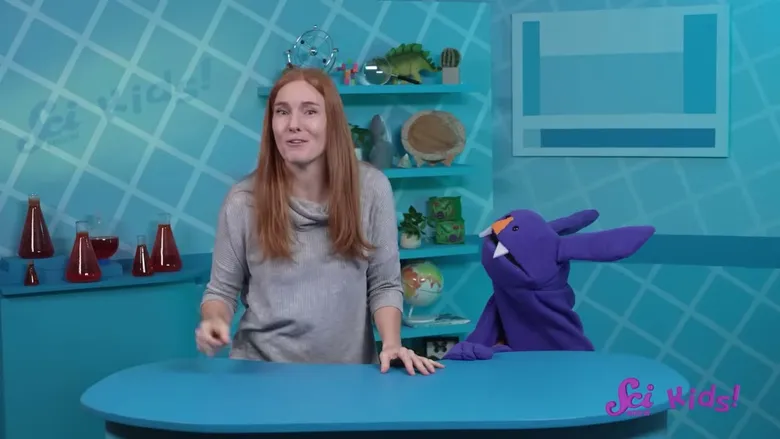
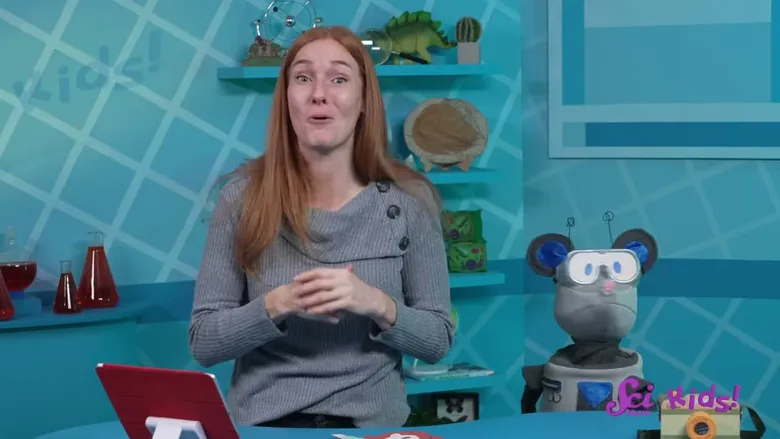
Jessi, the host, welcomes back Squeaks, a robot rat, who shares photos from his trip to Vatnajokull National Park in Iceland. Together they figure out where he went and explore why this 'land of ice and fire' has both fiery volcanoes and freezing glaciers, using maps, diagrams and real photographs. They learn how volcanoes and glaciers form, how tectonic plates shape the land, and which plants and animals live there, such as moss and harbor seals. The episode ends with Jessi thanking Squeaks for sharing and inviting viewers to think about whether they would explore a volcano, a glacier, or both.

Videos

a selection of popular and recent videos

SciShow Kids

SciShow Kids

KABOOM! All About Volcanoes!

Balanced
recommended age Unlock co-watching from 2
Jessi welcomes viewers to the fort and, with the robot rat Squeaks and Sam the Bat, explores volcanoes. They explain how Hawaii's islands grew from a hot spot, why Mars holds the solar system's tallest volcano, Olympus Mons, and the different shapes and sizes volcanoes come in. Real footage of lava and maps back up the talk, along with how scientists predict eruptions and keep people safe. It ends on the idea that the Earth is always changing and an invitation to come back next time.

SciShow Kids

SciShow Kids

Iceland: A Land of Ice and Fire

Balanced
recommended age Unlock co-watching from 2
Jessi, the host, welcomes back Squeaks, a robot rat, who shares photos from his trip to Vatnajokull National Park in Iceland. Together they figure out where he went and explore why this 'land of ice and fire' has both fiery volcanoes and freezing glaciers, using maps, diagrams and real photographs. They learn how volcanoes and glaciers form, how tectonic plates shape the land, and which plants and animals live there, such as moss and harbor seals. The episode ends with Jessi thanking Squeaks for sharing and inviting viewers to think about whether they would explore a volcano, a glacier, or both.

SciShow Kids

SciShow Kids

Worms Are Wonderful

Balanced
recommended age Unlock co-watching from 2
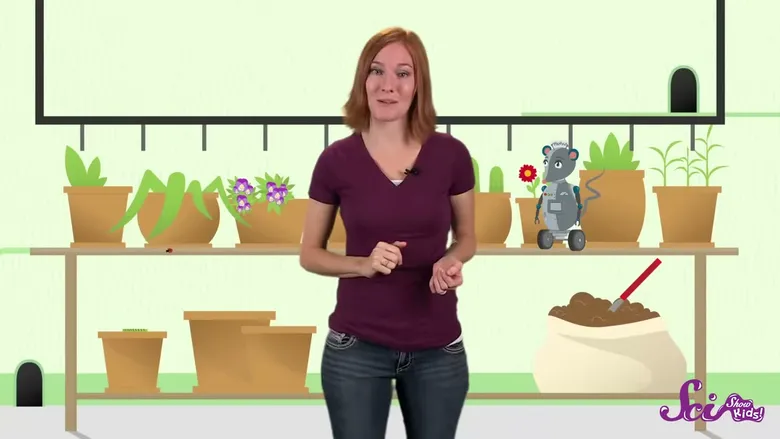
Jessi, a science host, and her robot friend Squeaks introduce earthworms and explain what makes them special. Standing in an illustrated set, she covers how worms differ from insects and snakes, how they move and breathe, why they live in burrows, what they eat, and how they enrich soil through tunnelling and composting. Real footage of worms, birds and soil is mixed with cartoon diagrams of worm anatomy. The episode closes with the message that healthy worms mean healthy soil and healthy people, and a thank-you to the viewer.

SciShow Kids

SciShow Kids

What Is a Tornado?

Balanced
recommended age Unlock co-watching from 2
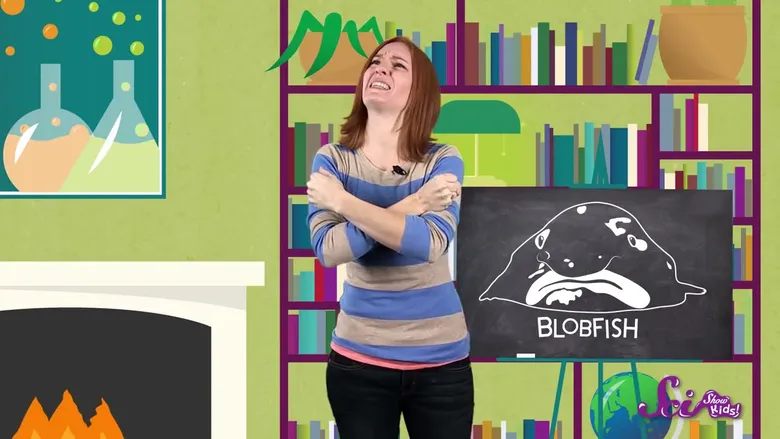
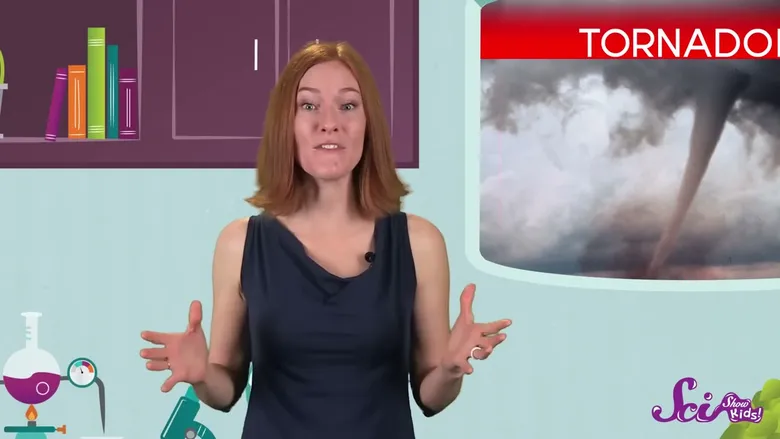
A friendly host explains what tornadoes are and how they form when cold, dry air collides with warm, wet air inside a big thunderstorm. Using real storm footage, maps and simple diagrams, she covers how fast and powerful tornadoes can be, where they happen most in the United States, and how meteorologists and storm chasers study them. The episode closes with what to do during a tornado warning and a sign-off inviting children to send in their questions.

SciShow Kids

SciShow Kids

Blobfish: The World's Ugliest Animal

Balanced
recommended age Unlock co-watching from 2
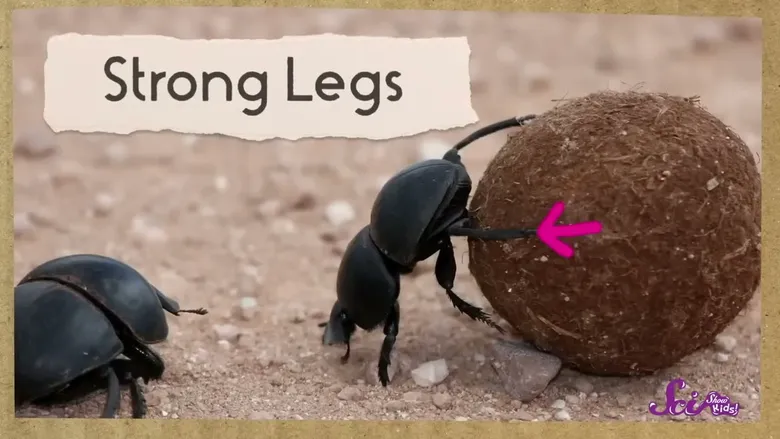
Live-action host Jessi and her robot puppet Squeaks introduce the blobfish, a deep-sea animal once labeled the world's ugliest. They explain that it lives near the ocean floor off Australia, where it is dark, cold, and under heavy pressure, and that its soft, jelly-like body lets it float and feed with little effort. Jessi adds that the fish only looks blobby once nets pull it up from that pressure, and looks more ordinary at depth. The episode ends with the two practicing silly faces together.

SciShow Kids

SciShow Kids

Animals That Eat Poop

Balanced
recommended age Unlock co-watching from 2
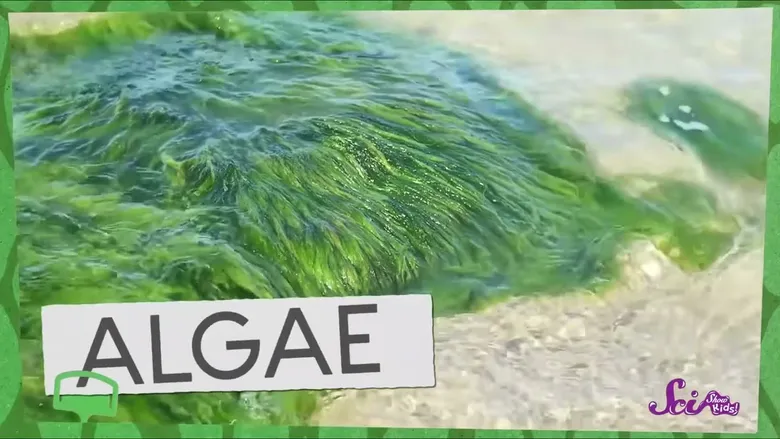
Host Jessi and her robot rat Squeaks explore why some animals, especially dung beetles, collect and eat poop. From a bright studio set, Jessi explains what beetles are, describes the dung beetle's horns, wings, and strong legs, and works through the mystery of the ball Squeaks saw one pushing. Using real footage and simple diagrams, she shows how nutrients pass from grass through cows into poop, which beetles then reuse for food and to feed their young. The episode ends with Squeaks eager to learn about more unusual animals.

SciShow Kids

SciShow Kids

Super Slugs

Balanced
recommended age Unlock co-watching from 2
Host Jessi and her robot rat Squeaks explore how a sea slug called the emerald Elysia can make its own food from sunlight. From a bright studio set, Jessi explains that plants and algae use chloroplasts to turn light into food, and that the slug keeps those tiny machines running after eating algae. Real footage of slugs, algae and ponds is mixed with simple animated diagrams. The episode closes with Jessi and Squeaks heading to the garden to pick tomatoes for a salad.

SciShow Kids

SciShow Kids

Itchy Head Lice

Balanced
recommended age Unlock co-watching from 2
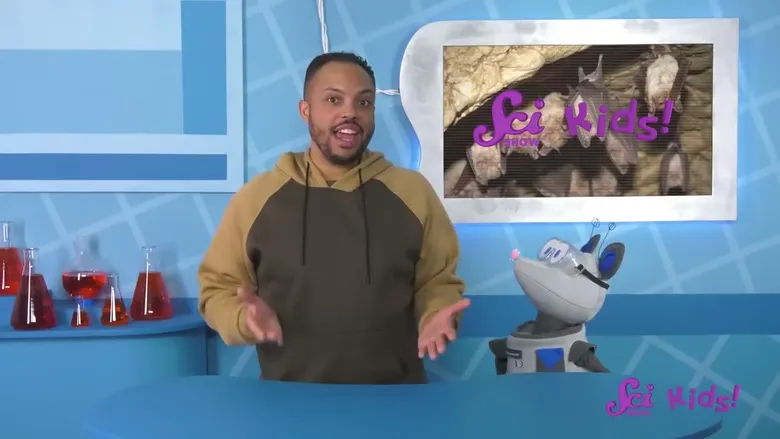
Host Jessi and her robot rat Squeaks explain head lice from a bright studio set, using close-up footage and simple diagrams. Jessi describes what lice are, how they spread through shared hats and brushes, their life cycle from egg to adult, and how to treat them with a fine-tooth comb and special shampoo. She reassures children that anyone can get lice and it is nothing to worry about. The episode ends with her advice to tell an adult whenever something feels unusual.

SciShow Kids

SciShow Kids

Amazing Cave Animals

Balanced
recommended age Unlock co-watching from 2
Host Jessi, a male co-host and Squeaks the robot rat get ready to visit their friend Sam the bat in his cave. Along the way they explain that a cave is a habitat, show real footage of an olm, a Mexican tetra and a cave spider, and point out that these animals have no eyes. They walk the viewer through why deep cave animals rely on smell and touch instead of sight, and invite the child to close their eyes and notice their own senses. The episode ends back in the studio as the hosts finish packing for the trip.

SciShow Kids

SciShow Kids

The Scientist Who Studied Bug Brains

Balanced
recommended age Unlock co-watching from 2
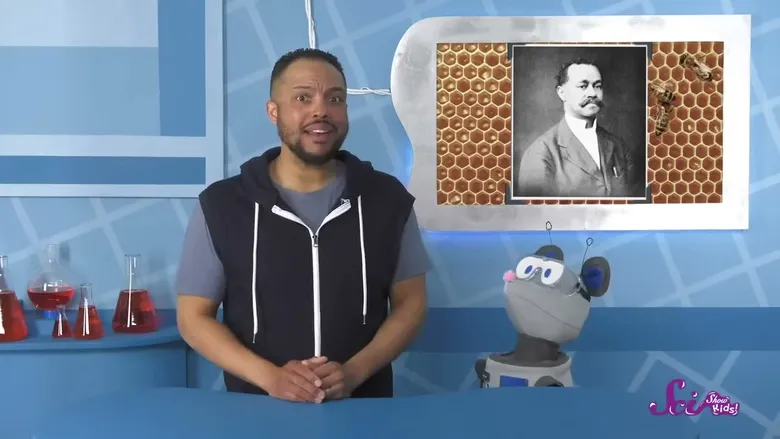
Two hosts and their robot rat Squeaks watch honey bees in a garden and then tell the true story of Dr. Charles Henry Turner, a scientist who proved that bugs can learn and remember. The episode explains his colored-box experiment, which showed bees can see color and return to where they found food, and notes that he was refused a university job because he was Black. It closes with the hosts wondering about their own bee questions and inviting children to experiment. Real bee footage and simple animations illustrate the science and Turner's life throughout.

Explore more

From this series SciShow Kids
By age 5 years
By platform YouTube

Just launched: free lifetime premium for the first 1,000 members to activate their account.

Create your account

Search by title, show, tag, or topic

We use functional cookies and Google Analytics to improve our site. Learn more