















This program is well-balanced. It remains mostly easy to follow and process. It is a good fit for the recommended age.
The pacing is calm. A child has time to watch and understand what is happening.
The sound is clearly present and regularly draws attention.
The visuals are calm and well-organized.
The episode holds one clear thread from start to finish: what caves are as a habitat and how the animals inside them adapt. It builds in a recognizable order, defining a habitat, showing three real cave animals, noticing they share no eyes, then explaining why. Cause and effect is spelled out plainly, that deep dark caves mean sight is not useful so those animals rely on smell and touch instead. Some sections stack several new ideas close together, which asks a bit of focus, but the logic stays followable.
The tone is warm and even throughout, with the hosts speaking gently and supporting Squeaks the robot rat when the lights go out, saying 'I'll be right next to you the whole time.' Caves are called 'dark, scary' once, but this is immediately reframed as interesting and safe, so any small tension is settled right away. Characters behave consistently and treat the viewer with care. There are no sudden emotional swings, and the mood holds steady from opening to close.
Most of the episode is explained by the hosts rather than worked out through a problem the characters tackle themselves. The strongest moment of independent thinking is the hands-on sensing activity, where the viewer is invited to close their eyes and notice what they can hear, feel and touch. Curiosity drives the pair as they prepare to visit Sam the bat, but there is little trial, failure and adjustment on screen. The reasoning about why cave animals lost their eyes is clear, yet the child is mostly guided to the answer rather than left to build it.
Language is clear, correct and purposeful, with new words introduced and defined in context, such as 'A habitat is a place where living things make their home' and 'A sense is how living creatures know things about the world around them.' Sentences are complete and well formed, and nearly all of the talk carries information or instruction rather than empty exclamation. The delivery moves along briskly, which asks steady listening from a five year old, but the vocabulary and structure fit this age well. Terms like adaptation, salamander and freshwater fish stretch the child gently without losing them.
The episode connects directly to the real world through actual footage of caves, an olm, a Mexican tetra and a cave spider, all presented as real places and creatures. The sensing activity is the most transferable part, since a child can turn off a light and pay attention to their other senses right away, while the animal facts are more about knowing than doing. Social context is light but recognizable, framed around visiting a friend and his family. The robot rat is the one imagined element, which sits comfortably alongside the otherwise grounded, factual material for this age.
More information
This score shows how inclusively the series portrays diverse people, families and cultures. Scale: Limited → Varied → Rich → Inclusive.
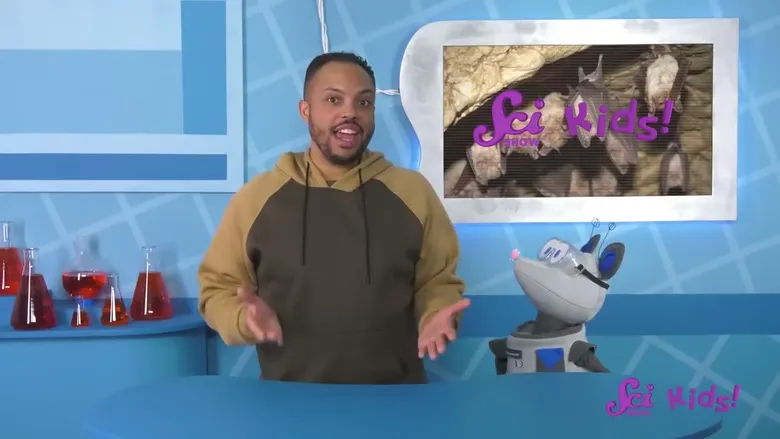
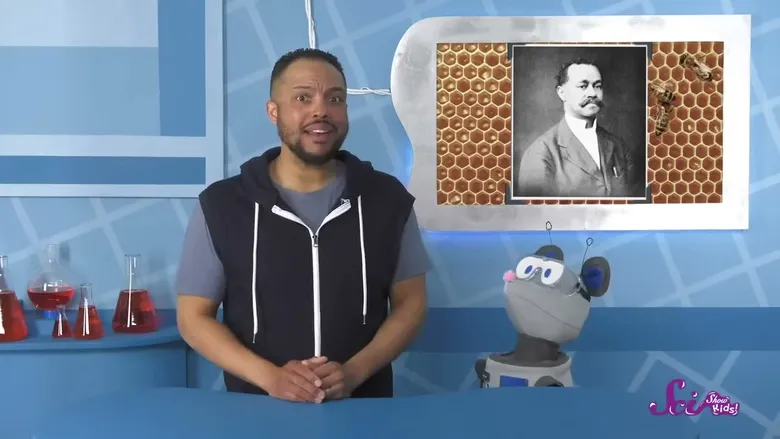
Two hosts guide this look at cave animals, a woman with red hair who opens and closes the episode and a Black man who leads most of the exploration, joined by Squeaks the robot rat and a Black boy who tries a senses experiment at home. Both hosts share the role of curious science guide on equal footing, explaining habitats, salamanders, cave fish and spiders in the same warm, knowledgeable way. The human cast is small because the focus stays on animals and cave footage, so family forms, ages and life-worlds are barely explored. Within that narrow frame, the people shown vary in gender and background and all appear as capable, engaged and interested.
This score shows whether the series stays close to everyday reality or leans into fantasy. Scale: Fantasy → Mixed reality → Realistic.
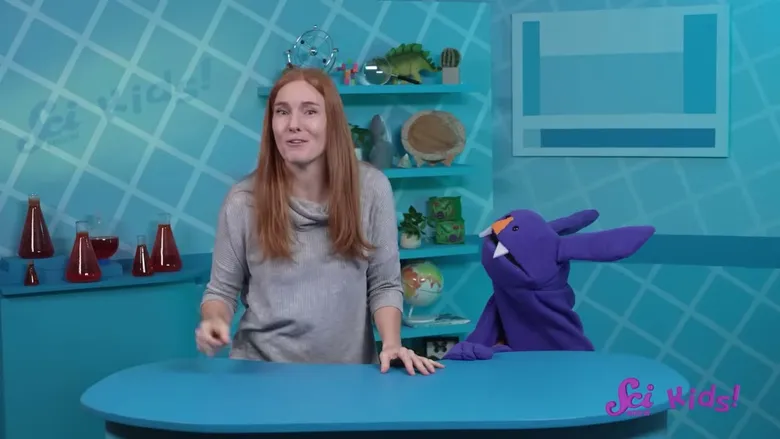
This episode is built almost entirely on the real world. Host Jessi and a friendly co-host guide children through actual footage of caves and the animals that live in them, from the olm salamander to the Mexican tetra and a cave wolf spider. There is no villain and no hero-versus-enemy story; the curiosity comes from questions about how animals adapt to dark places. The only imagined touch is Squeaks, a robot rat companion, which sits comfortably alongside a real, recognizable world and fits a five-year-old well.
This score shows how enjoyable the series is for parents watching along. Scale: Tedious → Tolerable → Pleasant → Enjoyable.
This is a calm, narrated nature lesson built around a friendly studio host and a puppet robot rat, broken up with real footage of caves and cave animals. For a watching adult it is easy to sit through: the voices are gentle, there is no looping music or shrill noise, and the filmed animals are genuinely interesting to look at. The trade-off is that the humor and framing stay firmly aimed at young children, so there is little wink to the grown-up in the room. Production is clean and the light plot of getting ready to visit a bat's cave gives just enough thread to follow.
Host Jessi, a male co-host and Squeaks the robot rat get ready to visit their friend Sam the bat in his cave. Along the way they explain that a cave is a habitat, show real footage of an olm, a Mexican tetra and a cave spider, and point out that these animals have no eyes. They walk the viewer through why deep cave animals rely on smell and touch instead of sight, and invite the child to close their eyes and notice their own senses. The episode ends back in the studio as the hosts finish packing for the trip.