

Slowscreen SlowScreen
Toggle sidebar

Just launched: free lifetime premium for the first 1,000 members to activate their account.

Start free

Sid the Science Kid

Good

Recommended age Unlock

Co-watching from age 3

Balanced

Exact score locked

Watch on PBS Kids
Availability in
Save
Sid the Science Kid

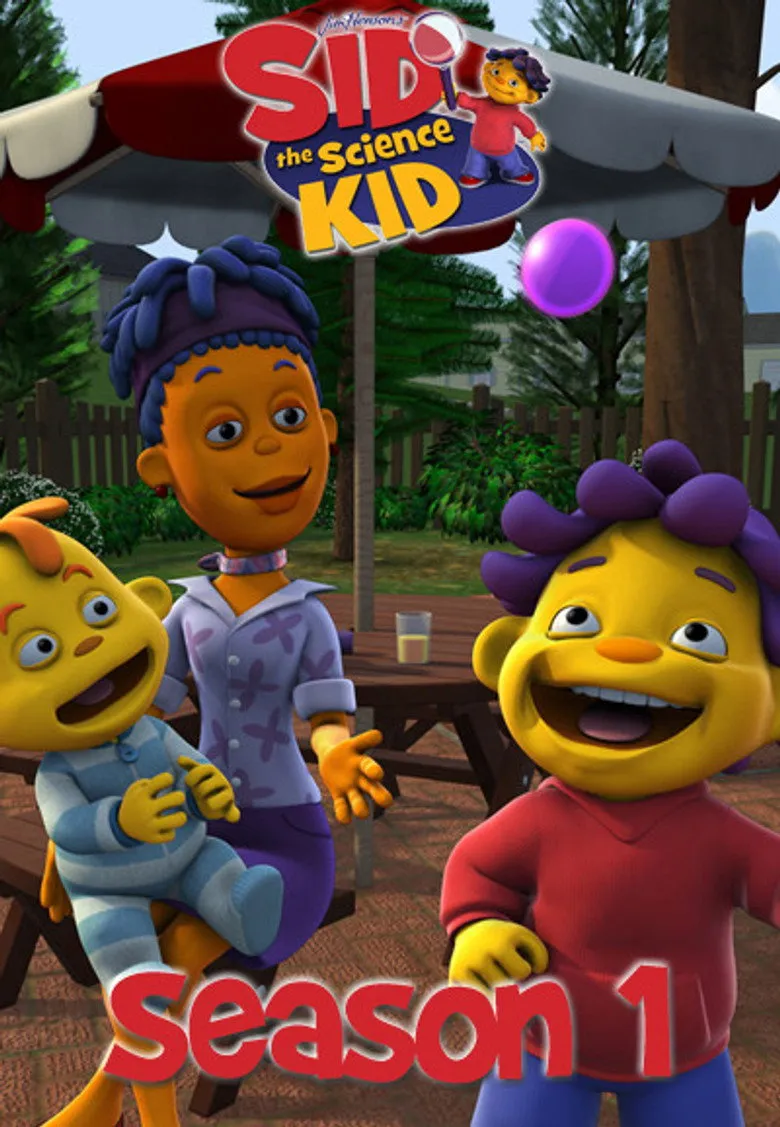
Sid the Science Kid follows a curious boy who turns everyday questions into science investigations at home and school. The tone is upbeat and playful, aimed at preschoolers, building early science thinking and observation skills.

  • Models curiosity and asking questions about the everyday world.
  • Introduces simple science skills like observing, measuring and estimating.
  • Short, clear stories suited to young attention spans.
  • Friendly classroom with cooperative, supportive friends.
  • Sid sometimes nags to get his way.
  • Occasional direct prompts encourage children to keep watching.

See the exact scores

The review is yours to read. Create a free account to reveal the exact SlowScreen score and every pillar score.

Create free account

Score Breakdown

The visuals stay busy throughout, with a lot of movement and frequent changes, while the sound is soft and supportive and never competes for attention. Most episodes move at a fast pace, with images following each other quickly and little room to pause and take in what is happening, though one episode settles into a more moderate tempo. This matters because the quick cutting can ask a lot of a young child even when the soundscape stays calm. Overall it remains mostly easy to follow and process for the recommended age.
Every episode is built around one clear question, such as how roly-polies move or how to measure something as big as a whale, and every part of the day circles back to that single thread. New ideas arrive one or a few at a time and are repeated before the next one appears, so a child can follow each step without getting lost, and cause and effect is spelled out in plain terms. This consistent structure makes the stories easy to predict and hold onto. The labelled, magazine-style segments and occasional song breaks interrupt the flow a little, but each transition is clearly signposted so the central idea always stays in view.
The emotional tone stays warm and steady from start to finish, with adults and children speaking to one another with patience and respect. Teacher Susie treats every guess as worthwhile, grandparents offer praise, and small worries, like Sid wondering how to earn his toy, are settled gently and quickly. There is no real conflict, teasing, or fear to weather, so a young child can settle in without emotional surprises. One pretend scene shows Sid playfully nagging a make-believe parent for a toy, but the game openly pokes fun at itself and the mood quickly returns to its calm, supportive default.
Sid's own curiosity sets each investigation in motion: he poses the question, surveys his friends and family, then tests and checks his idea, with the thinking behind every step spoken aloud so children can follow how one idea leads to the next. Estimation, measuring with your own body, and observing closely are all shown as clear chains of steps a child could copy, and the gap between a guess and the real count becomes part of the learning. The balance shifts between episodes: in some, Sid genuinely drives the discovery, while in others the teacher demonstrates the method and hands him much of the key insight, so he figures out less on his own. Even then, his initiative and the visible, step-by-step solutions keep real problem-solving on screen.
The language fits preschoolers well and does real work. Science words like observe, compare, estimate and magnify are introduced and then explained in plain terms, often tied to something the children can see, and they return often enough to stick. Sentences are mostly complete and clearly spoken, and most of the talk gives information or instructions rather than empty filler. Lively exclamations like 'wow' and 'cool' and bits of playful nonsense pepper the busier moments, but they lighten the mood without muddying the meaning.
The series connects tightly to everyday life, building each episode around a practical skill, making a chart, using a magnifying glass, estimating, or measuring, shown in clear steps a child could repeat at home that same afternoon. Live-action clips of real children doing each activity make the steps easy to copy, and the episodes openly invite viewers to try it themselves and even make their own paper body ruler. The settings are ordinary and recognisable, a family breakfast, a classroom, a backyard or a playground, with familiar routines like being woken for school and tucked in at night. The lighter flights of fancy, like singing science tools, stay clearly framed as play.

More information

This score shows how inclusively the series portrays diverse people, families and cultures. Scale: Limited → Varied → Rich → Inclusive.
Sid is surrounded by a naturally varied cast: his friends Gabriela, May and Gerald reflect a range of backgrounds and return as familiar faces, and his home brings together parents, a baby brother and a grandmother under one roof. Curiosity, humour and ideas are shared freely between the boys and girls and across the three generations, with no group pushed to the edge, and the live demonstration breaks add faces of varied backgrounds too. A mild, recurring comic streak around Gerald is the main character pattern, and it does not narrow the otherwise balanced picture. The clearest limit is the world itself, which rarely moves beyond one home and one classroom, so different ways of living are less visible than the range of faces.
This score shows whether the series stays close to everyday reality or leans into fantasy. Scale: Fantasy → Mixed reality → Realistic.
The series keeps both feet in a child's real world: breakfast with the family, a day at school, a ride home with grandma, all built around a genuine science question. There is no villain anywhere and no good-versus-bad conflict, so the friction comes entirely from curiosity and resolves through learning rather than opposition. A few light flights of imagination, like a science tool breaking into song or Sid dreaming up a hat full of lenses, are clearly framed as pretend and keep their own logic without unsettling the grounded setting. This realistic, hands-on mix is an easy fit for the recommended age.
This score shows how enjoyable the series is for parents watching along. Scale: Tedious → Tolerable → Pleasant → Enjoyable.
You will find this an easy one to have on in the room, even if it rarely plays to the grown-up on the couch. The production is the real strength, with consistent puppet-style animation, clean songs and a tidy sound mix, and each episode carries one clear question that gives you a thread to follow, plus the odd adult-pitched wink like Sid's salesman act or his dad recalling a long science word from school. The catch is Sid's relentless energy and the looping refrains, including 'non-standard measurement' repeated until it sticks in your head, which can wear thin over a full sitting. Pleasant enough to share, but built firmly for your child rather than for you.

Season 1

5 episodes

Sid the Science Kid
S01 E01

Sid the Science Kid

The Sticker Chart

Balanced
recommended age Unlock co-watching from 3
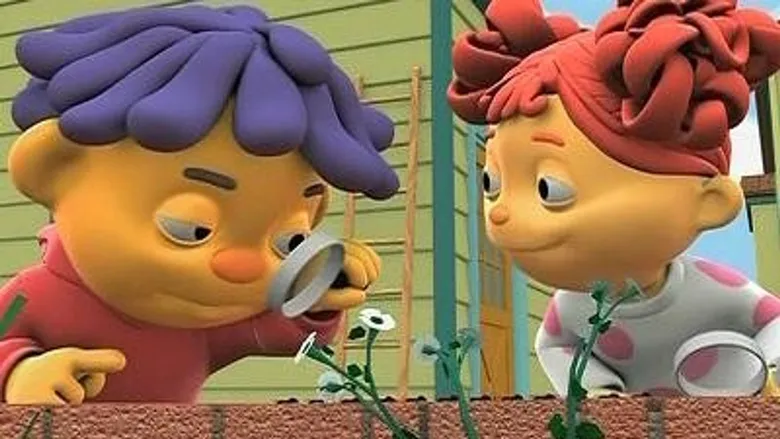
Sid worries he will never fill his chore sticker chart to earn a new toy, so he sets out to learn why charts matter at all. Across breakfast at home, a morning at school and a chat with grandma in the car, he discovers that charts help people remember and compare information, which he calls data. He and his classmates build a snack chart together and practise observing, comparing and contrasting. By the end Sid cleans the table on his own and feels proud, deciding that charts are useful after all.

Sid the Science Kid
S01 E02

Sid the Science Kid

The Rolie Polie

Balanced
recommended age Unlock co-watching from 3

Sid wants to know how his tiny pet roly-polies move, so he brings them to school to investigate with his friends. Teacher Susie introduces the magnifying glass as a science tool, and the class uses it to look closely at skin, crayons, and the bugs themselves. Sid discovers that roly-polies walk on fourteen little legs and records his findings in a journal. He reports back to his dad during a backyard bug hunt and ends the day imagining a hat full of magnifying glasses.

Sid the Science Kid
S01 E03

Sid the Science Kid

Enough With The Seashells!

Balanced
recommended age Unlock co-watching from 3
Sid brings home a school jar filled with seashells and wants to know exactly how many there are, but there are too many to count easily. Through a survey of his friends and a classroom investigation with Teacher Susie, he learns to estimate by counting out ten, picturing groups of ten and then guessing. He practices the method at home, comparing his guess of twenty-two shells to the actual twenty-eight, and tries it again at dinner with his family. The episode ends with Sid waving goodbye and imagining estimating the stars in the sky.

Sid the Science Kid
S01 E04

Sid the Science Kid

The Whale Episode

Balanced
recommended age Unlock co-watching from 3
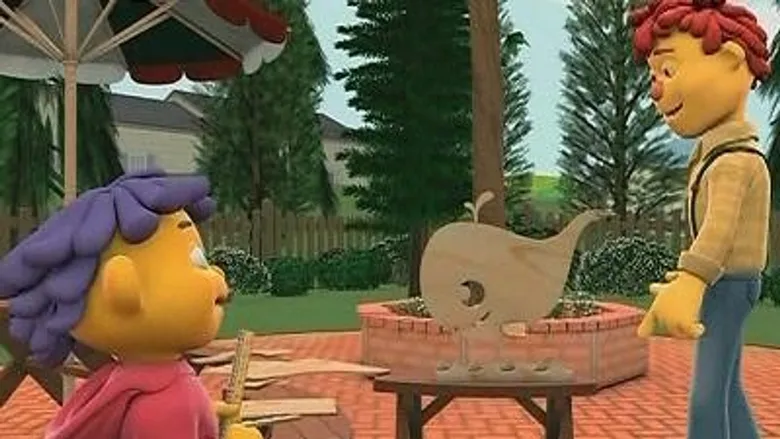
Sid wants to know how to measure a giant blue whale with the small ruler his dad gave him. He carries the question through breakfast, a classroom survey and a lab session where Teacher Susie shows the class how to measure using shoes, blocks and their own bodies, a method called non-standard measurement. After a story from grandma and helping his dad measure wood for a toy whale, Sid invents a 'whale ruler' of identical toy whales lined up to count. The episode closes with Sid reminding viewers to keep asking questions.

Sid the Science Kid
S01 E05

Sid the Science Kid

Super Science Tools

Balanced
recommended age Unlock co-watching from 3
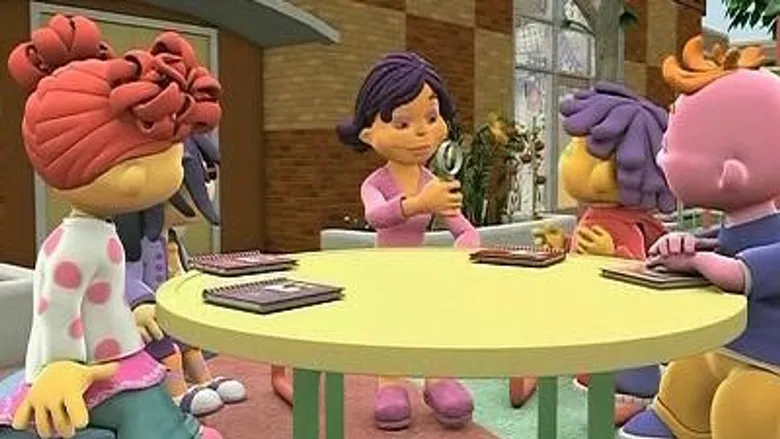
Sid is a young boy who collects science tools and cannot decide which is his favorite: his magnifying glass, estimation jar, chart or ruler. He brings the magnifying glass to school, where teacher Susie and his friends explore each tool through hands-on investigations, from magnifying tiny bugs to estimating balls in a jar and measuring the classroom with their bodies. Real children appear in short clips trying the same activities themselves. By bedtime Sid decides he likes all of his science tools equally.

Explore more

By age 4 years
By platform PBS Kids

Share

Pass this find on to another parent

Link preview

Sid the Science Kid | Good, co-watching from age 3

Sid the Science Kid | Good, co-watching from age 3 - Slowscreen

Good · Co-watching from age 3. Sid the Science Kid follows a curious boy who turns everyday questions into science investigations at home and school. The tone i...

slowscreen.com

https://slowscreen.com/en/series/sid-the-science-kid

https://slowscreen.com/en/series/sid-the-science-kid

Slowscreen

Sid the Science Kid | Good, co-watching from age 3 - Slowscreen

Good · Co-watching from age 3. Sid the Science Kid follows a curious boy who turns everyday questions into science investigations at home and school. The tone i...

Sid the Science Kid | Good, co-watching from age 3

slowscreen.com

Sid the Science Kid | Good, co-watching from age 3 - Slowscreen

Good · Co-watching from age 3. Sid the Science Kid follows a curious boy who turns everyday questions into science investigations at home and school. The tone i...

Sid the Science Kid | Good, co-watching from age 3
slowscreen.com

Sid the Science Kid | Good, co-watching from age 3 - Slowscreen

slowscreen.com · Posted by you

Sid the Science Kid | Good, co-watching from age 3 - Slowscreen

0 Share
Sid the Science Kid | Good, co-watching from age 3
To
Subject Sid the Science Kid | Good, co-watching from age 3

Good · Co-watching from age 3. Sid the Science Kid follows a curious boy who turns everyday questions into science investigations at home and school. The tone i...

https://slowscreen.com/en/series/sid-the-science-kid

Share on WhatsApp Share on X Share on Facebook Share on Telegram Share on Reddit Share on Email

Just launched: free lifetime premium for the first 1,000 members to activate their account.

Create your account

Search by title, show, tag, or topic

We use functional cookies and Google Analytics to improve our site. Learn more