























This program is well-balanced. It remains mostly easy to follow and process. It is a good fit for the recommended age.
The pacing is fast. Images follow each other quickly, leaving little time to pause and take in what is happening.
The sound is soft and supportive.
The visuals are busy, with a lot of movement and frequent changes.
One clear question anchors the whole episode: how do roly-polies move? Every part, from the breakfast table to the classroom investigation to the report back to Dad, circles back to that single thread, so a child always knows what the story is about. New ideas arrive a few at a time and are reinforced before the next one appears, and the chain of cause and effect is spelled out plainly: the bugs are too small to see, a magnifying glass makes them look bigger, and now their legs are visible. The labelled segments break the flow a little, but each transition is clearly signposted.
The emotional climate is warm and steady from beginning to end. Adults and children speak to one another with encouragement and respect, with Teacher Susie praising every child's journal and Dad celebrated for remembering a science fact from school. There is no real conflict, teasing, or fear to unsettle a young viewer, and the friendly tone holds consistently across every scene. A four-year-old can settle into this episode without emotional surprises.
Sid's own curiosity sets everything in motion: he wants to know how his roly-polies move and keeps chasing the answer himself. The episode walks through a genuine thinking process, guessing the bugs might have legs or roll, researching how other small creatures move, then choosing a magnifying glass to look closely and concluding they walk on fourteen little legs. The children offer their own ideas, including Gerald's playful 'bigger machine', and the adults guide rather than hand over the answer. Real problem-solving steps stay visible and child-led.
Language is clear and purposeful, and new science words are explained as they appear: 'magnify' is defined as making things look bigger, and observe, compare, and contrast each get a plain definition. Sentences are mostly complete and well formed, with descriptions and instructions outweighing empty exclamations, though lively fillers like 'wow' and 'cool' pepper the busier moments. Terms are used consistently, so a child hears the same word attached to the same meaning each time. The result is easy for a four-year-old to follow while still stretching vocabulary.
This episode connects tightly to everyday life. Using a magnifying glass to look at skin, crayons, pebbles, and bugs is something a child can do at home that same afternoon, and Grandma shows the same tool helping her thread a needle for sewing. The settings of a home, a classroom, and a backyard bug hunt are familiar, and the situations of family breakfast, school, and a playdate mirror a preschooler's own world. Light pretend moments, like inventing a 'magno hat', stay clearly framed as imagination.
More information
This score shows how inclusively the series portrays diverse people, families and cultures. Scale: Limited → Varied → Rich → Inclusive.
Sid's world brings together a naturally varied cast. Sid and his friends Gabriela, May and Gerald reflect a range of ethnic backgrounds, and they return as familiar figures rather than one-off faces. The household spans three generations, with Mom, Dad and a grandmother all taking part, and curiosity and ideas are shared freely between boys and girls and across ages. The main limits are a fairly conventional family setup and a narrow range of body types, plus a grandmother whose contribution leans on sewing and quilting.
This score shows whether the series stays close to everyday reality or leans into fantasy. Scale: Fantasy → Mixed reality → Realistic.
This episode stays close to a child's real world, following Sid through breakfast with his family, a day at school, and a car ride home with grandma, all built around a real science question about how roly-polies move. There is no villain and no good-versus-bad conflict; the story runs on curiosity and the help of friends, family, and teacher Susie. A couple of playful imaginings, like Susie singing as a magnifying glass and Sid dreaming up a hat full of lenses, are clearly framed as pretend and never unsettle the grounded setting. For a four-year-old this mix of everyday life and real, hands-on science is easy to recognize and copy.
This score shows how enjoyable the series is for parents watching along. Scale: Tedious → Tolerable → Pleasant → Enjoyable.
The episode follows a clear question and answer about how roly-polies move, which gives an adult something to follow, though the rigid routine of songs and segments wears thin over a full sitting. The humor is pitched at children, with groan-worthy puns and only a few beats that land for grown-ups, such as Sid's dad recalling a long scientific name from his school days. The repeated refrains and one drawn-out magnifying-glass song are the main irritants for an adult in the room, while the voices stay within a comfortable range. Production from Jim Henson's studio is the strongest element, with smooth animation, a clean sound mix, and real-world photo inserts that read as deliberate choices.
Themes
Science
Central
The whole episode follows Sid investigating how roly-polies move using a magnifying glass.
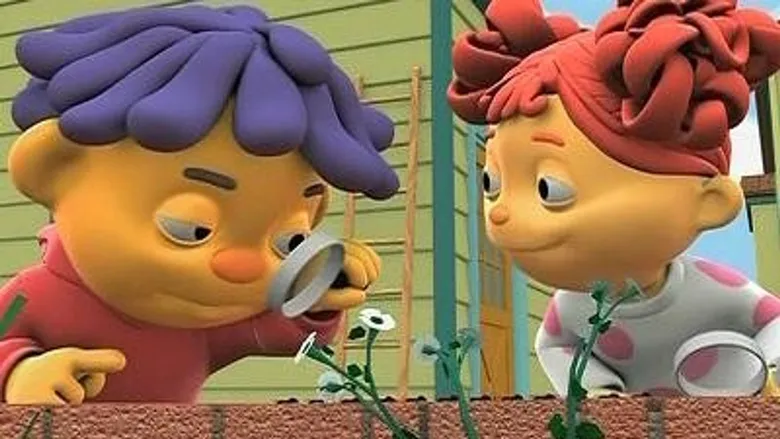
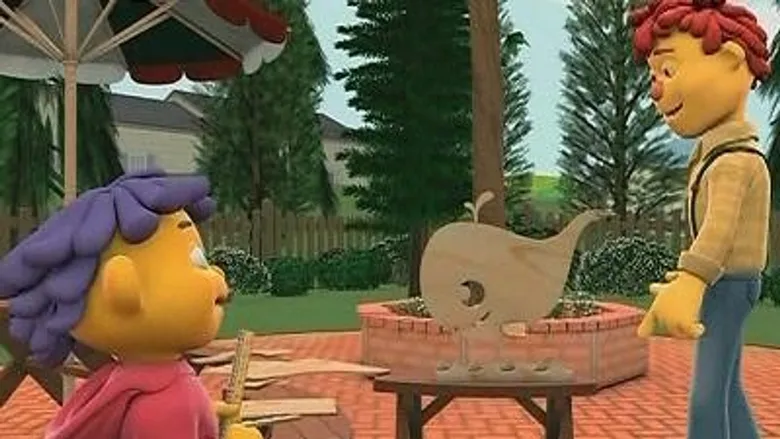
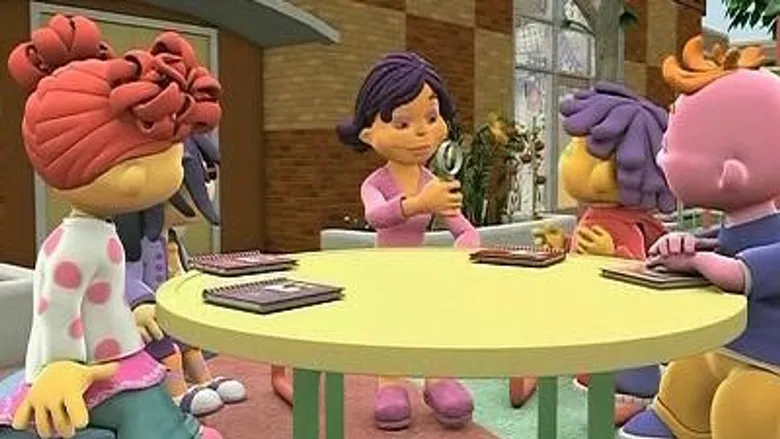
Sid wants to know how his tiny pet roly-polies move, so he brings them to school to investigate with his friends. Teacher Susie introduces the magnifying glass as a science tool, and the class uses it to look closely at skin, crayons, and the bugs themselves. Sid discovers that roly-polies walk on fourteen little legs and records his findings in a journal. He reports back to his dad during a backyard bug hunt and ends the day imagining a hat full of magnifying glasses.